2026 Kia Sportage Hybrid: Quick Verdict
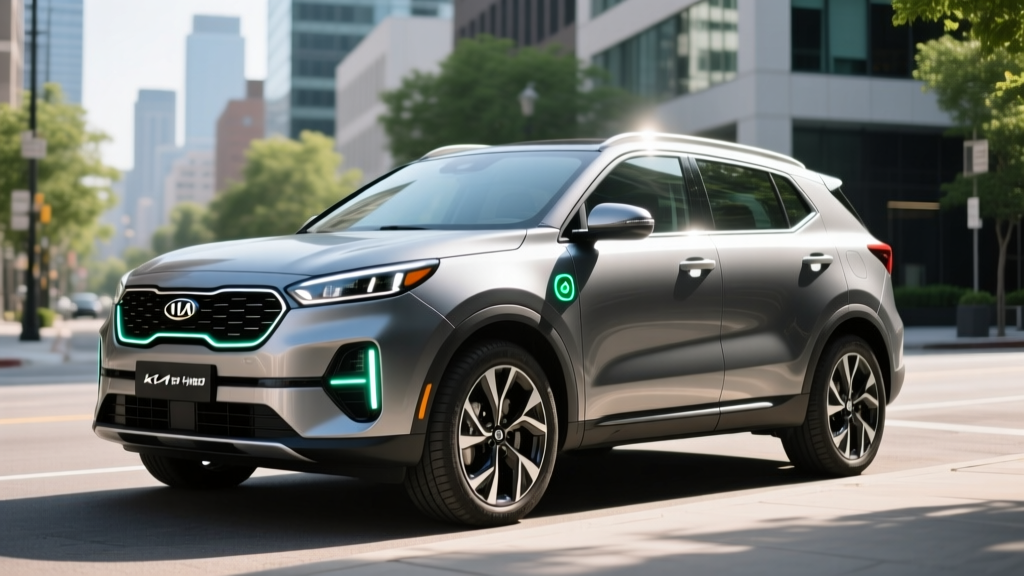
The 2026 Kia Sportage Hybrid occupies a practical sweet spot for buyers who want electrified efficiency without plugging in. As a conventional hybrid electric vehicle (HEV), it requires no lifestyle change — no home charger installation, no route planning around charging stations. You simply fuel it like any gasoline vehicle and let the hybrid powertrain optimize efficiency automatically. With an EPA-estimated 43 MPG combined on front-wheel-drive trims and a turbocharged 261-horsepower powertrain, the Sportage Hybrid delivers both efficiency and adequate passing power in a compact SUV package that starts under $30,000.
This guide breaks down the Sportage Hybrid's real-world fuel economy, powertrain specs, battery longevity, and how it compares to the Sportage Plug-In Hybrid (PHEV) and a battery-electric alternative for buyers cross-shopping the segment.
HEV vs. PHEV: Which Sportage Is Right for You?
Kia offers the Sportage in three powertrain configurations: a conventional gasoline model, the Sportage Hybrid (HEV), and the Sportage Plug-In Hybrid (PHEV). Understanding the distinction is essential before evaluating specs.
| Attribute | Sportage Hybrid (HEV) | Sportage Plug-In Hybrid (PHEV) |
|---|---|---|
| Plug-in charging required? | No — self-charging via regenerative braking and engine | Yes — plug in to access electric-only range |
| Electric-only driving | Limited to low-speed creep and assist | Up to 34 miles (EPA) on battery alone |
| Battery capacity | ~1.49 kWh (small buffer) | 13.8 kWh usable |
| Charging hardware | None — no charge port | Level 2 AC (J1772); no DC fast charging |
| Combined horsepower | 261 hp | 261 hp |
| EPA combined fuel economy | 43 MPG (FWD) / 38 MPG (AWD) | 84 MPGe (charge-sustaining: ~35 MPG) |
| Starting MSRP (2026) | ~$29,990 | ~$39,590 |
| Federal tax credit (§30D) | Not eligible | Up to $7,500 (subject to eligibility rules) |
The core distinction: The Sportage Hybrid (HEV) captures energy from braking and the engine to charge its small battery internally. You never plug it in. The Sportage PHEV has a larger battery you charge externally, enabling roughly 34 miles of pure electric driving before the gasoline engine engages. If your daily commute is under 34 miles and you have access to home or workplace charging, the PHEV can operate as an EV most days while retaining a gasoline engine for road trips.
Fuel Economy: EPA Ratings and Real-World MPG
| Trim / Drivetrain | City MPG | Highway MPG | Combined MPG |
|---|---|---|---|
| LX / S FWD | 42 | 44 | 43 |
| EX / SX-Prestige AWD | 38 | 38 | 38 |
The front-wheel-drive Sportage Hybrid achieves its strongest numbers in city driving, where regenerative braking and electric-motor assist provide the greatest benefit. This is typical of conventional hybrids: stop-and-go traffic actually improves efficiency compared to steady highway cruising, the inverse of a gasoline-only vehicle.
Real-World MPG Expectations
Based on owner reports and independent testing, the FWD Sportage Hybrid consistently meets or slightly exceeds its EPA city estimate. In mixed suburban driving with moderate stoplights, owners report 41–45 MPG. Highway cruising at 70–75 MPH tends to yield 38–41 MPG for FWD models — slightly below the EPA highway rating, which is common since the EPA highway test cycle uses relatively low average speeds.
AWD trims sacrifice roughly 5 MPG combined due to the mechanical and weight penalty of the rear driveline. Expect 35–38 MPG in real-world mixed driving with AWD. Cold weather (below 35°F) reduces hybrid efficiency by approximately 8–12% due to increased engine warm-up cycles and reduced battery performance — a factor buyers in northern climates should budget for.
Source: fueleconomy.gov — 2026 Kia Sportage Hybrid
Powertrain Specs: 261 HP Turbocharged Hybrid
| Specification | Detail |
|---|---|
| Engine | 1.6L turbocharged inline-4 (GDI) |
| Engine output | 178 hp / 195 lb-ft torque |
| Electric motor | 47.7 kW (64 hp) permanent-magnet synchronous |
| Combined system output | 261 hp / 258 lb-ft torque |
| Transmission | 6-speed automatic (torque-converter, not CVT) |
| Drivetrain | FWD standard; AWD available |
| Hybrid battery | ~1.49 kWh lithium-ion polymer |
| 0–60 MPH | ~7.1 seconds (FWD) |
| Towing capacity | 2,000 lbs (AWD) |
| Fuel tank | 13.7 gallons |
| Total driving range | ~589 miles (FWD, EPA combined) |
Unlike many competitors that pair a hybrid system with a continuously variable transmission (CVT), Kia uses a conventional 6-speed automatic. This gives the Sportage Hybrid a more natural acceleration feel — no "rubber-band" drone under hard throttle — at a minor cost to peak efficiency. The turbocharged 1.6L provides strong low-end torque, and the electric motor fills in the gap before the turbo spools, resulting in responsive off-the-line acceleration that masks the 7.1-second 0–60 time in everyday driving.
Sportage PHEV: Electric-Only Range and Charging
For buyers specifically evaluating the plug-in variant, the 2026 Sportage PHEV offers meaningful electric-only capability:
| Attribute | Specification |
|---|---|
| EPA electric-only range | 34 miles |
| Total combined range (electric + gas) | ~430 miles |
| Battery capacity (usable) | 13.8 kWh lithium-ion polymer |
| Level 1 charging (120V / 12A) | ~11 hours (0–100%) |
| Level 2 charging (240V / 32A, 7.2 kW onboard charger) | ~3 hours 15 min (0–100%) |
| DC fast charging | Not supported |
| Charge-sustaining MPG (after battery depleted) | ~35 MPG combined |
| MPGe (combined, with full battery) | 84 MPGe |
The PHEV's 34-mile electric range covers most daily commutes, and its 7.2 kW onboard charger enables a full recharge overnight on a standard Level 2 home charger. The absence of DC fast charging is typical for PHEVs in this segment — the battery is small enough that Level 2 charging is adequate, and the added cost and weight of DC fast-charge hardware isn't justified.
Pricing, Tax Credits, and Ownership Costs
| Trim | Drivetrain | MSRP (incl. destination) |
|---|---|---|
| LX | FWD | $29,990 |
| S | FWD | $31,590 |
| EX | AWD | $33,990 |
| SX-Prestige | AWD | $37,990 |
Federal Tax Credit Eligibility
The conventional Sportage Hybrid (HEV) does not qualify for the federal §30D clean vehicle tax credit. That credit applies only to plug-in electric vehicles (BEVs and PHEVs) meeting battery-sourcing, critical-mineral, MSRP, and buyer-income requirements.
The Sportage PHEV may qualify for up to $7,500 under §30D, but eligibility depends on several conditions that change periodically:
- MSRP cap: SUVs must be priced at or below $80,000 (Sportage PHEV qualifies)
- Buyer income cap: Modified AGI must not exceed $150,000 (single) / $300,000 (joint)
- Battery component sourcing: Percentage of battery components manufactured or assembled in North America must meet annual thresholds set by the IRS
- Critical minerals: Percentage of critical minerals sourced from the U.S. or FTA partners must meet annual thresholds
- Point-of-sale transfer: Eligible buyers can transfer the credit to the dealer for an immediate price reduction at purchase
Verify current eligibility on IRS.gov and confirm specific VIN eligibility through the IRS Energy Credits Online tool before purchasing. Kia's assembly location and battery sourcing determine whether a given model-year Sportage PHEV meets the thresholds — these can change mid-year.
Battery Warranty, Reliability, and Replacement Cost
Kia Hybrid Battery Warranty
Hybrid battery: 10 years / 100,000 miles (whichever comes first)
Hybrid system components (motor, inverter, controller): 10 years / 100,000 miles
Powertrain warranty (engine, transmission): 10 years / 100,000 miles
Limited vehicle warranty: 5 years / 60,000 miles
Kia's hybrid battery warranty is among the longest in the segment, matching Hyundai's coverage and exceeding Toyota's 10-year/150,000-mile hybrid battery warranty for CARB-state vehicles.
Long-Term Reliability
Kia's hybrid powertrain has demonstrated strong durability since the introduction of the turbocharged 1.6T hybrid system. The lithium-ion polymer battery pack is small (~1.49 kWh in the HEV) and operates within a narrow state-of-charge window — typically between 40% and 70% SoC — which minimizes degradation. The battery management system prevents deep discharges and overcharging, the primary causes of lithium-ion capacity loss.
Most hybrid battery failures in the industry occur within the first 8–10 years and are covered under warranty. Based on failure-rate data across Hyundai-Kia hybrid platforms, the probability of needing a hybrid battery replacement within the warranty period is low (estimated below 3%).
Battery Replacement Cost
If the hybrid battery requires replacement out of warranty, expect the following approximate costs:
- Sportage Hybrid (HEV) battery pack: $2,000–$3,500 (parts) + $500–$800 (labor) = roughly $2,500–$4,300 total
- Sportage PHEV battery pack: $5,000–$8,000 (parts) + $800–$1,200 (labor) = roughly $5,800–$9,200 total
The HEV battery is relatively inexpensive to replace because of its small capacity. The PHEV battery is substantially larger and more costly. However, given Kia's 10-year/100,000-mile coverage, most original owners will never face this expense.
Sportage Hybrid vs. Full EV vs. Gas: Decision Framework
Choose the Sportage Hybrid (HEV) if:
- You cannot install a home charger (apartment, street parking, no garage)
- You want better fuel economy without any behavioral change
- You regularly drive in stop-and-go city traffic where hybrids excel
- Your budget is under $35,000 and you want a compact SUV
- You take frequent long road trips and don't want to plan charging stops
Choose the Sportage PHEV if:
- Your daily commute is under 34 miles round-trip
- You have access to Level 2 charging at home or work
- You want to drive mostly on electricity but need a gas engine for longer trips
- You qualify for the §30D tax credit (income and sourcing requirements met)
- You want to reduce fuel costs significantly without full EV commitment
Choose a Full EV (e.g., Hyundai Ioniq 5, Kia EV6) if:
- You have reliable home Level 2 charging
- Your daily driving is under 250 miles and you can plan DC fast-charge stops for road trips
- You want to eliminate gasoline expenses and oil changes entirely
- You qualify for the full $7,500 federal tax credit
- You prioritize the lowest per-mile energy cost and lowest maintenance burden
Pros and Cons
Pros
- 43 MPG combined (FWD) with no plug-in requirement
- 261 hp is the most powerful in the compact hybrid SUV segment
- Conventional 6-speed automatic avoids CVT drone
- 10-year/100,000-mile hybrid battery and powertrain warranty
- ~589 miles of total range on a single tank (FWD)
- Sub-$30,000 starting price for a well-equipped compact SUV
Cons
- AWD drops fuel economy to 38 MPG combined — a 5 MPG penalty
- No federal tax credit for the HEV variant
- Hybrid battery limits cargo space slightly vs. gas-only Sportage
- AWD towing limited to 2,000 lbs (below some competitors)
- Infotainment learning curve with Kia's latest UI
- Real-world highway MPG falls 2–4 MPG below EPA estimate at sustained 75+ MPH
Frequently Asked Questions
How many MPG does the Kia Sportage Hybrid get?
The 2026 Kia Sportage Hybrid achieves an EPA-estimated 42 city / 44 highway / 43 combined MPG in front-wheel-drive trims, and 38 city / 38 highway / 38 combined in all-wheel-drive trims. Real-world city driving often yields 41–45 MPG in FWD models, while sustained highway driving at 70+ MPH typically returns 38–41 MPG.
Does the Sportage Hybrid need to be plugged in?
No. The Sportage Hybrid (HEV) is a conventional, self-charging hybrid. It generates electricity through regenerative braking and the gasoline engine. You never plug it in. Only the Sportage PHEV (Plug-In Hybrid) requires external charging to access its electric-only range.
How far can the Sportage PHEV go on electric only?
The 2026 Sportage PHEV delivers an EPA-estimated 34 miles of electric-only range on a full charge. After the battery depletes, the vehicle operates as a conventional hybrid, achieving approximately 35 MPG combined. Total combined range (electric + gasoline) is approximately 430 miles.
Is the Sportage Hybrid reliable, and what does battery replacement cost?
Kia's hybrid powertrain has shown strong reliability since its deployment across the Hyundai-Kia platform. The hybrid battery is covered by a 10-year/100,000-mile warranty. Out-of-warranty replacement costs approximately $2,500–$4,300 for the HEV battery and $5,800–$9,200 for the PHEV battery, including labor. Given the warranty length and low failure rates, most owners will not face this cost.
Does the Sportage Hybrid qualify for any tax credit?
The conventional Sportage Hybrid (HEV) does not qualify for the federal §30D clean vehicle tax credit, which is limited to plug-in vehicles. The Sportage PHEV may qualify for up to $7,500 depending on battery-sourcing requirements, buyer income limits ($150K single / $300K joint), and the vehicle's MSRP (must be ≤$80,000 for SUVs). Check current eligibility at IRS.gov. Some states offer additional hybrid or PHEV rebates — check your state energy office for local programs.
How does the Sportage Hybrid compare to the Toyota RAV4 Hybrid?
The Toyota RAV4 Hybrid achieves 41 MPG combined (AWD standard) with 219 hp and starts around $33,425. The Sportage Hybrid offers more horsepower (261 vs. 219) and a lower starting price (~$29,990 FWD), but AWD trims trail the RAV4's efficiency (38 vs. 41 MPG combined). The RAV4 Hybrid includes AWD on every trim; the Sportage Hybrid offers AWD as an option. Both carry strong hybrid battery warranties.
What is the total driving range on a full tank?
The FWD Sportage Hybrid delivers approximately 589 miles of total range from its 13.7-gallon fuel tank at the EPA combined rating of 43 MPG. AWD trims achieve approximately 520 miles. This range exceeds most BEVs and reduces fuel-stop frequency on long road trips.
Sources: fueleconomy.gov, Kia America, IRS §30D Clean Vehicle Credit. Specifications reflect 2026 model-year data as published; verify with your dealer for the latest trim configurations and pricing.