Kia Sportage Hybrid Mileage: What the EPA Numbers Actually Mean
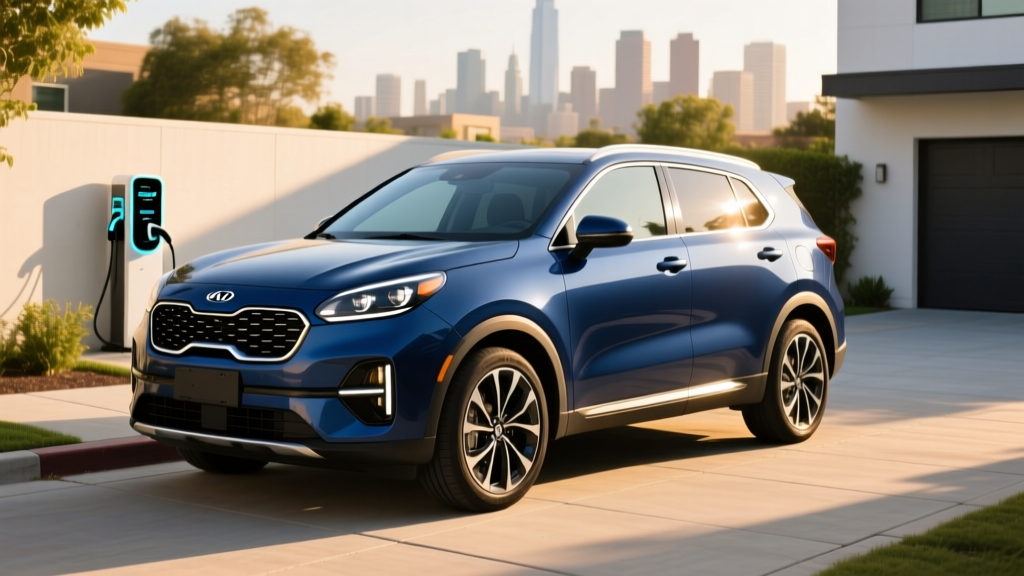
Buyers researching Kia Sportage hybrid mileage encounter two very different powertrains under the same nameplate: a conventional hybrid (HEV) that never needs to be plugged in, and a plug-in hybrid (PHEV) that delivers roughly 34 miles of electric-only driving before the gas engine takes over. Both share the same 1.6-liter turbocharged four-cylinder foundation, but their efficiency profiles diverge significantly depending on how and where you drive.
This guide breaks down the EPA-rated and real-world fuel economy for both the 2026 Kia Sportage Hybrid (HEV) and the 2026 Kia Sportage Plug-In Hybrid (PHEV), along with powertrain specs, battery warranty coverage, pricing, and tax credit eligibility — everything you need to decide which version fits your routine.
HEV vs PHEV: Which Sportage Hybrid Are We Talking About?
Before diving into mileage figures, it's critical to understand the distinction between Kia's two Sportage hybrid variants. Conflating them is the most common mistake buyers make in this segment.
Conventional Hybrid (HEV)
The Sportage HEV uses a small battery (approximately 1.49 kWh) and an electric motor sandwiched between the engine and transmission. It recovers energy through regenerative braking and engine-driven charging. You never plug it in. It operates like a normal gas car at the pump — you simply get significantly better MPG.
Plug-In Hybrid (PHEV)
The Sportage PHEV carries a much larger 13.8 kWh battery pack and a more powerful electric motor. You plug it into a Level 1 (120V) or Level 2 (240V) charger to fill the battery, giving you an EPA-rated 34 miles of pure electric driving. Once the battery depletes, it reverts to hybrid mode and runs on gas like a conventional HEV.
Fuel Economy: EPA MPG for the Sportage HEV and PHEV
Fuel economy is the headline metric, and the Sportage Hybrid delivers strong numbers — especially in the city, where hybrid systems shine by recovering braking energy and avoiding idling.
| Metric | Sportage HEV (FWD) | Sportage HEV (AWD) | Sportage PHEV (AWD, Hybrid Mode) |
|---|---|---|---|
| City MPG | 42 | 38 | 36 |
| Highway MPG | 44 | 38 | 35 |
| Combined MPG | 43 | 38 | 35 |
| Electric-Only Range | N/A | N/A | 34 miles |
| Total Range (est.) | ~560 miles | ~490 miles | ~430 miles |
Source: EPA Fuel Economy. Figures reflect 2025–2026 model year data. Verify current-year ratings on fueleconomy.gov.
Real-World MPG: What to Actually Expect on the Road
EPA numbers are a standardized baseline, but real-world Kia Sportage hybrid mileage varies based on driving conditions — and not always in the direction you'd expect.
City driving favors the HEV. Hybrid systems recapture energy from frequent stops, so the Sportage HEV often meets or exceeds its EPA city rating in stop-and-go traffic. Owners routinely report 40–45 MPG in urban commuting with the FWD model.
Highway driving reduces the hybrid advantage. At sustained 70–80 mph speeds, the electric motor contributes less and aerodynamic drag dominates. Expect the FWD HEV to return roughly 38–42 MPG on the highway — slightly below its EPA highway sticker. The AWD HEV drops to approximately 34–37 MPG at highway speeds.
Cold weather impact. In freezing temperatures (below 32°F), expect a 10–15% reduction in fuel economy for the HEV due to engine warm-up cycles, cabin heating demands, and reduced battery efficiency. The PHEV sees an even larger hit to its electric-only range — roughly 25–28 miles instead of the rated 34 — because the battery is less efficient when cold and cabin heating draws from the pack.
Powertrain Specs: What's Under the Hood
| Specification | Sportage HEV | Sportage PHEV |
|---|---|---|
| Engine | 1.6L Turbo I-4 | 1.6L Turbo I-4 |
| Combined System HP | 226 hp | 261 hp |
| Combined Torque | 258 lb-ft | 258 lb-ft |
| Electric Motor Output | 47 kW (64 hp) | 72 kW (97 hp) |
| Transmission | 6-speed automatic | 6-speed automatic |
| Battery Capacity | ~1.49 kWh | 13.8 kWh |
| Drivetrain | FWD or AWD | AWD (standard) |
| 0–60 mph (est.) | ~7.5 sec | ~6.7 sec |
| Towing Capacity | 2,000 lbs | 2,000 lbs |
The PHEV's more powerful electric motor and larger battery give it a meaningful acceleration edge. It also comes exclusively with all-wheel drive, which adds weight but provides year-round traction.
PHEV Charging: Battery Size, Charge Times, and the DC Fast-Charging Question
The Sportage PHEV's 13.8 kWh battery pack is sized for daily commuting on electricity. Here's what charging looks like in practice:
| Charging Method | Power (kW) | 0–100% Time |
|---|---|---|
| Level 1 (120V household outlet) | ~1.4 kW | ~10–11 hours |
| Level 2 (240V home/public charger) | ~7.2 kW | ~2 hours |
| DC Fast Charging | Not supported | N/A |
The Sportage PHEV does not support DC fast charging. This is standard for most PHEVs in this class — the battery is small enough that Level 2 charging fills it quickly, and DC fast-charging hardware adds cost and weight. For PHEV owners, a Level 2 home charger is the practical sweet spot: plug in when you get home, and the battery is full by morning.
A critical note on kW vs kWh: kW (kilowatts) measures the rate of charging — like water flow from a hose. kWh (kilowatt-hours) measures the battery's energy capacity — like the size of the tank. The Sportage PHEV has a 13.8 kWh battery and accepts up to 7.2 kW of Level 2 charging power.
Pricing, Trims, and Tax Credit Eligibility
Pricing for the 2026 Kia Sportage Hybrid lineup positions it competitively in the compact crossover segment:
| Model / Trim | MSRP (approx.) |
|---|---|
| Sportage HEV LX (FWD) | ~$29,590 |
| Sportage HEV EX (AWD) | ~$33,090 |
| Sportage HEV SX-Prestige (AWD) | ~$36,590 |
| Sportage PHEV X-Line (AWD) | ~$39,590 |
| Sportage PHEV X-Line Prestige (AWD) | ~$42,590 |
MSRP figures are approximate for the 2026 model year. Verify current pricing on Kia.com.
Federal Tax Credit: Does the Sportage PHEV Qualify?
Under IRS §30D rules, the Sportage PHEV may qualify for a partial or full federal tax credit of up to $7,500, but eligibility depends on several factors that change regularly:
- Battery sourcing and critical minerals: A percentage of battery components must be manufactured or assembled in North America, and critical minerals must meet sourcing thresholds. These percentages increase each year, and Kia's supply chain compliance may shift.
- Buyer income limits: Modified adjusted gross income cannot exceed $150,000 (single), $225,000 (head of household), or $300,000 (joint filing).
- MSRP cap: The vehicle's MSRP must not exceed $80,000 for SUVs — the Sportage PHEV clears this easily.
- Point-of-sale transfer: As of 2024+, eligible buyers can transfer the credit to the dealer at purchase, reducing the purchase price directly rather than waiting for a tax refund.
The conventional Sportage HEV does not qualify for the §30D federal EV tax credit — it is not a plug-in vehicle. However, some states offer separate rebates for conventional hybrids. Check your state's energy office or the Alternative Fuels Data Center for local incentives.
Battery Warranty, Reliability, and Replacement Cost
Kia Hybrid Battery Warranty
HEV: 10 years / 100,000 miles (whichever comes first)
PHEV: 10 years / 100,000 miles (whichever comes first)
Kia's hybrid battery warranty is among the best in the industry, covering defects and capacity loss below a defined threshold (typically 60–70% of original capacity). This applies to the original owner and, in many states, transfers to subsequent owners for a reduced period (often 8 years/80,000 miles under federal emissions warranty requirements).
Reliability: Kia's 1.6L turbo hybrid powertrain has been in service across multiple models (Sorento, Tucson, Sportage) since 2022, and the architecture is well-proven. The conventional HEV system is mechanically simpler than a PHEV — smaller battery, no plug hardware — which translates to fewer potential failure points over 150,000+ miles.
Battery replacement cost: If the hybrid battery fails outside warranty, replacement costs are estimated at:
- HEV battery: $2,000–$3,500 (smaller pack, lower cost)
- PHEV battery: $5,000–$8,000 (larger 13.8 kWh pack)
These are ballpark figures based on current parts pricing and labor. Hybrid batteries rarely require full replacement — individual cell modules can sometimes be serviced. In practice, most hybrid batteries outlast the vehicle's economic life, and Kia's 10-year coverage provides substantial peace of mind.
Who Should Choose the Sportage HEV, PHEV, or a Full EV?
Sportage HEV — Choose If:
- You want better MPG with zero lifestyle change
- You don't have access to home or workplace charging
- Your budget is under $35,000
- You drive mostly city miles (where the 42 MPG city rating shines)
- You want the lowest maintenance complexity
Sportage PHEV — Choose If:
- Your daily commute is under 34 miles round-trip
- You can install a Level 2 charger at home
- You want electric commuting but gas flexibility for road trips
- You may qualify for the federal tax credit (reducing the price gap)
- You value the extra 35 hp from the larger electric motor
Full EV (e.g., Kia EV6, Hyundai Ioniq 5) — Choose If:
- You have reliable home Level 2 charging
- Your daily driving is under 250 miles
- You want the lowest per-mile fuel cost (electricity vs. gas)
- You're ready to plan around DC fast charging on road trips
- You want maximum federal tax credit eligibility ($7,500)
The decision framework is straightforward: no charging access → HEV. Home charging + short commute → PHEV. Home charging + willingness to plan road trips → full EV. The Sportage hybrid lineup covers the first two scenarios exceptionally well.
Frequently Asked Questions
How many MPG does the Kia Sportage Hybrid get?
The FWD Sportage HEV achieves an EPA-rated 42 city / 44 highway / 43 combined MPG. The AWD HEV drops to 38/38/38. In real-world city driving, owners frequently report meeting or exceeding the EPA city number, while highway cruising at 75+ mph typically returns 2–4 MPG below the sticker.
How far can the Sportage PHEV go on electric only?
The EPA rates the Sportage PHEV at 34 miles of electric-only range. In warm weather with moderate speeds, you may see 32–36 miles. In cold weather (below freezing), expect 25–28 miles due to battery inefficiency and cabin heating demands.
Do I need to plug in the Sportage Hybrid (HEV)?
No. The conventional Sportage HEV charges its small battery through regenerative braking and the gas engine. You fuel it exclusively at gas stations, just like any other car. Only the PHEV variant requires plugging in to access its electric-only range.
Does the Kia Sportage Hybrid qualify for a tax credit?
The conventional HEV does not qualify for any federal tax credit. The PHEV may qualify for up to $7,500 under IRS §30D, depending on battery sourcing requirements, your income, and current-year rules. Always verify at IRS.gov and consult a tax professional before relying on credit eligibility.
Is the Kia Sportage Hybrid reliable?
Kia's 1.6L turbo hybrid powertrain has been in production since 2022 across multiple models. The system is well-proven, and Kia backs the hybrid battery with a 10-year/100,000-mile warranty — one of the longest in the industry. Long-term data suggests hybrid battery replacement is rarely needed within normal vehicle lifespans.
What does it cost to replace the hybrid battery?
Out-of-warranty replacement runs approximately $2,000–$3,500 for the HEV battery and $5,000–$8,000 for the PHEV's larger 13.8 kWh pack. However, failures within the 10-year/100,000-mile warranty period are covered, and complete battery failures are uncommon.
Should I get the HEV or the PHEV?
If you can charge at home and your daily driving is under 34 miles, the PHEV lets you commute on electricity while keeping gas for longer trips — and may qualify for a tax credit that narrows the price gap. If you can't charge at home or prefer a lower purchase price, the HEV delivers excellent MPG with no behavioral change required.