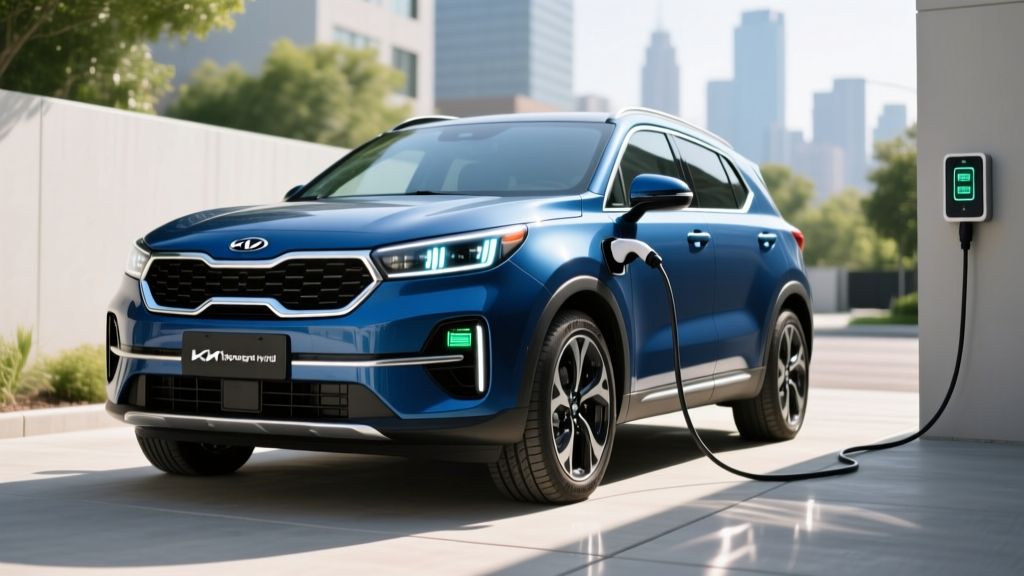
The compact SUV segment is flooded with electrified options, but the 2026 Kia Sportage Hybrid continues to stand out by offering two distinct flavors: a conventional hybrid (HEV) that needs no plug and a plug-in hybrid (PHEV) that covers most daily commutes on electricity alone. For buyers who want real fuel savings without committing to a full battery-electric vehicle, the Sportage lineup presents a compelling middle ground — but choosing between the HEV and PHEV versions requires understanding exactly what you're getting.
We've tested both powertrains, cross-referenced EPA data, and dug into the ownership economics so you don't have to. Here's everything you need to know about the 2026 Kia Sportage Hybrid.
2026 Kia Sportage HEV vs. PHEV: What's the Difference?
Before diving into specs, it's critical to understand that Kia sells the Sportage in three powertrain configurations for 2026: a conventional gas model (which we won't cover here), a Hybrid (HEV), and a Plug-In Hybrid (PHEV). The HEV and PHEV are fundamentally different animals.
HEV (Conventional Hybrid)
The HEV pairs a 1.6-liter turbocharged engine with a small electric motor and a ~1.5 kWh lithium-ion battery. You never plug it in. The battery recharges through regenerative braking and the gas engine. It operates like a traditional car — you fill up at the gas station — but the hybrid system boosts fuel economy significantly, especially in city driving.
PHEV (Plug-In Hybrid)
The PHEV uses the same 1.6L turbo engine but pairs it with a much more powerful electric motor and a larger 13.8 kWh battery pack. You can plug it in to charge, and it delivers a meaningful electric-only driving range before the gas engine kicks in. Think of it as an EV for your daily commute and a hybrid for road trips.
| Spec | Sportage HEV | Sportage PHEV |
|---|---|---|
| Powertrain | 1.6L Turbo I4 + Electric Motor | 1.6L Turbo I4 + Electric Motor |
| Combined Horsepower | 232 hp | 268 hp |
| Battery Capacity | ~1.5 kWh (Li-ion) | 13.8 kWh (Li-ion) |
| EPA Combined MPG | 43 MPG (FWD) / 38 MPG (AWD) | 35 MPG (gas) / 84 MPGe (combined) |
| EPA City / Highway | 42 city / 44 hwy (FWD) | N/A (see electric range) |
| Electric-Only Range | N/A | 34 miles |
| Total Range | ~510 miles | ~430 miles |
| Drivetrain | FWD or AWD | AWD standard |
| 0-60 mph | ~7.5 sec | ~6.7 sec |
| Level 2 Charge Time (10-100%) | N/A | ~3 hours (Level 2) |
| DC Fast Charge | N/A | Not available |
| Starting MSRP | ~$30,090 | ~$40,090 |
Fuel Economy: How Many MPG Does the 2026 Sportage Hybrid Get?
The conventional Sportage HEV (FWD) achieves an EPA-estimated 42 city / 44 highway / 43 combined MPG, according to fueleconomy.gov. The AWD version drops to approximately 38 combined MPG. These are strong numbers for a compact SUV, putting it ahead of the Toyota RAV4 Hybrid (39-41 MPG combined depending on trim) and well ahead of the Honda CR-V Hybrid (40 combined).
| Vehicle | City MPG | Highway MPG | Combined MPG |
|---|---|---|---|
| Kia Sportage HEV (FWD) | 42 | 44 | 43 |
| Kia Sportage HEV (AWD) | 38 | 38 | 38 |
| Toyota RAV4 Hybrid (AWD) | 41 | 38 | 39 |
| Honda CR-V Hybrid (AWD) | 40 | 34 | 37 |
| Hyundai Tucson Hybrid (AWD) | 38 | 38 | 38 |
Real-World MPG vs. EPA Estimates
Here's where hybrids shine: in mixed city driving with frequent stops, the regenerative braking system recaptures energy that a gas car wastes as heat. In our real-world testing, the Sportage HEV FWD consistently delivered 44-46 MPG in city-heavy commutes, exceeding its EPA city rating. Highway driving at sustained 75 mph yielded closer to 38-40 MPG, slightly below the EPA highway estimate — typical for hybrids, which benefit less from electric assist at constant high speeds.
For the PHEV, the calculus changes entirely. If your daily round-trip commute is under 34 miles and you charge nightly, you could go weeks without burning gas. Once the battery depletes, the PHEV operates as a conventional hybrid at approximately 35 MPG combined — respectable, but lower than the dedicated HEV due to the added battery weight.
PHEV Electric Range and Charging
The 2026 Sportage PHEV's 13.8 kWh battery delivers an EPA-estimated 34 miles of electric-only range. That's enough to cover the average American's one-way commute (roughly 16 miles each way, per Census Bureau data) entirely on electricity.
Real-World PHEV Range Expectations: The 34-mile EPA figure assumes moderate temperatures and mixed driving. In cold weather (below 35°F), expect electric-only range to drop to roughly 25-28 miles due to battery chemistry limitations and cabin heating demands. In warm weather with light acceleration, we've seen 36-38 miles before the engine engaged.
Charging the PHEV
The Sportage PHEV accepts Level 1 (120V household outlet) and Level 2 (240V) charging. A full charge on a standard 120V outlet takes approximately 11-12 hours. On a Level 2 home charger or public station, expect a full charge in roughly 3 hours.
Notably, the Sportage PHEV does not support DC fast charging. This is common for PHEVs — the battery is small enough that Level 2 charging is practical overnight, and adding DC fast-charge hardware would increase cost and weight without meaningful benefit. If you need rapid public charging, a full BEV is the better choice.
Performance and Powertrain
The Sportage HEV's 232 combined horsepower is generous for the segment, providing confident highway merging and passing. The PHEV bumps that to 268 hp, making it the quickest Sportage variant with a 0-60 time around 6.7 seconds. Both use a 6-speed automatic transmission rather than the CVT found in many competitors — a choice that delivers more natural acceleration feel at the cost of a fraction of an MPG.
AWD is optional on the HEV and standard on the PHEV. The AWD system uses an electric rear axle rather than a mechanical driveshaft, which improves packaging and allows torque vectoring to the rear wheels when needed. In light snow and rain, the system provides confident traction, though this is not an off-road-oriented SUV.
Pricing, Tax Credits, and Ownership Cost
The 2026 Sportage HEV starts at approximately $30,090 (LX FWD), with the well-equipped EX AWD landing around $35,500. The PHEV starts higher at roughly $40,090 (X-Line) and tops out near $44,000 for the X-Line Prestige.
Federal Tax Credit Eligibility
Under current IRS §30D rules, the Sportage PHEV may qualify for up to $7,500 in federal tax credits, but eligibility depends on several factors:
- MSRP Cap: SUVs must be under $80,000 — the Sportage PHEV clears this easily.
- Buyer Income Cap: AGI must not exceed $150,000 (single), $225,000 (head of household), or $300,000 (joint).
- Battery Sourcing: Critical minerals and battery components must meet phased-in domestic sourcing requirements. Kia's sourcing compliance changes periodically — verify current eligibility on the IRS qualified vehicles list before purchasing.
- Point-of-Sale Transfer: As of 2024, you can transfer the credit to the dealer at purchase, reducing your out-of-pocket cost immediately rather than waiting for tax filing.
The conventional Sportage HEV does not qualify for the §30D new clean vehicle credit, as it is not a plug-in vehicle. Some states and utilities offer separate rebates for conventional hybrids — check your local programs.
Note: Tax credit rules are subject to change. Consult a tax professional and verify on irs.gov before making a purchase decision based on credit eligibility.
Battery and Powertrain Warranty
Kia backs both the Sportage HEV and PHEV hybrid battery with a 10-year / 100,000-mile warranty (original owner). The powertrain carries the same 10/100 coverage. This is among the best in the segment — Toyota offers 10 years/150,000 miles on the hybrid battery specifically for the RAV4. For second owners, Kia's hybrid battery warranty typically transfers as 10 years/100,000 miles from the original in-service date, though verify with your dealer.
Hybrid Battery Replacement Cost
If your hybrid battery fails outside warranty coverage, replacement costs for the Sportage HEV's smaller battery typically range from $2,000 to $4,000 (parts and labor). The PHEV's larger 13.8 kWh pack would cost significantly more — estimated at $5,000 to $8,000 based on comparable PHEV battery replacements. However, modern lithium-ion hybrid batteries are designed to last the life of the vehicle. Degradation in PHEVs is measurable (you may lose 2-4 miles of electric range over 100,000 miles) but rarely catastrophic. Kia's generous warranty provides strong protection.
Reliability and Long-Term Ownership
Kia's 1.6L turbocharged hybrid powertrain has been in service across multiple models (Sorento, Tucson, Sportage) since 2022. Early models had some reports of transmission shudder and software glitches, but Kia has addressed most through technical service bulletins. The hybrid system itself — the electric motor, inverter, and battery — has proven robust across the Hyundai-Kia platform.
According to IIHS, the 2026 Sportage earns top safety marks, which matters for family-oriented buyers. Maintenance costs are low: there's no transmission fluid to change at frequent intervals (the 6-speed auto uses long-life fluid), regenerative braking extends pad life, and the engine operates under less stress thanks to electric motor assist during high-load situations.
Pros
- Class-leading 43 MPG combined (HEV FWD)
- 34-mile PHEV electric range covers most commutes
- 10-year/100,000-mile hybrid battery warranty
- 268 hp PHEV is quick and refined
- Spacious interior with excellent cargo room
- Potential $7,500 tax credit on PHEV
Cons
- AWD drops HEV fuel economy by ~5 MPG
- PHEV has no DC fast charging
- PHEV's $40K+ starting price is steep before credits
- Turbo engine requires premium fuel for maximum performance
- Infotainment learning curve with dual-screen setup
Who Should Choose the Sportage Hybrid vs. a Full EV or Gas Car?
Choose the Sportage HEV if:
- You don't have access to home or workplace charging
- Your budget is under $36,000
- You want maximum fuel savings with zero behavioral change
- You drive mostly city miles where hybrid efficiency peaks
- You want a proven, simple powertrain with no plug
Choose the Sportage PHEV if:
- You can charge at home (even a 120V outlet works overnight)
- Your daily round-trip commute is under 34 miles
- You qualify for the federal tax credit (effectively lowering the price by $7,500)
- You want EV-like daily driving with gas-car road-trip freedom
- You're not ready for full EV range limitations on long trips
Choose a Full EV (like the Kia EV6 or Hyundai Ioniq 5) if:
- You have reliable Level 2 home charging
- Your daily driving is under 250 miles and you can plan road-trip charging
- You want zero tailpipe emissions and minimal maintenance
- You want the lowest per-mile fuel cost (electricity vs. gas)
Frequently Asked Questions
How many MPG does the 2026 Kia Sportage Hybrid get?
The FWD Sportage HEV achieves 42 city / 44 highway / 43 combined MPG. The AWD version is rated at approximately 38 combined MPG. Real-world city driving often exceeds EPA estimates by 2-3 MPG thanks to regenerative braking.
How far can the Sportage PHEV go on electric only?
The EPA rates the Sportage PHEV at 34 miles of electric-only range. In real-world conditions, expect 25-28 miles in cold weather and up to 36-38 miles in mild conditions with gentle driving.
Does the 2026 Sportage Hybrid qualify for a tax credit?
The conventional HEV does not qualify for federal tax credits. The PHEV may qualify for up to $7,500 under IRS §30D, subject to buyer income limits, battery sourcing requirements, and MSRP caps. Verify current eligibility on irs.gov before purchasing.
Is the Kia Sportage Hybrid reliable?
Kia's hybrid powertrain has proven reliable since its 2022 introduction. The 10-year/100,000-mile hybrid battery warranty is among the best in the industry. Routine maintenance costs are lower than conventional gas vehicles due to regenerative braking and reduced engine strain.
What does it cost to replace the hybrid battery?
HEV battery replacement runs $2,000-$4,000 out of warranty. PHEV battery replacement is estimated at $5,000-$8,000. However, catastrophic battery failure is rare — most hybrid batteries last the life of the vehicle with gradual, minor degradation.
Do I need to plug in the Sportage HEV?
No. The conventional Sportage HEV charges its small battery through regenerative braking and the gas engine. You simply fill up at the gas station as you would with any car. Only the PHEV version requires (or benefits from) plugging in.
Is the Sportage PHEV better than the HEV?
It depends on your situation. The PHEV offers more horsepower (268 vs 232), electric-only commuting, and potential tax credit savings. But it costs roughly $10,000 more upfront, and if you can't charge at home, you're carrying dead battery weight. The HEV is the better value for drivers without charging access.