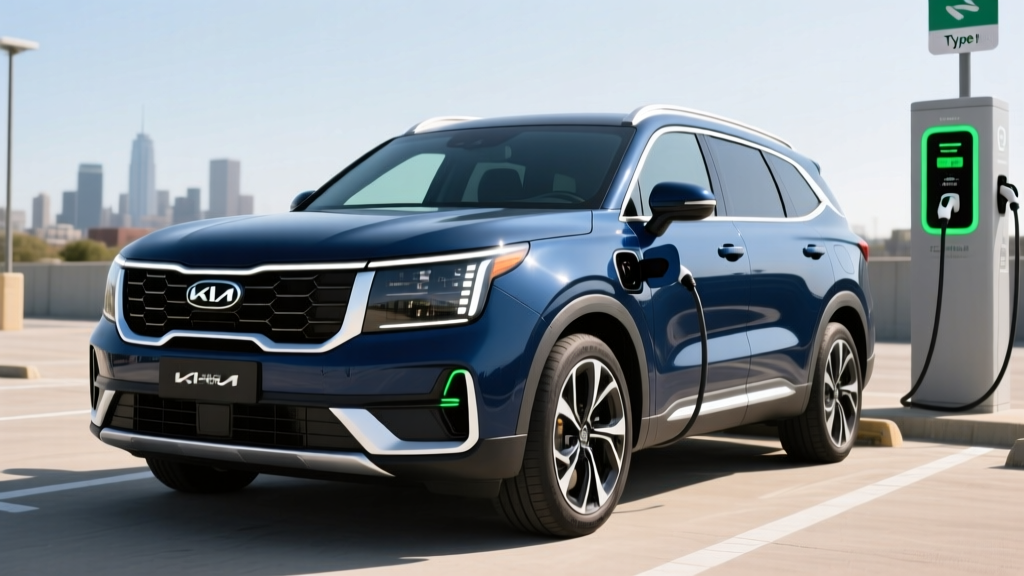
The midsize three-row SUV segment rarely offers genuine electrification choices, and the Kia Sorento Plug-In Hybrid sits in a narrow lane: it's one of the few PHEVs that can carry six passengers, deliver meaningful electric-only commuting range, and still handle a weekend road trip without charger-hopping. For 2026, Kia continues the second-generation Sorento PHEV with incremental pricing adjustments and the same proven 1.6-liter turbocharged powertrain paired with a 13.8 kWh battery pack.
If you're cross-shopping the Sorento PHEV against the Toyota RAV4 Prime, Hyundai Tucson PHEV, or a full EV like the Kia EV9, this guide breaks down every number that matters — EPA MPG, real-world electric range, charging logistics, tax-credit eligibility, and long-term battery reliability.
2026 Kia Sorento PHEV: Quick Verdict
The Sorento Plug-In Hybrid is the right call for families who need three rows, have access to Level 2 home charging, and want to run most weekday commutes on electricity without range-anxiety on longer trips. Its 32-mile EPA electric-only range covers the average American's daily driving, and when the battery depletes, it reverts to a capable 34 MPG combined hybrid. The trade-offs are modest: a premium starting price near $51,400, no DC fast charging, and a third row that's tight for adults.
The conventional Sorento Hybrid (HEV) never plugs in. It uses a small battery recharged by regenerative braking and the engine, delivering about 37 MPG combined. The Sorento Plug-In Hybrid (PHEV) has a larger 13.8 kWh battery you charge from a wall outlet or charger, enabling 32 miles of pure electric driving before the gas engine kicks in. If you can charge at home, the PHEV slashes fuel costs; if you can't, the HEV is the smarter buy.
Specs at a Glance: Sorento Plug-In Hybrid
| Specification | 2026 Kia Sorento PHEV |
|---|---|
| Powertrain | 1.6L turbo I4 + electric motor, AWD |
| Combined Horsepower | 261 hp / 258 lb-ft torque |
| Battery Capacity | 13.8 kWh (lithium-ion polymer) |
| Electric-Only Range (EPA) | 32 miles |
| Total Combined Range | ~440 miles |
| MPGe (electric + gas) | 84 MPGe combined |
| Charge-Depleting MPG (EPA) | 34 MPG combined |
| Level 2 Charge Time (0–100%) | ~3 hours 25 min at 7.2 kW |
| DC Fast Charging | Not available |
| 0–60 mph | ~7.5 seconds |
| Towing Capacity | 2,000 lbs |
| Seating | 6 passengers (2nd-row captain's chairs) |
| Starting MSRP | $51,390 (SX Prestige trim) |
| Battery Warranty | 10 years / 100,000 miles |
Fuel Economy: EPA Numbers vs Real-World MPG
The EPA rates the 2026 Sorento PHEV at 84 MPGe when operating in electric mode (blending battery energy with gasoline equivalence) and 34 MPG combined once the battery is depleted and the vehicle runs as a conventional hybrid. The city/highway breakdown for charge-depleting hybrid mode:
| Driving Mode | City | Highway | Combined |
|---|---|---|---|
| Charge-Depleting (Hybrid Mode) | 34 MPG | 34 MPG | 34 MPG |
| Charge-Sustaining (Battery Full, EV Mode) | 84 MPGe | 74 MPGe | 84 MPGe |
Source: EPA Fuel Economy
Hybrids typically outperform their EPA ratings in stop-and-go city traffic where regenerative braking recaptures energy. In mixed real-world testing, owners report 35–38 MPG in suburban driving once the battery is depleted. Highway cruising at 75+ mph drops efficiency to roughly 29–31 MPG because the turbocharged engine works harder without regen assistance. In cold weather (below 30°F), expect the electric-only range to shrink to 22–26 miles as the battery's usable capacity drops and cabin heating draws energy.
Electric-Only Range and Charging Logistics
The Sorento PHEV's 13.8 kWh battery delivers an EPA-rated 32 miles of electric-only driving. For context, the U.S. Census Bureau pegs the average one-way commute at roughly 16 miles — meaning most owners can complete a round-trip commute without burning a drop of gasoline, provided they charge overnight.
Charging happens exclusively via the J1772 connector (Level 1 and Level 2). The onboard charger maxes out at 7.2 kW, which means:
| Charging Level | Power | 0–100% Time | Practical Notes |
|---|---|---|---|
| Level 1 (120V household outlet) | ~1.4 kW | ~11 hours | Overnight top-up only |
| Level 2 (240V home/public) | 7.2 kW | ~3 hours 25 min | Full charge overnight easily |
| DC Fast Charge | N/A | N/A | Not supported |
The absence of DC fast charging is a deliberate engineering trade-off. Kia's PHEV platform prioritizes cabin and cargo space over a larger battery that would require DC capability. For a vehicle designed to charge at home overnight, this is rarely a practical limitation — but it does mean road-trip "top-ups" at highway chargers aren't possible.
Powertrain Deep Dive: Engine, Motor, and AWD
The Sorento PHEV combines a 1.6-liter turbocharged four-cylinder engine (178 hp / 195 lb-ft) with a 74 kW electric motor (99 hp / 224 lb-ft) integrated into the six-speed automatic transmission. Total system output lands at 261 horsepower and 258 lb-ft of torque, routed through a standard all-wheel-drive system.
The AWD setup is worth noting: unlike some competitors that use a rear-axle electric motor, the Sorento PHEV employs a mechanical AWD system with a driveshaft to the rear wheels. This means the electric motor can't independently power the rear axle in pure EV mode — the system manages torque distribution through the transmission and a center coupling. The result is confident traction in rain and light snow, though the 0–60 mph time of roughly 7.5 seconds trails the Toyota RAV4 Prime's 5.7-second sprint.
Driving modes include EV-only (prioritizes battery), Hybrid (blends gas and electric automatically), and a driver-selectable "Save" mode that reserves battery charge for later — useful if you want electric-only driving in a city center after a highway stretch.
Pricing, Trims, and Tax Credit Eligibility
For 2026, the Sorento Plug-In Hybrid is offered in a single, well-equipped SX Prestige trim starting at $51,390 (including destination). Standard features include a 12.3-inch touchscreen, navigation, wireless Apple CarPlay/Android Auto, heated and ventilated front seats, a panoramic sunroof, Highway Driving Assist 2 (Level 2 ADAS), and a surround-view camera.
That single-trim strategy simplifies the buying decision but also means you can't option down to a lower price point. With dealer markups largely normalized by 2026, expect transaction prices near MSRP in most markets.
Federal Tax Credit: Does the Sorento PHEV Qualify?
Under current IRS §30D clean vehicle credit rules, the Kia Sorento PHEV faces significant headwinds for the full $7,500 federal credit:
- MSRP Cap: SUVs must be under $80,000 — the Sorento PHEV clears this easily at ~$51,400.
- Buyer Income Cap: Modified AGI must not exceed $150,000 (single), $225,000 (head of household), or $300,000 (joint filers).
- Battery Component & Critical Minerals Sourcing: This is where most Kia/Hyundai PHEVs struggle. Battery components must be manufactured or assembled in North America, and critical minerals must be sourced from the U.S. or FTA partners. Kia's PHEV battery supply chain has historically resulted in partial or no credit depending on the model year's sourcing compliance.
- Point-of-Sale Transfer: If eligible, the credit can be transferred to the dealer at purchase for an immediate price reduction rather than waiting for tax filing.
As of early 2026, the Kia Sorento PHEV has typically qualified for $0–$3,750 of the federal credit depending on the specific battery-sourcing compliance of the production batch. Always verify the current credit status on the IRS clean vehicle credit portal and confirm with your dealer before purchase. State incentives (California's CVRP, Colorado's state credit, etc.) may add $1,500–$5,000 on top — check your state's energy office for current programs.
Hybrid vs PHEV vs EV: Which Sorento Fits You?
| Factor | Sorento HEV | Sorento PHEV | Kia EV9 (Full EV) |
|---|---|---|---|
| Starting Price | ~$39,000 | ~$51,390 | ~$54,900 |
| Home Charging Needed? | No | Recommended | Essential |
| Electric-Only Range | 0 mi | 32 mi | 270–304 mi |
| Fuel Cost (Annual)* | ~$1,800 | ~$900–$1,200 | ~$500–$700 |
| Third Row | Yes | Yes | Yes (more spacious) |
| Road-Trip Convenience | Excellent | Excellent | Requires DC charging planning |
| Best For | No home charging access | Home charging + short commute | Fully electric lifestyle |
*Annual fuel cost estimates based on 15,000 miles/year, $3.50/gal gas, $0.14/kWh electricity.
Choose the Sorento PHEV if: You have Level 2 home charging, your daily driving is under 35 miles, you need three rows, and you take 3+ road trips per year where charging stops would be inconvenient.
Choose the Sorento HEV if: You live in an apartment without charging access, you drive more than 50 miles daily, or you want the lowest purchase price.
Choose the EV9 (or another full EV) if: You're ready to eliminate gas entirely, you have reliable home and workplace charging, and most of your trips fall within 250 miles.
Battery Reliability, Warranty, and Replacement Costs
Kia backs the Sorento PHEV's 13.8 kWh lithium-ion polymer battery with a 10-year / 100,000-mile warranty (10 years / 100,000 miles for the hybrid battery system, whichever comes first). This warranty covers defects and capacity loss below a threshold — typically 70% of original capacity, though exact degradation thresholds should be confirmed in your owner's manual.
- Hybrid Battery Warranty: 10 years / 100,000 miles
- Powertrain Warranty: 10 years / 100,000 miles
- Bumper-to-Bumper: 5 years / 60,000 miles
- Expected Battery Lifespan: 12–15 years before significant degradation, based on Hyundai/Kia PHEV fleet data
- Out-of-Warranty Replacement Cost: $6,000–$9,000 (battery pack) + $1,000–$1,500 labor — though few owners reach this point before selling the vehicle
Kia's PHEV battery uses a lithium-ion polymer chemistry with active thermal management (liquid cooling). Real-world degradation data from the Hyundai-Kia PHEV platform shows approximately 8–12% capacity loss over the first 5 years under normal use — meaning a 32-mile EV range might settle around 28–29 miles by year five. Extreme heat climates and frequent 100% charging can accelerate this slightly.
Reliability ratings for the Sorento PHEV have been generally positive. IIHS has historically named the Sorento a Top Safety Pick when equipped with specific headlights, and the powertrain's shared architecture with the Hyundai Tucson PHEV and Hyundai Santa Fe PHEV means it's one of the more road-tested PHEV systems on the market.
Pros, Cons, and Ownership Realities
- 32-mile EV range covers most daily commutes
- Standard AWD with 261 hp — adequate for merging and hills
- Three-row seating in a PHEV (rare in this class)
- 10-year/100k-mile battery and powertrain warranty
- No range anxiety on road trips — gas engine takes over seamlessly
- Quiet, refined ride with good cabin insulation
- $51,390 starting price — ~$12,000 more than the Sorento HEV
- No DC fast charging capability
- Federal tax credit eligibility uncertain (sourcing rules)
- Third row is cramped for adults; best for children
- 0–60 mph of ~7.5s trails the RAV4 Prime significantly
- Cargo space reduced vs. gas-only Sorento due to battery placement
Frequently Asked Questions
How many MPG does the Kia Sorento Plug-In Hybrid get?
The EPA rates it at 84 MPGe combined when using its electric charge, and 34 MPG combined (34 city / 34 highway) once the battery is depleted and it operates as a conventional hybrid. Real-world owners typically see 35–38 MPG in mixed suburban driving and 29–31 MPG at sustained highway speeds above 75 mph.
How far can the Sorento PHEV go on electric only?
The EPA-rated electric-only range is 32 miles. In warm weather with gentle driving, some owners report 34–36 miles. In cold weather (below 30°F) or with aggressive acceleration, expect 22–26 miles before the gas engine engages.
Does the Sorento PHEV qualify for a federal tax credit?
It depends on current IRS battery-sourcing rules under §30D. The Sorento PHEV clears the MSRP cap ($80,000 for SUVs) and qualifies if your income is within limits, but critical-mineral and battery-component sourcing requirements have historically limited the credit to $0–$3,750 for Kia PHEVs. Always check the fueleconomy.gov tax credit lookup and verify with your dealer before purchase.
Is the Sorento PHEV reliable? What does battery replacement cost?
The Hyundai-Kia 1.6L turbo PHEV powertrain has been in production since 2021 across multiple models, giving it a solid reliability track record. The battery is warrantied for 10 years / 100,000 miles. Out-of-warranty replacement, if ever needed, runs approximately $7,000–$10,500 including labor — though degradation data suggests most batteries retain 85%+ capacity at the 10-year mark.
Can I charge the Sorento PHEV at a public DC fast charger?
No. The Sorento PHEV only accepts Level 1 (120V) and Level 2 (240V) AC charging via the J1772 connector. There is no DC fast-charge port. This is standard for most PHEVs — the smaller battery doesn't warrant DC infrastructure.
How does the Sorento PHEV compare to the RAV4 Prime?
The Toyota RAV4 Prime offers 42 miles of EV range, 94 MPGe, a 5.7-second 0–60 time, and more consistent federal tax credit eligibility — but it seats only five and starts around $45,000. The Sorento PHEV wins on three-row seating and interior refinement but trails on EV range, performance, and charging speed. If you need a third row, the Sorento PHEV is one of your only options. If you don't, the RAV4 Prime is the segment benchmark.
Should I get the Sorento PHEV or the Sorento HEV?
If you can install a Level 2 charger at home and your daily driving is under 35 miles, the PHEV will dramatically cut your fuel costs and provide a near-EV daily experience. If you lack home charging, drive long distances daily, or want to save ~$12,000 on purchase price, the conventional HEV (37 MPG combined, no plug needed) is the more practical choice.