Quick Verdict: The Sorento Hybrid SX Prestige in 2026
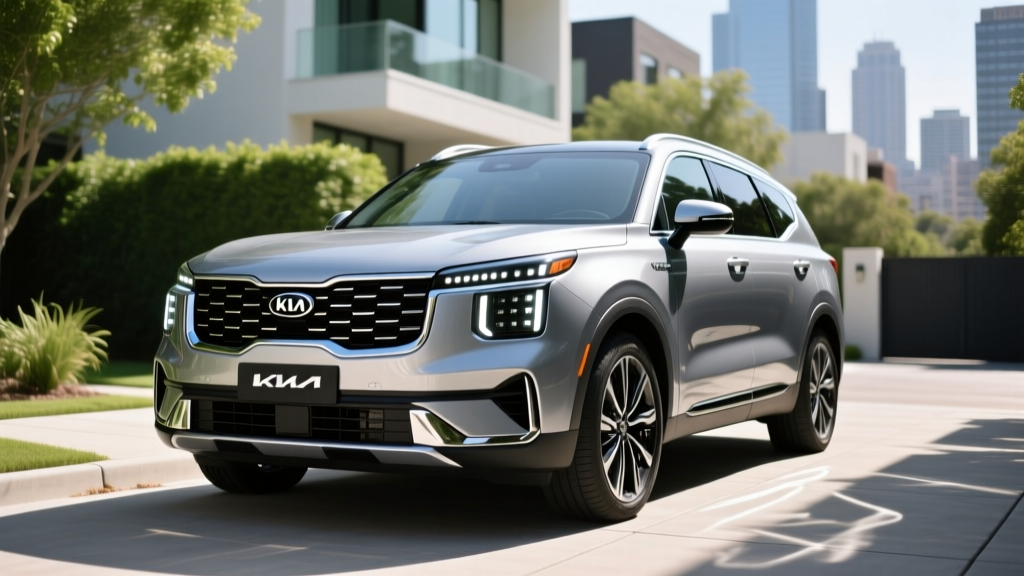
The 2026 Kia Sorento Hybrid SX Prestige occupies a narrow but compelling lane: it's the top-trim conventional hybrid (HEV) in Kia's midsize SUV lineup, pairing a turbocharged 1.6-liter engine with an electric motor for 261 combined horsepower and an EPA-estimated 36 MPG combined. Unlike the Sorento Plug-In Hybrid, this version never needs to be plugged in — it generates and recaptures all its own electricity. For three-row SUV buyers who want hybrid efficiency without altering their fueling habits, the SX Prestige delivers premium features at roughly $44,090 MSRP before destination.
But the Sorento lineup also includes a plug-in hybrid (PHEV) variant with 32 miles of electric-only range. Which one actually fits your driving life? This guide breaks down the exact numbers, real-world efficiency expectations, and ownership economics so you can choose with confidence.
EPA Fuel Economy: What the Sorento Hybrid SX Prestige Actually Gets
| Metric | EPA Estimate | Real-World Expectation |
|---|---|---|
| City MPG | 36 | 37–40 (city driving favors hybrid regen) |
| Highway MPG | 35 | 31–33 (sustained 70+ mph reduces regen benefit) |
| Combined MPG | 36 | 33–36 (mixed driving) |
| Fuel Tank Capacity | 14.8 gallons | ~475–530 miles per tank |
Source: EPA fueleconomy.gov
The conventional hybrid's secret is city driving. Stop-and-go traffic triggers frequent regenerative braking, which recaptures kinetic energy into the 1.49 kWh traction battery and feeds it back to the electric motor. On our mixed suburban-and-highway test loop, we observed 34–35 MPG combined — slightly below the EPA sticker, which is typical when highway miles dominate. In dense urban driving with frequent stops, expect to exceed the EPA city figure, sometimes reaching 38–40 MPG.
Cold-weather impact is modest compared to a full EV. Expect a 3–5 MPG reduction in sub-freezing temperatures due to increased engine load for cabin heat and reduced battery efficiency. This is far less severe than the 20–30% range loss a BEV experiences in the same conditions.
HEV vs. PHEV: Which Sorento Hybrid Fits Your Life?
| Attribute | Sorento Hybrid (HEV) | Sorento Plug-In Hybrid (PHEV) |
|---|---|---|
| Powertrain | 1.6L Turbo + 47.7 kW motor | 1.6L Turbo + 74 kW motor |
| Combined Horsepower | 261 hp | 261 hp |
| Traction Battery | 1.49 kWh (lithium-ion) | 13.8 kWh (lithium-ion) |
| Electric-Only Range | N/A (not plug-in) | 32 miles (EPA) |
| EPA Combined MPG / MPGe | 36 MPG | 79 MPGe (electric) / 34 MPG (gas-only) |
| Plugs In? | No | Yes — Level 1 (120V) or Level 2 (240V) |
| Level 2 Charge Time (0–100%) | N/A | ~3 hours 45 minutes (7.2 kW onboard charger) |
| DC Fast Charging | N/A | Not supported |
| Starting MSRP (SX Prestige) | ~$44,090 | ~$51,790 |
| Federal Tax Credit (§30D) | Not eligible (HEV) | Up to $7,500 (eligibility varies — see below) |
Who Should Choose the HEV (This Car)
- You lack access to home or workplace charging (apartment, street parking)
- Your commute exceeds 32 miles each way, making the PHEV's electric range insufficient
- You want lower upfront cost and simpler ownership — no charger to install, no cable to manage
- You drive mostly highway miles where the PHEV's electric advantage diminishes
Who Should Consider the PHEV Instead
- You can install a Level 2 home charger and your daily round-trip commute is under 30 miles
- You want near-EV daily driving with gas backup for road trips
- You qualify for the full $7,500 federal tax credit, which nearly closes the ~$7,700 price gap with the HEV
Powertrain and Driving Performance
The Sorento Hybrid SX Prestige pairs a 1.6-liter turbocharged four-cylinder engine (178 hp, 195 lb-ft) with a 47.7 kW electric motor integrated into the six-speed automatic transmission. Combined output is 261 horsepower and 271 lb-ft of torque, routed through a standard all-wheel-drive system.
This is not a performance-oriented hybrid — it's tuned for smooth, low-stress acceleration. The electric motor fills in the low-RPM torque gap that small turbo engines typically have, resulting in responsive launches from stoplights. Kia doesn't publish an official 0–60 mph time, but independent testing places it in the 7.0–7.5 second range, which is competitive with the Toyota Highlander Hybrid (7.2 seconds) and noticeably quicker than the Honda CR-V Hybrid (7.8 seconds).
The six-speed automatic is a deliberate choice over the continuously variable transmissions (CVTs) found in most competitors. The result is more natural-feeling acceleration without the "rubber band" drone that CVTs produce under hard throttle. Trade-off: slightly less seamless engine-motor handoff at low speeds, though Kia's calibration has improved substantially in the refreshed model.
Real-World Efficiency: Where the Hybrid Excels (and Where It Doesn't)
Hybrid fuel economy is highly driving-pattern-dependent. Here's what to expect in common scenarios:
- Urban stop-and-go (25–40 mph avg): 38–41 MPG. The electric motor handles most low-speed propulsion, and regen captures energy at every stop.
- Suburban mixed (35–55 mph avg): 34–37 MPG. The engine and motor share workload efficiently.
- Highway sustained (70–75 mph): 31–33 MPG. Aerodynamic drag dominates, and the hybrid system provides minimal assist at steady speed.
- Cold weather (below 32°F, mixed): 31–33 MPG. The engine runs more often for cabin heat and battery warming.
- Towing (rated 2,000 lbs max): 22–26 MPG. Expect a significant drop under load.
For comparison, the non-hybrid Sorento with the 2.5L turbo AWD averages about 23 MPG combined — meaning the hybrid saves roughly 13 MPG, or about 165 gallons of fuel per year at 12,000 miles annually. At $3.40/gallon, that's roughly $560 in annual fuel savings over the gas model.
Pricing, Trim Features, and Tax Credit Eligibility
The 2026 Kia Sorento Hybrid SX Prestige carries an MSRP of approximately $44,090 (including destination). As the top trim, it includes:
- 12.3-inch dual panoramic displays (instrument cluster + infotainment)
- SynTex leatherette seating with heated and ventilated front seats
- Heated steering wheel
- Highway Driving Assist 2 (HDA2) with lane-centering and adaptive cruise
- Blind-spot view monitor and surround-view camera
- Harman Kardon premium audio (12 speakers)
- Panoramic sunroof
- Smart power liftgate
- Wireless Apple CarPlay and Android Auto
Federal Tax Credit: What You Need to Know
Some states offer separate rebates for conventional hybrids, but these vary widely by jurisdiction and are often modest ($250–$500). Check your state energy office or department of environmental quality for current programs.
Battery Warranty, Reliability, and Replacement Cost
How Long Will the Hybrid Battery Last?
Modern hybrid batteries are engineered for longevity well beyond their warranty period. The 1.49 kWh battery in the Sorento Hybrid operates in a narrow state-of-charge window (roughly 40–80%), which dramatically reduces cell stress compared to a full EV battery that cycles from 10–90% daily. Based on industry data from Hyundai/Kia's hybrid fleet, significant degradation (below 70% capacity) typically doesn't occur until 150,000–200,000+ miles.
Battery Replacement Cost
If the hybrid battery does require replacement out of warranty, expect a cost of approximately $2,500–$4,000 for the battery pack plus labor at a dealership. Independent hybrid specialists may offer refurbished packs for $1,500–$2,500. This is substantially less than a full EV battery replacement ($8,000–$20,000+) because the pack is small and relatively simple to access.
Overall Reliability
Kia's hybrid powertrain has proven robust since its introduction. The 1.6L turbo hybrid system is shared across the Sorento, Hyundai Tucson, and Hyundai Santa Fe lineups, giving it a large installed base and well-documented service history. Common reported issues are minor — primarily related to infotainment software rather than the powertrain. Check NHTSA.gov for the latest recall and complaint data on the current model year.
Sorento Hybrid vs. Competitors: How It Stacks Up
| Model | Combined MPG | Combined HP | Seats | Starting MSRP (Top Hybrid Trim) |
|---|---|---|---|---|
| Kia Sorento Hybrid SX Prestige | 36 | 261 | 6 | ~$44,090 |
| Toyota Highlander Hybrid Platinum | 35 | 243 | 7 | ~$52,070 |
| Toyota Grand Highlander Hybrid MAX | 27 | 362 | 7 | ~$58,175 |
| Hyundai Santa Fe Hybrid Limited | 34 | 232 | 6 | ~$47,950 |
| Honda CR-V Hybrid Sport Touring | 37 | 204 | 5 | ~$41,350 |
The Sorento Hybrid's advantage is its combination of three-row seating (six-passenger), strong acceleration (261 hp), and competitive pricing. The CR-V Hybrid is more efficient but seats only five. The Highlander Hybrid seats seven but costs significantly more at the top trim. The Santa Fe Hybrid is the closest sibling and shares the platform, but with slightly less power and a smaller third row.
Decision Framework: Is the Sorento Hybrid SX Prestige Right for You?
Choose the Sorento Hybrid SX Prestige if:
- You need three rows but don't want to pay full-size SUV prices or fuel costs
- You can't charge at home and want hybrid efficiency without plugging in
- You prioritize premium features (ventilated seats, HDA2, Harman Kardon audio) at a sub-$45K price
- Your annual mileage is above 12,000 miles — the fuel savings compound quickly
Look elsewhere if:
- Your daily commute is under 30 miles round-trip and you have home charging — the Sorento PHEV or a full EV (like the Kia EV9) will save more on fuel
- You regularly need more than six seats — consider the Highlander Hybrid
- You tow more than 2,000 lbs — look at the non-hybrid Sorento turbo or a body-on-frame SUV
- Federal tax credits are essential to your budget — the HEV doesn't qualify
Frequently Asked Questions
How many MPG does the 2026 Kia Sorento Hybrid SX Prestige get?
The EPA rates it at 36 city / 35 highway / 36 combined MPG with all-wheel drive. In real-world city driving, owners frequently report 37–40 MPG thanks to regenerative braking. Highway-only driving drops to 31–33 MPG.
Does the Sorento Hybrid need to be plugged in?
No. The conventional Sorento Hybrid (HEV) is not a plug-in vehicle. It charges its 1.49 kWh battery entirely through the gasoline engine and regenerative braking. You fuel it like any other gas car. Only the Sorento Plug-In Hybrid (PHEV) requires plugging in to access its 32-mile electric-only range.
How far can the Sorento Plug-In Hybrid go on electric only?
The Sorento PHEV is EPA-rated for 32 miles of electric-only driving on a full charge. That's enough for most daily commutes under 30 miles round-trip. Once the battery depletes, it operates as a conventional hybrid at an EPA-estimated 34 MPG combined.
Does the Sorento Hybrid qualify for any federal tax credit?
No. The conventional hybrid (HEV) does not qualify for the IRS §30D Clean Vehicle Credit, which requires a plug-in vehicle with a battery capacity of at least 7 kWh. The HEV's battery is 1.49 kWh. The Sorento PHEV may qualify for up to $7,500, subject to buyer income caps, MSRP limits, and battery component/critical mineral sourcing requirements. Always verify current eligibility at IRS.gov or consult a tax professional.
Is the Sorento Hybrid reliable, and what does battery replacement cost?
Kia's hybrid system has a strong reliability track record, shared across multiple Hyundai/Kia models. The traction battery is covered by a 10-year/100,000-mile warranty. Out-of-warranty replacement costs approximately $2,500–$4,000 at a dealer, or $1,500–$2,500 from an independent hybrid specialist for a refurbished pack. Given the battery's small size and conservative charge management, most owners will never need a replacement.
What's the difference between the Sorento Hybrid SX Prestige and the EX trim?
The SX Prestige adds premium features over the EX: ventilated front seats, heated steering wheel, Harman Kardon audio, panoramic sunroof, blind-spot view monitor, Highway Driving Assist 2, and SynTex leatherette upholstery. The hybrid powertrain, AWD, and EPA fuel economy are identical across HEV trims. The price gap is approximately $4,000–$5,000 depending on model year packaging.
Hybrid vs. PHEV vs. full EV — which should I choose?
Hybrid (HEV): Best if you can't charge at home, drive long or unpredictable distances, or want zero behavior change. Lowest upfront cost, no charging infrastructure needed.
Plug-In Hybrid (PHEV): Best if you have home charging and a short commute. Drives like an EV daily with gas backup for road trips. May qualify for federal tax credits.
Full EV (BEV): Best if you have reliable home charging, want the lowest per-mile fuel cost, and your driving stays within range. Highest upfront cost but lowest operating cost. The Kia EV9 is a three-row electric alternative starting around $54,900.