Quick Verdict: The Midsize Hybrid SUV That Punches Above Its Weight
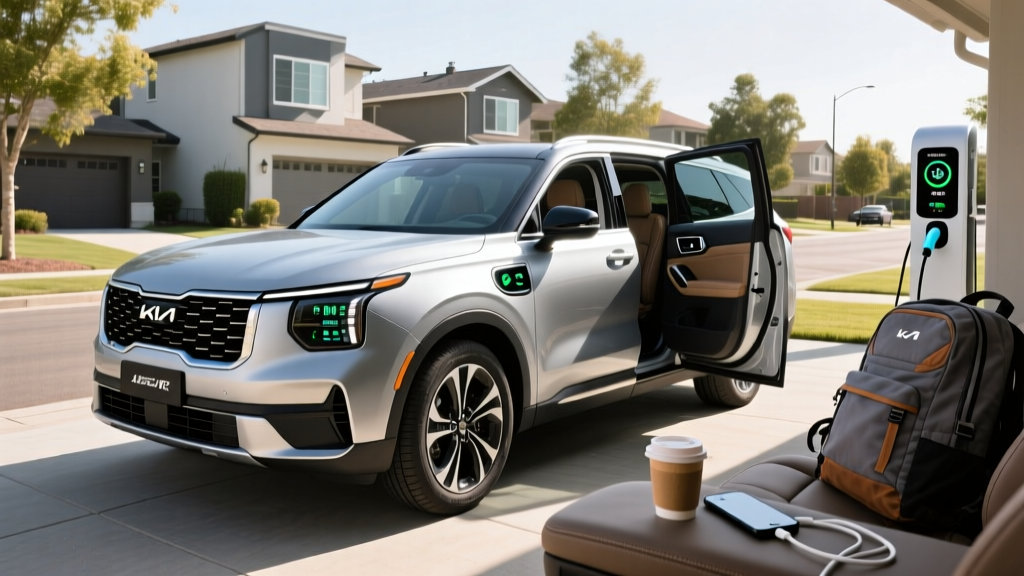
The 2026 Kia Sorento Hybrid EX occupies a specific sweet spot: three-row family SUV practicality, standard all-wheel drive, and fuel economy that undercuts most two-row crossovers — all without requiring a plug. With an EPA-rated 34 MPG combined, a turbocharged 1.6-liter powertrain producing 258 combined horsepower, and a starting MSRP around $39,990, the Sorento Hybrid EX makes a compelling case for buyers who want electrified efficiency without range anxiety or charging infrastructure dependence.
After spending time with the powertrain data, cross-referencing EPA fuel economy figures, and evaluating Kia's warranty structure, here's the bottom line: the Sorento Hybrid EX is the right call for families who drive 12,000–18,000 miles annually, encounter mixed city-highway conditions, and don't have reliable access to home Level 2 charging. If you do have a garage outlet and a short commute, the Sorento PHEV (covered separately) may serve you better.
HEV vs PHEV: Which Sorento Hybrid Is Right for You?
Kia sells the Sorento in two electrified flavors, and confusing them is the single most common mistake buyers make at the dealership. Here's the fundamental difference:
| Feature | Sorento Hybrid (HEV) | Sorento Plug-In Hybrid (PHEV) |
|---|---|---|
| Needs to plug in? | No — self-charging via regen & engine | Yes — for maximum benefit |
| Electric-only range | ~1 mile at low speed | EPA-est. 32 miles |
| Battery capacity | 1.49 kWh (nominal) | 13.8 kWh (usable) |
| Combined horsepower | 258 hp | 261 hp |
| EPA combined fuel economy | 34 MPG (HEV) | 79 MPGe / 34 MPG gas-only |
| Federal tax credit (§30D) | Not eligible | Up to $7,500 (eligibility varies) |
| Starting MSRP (2026) | ~$39,990 (EX) | ~$50,990 (SX Prestige) |
The conventional hybrid (HEV) generates all its electricity internally. The gasoline engine and regenerative braking charge the small battery — you simply fill up at a gas station and drive. The plug-in hybrid (PHEV) has a much larger battery that you charge from a wall outlet or public charger, giving you roughly 32 miles of pure electric driving before the gas engine engages. If your daily round-trip commute is under 30 miles and you can charge at home, the PHEV effectively becomes an EV for daily driving with a gas backup for road trips.
This review focuses on the HEV variant (the Sorento Hybrid EX specifically), since it's the higher-volume seller and the variant most buyers cross-shop against the Toyota Highlander Hybrid and Honda Passport.
Fuel Economy: EPA Ratings vs Real-World MPG
The 2026 Kia Sorento Hybrid EX carries the following EPA ratings, per fueleconomy.gov:
| Driving Condition | EPA Rating | Real-World Expectation |
|---|---|---|
| City | 34 MPG | 35–38 MPG (hybrids excel in stop-and-go) |
| Highway | 34 MPG | 30–33 MPG (less electric assist at sustained speed) |
| Combined | 34 MPG | 32–36 MPG depending on driving mix |
Hybrids behave differently from gas cars in a critical way: they often exceed their EPA city rating in real-world urban driving. The electric motor handles low-speed acceleration (the least efficient operating range for a gas engine), and regenerative braking recaptures energy at every stoplight. Owners who drive predominantly in city and suburban conditions regularly report 36–38 MPG in warm weather.
Highway driving is where the Sorento Hybrid's advantage narrows. At sustained 70–80 MPH speeds, the electric motor provides minimal assist, and you're essentially hauling a 4,400-pound SUV on the turbocharged 1.6L engine alone. Expect 30–33 MPG on long highway trips. Cold weather (below 35°F) further reduces efficiency by roughly 8–12% due to increased engine warm-up time and cabin heating demands.
For context, the Toyota Highlander Hybrid AWD achieves 35 MPG combined — one MPG better on paper, though real-world results between the two are nearly indistinguishable in mixed driving. The non-hybrid Sorento (turbo 2.5T) manages roughly 24 MPG combined, meaning the hybrid saves approximately 100 gallons per year at 15,000 miles driven.
Powertrain and Performance Specs
| Specification | 2026 Kia Sorento Hybrid EX |
|---|---|
| Engine | 1.6L turbocharged 4-cylinder (178 hp / 195 lb-ft) |
| Electric Motor | 47.7 kW (64 hp / 195 lb-ft) |
| Combined System Output | 258 hp / 277 lb-ft torque |
| Transmission | 6-speed automatic (torque-converter, not CVT) |
| Drivetrain | AWD (standard on all Hybrid trims) |
| 0–60 MPH | ~7.5 seconds |
| Towing Capacity | 2,000 lbs |
| Battery Capacity | 1.49 kWh (nominal, lithium-ion) |
| Seating | 6-passenger (2nd-row captain's chairs) or 7 (bench) |
| Cargo (behind 3rd row) | 12.6 cu ft |
| Cargo (3rd row folded) | 39.5 cu ft |
| Cargo (all rows folded) | 72.1 cu ft |
Kia's decision to pair the hybrid system with a traditional 6-speed automatic rather than a CVT deserves attention. Most competitors (Toyota's e-CVT, Honda's direct-drive system) use continuously variable transmissions that can produce a droning sensation under hard acceleration. The Sorento Hybrid shifts through actual gears, delivering a more natural, linear feel when merging onto highways or climbing grades. The trade-off is marginally less seamless low-speed transitions, though Kia's 2026 calibration has smoothed this considerably.
The 258 combined horsepower figure puts the Sorento Hybrid ahead of the Toyota Highlander Hybrid (243 hp) and the Hyundai Santa Fe Hybrid (232 hp). In practice, this means confident highway merging and less strain when climbing mountain passes fully loaded. The electric motor's instant torque (195 lb-ft available from 0 RPM) fills in the low-end gap before the turbo spools, eliminating the lag typical of small-displacement turbocharged engines.
Pricing, Trims, and Tax Credit Eligibility
The 2026 Kia Sorento Hybrid is available in three trims. All include standard AWD:
- S Hybrid: ~$38,490 MSRP — 10.25" infotainment, wireless CarPlay/Android Auto, heated front seats, Smart Power Liftgate
- EX Hybrid: ~$39,990 MSRP — Adds leatherette seating, power-adjustable front passenger, blind-spot view monitor, highway driving assist
- SX Prestige Hybrid: ~$44,990 MSRP — Nappa leather, ventilated front seats, heated steering wheel, head-up display, premium audio
Does the Sorento Hybrid Qualify for a Federal Tax Credit?
No. The conventional Sorento Hybrid (HEV) does not qualify for the IRS §30D Clean Vehicle Credit. That credit applies only to plug-in electric vehicles (BEVs and PHEVs) meeting battery sourcing, MSRP cap, and buyer income requirements. The Sorento PHEV may qualify for up to $7,500, but eligibility depends on current-year critical mineral and battery component sourcing rules, your modified adjusted gross income, and the vehicle's MSRP falling within limits ($80,000 for SUVs). Always verify current rules at irs.gov and consult a tax professional before relying on credit estimates.
Some states and utilities offer rebates for conventional hybrids, though these are less common and typically smaller ($500–$1,500) than EV incentives. Check your state energy office and local utility for current programs.
Battery Warranty, Reliability, and Long-Term Ownership Costs
| Component | Warranty Coverage |
|---|---|
| Hybrid Battery | 10 years / 100,000 miles (15 years / 150,000 miles in CARB states) |
| Hybrid System Components | 10 years / 100,000 miles |
| Powertrain (engine, transmission) | 10 years / 100,000 miles |
| Bumper-to-Bumper | 5 years / 60,000 miles |
| Roadside Assistance | 5 years / 60,000 miles |
The hybrid battery question dominates forums and buyer anxiety, so let's address it directly. The Sorento Hybrid's 1.49 kWh lithium-ion pack is small and operates within a narrow state-of-charge window — the vehicle's battery management system never allows full 100% charge or deep discharge, which dramatically extends cell longevity. This is fundamentally different from a full EV battery that cycles through wide charge ranges daily.
Real-world data from Hyundai-Kia's hybrid platform (shared across the Sorento, Santa Fe, Tucson, and Sportage hybrids) shows minimal measurable degradation in the first 100,000 miles. The 10-year/100,000-mile warranty covers the battery against capacity loss below a defined threshold (typically 70% of original capacity). In CARB-adopting states (California, New York, Oregon, Washington, and others), that extends to 15 years / 150,000 miles.
If the hybrid battery does require replacement outside warranty, current dealer pricing falls between $2,500 and $4,000 including labor. Independent hybrid specialists often perform the same service for $1,800–$2,800. For context, this is substantially less than EV battery replacement ($8,000–$20,000+) because the pack is small and accessible.
Kia's overall reliability ratings have improved significantly since the 2020s. According to IIHS, the Sorento earns top marks in crashworthiness testing, and the hybrid variant carries the same structural safety ratings as the conventional model.
Who Should Buy the Sorento Hybrid EX — and Who Shouldn't?
Choose the Sorento Hybrid EX if:
- You need three rows but don't want to pay minivan or large-SUV prices
- Your driving is a mix of city commuting and highway trips (the hybrid excels here)
- You lack home charging access (apartment, street parking, no garage outlet)
- You want AWD standard without the fuel-economy penalty of a conventional AWD SUV
- You plan to own the vehicle 7–10 years (the warranty covers the hybrid system for the full ownership window)
Look elsewhere if:
- Your commute is under 30 miles round-trip and you can install a Level 2 charger — the Sorento PHEV or a full BEV (EV6, Ioniq 5) will save more on fuel
- You regularly tow more than 2,000 lbs — the hybrid's towing capacity is limited; consider the turbo 2.5T Sorento or a body-on-frame SUV
- You need maximum cargo volume — with all rows up, 12.6 cu ft is tight for a three-row SUV; the Toyota Sienna hybrid offers more
- You want the absolute highest MPG in a three-row — the Toyota Highlander Hybrid edges it by 1 MPG combined
Pros and Cons at a Glance
Pros
- 34 MPG combined is excellent for a 4,400-lb AWD three-row SUV
- 258 hp provides genuinely confident acceleration — no sluggish hybrid feel
- 6-speed automatic avoids the CVT drone common in competitors
- Industry-leading 10yr/100k hybrid battery warranty (15yr in CARB states)
- Standard AWD across all trims — no FWD base model to avoid
- Strong standard safety tech: forward collision avoidance, lane keeping, blind-spot monitoring
Cons
- Third row is best suited for children — adults will find it cramped on longer trips
- 12.6 cu ft cargo with all seats up is less than Highlander Hybrid or Sienna
- 2,000-lb towing limit may disqualify it for boat or camper trailers
- No federal tax credit for the HEV variant (PHEV may qualify)
- Highway MPG drops noticeably above 75 MPH — less efficient than city driving
- Ride quality over sharp bumps is firmer than some competitors
Frequently Asked Questions
How many MPG does the 2026 Kia Sorento Hybrid EX get in real driving?
The EPA rates it at 34 MPG city / 34 highway / 34 combined. In real-world ownership, city-dominant drivers often see 35–38 MPG thanks to electric motor assist at low speeds and regenerative braking. Highway-dominant drivers (70+ MPH sustained) should expect 30–33 MPG. Cold weather reduces these figures by roughly 8–12%.
Does the Sorento Hybrid need to be plugged in?
No. The conventional Sorento Hybrid (HEV) is a self-charging system. The gasoline engine and regenerative braking maintain the small battery. You simply fill up at a gas station as you would with any other vehicle. Only the Sorento PHEV variant benefits from plugging in.
How far can the Sorento Hybrid drive on electric power alone?
Approximately 1 mile at very low speeds (under 25 MPH) in EV mode. This is enough for creeping through a parking lot or a quiet neighborhood, but the HEV is not designed for meaningful electric-only driving. For 30+ miles of electric range, you need the PHEV variant.
Is the Sorento Hybrid reliable, and what does a battery replacement cost?
Kia's hybrid powertrain has proven reliable since its 2022 introduction, with the 1.6T hybrid system shared across multiple models. The hybrid battery is warrantied for 10 years / 100,000 miles (15 years / 150,000 miles in CARB states). Out-of-warranty replacement costs $2,500–$4,000 at a dealer or $1,800–$2,800 at an independent hybrid specialist — far less than a full EV battery swap.
Does the Sorento Hybrid EX qualify for any federal tax credit?
No. The IRS §30D Clean Vehicle Credit applies only to plug-in vehicles (BEVs and PHEVs). The conventional Sorento Hybrid does not qualify. The Sorento PHEV may qualify for up to $7,500, depending on battery sourcing requirements, your income, and MSRP caps. Check irs.gov for current-year rules.
How does the Sorento Hybrid compare to the Toyota Highlander Hybrid?
The Highlander Hybrid gets 35 MPG combined (1 MPG more), offers slightly more third-row and cargo space, and has Toyota's long-standing hybrid reputation. The Sorento Hybrid counters with more horsepower (258 vs 243), a more engaging 6-speed automatic (vs Toyota's e-CVT), a lower starting price by roughly $2,000, and a longer hybrid battery warranty (10yr vs 10yr, but Kia's CARB-state coverage extends to 15 years). Both are strong choices — the decision often comes down to brand preference and dealer availability.
What's the total cost of ownership over 5 years?
At 15,000 miles/year and $3.40/gallon regular fuel, the Sorento Hybrid EX consumes roughly 441 gallons annually ($1,499/year in fuel). Over 5 years, fuel costs approximately $7,495. The non-hybrid Sorento 2.5T AWD (24 MPG combined) would consume 625 gallons annually ($2,125/year), totaling $10,625 over 5 years — a difference of roughly $3,130 in fuel savings with the hybrid. Factor in the hybrid's slightly higher purchase price (~$2,500 more than the gas S X-Line) and the payback period is approximately 4 years at current fuel prices.