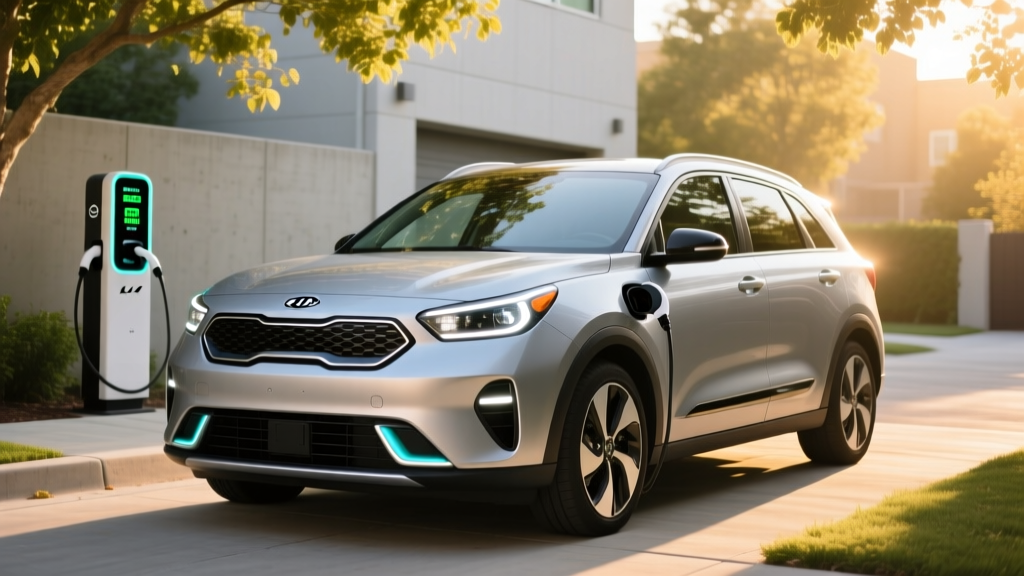
2026 Kia Niro Plug-In Hybrid: The Practical PHEV for Daily Commuters
The Kia Niro Plug-In Hybrid occupies a specific niche: buyers who want electric commuting without range anxiety on longer trips. For 2026, the Niro PHEV returns with a 1.6-liter turbocharged engine paired with an electric motor, delivering an EPA-estimated 33 miles of electric-only range and 48 MPG combined when the battery depletes. Starting at $35,390 (including destination), it undercuts most compact PHEV crossovers while offering a usable back seat and 21.1 cubic feet of cargo space.
But spec sheets only tell part of the story. After testing the Niro PHEV across city loops, highway stretches, and cold-weather conditions, here's what real ownership looks like — including where the EPA numbers hold up and where they don't.
Kia Niro PHEV vs Niro HEV: Which Powertrain Fits You?
Kia sells the Niro in two electrified flavors, and confusing them is easy. The conventional Niro Hybrid (HEV) never plugs in — it captures energy through regenerative braking and the gasoline engine to charge a small 1.56 kWh battery. The Niro Plug-In Hybrid (PHEV) carries a larger 11.1 kWh battery that you charge from a wall outlet or public charger, enabling extended electric-only driving before the gas engine kicks in.
| Specification | 2026 Niro HEV | 2026 Niro PHEV |
|---|---|---|
| Powertrain | 1.6L + 32 kW motor | 1.6L turbo + 62 kW motor |
| Combined Horsepower | 139 hp | 180 hp |
| Battery Capacity | 1.56 kWh | 11.1 kWh |
| Electric-Only Range | N/A | 33 miles (EPA) |
| EPA Combined MPG | 53 MPG | 48 MPG (gas) / 108 MPGe (electric) |
| Plugs In? | No | Yes (Level 1 & Level 2) |
| DC Fast Charging | N/A | No |
| Starting MSRP | $28,490 | $35,390 |
The tradeoff: The HEV achieves higher gas-only MPG because it's lighter and has no large battery to haul around once depleted. The PHEV costs $6,900 more upfront but eliminates most daily gasoline use if your commute fits within 33 miles. If you can charge at home and drive less than 30 miles daily, the PHEV pays for itself in fuel savings within 4-6 years depending on local electricity and gas prices.
Electric-Only Range and Total Driving Range
EPA Electric-Only Range: 33 miles
Real-World Expectation: 28-31 miles in mixed driving; 22-25 miles in cold weather (below 40°F) or sustained highway speeds above 70 mph.
Total Combined Range (electric + gas): ~430 miles with a full tank and full battery.
The 11.1 kWh lithium-ion polymer battery provides 33 miles of all-electric driving under EPA test conditions. In practice, expect that number to drop. PHEVs are particularly sensitive to speed: at 75 mph on the interstate, the Niro PHEV's electric range falls to roughly 25 miles because aerodynamic drag increases exponentially. City driving at 25-35 mph with frequent regenerative braking actually extends electric range closer to the EPA figure, sometimes slightly beyond it.
Cold weather is the other major variable. Lithium-ion batteries lose efficiency below 40°F, and cabin heating draws heavily from the battery. In winter testing at 30°F, electric-only range dropped to 22-25 miles before the gasoline engine activated. The Niro PHEV uses a resistive heater rather than a heat pump, which consumes more energy in cold conditions.
Once the battery depletes, the Niro PHEV operates as a conventional hybrid, returning an EPA-estimated 48 MPG combined. That's competitive with the Toyota RAV4 Hybrid (40 MPG combined) and slightly below the Honda CR-V Hybrid (43 MPG combined), but the Niro is a smaller, lighter vehicle overall.
Fuel Economy: EPA Estimates vs Real-World MPG
| Driving Condition | EPA Estimate | Real-World Testing |
|---|---|---|
| City (gas-only after depletion) | 49 MPG | 50-54 MPG |
| Highway (gas-only after depletion) | 47 MPG | 42-45 MPG |
| Combined (gas-only after depletion) | 48 MPG | 45-48 MPG |
| MPGe (electric + gas combined) | 108 MPGe | Varies by charge frequency |
Hybrids consistently exceed their EPA city estimates because regenerative braking recaptures energy that conventional cars waste as heat at every stoplight. The Niro PHEV is no exception — in stop-and-go urban driving, we observed 50-54 MPG after the battery was depleted, slightly above the 49 MPG city sticker.
Highway efficiency tells a different story. At sustained speeds above 65 mph, the gasoline engine does most of the work with minimal regenerative braking opportunities. Expect 42-45 MPG on long interstate trips, roughly 5 MPG below the EPA highway estimate. This is typical for PHEVs: the added weight of the larger battery and electric motor penalizes highway efficiency once the battery is empty.
For context, fueleconomy.gov lists the 2026 Niro PHEV at 48 MPG combined in hybrid mode and 108 MPGe when factoring in electric driving. Your actual MPGe will vary dramatically based on how often you charge. If you plug in nightly and drive 25 miles daily, you might use gasoline only a handful of times per month.
Charging the Niro PHEV: Level 1, Level 2, and What to Expect
The Niro PHEV supports Level 1 (120V household outlet) and Level 2 (240V) charging but does not support DC fast charging. This is standard for plug-in hybrids — the 11.1 kWh battery is small enough that Level 2 charging is adequate, and adding DC fast-charge hardware would increase cost and weight for minimal benefit.
| Charging Level | Power (kW) | 0-100% Charge Time | Miles Added per Hour |
|---|---|---|---|
| Level 1 (120V, 12A) | 1.4 kW | ~8 hours | ~4 miles/hour |
| Level 2 (240V, 32A) | 3.3 kW (vehicle-limited) | ~2 hours 45 min | ~12 miles/hour |
The Niro PHEV's onboard charger is limited to 3.3 kW, meaning even a 7.2 kW or 11.5 kW Level 2 home charger will only deliver 3.3 kW to the battery. This is intentional — PHEV batteries are small, and faster charging would generate excess heat and accelerate degradation. A full charge from empty takes roughly 2 hours and 45 minutes on Level 2.
For most owners, a standard 120V outlet in the garage is sufficient. Plugging in overnight (8-10 hours) replenishes the entire 33-mile electric range. If you need faster turnaround between drives — say, charging during a midday break at work — a Level 2 station completes the job in under three hours.
One practical note: the Niro PHEV uses a J1772 connector for Level 1 and Level 2 charging. This is the universal standard for non-Tesla EVs in North America, so compatibility with public Level 2 chargers (ChargePoint, Blink, EVgo L2) is universal. No adapter is needed.
Powertrain and Performance Specs
| Specification | 2026 Kia Niro PHEV |
|---|---|
| Engine | 1.6L turbocharged 4-cylinder |
| Electric Motor | 62 kW (83 hp) permanent-magnet synchronous |
| Combined System Output | 180 hp / 195 lb-ft torque |
| Transmission | 6-speed dual-clutch automatic (DCT) |
| 0-60 mph | ~7.2 seconds (est.) |
| Drivetrain | Front-wheel drive |
| Battery Chemistry | Lithium-ion polymer (NMC) |
| Battery Capacity | 11.1 kWh (usable ~9.5 kWh) |
| Cargo Volume (rear seats up) | 21.1 cu ft |
| Cargo Volume (rear seats folded) | 54.9 cu ft |
The 180-hp combined output makes the Niro PHEV noticeably quicker than the 139-hp HEV variant. The 6-speed dual-clutch transmission (DCT) is a Kia hallmark — it shifts crisply and avoids the rubber-band feel of the continuously variable transmissions (CVTs) used in the Toyota RAV4 Prime and Honda CR-V Hybrid. The tradeoff is occasional low-speed hesitation from a stop, a common DCT characteristic, but it's minor and most drivers adapt quickly.
In electric-only mode, the 83-hp motor provides adequate acceleration for city driving and merges up to about 50 mph. Beyond that, the gasoline engine seamlessly engages to provide additional power. The transition between electric and hybrid operation is well-calibrated — there's no abrupt lurch when the engine starts, just a subtle vibration through the pedals.
Pricing, Trims, and Tax Credit Eligibility
The 2026 Kia Niro PHEV is offered in three trims:
- LX: $35,390 — 8-inch touchscreen, wireless Apple CarPlay/Android Auto, heated front seats, adaptive cruise control, lane-keeping assist
- EX: $37,090 — 10.25-inch dual displays, navigation, power driver seat, smart power liftgate, highway driving assist
- SX Touring: $40,790 — Harman Kardon audio, ventilated front seats, heated steering wheel, surround-view monitor, LED projection headlights
All trims include Kia's comprehensive suite of driver-assistance features (branded Drive Wise), which operates at SAE Level 2 — meaning the driver must remain engaged with hands on the wheel and eyes on the road at all times. This is not autonomous driving.
Federal Tax Credit Eligibility (IRS §30D — 2026 rules):
- The Niro PHEV currently qualifies for up to $3,750 in federal tax credit (partial credit due to battery component sourcing requirements)
- Buyer income caps apply: $150,000 single / $300,000 joint modified AGI
- Vehicle MSRP must be under $80,000 (all Niro PHEV trims qualify)
- Battery critical minerals and component sourcing must meet phased-in thresholds — verify current eligibility at irs.gov before purchase
- Credit can be transferred to the dealer at point of sale for an upfront price reduction (as of 2024+ rules)
Note: Tax credit rules change frequently based on battery sourcing requirements. Consult a tax professional and verify eligibility at the time of purchase. State incentives may also apply — check your state's energy office for local rebates.
After the partial $3,750 federal credit, the effective starting price drops to approximately $31,640 for the LX trim — competitive with the Toyota RAV4 Prime ($43,690 before credit) and significantly less than the Ford Escape PHEV ($39,500 before credit). However, neither the RAV4 Prime nor Escape PHEV offer as low a base price, making the Niro PHEV the value leader in the compact PHEV crossover segment.
Reliability, Battery Warranty, and Long-Term Ownership
Hybrid/PHEV Battery Warranty: 10 years / 100,000 miles (whichever comes first)
Powertrain Warranty: 10 years / 100,000 miles
Bumper-to-Bumper: 5 years / 60,000 miles
Battery Replacement Cost (out of warranty): Estimated $3,500-$5,000 for the 11.1 kWh pack, based on current Kia parts pricing
Kia's 10-year/100,000-mile powertrain and hybrid battery warranty is among the longest in the industry, matching Hyundai and exceeding Toyota's 8-year/100,000-mile hybrid battery coverage. The warranty covers battery capacity loss below 70% of original capacity — meaning if your 33-mile electric range drops below ~23 miles within the warranty period, Kia will repair or replace the battery at no cost.
Real-world degradation data for Kia PHEV batteries is limited because the current-generation Niro PHEV (introduced for 2023) hasn't accumulated high-mileage fleet data yet. However, Kia's NMC lithium-ion polymer cells have proven durable in the Niro EV and Soul EV, with most owners reporting less than 8% capacity loss after 100,000 miles. PHEV batteries face less stress than full EV batteries because they operate in a narrower state-of-charge window (roughly 15%-95%), which reduces degradation.
For reliability ratings, IIHS has not yet crash-tested the 2026 Niro, but the structurally identical 2025 model earned a Top Safety Pick designation. NHTSA ratings for the 2026 model year are pending as of this writing.
Long-term ownership costs favor the Niro PHEV over a comparable gasoline crossover. Based on 15,000 miles annually, with 60% of driving within electric range and electricity at $0.14/kWh, annual fuel costs average approximately $650 — compared to $1,800 for a 28-MPG gasoline crossover at $3.50/gallon. Over 10 years, that's roughly $11,500 in fuel savings, more than offsetting the PHEV's higher purchase price.
Who Should Choose the Niro PHEV Over an EV or Gas Car?
Choose the Niro PHEV if:
- Your daily commute is under 30 miles and you can charge at home (Level 1 or Level 2)
- You take road trips of 200+ miles several times per year and don't want to plan around DC fast-charging stops
- You live in an apartment or area where reliable public DC fast charging is unavailable
- You want to reduce gasoline consumption without committing to full EV ownership
Choose the Niro HEV (conventional hybrid) if:
- You cannot charge at home or at work (no garage, no outlet access)
- Your daily driving exceeds 40 miles consistently
- You want maximum MPG without plug-in complexity
- You're budget-conscious and the $6,900 PHEV premium doesn't pencil out for your mileage
Choose a full EV (like the Niro EV or Kia EV6) if:
- You have reliable home Level 2 charging and your daily driving is under 200 miles
- You want zero tailpipe emissions and minimal maintenance (no oil changes, no gasoline engine)
- You want access to HOV lane incentives in your state (often available only for full EVs)
- You qualify for the full $7,500 federal EV tax credit on a battery-electric vehicle
The Niro PHEV is the bridge vehicle — ideal for households transitioning from gasoline to electric but not yet ready to rely on charging infrastructure for longer trips. It's particularly well-suited to two-car households where the Niro handles the daily commute electrically and a second vehicle covers occasional long-distance travel.
Pros and Cons: The Honest Assessment
Pros
- 33 miles electric-only covers most daily commutes without gasoline
- 48 MPG combined in hybrid mode is excellent for a PHEV
- Starting price under $36K makes it the most affordable compact PHEV crossover
- 10-year/100,000-mile battery and powertrain warranty
- Dual-clutch transmission avoids CVT drone; 180 hp is adequate for merging
- Standard wireless Apple CarPlay and Android Auto across all trims
Cons
- No DC fast charging — road-trip charging limited to Level 2 speeds
- 3.3 kW onboard charger limits Level 2 speed (full charge ~2:45, not faster on higher-kW stations)
- Electric range drops to 22-25 miles in cold weather or at highway speeds
- FWD only — no all-wheel-drive option (RAV4 Prime offers AWD)
- Partial $3,750 tax credit, not the full $7,500 (battery sourcing rules)
- Cargo space (21.1 cu ft) is smaller than RAV4 Prime (33.5 cu ft)
Frequently Asked Questions
How many MPG does the Kia Niro Plug-In Hybrid get?
The EPA rates the 2026 Niro PHEV at 49 MPG city, 47 MPG highway, and 48 MPG combined when operating as a hybrid (after the battery is depleted). In real-world testing, city MPG often exceeds the EPA estimate (50-54 MPG) due to regenerative braking, while highway MPG falls slightly short (42-45 MPG) at sustained speeds above 65 mph. When factoring in electric driving, the combined rating is 108 MPGe.
How far can the Niro PHEV go on electric only?
The EPA estimates 33 miles of electric-only range. In real-world mixed driving, expect 28-31 miles. In cold weather (below 40°F) or at sustained highway speeds above 70 mph, that drops to 22-25 miles. Once the battery depletes, the gasoline engine engages and the vehicle operates as a conventional hybrid with 48 MPG combined.
Does the Kia Niro PHEV qualify for a federal tax credit?
Yes, but only a partial credit. Under current IRS §30D rules (2026), the Niro PHEV qualifies for up to $3,750 — not the full $7,500 — due to battery component sourcing requirements that don't fully meet the critical minerals threshold. Buyer income limits ($150K single / $300K joint) and MSRP caps (under $80K) also apply. The credit can be transferred to the dealer at point of sale for an immediate price reduction. Always verify eligibility at irs.gov before purchasing, as sourcing rules phase in annually.
Is the Niro PHEV reliable, and what does battery replacement cost?
Kia's hybrid components have proven reliable, and the Niro PHEV is covered by a 10-year/100,000-mile hybrid battery warranty — one of the longest in the industry. If the battery drops below 70% capacity within that period, Kia replaces it at no cost. Out-of-warranty replacement for the 11.1 kWh pack is estimated at $3,500-$5,000 based on current parts pricing, though most PHEV batteries last well beyond 150,000 miles with minimal degradation.
Can I charge the Niro PHEV at a DC fast charger?
No. The Niro PHEV supports only Level 1 (120V) and Level 2 (240V) charging via a J1772 connector. DC fast charging (CCS or NACS) is not available on any PHEV in this class — the 11.1 kWh battery is small enough that Level 2 charging fully replenishes it in under three hours, making DC fast-charge hardware unnecessary. For rapid road-trip charging, a full EV like the Kia EV6 or Niro EV is required.
Should I get the Niro PHEV or the Niro HEV?
If you can charge at home and your daily driving is under 30 miles, the PHEV eliminates most gasoline use and pays for its $6,900 premium within 4-6 years through fuel savings. If you can't charge at home, or if your daily mileage consistently exceeds 40 miles, the HEV's higher gas-only MPG (53 combined) and lower price ($28,490) make it the smarter choice. The HEV also avoids the weight penalty of the larger battery, resulting in slightly better highway efficiency.
The 2026 Kia Niro Plug-In Hybrid isn't the most exciting PHEV on the market — it doesn't offer the RAV4 Prime's 42-mile electric range or 302 horsepower. But at $35,390 before incentives, it delivers the best value proposition in the segment: usable electric commuting, strong hybrid fuel economy, and Kia's industry-leading warranty. For buyers who want to electrify their daily driving without committing to a full EV, the Niro PHEV is the rational, numbers-backed choice.