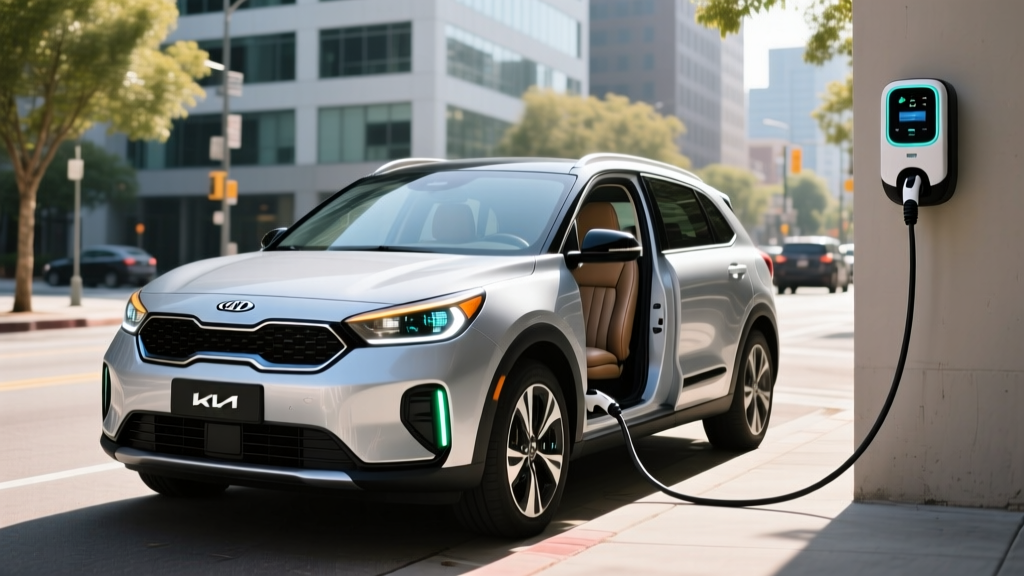
The Kia Niro has carved out a specific niche since its redesign: it's a practical compact crossover that prioritizes efficiency over performance theatrics. For 2026, the Niro continues to offer both a conventional hybrid (HEV) and a plug-in hybrid (PHEV) variant, making it one of the few vehicles in its class to give buyers a genuine choice between two electrification strategies. This Kia Niro Hybrid review breaks down the real-world numbers—MPG, electric range, pricing, and long-term ownership costs—so you can decide which version earns a spot in your driveway.
HEV vs PHEV: Which Niro Are You Actually Looking At?
Before we get into the specs, it's critical to understand the fundamental difference between the two Niro models, because they serve different use cases entirely.
Kia Niro HEV (Conventional Hybrid)
- No plug required. The battery recharges through regenerative braking and the gasoline engine.
- Best for: Drivers without reliable home charging access, apartment dwellers, or those who want simplicity.
- How it works: A small lithium-ion battery assists a 1.6L engine. The electric motor handles low-speed driving and supplements acceleration; the gas engine takes over at higher loads.
Kia Niro PHEV (Plug-In Hybrid)
- Plugs in like an EV. A larger 11.1 kWh battery delivers genuine electric-only driving before the gas engine kicks in.
- Best for: Drivers with home Level 2 charging who commute under 33 miles daily and want EV-like operation most days.
- How it works: Operates as a pure EV until the battery depletes, then seamlessly transitions to hybrid mode with the 1.6L engine.
Neither version requires you to change your driving habits. The HEV simply sips less fuel than a conventional gas car. The PHEV lets you skip the gas station entirely on short commutes—if you plug it in nightly.
Fuel Economy: EPA Numbers and Real-World MPG
The headline number for any hybrid buyer is fuel economy. Here's how the 2026 Niro lineup stacks up according to EPA data at fueleconomy.gov:
| Model | City MPG | Highway MPG | Combined MPG | MPGe (PHEV EV Mode) |
|---|---|---|---|---|
| Niro HEV (LX/EX) | 53 | 54 | 53 | N/A |
| Niro HEV (Touring — larger wheels) | 49 | 52 | 50 | N/A |
| Niro PHEV (charge-depleting) | — | — | — | 108 MPGe |
| Niro PHEV (charge-sustaining / hybrid mode) | 49 | 52 | 50 | N/A |
Real-World MPG: What to Actually Expect
Hybrids consistently outperform their EPA city ratings in stop-and-go traffic because regenerative braking recovers energy that a gas car wastes as heat. In mixed suburban driving, owners regularly report 55-58 MPG in the HEV during warm months. Highway driving at 75+ mph will drop that to roughly 46-49 MPG, since the electric motor contributes less at sustained high speeds and aerodynamic drag dominates.
Cold weather (below 35°F) typically reduces hybrid fuel economy by 8-15% due to increased engine idling for cabin heat, thicker fluids, and reduced battery efficiency. Expect winter combined figures closer to 45-48 MPG in the HEV.
The PHEV's 50 MPG hybrid-mode figure applies only after the battery is depleted. If your daily round-trip commute is under 33 miles and you charge nightly, you may use gasoline only on longer weekend trips.
PHEV Electric Range, Battery, and Charging
The Niro PHEV carries an 11.1 kWh lithium-ion battery pack, of which approximately 8.9 kWh is usable (the rest is a protective buffer to prevent deep discharge and extend longevity).
| Specification | Niro HEV | Niro PHEV |
|---|---|---|
| Battery Capacity | 1.56 kWh | 11.1 kWh (8.9 kWh usable) |
| EPA Electric-Only Range | N/A | 33 miles |
| Total Combined Range | ~550 miles | ~430 miles (EV + gas) |
| Level 1 Charging (120V) | N/A | ~10.5 hours (0-100%) |
| Level 2 Charging (240V, 3.3 kW) | N/A | ~2 hr 45 min (0-100%) |
| DC Fast Charging | N/A | Not supported |
| Charge Port | N/A | J1772 (Level 2) |
Critical note: The Niro PHEV does not support DC fast charging. This is typical for PHEVs—the battery is small enough that Level 2 charging fills it quickly, and the added cost/weight of DC hardware isn't justified. A full charge on a 240V Level 2 home charger takes under three hours, which is easily manageable overnight.
If you only have access to a standard 120V outlet (Level 1), expect roughly 4-5 miles of range per hour of charging. That's sufficient for overnight replenishment of the 33-mile electric range, but a Level 2 home charger (typically $500-$1,200 installed for PHEV-appropriate 16A units) is strongly recommended for daily PHEV use.
Powertrain and Performance Specs
Both Niro variants share Kia's 1.6-liter GDI four-cylinder engine paired with an electric motor, but output differs slightly.
| Spec | Niro HEV | Niro PHEV |
|---|---|---|
| Engine | 1.6L GDI 4-cyl | 1.6L GDI 4-cyl |
| Engine HP | 104 hp | 104 hp |
| Electric Motor HP | 43 hp (32 kW) | 83 hp (62 kW) |
| Combined System HP | 139 hp | 180 hp |
| Combined Torque | 195 lb-ft | 195 lb-ft |
| Transmission | 6-speed DCT | 6-speed DCT |
| Drivetrain | FWD | FWD |
| 0-60 mph (est.) | ~9.5 sec | ~7.2 sec |
The PHEV's stronger electric motor gives it a noticeable acceleration advantage—you feel it immediately at stoplights and during highway merges. Neither Niro is a performance vehicle, but the PHEV's 180 combined horsepower makes it genuinely adequate in situations where the HEV feels leisurely.
Both use a 6-speed dual-clutch transmission rather than a CVT. This means shifts feel more like a conventional automatic, which most drivers prefer, though you may notice the occasional low-speed hesitation common to DCTs.
Pricing, Trims, and Tax Credit Eligibility
Here's the 2026 Kia Niro pricing structure by trim (MSRP, destination included):
| Trim | HEV MSRP | PHEV MSRP |
|---|---|---|
| LX | $28,490 | — |
| EX | $31,090 | $35,890 |
| SX Touring | $35,490 | $39,690 |
Federal Tax Credit: What Applies?
This is where the HEV and PHEV diverge sharply:
- Niro HEV: Does not qualify for the federal §30D clean vehicle credit. Conventional hybrids are ineligible—they lack the minimum battery capacity and plug-in capability the IRS requires.
- Niro PHEV: May qualify for up to $3,750 under the §30D credit, contingent on battery component and critical mineral sourcing requirements that phase in through 2026. The full $7,500 credit requires meeting both sourcing thresholds; most PHEVs with smaller batteries and partial sourcing compliance land at the $3,750 tier.
- Income caps apply: Modified adjusted gross income must not exceed $150,000 (single), $225,000 (head of household), or $300,000 (joint). See the IRS §30D guidance for current-year rules.
- MSRP cap: The Niro PHEV is classified as a sedan/compact, so the $55,000 MSRP cap applies. All trims clear this easily.
- Point-of-sale transfer: As of 2024, eligible buyers can transfer the credit to the dealer at purchase, reducing the purchase price directly rather than waiting for a tax refund. This option remains available in 2026.
State incentives vary. Several states (California, Colorado, Massachusetts, among others) offer additional rebates for PHEVs—typically $1,000-$2,500. Check your state energy office or DMV for current programs. The HEV is unlikely to qualify for state EV incentives.
Battery Warranty, Reliability, and Replacement Cost
Kia Hybrid/PHEV Battery Warranty
Hybrid battery: 10 years / 100,000 miles (whichever comes first)
Hybrid system components: 10 years / 100,000 miles
Basic vehicle warranty: 5 years / 60,000 miles
Powertrain warranty: 10 years / 100,000 miles
Note: In states that follow California Air Resources Board (CARB) emissions warranty rules (CA, CT, ME, MA, NJ, NY, OR, RI, VT, WA), hybrid battery coverage may extend to 10 years / 150,000 miles.
Kia's hybrid battery warranty is among the strongest in the industry. The lithium-ion packs in both the HEV and PHEV are designed to retain at least 70% of original capacity over the warranty period. In practice, hybrid batteries degrade slowly—the HEV's 1.56 kWh pack cycles shallowly (it never fully depletes), which dramatically extends cell life. The PHEV's larger pack sees deeper cycles but benefits from active thermal management.
Reliability Track Record
The second-generation Niro (introduced for 2023) has shown solid reliability in early data. The 1.6L GDI engine and 6-speed DCT are proven components shared across Hyundai/Kia models. IIHS has evaluated the Niro with strong crash-test performance, earning top marks in most categories.
Common owner-reported concerns are minor: occasional infotainment lag, DCT hesitation at very low speeds, and road noise at highway velocity. None are powertrain-related.
Battery Replacement Cost
If the hybrid battery fails outside warranty coverage, replacement costs are:
- HEV battery: $2,000–$3,500 (parts and labor) — the pack is small and relatively inexpensive.
- PHEV battery: $5,000–$8,000 — the 11.1 kWh pack is substantially larger and more complex.
That said, hybrid battery failures before 150,000 miles remain uncommon. Toyota and Hyundai/Kia hybrid packs routinely exceed 200,000 miles with gradual capacity loss rather than catastrophic failure.
Who Should Buy the Niro Hybrid — And Who Shouldn't?
Pros
- Excellent real-world fuel economy (55+ MPG city in HEV)
- PHEV offers 33 miles of genuine zero-emission commuting
- 10-year / 100,000-mile hybrid battery warranty
- Practical cargo space (22.8 cu ft behind rear seats, 63.7 cu ft folded)
- Strong standard safety tech (forward collision avoidance, lane keeping, blind-spot monitoring)
- PHEV eligible for partial federal tax credit
Cons
- FWD only — no AWD option for snow-belt buyers
- Modest acceleration in HEV (9.5 sec 0-60)
- PHEV lacks DC fast charging
- HEV not eligible for any federal tax credit
- Road noise noticeable above 65 mph
- Touring trim's larger wheels reduce MPG by 3-4 MPG combined
The Decision Framework
Choose the Niro HEV if: You don't have home charging access, you want maximum simplicity, your budget is under $32K, or you drive more than 40 miles daily and want consistent efficiency without plug-in logistics.
Choose the Niro PHEV if: You have reliable Level 2 home charging, your daily commute is under 33 miles round-trip, you want EV-like daily operation with gas-engine backup for road trips, and you can utilize the partial federal tax credit.
Choose a full BEV (like the Kia EV6 or Hyundai Ioniq 5) if: Your daily driving exceeds 50 miles, you have DC fast-charging access nearby, you want zero gasoline dependency, and you qualify for the full $7,500 federal credit on eligible EVs.
Choose a conventional gas car if: You drive very few miles annually (under 8,000), where the hybrid premium won't pay back in fuel savings within your ownership period.
Frequently Asked Questions
How many MPG does the 2026 Kia Niro Hybrid get?
The Niro HEV earns an EPA-estimated 53 city / 54 highway / 53 combined MPG in LX and EX trims. The Touring trim with 18-inch wheels drops to 49/52/50. In real-world suburban driving, expect 55-58 MPG in warm weather and 45-48 MPG in winter.
How far can the Niro PHEV go on electric only?
The EPA rates the Niro PHEV at 33 miles of electric-only range. In mild weather at moderate speeds, some owners report 35-37 miles. In cold weather or at highway speeds, expect 26-29 miles before the gas engine engages.
Does the Kia Niro Hybrid qualify for a tax credit?
The conventional Niro HEV does not qualify for any federal tax credit. The Niro PHEV may qualify for up to $3,750 under the §30D clean vehicle credit, subject to income caps, battery sourcing requirements, and MSRP limits. Consult a tax professional and check IRS guidance for your specific eligibility.
Is the Kia Niro Hybrid reliable?
The Niro's powertrain uses proven Hyundai/Kia components with a strong track record. The hybrid battery carries a 10-year/100,000-mile warranty. Hybrid battery failures before 150,000 miles are uncommon across the Hyundai/Kia platform. IIHS crash-test ratings are strong.
How much does it cost to replace the Niro hybrid battery?
Out of warranty, the HEV battery replacement runs approximately $2,000–$3,500. The PHEV battery replacement is $5,000–$8,000 due to its larger capacity. However, most hybrid packs last well beyond 150,000 miles with gradual rather than sudden degradation.
Does the Niro HEV need to be plugged in?
No. The conventional Niro HEV charges its small battery entirely through regenerative braking and the gasoline engine. You fuel it like any other car—just less often. Only the PHEV variant benefits from plug-in charging.
Can I tow with the Kia Niro Hybrid?
Kia does not rate the Niro HEV or PHEV for towing in the US market. If towing is a requirement, look to the Kia Sportage Hybrid (2,000 lb capacity) or a larger SUV.