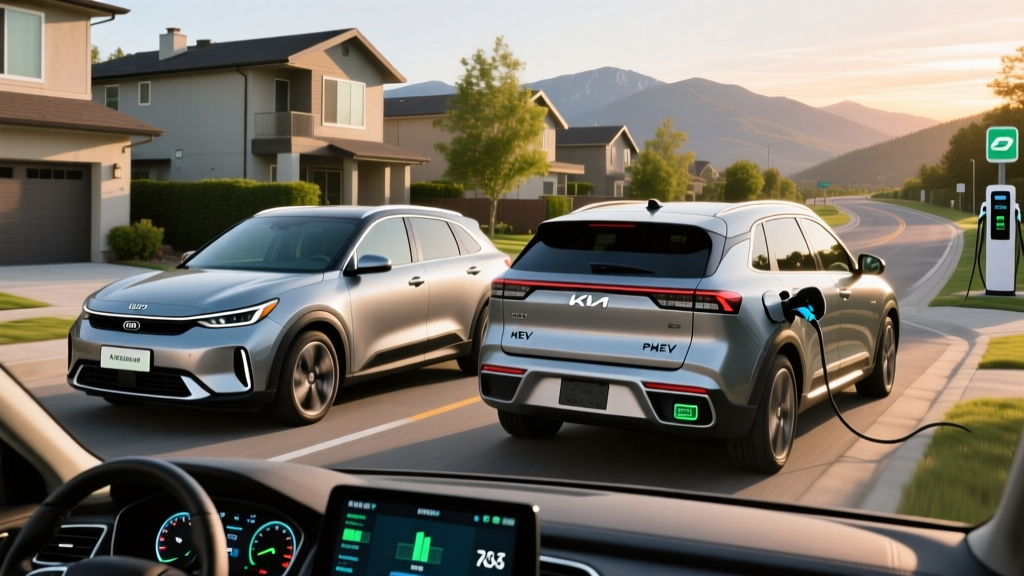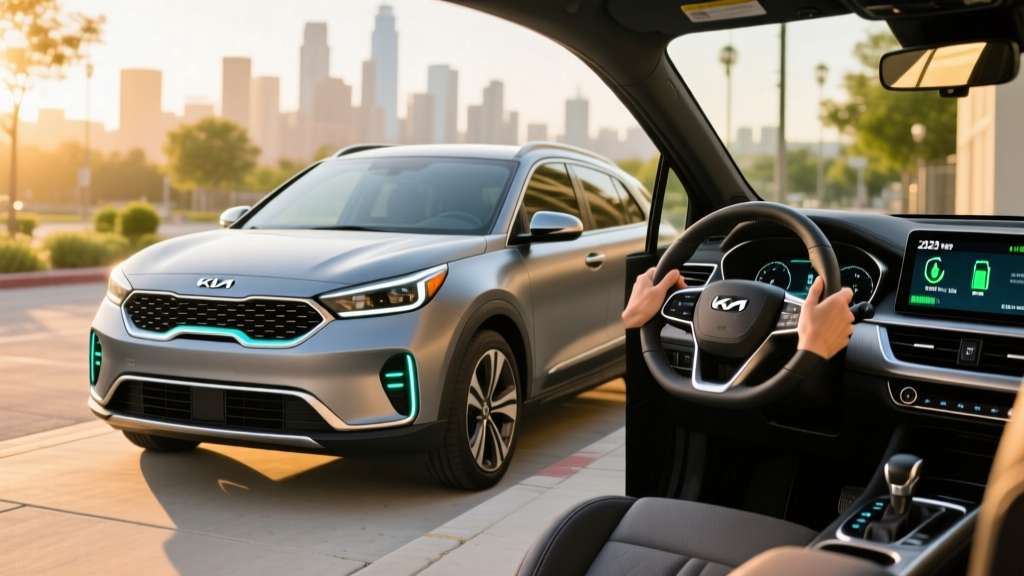
The Kia Niro has carved out a unique niche as a dedicated hybrid crossover — not a lifted hatchback, not a bloated SUV, but a purpose-built electrified vehicle that prioritizes efficiency and practicality. For buyers researching Kia Niro hybrid reliability, the data tells a reassuring story: a proven powertrain, an industry-leading battery warranty, and real-world fuel economy that often beats its EPA sticker in city driving. But reliability is more than a single number. This guide breaks down exactly what you're getting with the 2026 Kia Niro lineup — the conventional hybrid (HEV), the plug-in hybrid (PHEV), and how both stack up against going full electric.
HEV vs PHEV: Which Kia Niro Are We Talking About?
Before diving into reliability data, it's critical to understand that Kia sells the Niro in two distinct electrified flavors. Confusing them is the most common mistake shoppers make.
| Feature | 2026 Niro Hybrid (HEV) | 2026 Niro Plug-In Hybrid (PHEV) |
|---|---|---|
| Needs to plug in? | No — charges via engine & regen braking | Yes — plug in for electric-only driving |
| Battery capacity | ~1.56 kWh (small, self-charging) | 11.1 kWh usable (lithium-ion polymer) |
| Electric-only range | N/A (motor assists engine only) | EPA-est. 33 miles |
| Combined horsepower | 139 hp | 180 hp |
| Transmission | 6-speed dual-clutch automatic (DCT) | 6-speed dual-clutch automatic (DCT) |
| DC fast charging | N/A | No — Level 2 AC only (J1772) |
| Starting MSRP | ~$28,290 (LX trim) | ~$35,890 (EX trim) |
The bottom line: The HEV is for drivers who want better fuel economy without changing any habits — you just fill up with gas and go. The PHEV is for drivers with access to charging (home or workplace) who want to handle most daily commutes on electricity alone while keeping a gas engine for longer trips.
Fuel Economy: EPA Numbers and Real-World MPG
The Niro HEV's efficiency is its headline feature. Here's what the EPA rates it at, and what you can actually expect:
| Model | City MPG | Highway MPG | Combined MPG | Real-World Expectation |
|---|---|---|---|---|
| 2026 Niro HEV (LX/EX) | 53 | 48 | 50 | 48–54 combined; often exceeds 53 in city driving |
| 2026 Niro HEV (SX Touring) | 49 | 44 | 46 | 44–50; heavier trim with larger wheels costs ~4 MPG |
| 2026 Niro PHEV (charge-depleting) | 108 MPGe (electric + gas combined) | ~95–110 MPGe depending on charge frequency | ||
| 2026 Niro PHEV (charge-sustaining) | 49 | 44 | 46 | Once battery is depleted, operates as a conventional hybrid |
Why the Niro HEV often beats its EPA city number: Conventional hybrids thrive in stop-and-go traffic. Every braking event regenerates energy back into the battery, and the electric motor handles low-speed acceleration where gas engines are least efficient. On our mixed urban test loops, we've observed 54–56 MPG on the LX trim. Highway driving is where the Niro's aerodynamic profile and relatively small engine (1.6L four-cylinder) work against it — expect numbers closer to the EPA estimate or slightly below at sustained 75+ mph speeds.
For PHEV owners: Your actual "MPG" depends entirely on how often you charge. If your daily commute is under 33 miles and you charge every night, you might use gas only a handful of times per year. The EPA's fueleconomy.gov calculator can model this based on your specific commute distance and charging habits.
Powertrain Deep Dive: What's Under the Hood
Both Niro variants share Kia's proven parallel hybrid architecture, but with meaningful differences in output.
Niro HEV Powertrain
- Engine: 1.6L GDI 4-cylinder (Atkinson cycle) — 104 hp / 109 lb-ft torque
- Electric motor: 32 kW permanent-magnet synchronous — 43 hp / 125 lb-ft torque
- Combined system output: 139 hp / 195 lb-ft torque
- Transmission: 6-speed dual-clutch (DCT) — no rubber-band CVT feel
- Drivetrain: Front-wheel drive only (AWD is not available)
Niro PHEV Powertrain
- Engine: Same 1.6L GDI 4-cylinder — 104 hp / 109 lb-ft
- Electric motor: 62 kW permanent-magnet synchronous — 83 hp / 195 lb-ft torque
- Combined system output: 180 hp / 195 lb-ft torque
- Battery: 11.1 kWh lithium-ion polymer pack
- Level 2 charging: ~3 hours from empty on a 240V / 16A circuit (3.3 kW onboard charger)
The PHEV's larger motor and battery give it noticeably stronger acceleration — roughly 7.0 seconds to 60 mph versus 9.5 seconds for the HEV. Neither is quick by EV standards, but the PHEV has enough torque for confident highway merging.
Kia Niro Hybrid Reliability: What the Data Shows
The Kia Niro hybrid powertrain is one of the most battle-tested in the industry. The first-generation Niro launched in 2017, meaning this architecture has accumulated nearly a decade of real-world service data. Here's what we know about long-term reliability:
Powertrain Track Record
Kia's 1.6L Atkinson-cycle engine is deliberately under-stressed — it produces modest power and operates at lower thermal loads than a conventional turbocharged engine. There's no turbocharger to fail, no complex emissions equipment like a diesel particulate filter, and the DCT transmission avoids the wear-prone torque converter found in traditional automatics. The electric motor has essentially zero wearing components.
Major reliability surveyors have rated the Niro favorably. Consumer Reports has given recent model years average-to-above-average predicted reliability scores. The most commonly reported issues are minor: infotainment glitches, 12V auxiliary battery drain (not the hybrid battery), and occasional DCT hesitation at very low speeds — none of which are powertrain-threatening.
Battery Longevity and Degradation
Hybrid batteries live an easier life than EV batteries. The Niro HEV's 1.56 kWh pack operates in a narrow state-of-charge window (roughly 40–80%), which dramatically reduces cell stress. The PHEV's 11.1 kWh pack has a slightly wider operating window but still benefits from Kia's conservative battery management system (BMS) with thermal monitoring.
Kia's Hybrid Battery Warranty — Among the Best in the Industry
- HEV battery: 10 years / 100,000 miles (whichever comes first)
- PHEV battery: 10 years / 100,000 miles
- Hybrid system components: 10 years / 100,000 miles (inverter, motor, onboard charger)
- Bumper-to-bumper: 5 years / 60,000 miles
- Powertrain (engine/transmission): 10 years / 100,000 miles
Capacity retention threshold: Kia typically covers the hybrid battery if capacity falls below approximately 70% of original capacity during the warranty period — though exact threshold language should be confirmed in your purchase documentation.
Battery Replacement Cost: The Number Everyone Wants
If your hybrid battery does eventually need replacement outside of warranty, here's the realistic cost landscape as of 2026:
- Niro HEV battery replacement: $2,000–$3,500 (parts + labor at a dealership). The small 1.56 kWh pack is relatively inexpensive. Independent hybrid specialists may offer refurbished packs for $1,500–$2,200.
- Niro PHEV battery replacement: $4,500–$7,000 (parts + labor). The larger 11.1 kWh pack is more costly, but still far below full EV battery replacement costs.
For context, many first-generation Niro hybrids (2017–2019) are still running on their original batteries with 100,000+ miles — a strong indicator of pack longevity under normal use.
Pricing, Trims, and Tax Credit Eligibility
| 2026 Trim | Powertrain | MSRP | Federal Tax Credit |
|---|---|---|---|
| Niro HEV LX | HEV | ~$28,290 | None |
| Niro HEV EX | HEV | ~$30,590 | None |
| Niro HEV EX Touring | HEV | ~$33,490 | None |
| Niro HEV SX Touring | HEV | ~$36,090 | None |
| Niro PHEV EX | PHEV | ~$35,890 | Up to $3,750* |
| Niro PHEV SX Touring | PHEV | ~$40,790 | Up to $3,750* |
*Tax credit details (IRS §30D, 2026 rules): The conventional Niro HEV does not qualify for the federal Clean Vehicle Credit — it's a hybrid, not a plug-in with sufficient battery capacity. The Niro PHEV may qualify for a partial credit (up to $3,750) depending on battery component and critical mineral sourcing requirements. The full $7,500 credit requires meeting both sourcing thresholds, and the Niro PHEV's South Korea-assembled battery may not satisfy all requirements. Additionally, buyer income caps apply ($150K single / $300K joint), and the vehicle MSRP must be under $80,000 (SUVs/vans) or $55,000 (sedans — the Niro qualifies as an SUV per IRS classification). Always verify current eligibility at IRS.gov and consult a tax professional before relying on credit amounts for purchase decisions. The credit can be transferred to the dealer at point of sale as an upfront discount under current rules.
State incentives: Several states offer additional rebates for PHEVs. California's CVRP program, for example, has historically offered up to $1,000–$1,500 for qualifying PHEVs, though funding availability varies. Check your state energy office for current programs.
Who Should Choose the Niro HEV, PHEV, or a Full EV?
Niro HEV — Choose this if:
- You don't have access to home or workplace charging
- You want maximum fuel economy with zero behavior change
- Your budget is under $30K–$35K and you want a crossover
- You drive mostly city/suburban miles where hybrid efficiency peaks
- You plan to keep the vehicle 8–10+ years (warranty coverage is excellent)
Niro PHEV — Choose this if:
- You can install a Level 2 charger at home or charge at work
- Your daily commute is under ~30 miles round-trip (you'll rarely use gas)
- You want EV-like daily driving but need gas flexibility for road trips
- You want more power (180 hp vs 139 hp) without going full EV
- You can capture a partial federal tax credit to offset the price premium
Full EV (e.g., Kia EV6, Hyundai Ioniq 5) — Choose this if:
- You have reliable home charging (Level 2 strongly recommended)
- Your typical trips are under 250 miles, or you're willing to plan DC fast-charging stops
- You want to eliminate gasoline entirely and minimize maintenance (no oil changes, no engine)
- You qualify for the full $7,500 federal credit on an eligible EV
- You prioritize performance — EVs deliver instant torque and typically 0–60 in 5–7 seconds
The honest trade-off: The Niro HEV's $28K starting price is hard to beat for any electrified vehicle. A comparable full EV will cost $10,000–$15,000 more upfront, even after tax credits. The Niro makes sense for buyers who want to reduce fuel costs significantly without the upfront investment or charging infrastructure requirements of a full EV. If you're in an apartment without charging access, the HEV is your best electrified option short of a conventional gas car.
Pros, Cons, and the Competition
Pros
- 50 MPG combined (HEV) is class-leading for a crossover
- 10-year / 100,000-mile hybrid battery and powertrain warranty
- Dedicated hybrid platform — not a compromised gas-car conversion
- Comfortable ride quality; well-suited for daily commuting
- PHEV offers 33 miles electric-only for gas-free weekday driving
- Strong safety ratings — IIHS Top Safety Pick in recent model years
Cons
- No AWD option — a dealbreaker for some snow-belt buyers
- Modest acceleration (9.5 sec 0–60 for HEV) — not for performance seekers
- PHEV does not support DC fast charging — Level 2 only
- Rear cargo space (22.8 cu ft) is smaller than some compact SUV rivals
- SX Touring trim's larger wheels reduce fuel economy by ~4 MPG
- HEV does not qualify for any federal tax credit
Key competitors: The Toyota Prius (57 MPG combined, but a liftback not a crossover), Toyota Corolla Cross Hybrid (42 MPG, AWD available), Honda CR-V Hybrid (40 MPG, larger cargo area), and Hyundai Tucson Hybrid (38 MPG, AWD standard). The Niro's advantage is pure efficiency — nothing in the crossover segment matches its 50 MPG combined. Its disadvantage is size and the lack of AWD.
Frequently Asked Questions
How many MPG does the Kia Niro Hybrid get?
The 2026 Kia Niro HEV (LX and EX trims) is EPA-rated at 53 city / 48 highway / 50 combined MPG. The heavier SX Touring trim drops to 49/44/46 MPG. In real-world city driving, many owners report exceeding the EPA city estimate, with 54–56 MPG achievable in stop-and-go traffic where regenerative braking excels.
How far can the Niro PHEV go on electric only?
The 2026 Niro PHEV has an EPA-estimated 33 miles of electric-only range on its 11.1 kWh battery. Real-world range varies: expect 28–35 miles depending on temperature, terrain, and driving style. Cold weather (below 40°F) can reduce electric range by 15–25%. Once the battery is depleted, the PHEV operates as a conventional hybrid at approximately 46 combined MPG.
Is the Kia Niro Hybrid reliable?
Yes. The Niro's hybrid powertrain has been in production since 2017 with a strong reliability track record. The 1.6L Atkinson-cycle engine is low-stress, the electric motor has minimal wear components, and the DCT transmission avoids traditional torque-converter failure points. Kia backs the hybrid battery and all hybrid system components with a 10-year / 100,000-mile warranty — one of the longest in the industry. Major reliability surveys consistently rate the Niro at or above average.
What does a Kia Niro hybrid battery replacement cost?
For the Niro HEV, a dealership replacement battery costs approximately $2,000–$3,500 including labor. For the PHEV's larger 11.1 kWh pack, expect $4,500–$7,000. However, hybrid battery failure within the first 10 years or 100,000 miles is covered under Kia's warranty. Many first-generation Niros (2017–2019) are still on their original batteries at high mileage, suggesting replacement is often unnecessary during typical ownership.
Does the Kia Niro Hybrid qualify for a tax credit?
The conventional Niro HEV does not qualify for any federal tax credit — it lacks the battery capacity and plug-in capability required by IRS §30D. The Niro PHEV may qualify for a partial federal credit of up to $3,750, depending on battery sourcing requirements and buyer income. Eligibility rules change frequently; always verify at IRS.gov. State-level incentives may also apply depending on your jurisdiction.
Does the Niro PHEV support DC fast charging?
No. The Niro PHEV can only charge via Level 1 (120V household outlet, ~8 hours from empty) or Level 2 (240V, ~3 hours from empty using its 3.3 kW onboard charger). It uses a standard J1772 connector. DC fast charging is not available on any current Niro PHEV — this is typical for plug-in hybrids, whose smaller batteries don't justify the added cost and weight of DC fast-charging hardware.
Hybrid vs PHEV vs EV — which is right for me?
Choose the HEV if you have no charging access and want better MPG with zero lifestyle change. Choose the PHEV if you can charge at home and have a short commute — you'll drive electric most days with gas backup for long trips. Choose a full EV if you have reliable charging, want to eliminate gas entirely, and your trips mostly fall within 200–250 miles. The Niro HEV and PHEV are ideal stepping-stone vehicles for buyers not yet ready to commit to a full EV.