Quick Verdict: The Niro Bridges Hybrid and EV Ownership
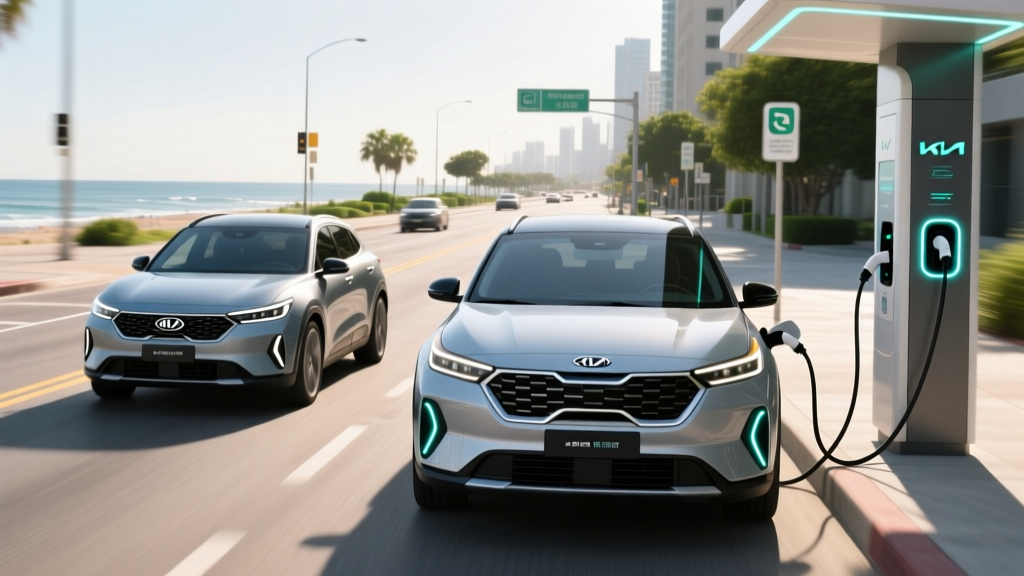
The 2026 Kia Niro arrives in two electrified flavors — a conventional hybrid (HEV) and a plug-in hybrid (PHEV) — both wearing Kia's bold "Opposites United" design language that enthusiasts have nicknamed the shark hybrid for its aggressive, angular front fascia and boomerang-shaped LED signatures. Neither version requires lifestyle compromise: the HEV delivers up to 53 MPG combined without ever plugging in, while the PHEV adds 33 miles of electric-only commuting before the gasoline engine kicks in. For buyers weighing a transition away from pure gasoline but hesitant about full EV charging logistics, the Niro lineup offers a measured, data-backed entry point.
| Specification | Niro HEV | Niro PHEV |
|---|---|---|
| EPA Combined MPG / MPGe | 53 MPG (LX FWD) | 108 MPGe combined; 48 MPG gas-only |
| EPA City / Highway MPG | 53 city / 54 highway (LX FWD) | 49 city / 47 highway (gas-only) |
| Electric-Only Range | N/A | 33 miles |
| Total Combined Range | ~550 miles | ~430 miles (EV + gas) |
| Powertrain | 1.6L GDI 4-cyl + 32 kW motor | 1.6L GDI 4-cyl + 62 kW motor |
| Combined Horsepower | 139 hp | 180 hp |
| Battery Capacity (usable) | 1.56 kWh (Li-ion) | 11.1 kWh (Li-ion polymer) |
| Transmission | 6-speed DCT | 6-speed DCT |
| DC Fast Charging | No | No (Level 2 AC only) |
| Level 2 Charge Time (0–100%) | N/A (self-charging) | ~2 hr 45 min at 7.2 kW |
| 0–60 mph | 9.8 sec | 7.4 sec |
| Starting MSRP | $30,290 (LX) | $35,790 (LX) |
| Battery Warranty | 10 yr / 100,000 mi | 10 yr / 100,000 mi |
HEV vs PHEV: Which Niro Powertrain Fits Your Commute?
The single most common mistake hybrid shoppers make is conflating a conventional hybrid with a plug-in hybrid. Here's the distinction in practical terms:
| Factor | Niro HEV | Niro PHEV |
|---|---|---|
| Needs to plug in? | No — regenerative braking and engine recharge the small battery | Yes — plug in to access 33 mi electric range |
| Home charging required? | No | Recommended (120V works; 240V faster) |
| Electric-only driving | Brief low-speed EV mode only | 33 miles at full highway speeds |
| Federal tax credit eligible? | No | Up to $3,750 (§30D, subject to sourcing rules) |
| Best for | No home charging access; long highway commutes | Home charging available; short daily commutes |
If you live in an apartment without charging access or routinely drive 60+ miles per day on the highway, the HEV is the logical pick — it never needs a plug and still returns over 50 MPG. If you can install a Level 2 charger at home (or have access to workplace charging) and your daily round-trip commute falls under 33 miles, the PHEV lets you drive on electricity most days while retaining a gas engine for weekend road trips.
Fuel Economy Deep Dive: EPA Stickers vs Real-World MPG
| Trim / Config | City MPG | Highway MPG | Combined MPG |
|---|---|---|---|
| Niro HEV LX (FWD) | 53 | 54 | 53 |
| Niro HEV EX / SX (FWD) | 50 | 52 | 51 |
| Niro HEV SX Touring (FWD, 18" wheels) | 46 | 49 | 47 |
| Niro PHEV (all trims, gas-only) | 49 | 47 | 48 |
| Niro PHEV (combined MPGe, EV + gas) | 108 MPGe | 108 | |
Source: EPA fueleconomy.gov
Real-World MPG: What Owners Actually See
Hybrids typically exceed their EPA city ratings in stop-and-go traffic because regenerative braking recaptures energy that a gasoline car wastes as heat. In real-world owner reports and independent testing, the Niro HEV LX routinely achieves 55–58 MPG in urban driving. Highway efficiency is a different story: at sustained 75–80 mph speeds, expect the HEV to drop to 44–48 MPG, since the electric motor assists less at high velocity and aerodynamic drag dominates.
For the PHEV, the 33-mile electric-only range holds up well in mild weather (55–75°F). In cold conditions (below 30°F), expect that range to shrink to roughly 25–28 miles as the battery's internal resistance increases and cabin heating draws additional energy. Once the battery depletes, the PHEV operates as a conventional hybrid, returning roughly 46–50 MPG in mixed driving — slightly below the HEV due to the extra ~250 lbs of battery mass it carries.
Real-World Range Expectations:
- Niro HEV: EPA ~550 mi total range. Expect ~480 mi on all-highway trips; ~570+ mi in city-heavy driving.
- Niro PHEV: EPA 33 mi EV-only, ~430 mi total. Cold weather reduces EV range to ~25–28 mi; gas-only range ~380 mi.
Powertrain and Battery: Under the Shark-Styled Hood
Both Niro variants share Kia's 1.6-liter GDI four-cylinder engine paired with a permanent-magnet synchronous electric motor, mated to a 6-speed dual-clutch transmission (DCT). The HEV uses a 32 kW (43 hp) motor and a 1.56 kWh lithium-ion battery pack — small enough that you'll never notice it in the cargo area. Combined system output is 139 hp and 195 lb-ft of torque.
The PHEV steps up to a 62 kW (83 hp) motor and an 11.1 kWh lithium-ion polymer battery, yielding 180 hp combined. That extra power is immediately noticeable: the PHEV hits 60 mph in 7.4 seconds versus the HEV's 9.8 seconds. In EV mode, the PHEV can reach speeds up to 75 mph without the engine engaging, making it viable for highway on-ramps and suburban parkways.
Charging the PHEV: What You Need to Know
The Niro PHEV charges exclusively via AC — there is no DC fast charging capability, which is standard for most PHEVs in this class (the battery is simply too small to benefit from DCFC infrastructure). Here's the charging breakdown:
| Charging Level | Power (kW) | Time (0–100%) | Outlet / Equipment |
|---|---|---|---|
| Level 1 (120V household) | ~1.4 kW | ~8 hours | Standard 3-prong outlet |
| Level 2 (240V home/public) | 7.2 kW (max) | ~2 hr 45 min | J1772 connector; home wallbox or public AC station |
For most PHEV owners, overnight Level 1 charging from a standard outlet is sufficient — plugging in at 10 PM easily tops off the 11.1 kWh battery by morning. A Level 2 home charger is a convenience upgrade, not a necessity, though it becomes worthwhile if you make multiple short trips per day and want the battery replenished between drives.
Pricing, Tax Credits, and Total Cost of Ownership
The 2026 Kia Niro HEV starts at $30,290 for the LX trim and climbs to roughly $38,500 for the fully loaded SX Touring. The PHEV starts at $35,790 (LX) and tops out near $41,000 (SX Touring).
Federal Tax Credit Eligibility (§30D)
Under current IRS rules for 2026, the Niro PHEV may qualify for up to $3,750 in federal tax credit under IRC §30D, provided the vehicle meets critical-mineral and battery-component sourcing requirements and the buyer falls within income caps ($150,000 single / $300,000 joint filer AGI). The credit can now be transferred to the dealer at point of sale, effectively reducing the purchase price upfront. The Niro HEV does not qualify for the §30D new-vehicle credit, as it is not a plug-in vehicle with a battery ≥7 kWh.
§30D Eligibility Checklist for the Niro PHEV:
- Vehicle MSRP must not exceed $80,000 (Niro PHEV qualifies — well under cap)
- Buyer AGI: ≤$150K (single) / ≤$225K (head of household) / ≤$300K (joint)
- Battery components and critical minerals must meet phased-in sourcing thresholds — verify current-year compliance on the IRS's clean vehicle credits page before purchasing
- Credit is non-refundable but transferable to dealer at point of sale (effective price reduction)
- State and utility incentives may stack on top — check AFDC state incentive database
5-Year Cost Snapshot
Assuming 15,000 miles/year, $3.50/gallon gasoline, and $0.14/kWh electricity:
| Vehicle | Annual Fuel/Energy Cost | 5-Year Total |
|---|---|---|
| Niro HEV (53 MPG) | ~$990 | ~$4,950 |
| Niro PHEV (80% EV commuting) | ~$520 | ~$2,600 |
| Comparable gas crossover (28 MPG) | ~$1,875 | ~$9,375 |
The PHEV's fuel savings over the HEV are substantial if most daily miles fall within the 33-mile EV envelope and charging is done at home. On highway-heavy driving patterns, the HEV's simplicity and consistent 50+ MPG may yield lower total energy cost than a PHEV driven mostly beyond its EV range.
Battery Longevity, Warranty, and Replacement Costs
Hybrid Battery Warranty: Kia covers both the HEV and PHEV high-voltage battery packs for 10 years or 100,000 miles (whichever comes first), with a capacity-retention threshold of 70% for the PHEV. This is among the strongest hybrid battery warranties in the industry, matched only by Hyundai's equivalent coverage.
How Long Do Hybrid Batteries Actually Last?
Modern lithium-ion hybrid battery packs are engineered with conservative charge buffers — the Niro HEV's 1.56 kWh pack typically cycles between roughly 40% and 80% state of charge, never hitting true 0% or 100%. This shallow-cycling strategy dramatically extends cycle life. Based on fleet data and owner reports from the first-generation Niro (2017–2022), hybrid battery packs routinely exceed 150,000 miles with minimal degradation. PHEV batteries see deeper cycles but benefit from larger capacity and active thermal management.
Battery Replacement Cost
Out-of-warranty replacement costs, should they become necessary after the 10-year coverage window:
- Niro HEV battery pack: $2,500–$3,800 (parts + labor)
- Niro PHEV battery pack: $5,500–$8,000 (parts + labor)
These figures are estimates based on current Kia parts pricing and independent shop labor rates. Dealership replacement typically runs 15–25% higher. Given the 10-year warranty and the demonstrated longevity of Kia's hybrid packs, most original owners will never face this expense.
Reliability and Safety Record
Kia's 1.6L GDI hybrid powertrain is now in its third generation, and reliability has improved markedly over early-model-year Niro units. The 6-speed DCT, which replaces the CVT found in competitors like the Toyota Prius, delivers more natural-feeling acceleration without the "rubber-band" effect, though it can exhibit slight low-speed hesitation in heavy stop-and-go traffic — a characteristic of DCTs, not a defect.
Safety ratings are strong. The Niro earns top marks from the IIHS, with standard forward collision avoidance, lane-keeping assist, and blind-spot monitoring across all trims. The NHTSA has awarded the Niro a 5-star overall safety rating. ADAS features are classified as SAE Level 2 driver assistance — they support steering and speed control but require the driver to remain fully engaged at all times.
Who Should Choose the Niro Hybrid — and Who Should Look Elsewhere?
Choose the Niro HEV if:
- You cannot charge at home or at work
- Your daily driving exceeds 60 miles, mostly on highways
- You want maximum MPG without any behavioral change
- Budget is a priority — the HEV starts $5,500 lower than the PHEV
Choose the Niro PHEV if:
- You have reliable home or workplace Level 1/Level 2 charging
- Your daily commute is under 33 miles round-trip
- You want EV-like daily driving with gas-engine road-trip flexibility
- You qualify for the §30D tax credit, narrowing the price gap with the HEV
Consider a full BEV instead if:
- You have home Level 2 charging and your daily driving is under 250 miles
- You want zero tailpipe emissions and minimal maintenance (no oil changes, no DCT)
- Models like the Kia EV6, Hyundai Ioniq 5, or Tesla Model Y fit your budget after incentives
Pros
- HEV achieves 53 MPG combined — best in its crossover class
- PHEV's 33-mile EV range covers most daily commutes
- 10-year / 100,000-mile battery warranty
- Distinctive "shark" design stands out in a segment of conservative styling
- Standard comprehensive ADAS suite across all trims
- Practical 22.8 cu ft cargo space (58.8 cu ft rear seats folded)
Cons
- No AWD option on PHEV (HEV offers AWD on select trims)
- PHEV lacks DC fast charging (class-normal but limiting for road-trip EV use)
- DCT low-speed hesitation in heavy traffic
- SX Touring trim's 18" wheels reduce HEV MPG by ~6 MPG combined
- PHEV price premium only justified with regular plug-in access
Frequently Asked Questions
How many MPG does the Kia Niro hybrid get?
The 2026 Niro HEV LX is EPA-rated at 53 city / 54 highway / 53 combined MPG. Higher trims with larger wheels drop to 46 city / 49 highway / 47 combined. In real-world urban driving, owners frequently report 55–58 MPG thanks to aggressive regenerative braking.
How far can the Niro PHEV go on electric only?
The EPA rates the Niro PHEV at 33 miles of electric-only range. In mild weather, that figure holds up well. In sub-freezing temperatures, expect 25–28 miles due to increased battery resistance and cabin heating demand.
Does the Kia Niro hybrid qualify for a tax credit?
The conventional Niro HEV does not qualify for the federal §30D new clean vehicle credit. The Niro PHEV may qualify for up to $3,750, subject to buyer income limits, battery sourcing requirements, and MSRP caps. Always verify current eligibility on irs.gov before purchase.
Is the Niro hybrid reliable, and what does battery replacement cost?
Kia's third-generation hybrid powertrain has a strong reliability record. The high-voltage battery is warranted for 10 years / 100,000 miles. Out-of-warranty replacement runs $2,500–$3,800 for the HEV and $5,500–$8,000 for the PHEV, though most packs last well beyond 150,000 miles.
Do I need to plug in the Niro hybrid?
No — the conventional Niro HEV never needs to be plugged in. It recharges its small battery through regenerative braking and the gasoline engine. Only the Niro PHEV benefits from plugging in; if you don't plug it in, it simply operates as a conventional (albeit heavier) hybrid.
Hybrid vs PHEV vs EV — which is right for me?
Choose an HEV if you lack charging access and want maximum simplicity. Choose a PHEV if you can charge at home and want electric commuting with gas-engine backup. Choose a full EV if you have reliable home charging, drive under 250 miles daily, and want the lowest operating cost and maintenance burden. The Niro lineup covers the first two scenarios; Kia's EV6 and EV9 address the third.