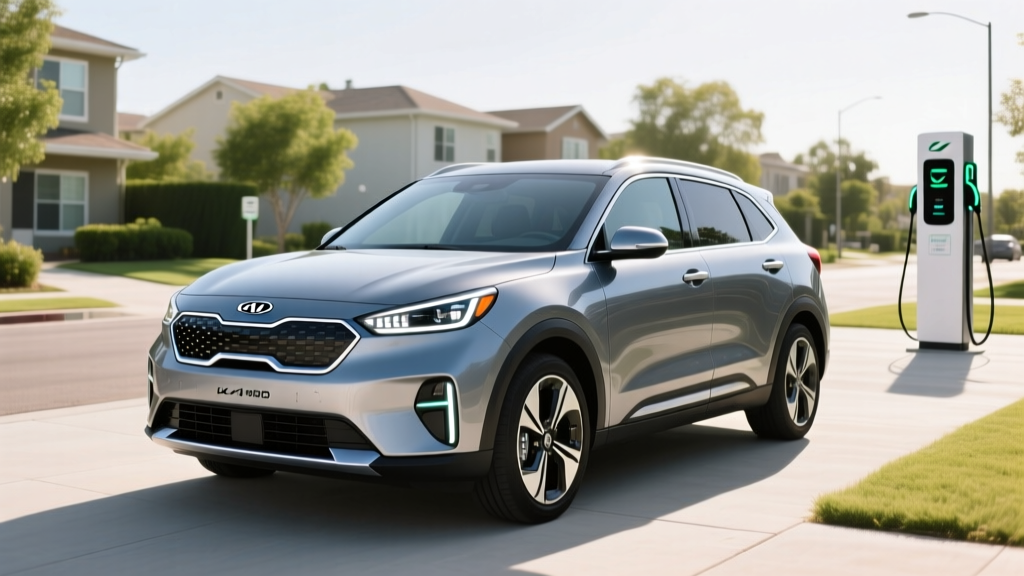
If you are searching for a practical compact crossover that slashes fuel costs without requiring a plug, the Kia Niro Hybrid deserves a close look. Now in its second generation, the 2026 Niro HEV pairs a 1.6-liter four-cylinder engine with an electric motor for an EPA-estimated 53 MPG combined — a figure that rivals the Toyota Prius while offering more cargo room and crossover styling. This guide covers everything buyers need to know: real-world fuel economy, powertrain specs, battery longevity, pricing, and whether the Niro Hybrid or its plug-in sibling is the right call.
Kia Niro Hybrid vs. Niro PHEV: Understanding the Difference
Before diving into specs, it is critical to distinguish between the two electrified Niro variants Kia offers. They share a platform but serve very different ownership patterns.
| Feature | Niro Hybrid (HEV) | Niro Plug-In Hybrid (PHEV) |
|---|---|---|
| Needs to be plugged in? | No — self-charging via regen and engine | Yes — plug in for electric-only driving |
| Battery size | 1.56 kWh (lithium-ion polymer) | 11.1 kWh (lithium-ion polymer) |
| Electric-only range | N/A (electric motor assists only) | EPA-est. 33 miles |
| Combined MPG / MPGe | 53 MPG combined | 48 MPG combined (gas) / 108 MPGe |
| Combined horsepower | 139 HP | 180 HP |
| Starting MSRP (2026) | $28,990 | $35,390 |
| DC fast charging | N/A | No — AC Level 2 only |
The core difference: The Niro HEV never needs a charger. You fill it with gas and the hybrid system handles the rest, recovering energy during braking and coasting. The Niro PHEV, by contrast, can drive roughly 33 miles on battery power alone before the gas engine kicks in — ideal for commuters with short one-way trips who have access to a Level 2 home charger. If you cannot install a charger at home, the HEV is the more practical choice.
Fuel Economy: EPA Ratings and Real-World MPG
The 2026 Kia Niro Hybrid carries EPA ratings that put it among the most efficient non-plug-in crossovers on the market. Here is the official breakdown, sourced from fueleconomy.gov:
| Driving Cycle | EPA Estimate |
|---|---|
| City | 53 MPG |
| Highway | 52 MPG |
| Combined | 53 MPG |
Hybrids like the Niro tend to shine in city driving, where the electric motor handles low-speed acceleration and regenerative braking recaptures energy at every stoplight. In real-world ownership, many drivers report matching or slightly exceeding the EPA city figure during warm-weather urban commutes. Expect roughly 54–56 MPG in stop-and-go traffic above 50°F.
Highway driving tells a slightly different story. At sustained speeds above 70 MPH, the gasoline engine does most of the work, and real-world highway economy typically lands between 47 and 50 MPG. In cold weather (below 30°F), expect a 5–10% drop across the board as the engine runs longer to heat the cabin and the battery operates less efficiently. Plan on roughly 48–50 MPG combined in winter conditions.
Real-World Range Estimate: With a 11.1-gallon fuel tank and real-world combined economy of ~50 MPG, you can expect roughly 550 miles per tank in mixed driving — or about 480 miles in sustained cold-weather highway use.
Powertrain and Performance Specs
The Niro Hybrid uses Kia's proven parallel-hybrid architecture. A 1.6-liter GDI four-cylinder engine producing 104 HP and 109 lb-ft of torque pairs with a 32 kW (43 HP) electric motor integrated into a 6-speed dual-clutch automatic transmission (DCT). Combined system output is 139 HP and 195 lb-ft of torque.
| Specification | 2026 Kia Niro Hybrid |
|---|---|
| Engine | 1.6L GDI 4-cylinder (104 HP) |
| Electric motor | 32 kW permanent-magnet synchronous (43 HP) |
| Combined output | 139 HP / 195 lb-ft torque |
| Transmission | 6-speed dual-clutch automatic (DCT) |
| Drivetrain | Front-wheel drive |
| 0–60 MPH | ~9.8 seconds |
| Battery (traction) | 1.56 kWh lithium-ion polymer |
| Fuel tank | 11.1 gallons |
| Curb weight | ~3,100 lbs |
| Cargo volume (rear seats up/down) | 22.8 / 54.9 cu ft |
The 6-speed DCT is a notable differentiator. Unlike the continuously variable transmissions (CVTs) in the Toyota Prius or Honda CR-V Hybrid, the Niro's DCT delivers traditional stepped gear shifts. Some drivers prefer this more natural feel; others notice occasional low-speed shift hesitation that CVTs avoid. In practice, the DCT is responsive once rolling, though it can feel slightly jerky in stop-and-go traffic compared to e-CVT rivals.
Acceleration is adequate for merging and passing but not brisk — the 9.8-second 0–60 time trails the Prius AWD (7.0 seconds) and the Niro PHEV (7.2 seconds). This is a fuel-economy-first vehicle, and the powertrain rewards a relaxed driving style with its best efficiency numbers.
Reliability, Battery Warranty, and Replacement Cost
Hybrid battery longevity remains a top concern for buyers transitioning from conventional gas vehicles. Kia addresses this with one of the strongest hybrid battery warranties in the industry:
- Hybrid battery warranty: 10 years / 100,000 miles (whichever comes first)
- Hybrid system components warranty: 10 years / 100,000 miles
- Limited vehicle warranty: 5 years / 60,000 miles
- Powertrain warranty: 10 years / 100,000 miles
The 1.56 kWh lithium-ion polymer battery in the Niro HEV is small and operates within a conservative state-of-charge window, which reduces degradation stress. In practice, hybrid batteries of this type routinely last 150,000–200,000+ miles before capacity loss becomes noticeable. Toyota and Hyundai/Kia hybrid batteries from the 2010s have demonstrated strong long-term durability in fleet data.
If replacement is eventually needed outside warranty, a refurbished Niro hybrid battery typically costs between $2,000 and $3,500 including labor at an independent hybrid specialist. A new OEM battery from a Kia dealer can run $3,500–$5,000. For context, most Niro HEV owners will never face this expense during typical ownership.
According to IIHS, the Niro carries strong safety ratings, which supports overall vehicle longevity and resale value.
Pricing, Trims, and Tax Credit Eligibility
The 2026 Kia Niro Hybrid is offered in three trims. Here is the MSRP breakdown (destination charge included):
| Trim | MSRP |
|---|---|
| LX (base) | $28,990 |
| EX | $31,490 |
| SX Touring | $35,490 |
Federal tax credit: The conventional Niro Hybrid (HEV) does not qualify for the federal §30D Clean Vehicle Credit. That credit applies only to plug-in electric vehicles (BEVs and PHEVs) that meet battery sourcing, MSRP, and buyer income requirements as outlined by the IRS.
The Niro PHEV may qualify for a partial or full §30D credit (up to $7,500) depending on current-year battery component and critical mineral sourcing requirements, your taxable income (capped at $150K single / $300K joint), and the vehicle's MSRP (must be under $80,000 for SUVs). The point-of-sale transfer option allows dealers to apply the credit as an immediate discount. However, sourcing rules have tightened significantly — always verify current eligibility on the IRS website or with a tax professional before assuming the full credit applies.
State incentives: Some states offer rebates or HOV-lane access for hybrid vehicles, but these vary widely. Check your state energy office or DMV for current programs.
Who Should Choose the Niro Hybrid vs. a PHEV or Full EV?
The Niro lineup spans three powertrains — HEV, PHEV, and full EV (Niro EV). Choosing the right one depends on your driving pattern, charging access, and budget.
Choose the Niro Hybrid (HEV) if:
- You cannot install a home charger (apartment, street parking, rented garage)
- Your budget is under $30,000 and you want maximum fuel savings per dollar
- You take frequent road trips and want zero charging planning
- You want 53 MPG combined without changing any habits
Choose the Niro PHEV if:
- Your daily round-trip commute is under 30 miles and you can charge at home
- You want electric-only driving most days but gas flexibility for long trips
- You may qualify for the §30D federal tax credit, narrowing the price gap
- You value the extra 41 HP (180 HP combined vs. 139 HP)
Choose a full EV (like the Niro EV or Hyundai Ioniq 5) if:
- You have reliable home Level 2 charging
- Your daily driving is under 200 miles and you rarely road-trip beyond charger-network range
- You want zero tailpipe emissions and minimal maintenance (no oil changes, no gas engine)
- You qualify for the full $7,500 federal credit, bringing effective price closer to hybrid territory
Pros and Cons of the 2026 Kia Niro Hybrid
Pros
- 53 MPG combined — among the best in the crossover segment
- 10-year / 100,000-mile hybrid battery and powertrain warranty
- Generous cargo space (22.8 cu ft rear up, 54.9 cu ft folded)
- No plug-in charging required — zero lifestyle change
- Competitive starting price at $28,990
- Standard wireless Apple CarPlay and Android Auto
Cons
- 9.8-second 0–60 — noticeably slower than Prius AWD and some hybrid rivals
- DCT can feel hesitant in low-speed stop-and-go traffic
- FWD only — no AWD option (Prius and CR-V Hybrid offer AWD)
- No federal tax credit for the HEV variant
- Cabin noise becomes noticeable above 70 MPH
Frequently Asked Questions
How many MPG does the Kia Niro Hybrid get?
The 2026 Kia Niro Hybrid is EPA-rated at 53 MPG city, 52 MPG highway, and 53 MPG combined. Real-world city driving often yields 54–56 MPG in warm weather, while sustained highway driving at 70+ MPH typically returns 47–50 MPG.
How far can the Niro PHEV go on electric only?
The 2026 Niro Plug-In Hybrid has an EPA-estimated 33 miles of electric-only range on a full charge. After the battery is depleted, it operates as a conventional hybrid rated at 48 MPG combined. Total combined range (electric + gas) exceeds 420 miles.
Does the Kia Niro Hybrid qualify for a tax credit?
The conventional Niro Hybrid (HEV) does not qualify for the federal §30D Clean Vehicle Credit — that credit is reserved for plug-in vehicles. The Niro PHEV may qualify for up to $7,500 depending on current IRS battery-sourcing rules, buyer income limits, and MSRP caps. Verify at IRS.gov before purchasing.
Is the Kia Niro Hybrid reliable?
Kia's hybrid powertrain has demonstrated strong reliability, backed by a 10-year / 100,000-mile hybrid battery and powertrain warranty. The 1.56 kWh battery operates in a conservative charge window that minimizes degradation. Most hybrid batteries last 150,000–200,000+ miles without significant capacity loss.
What does a Niro Hybrid battery replacement cost?
Outside of warranty, a refurbished Niro hybrid battery costs approximately $2,000–$3,500 installed at an independent shop, or $3,500–$5,000 for a new OEM battery at a Kia dealer. Given the 10-year/100,000-mile warranty and typical battery lifespan exceeding 150K miles, most owners never face this cost.
Does the Niro Hybrid have all-wheel drive?
No. The 2026 Niro Hybrid is front-wheel drive only. If AWD is a priority, consider the Toyota Prius AWD (54 MPG combined AWD) or the Honda CR-V Hybrid AWD (40 MPG combined).