Quick Verdict: The Efficiency Sweet Spot for Urban Commuters
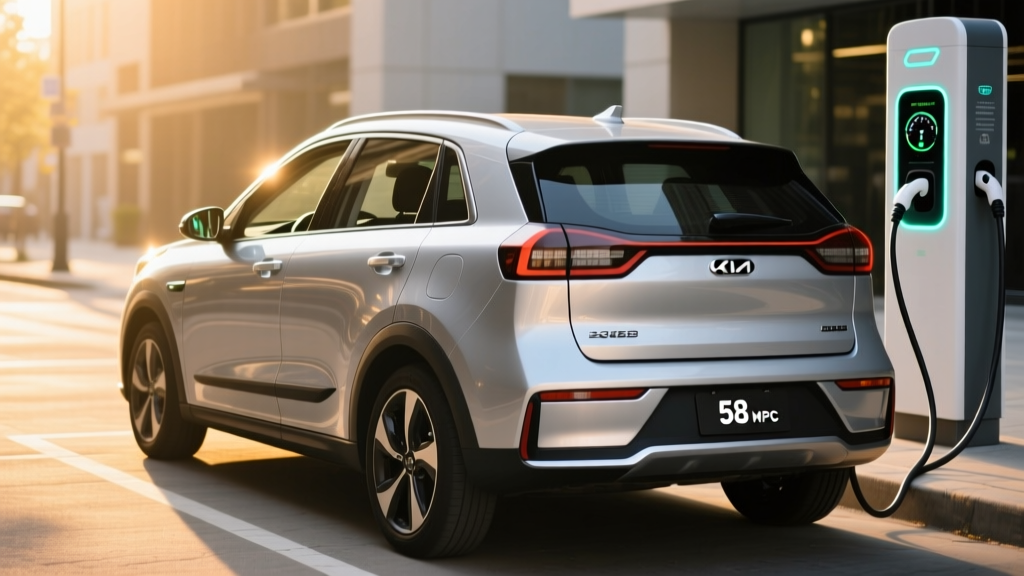
The Kia Niro Hybrid has carved out a distinct niche since its debut: a compact crossover that delivers genuinely impressive fuel economy without requiring a plug, a lifestyle sacrifice, or a premium price tag. For 2026, the Niro Hybrid (HEV) continues as Kia's volume-selling electrified nameplate, sitting below the Niro Plug-In Hybrid and all-electric Niro EV in the lineup. If you want to slash your fuel bills without altering your daily routine — no charging cables, no route planning — the conventional Niro Hybrid makes a compelling case.
This guide covers the 2026 Kia Niro Hybrid's EPA and real-world fuel economy, powertrain details, trim pricing, battery longevity, and how it stacks up against both its PHEV sibling and full battery-electric alternatives.
HEV vs. PHEV vs. EV: Which Niro Fits Your Life?
Kia sells three electrified Niro variants. Confusing them is easy at the dealership, but the differences matter enormously for your wallet and daily routine.
| Attribute | Niro Hybrid (HEV) | Niro Plug-In Hybrid (PHEV) | Niro EV |
|---|---|---|---|
| Powertrain | 1.6L turbo + electric motor | 1.6L turbo + larger electric motor | Battery-electric (no engine) |
| Plug-in Charging Required? | No — self-charging via regen | Yes, for max EV range | Yes, exclusively |
| EPA Combined MPG / MPGe | ~53 MPG (combined) | ~108 MPGe (EV mode) / ~48 MPG (hybrid) | ~113 MPGe |
| Electric-Only Range | N/A | ~33 miles | ~239 miles |
| Total Range | ~560+ miles | ~430+ miles combined | ~239 miles |
| Starting MSRP (approx.) | ~$28,500 | ~$35,500 | ~$40,000 |
| Federal Tax Credit (§30D) | Not eligible | Up to $7,500 (eligibility varies) | Up to $7,500 (eligibility varies) |
The conventional Niro Hybrid (HEV) captures energy through regenerative braking and the gasoline engine to charge a small battery. You never plug it in. It operates like a traditional car but delivers dramatically better fuel economy, especially in stop-and-go city driving.
The Niro Plug-In Hybrid (PHEV) adds a larger battery and more powerful electric motor, giving you roughly 33 miles of electric-only driving before the gasoline engine kicks in. You plug it in at home (Level 2) or use public chargers to maximize EV-mode usage.
The Niro EV is a full battery-electric vehicle with no gasoline engine at all. It offers the lowest operating cost per mile but requires access to charging infrastructure.
Fuel Economy: EPA Ratings and Real-World MPG
The headline number for the 2026 Kia Niro Hybrid is its EPA-estimated fuel economy. According to fueleconomy.gov, the Niro HEV achieves:
| Driving Cycle | EPA Estimate |
|---|---|
| City | 53 MPG |
| Highway | 52 MPG |
| Combined | 53 MPG |
With an 11.1-gallon fuel tank, the Niro Hybrid delivers a total driving range exceeding 560 miles — enough for most drivers to visit the gas station once every two to three weeks.
Powertrain and Performance Specs
The 2026 Niro Hybrid pairs a 1.6-liter turbocharged four-cylinder engine with a permanent-magnet synchronous electric motor, mated to a 6-speed dual-clutch automatic transmission (DCT). Unlike many competitors that use continuously variable transmissions (CVTs), the DCT gives the Niro a more traditional, responsive driving feel with defined gear shifts.
| Specification | Value |
|---|---|
| Engine | 1.6L turbocharged GDI 4-cylinder |
| Engine Output | ~104 hp / 195 lb-ft torque |
| Electric Motor Output | ~43 hp (32 kW) |
| Combined System Horsepower | ~139 hp |
| Combined System Torque | ~195 lb-ft |
| Transmission | 6-speed dual-clutch automatic (DCT) |
| Drivetrain | Front-wheel drive (FWD) |
| Hybrid Battery | ~1.56 kWh lithium-ion polymer |
| 0–60 mph | ~9.5 seconds |
The 139 combined horsepower is adequate for daily commuting, merging, and passing, though the Niro Hybrid is tuned for efficiency rather than acceleration. The electric motor fills in torque at low RPMs, making the car feel peppy from a stoplight. The DCT avoids the "rubber-band" sensation common in CVT-equipped hybrids like the Toyota Prius.
Pricing, Trims, and Tax Credit Eligibility
The 2026 Kia Niro Hybrid is offered in multiple trims, typically including LX, EX, EX Touring, SX, and SX Touring. Pricing starts around $28,500 for the base LX and climbs to approximately $37,000 for a fully loaded SX Touring with premium features like a Harman Kardon audio system, heated and ventilated front seats, and a power sunroof.
| Trim | Approximate MSRP |
|---|---|
| LX | $28,500 |
| EX | $30,500 |
| EX Touring | $32,500 |
| SX | $33,500 |
| SX Touring | $37,000 |
Some states and utilities offer their own incentives for hybrid purchases — these vary widely by jurisdiction. Check your state energy office or local utility for current programs.
Battery Longevity, Warranty, and Replacement Cost
Hybrid battery anxiety is one of the most common concerns we hear from first-time hybrid buyers. Here's what the data shows:
- Hybrid Battery Coverage: 10 years / 100,000 miles (whichever comes first)
- Hybrid System Components: 10 years / 100,000 miles
- Basic Vehicle Warranty: 5 years / 60,000 miles
- Powertrain Warranty: 10 years / 100,000 miles
Kia's hybrid battery warranty covers the battery against defects and capacity loss below a specified threshold. If the battery fails within the warranty period, Kia replaces it at no cost to the owner.
How long do hybrid batteries actually last? Modern lithium-ion hybrid batteries in vehicles like the Niro are engineered for the life of the car. Real-world data from earlier Niro model years and comparable Hyundai/Kia hybrids shows most batteries retain 85–90%+ capacity well past 150,000 miles. The small 1.56 kWh battery in the HEV operates within a narrow state-of-charge window (roughly 40–80%), which dramatically reduces stress and degradation compared to a full EV battery that cycles through a wider range.
Out-of-warranty replacement cost: If a hybrid battery does need replacement after the warranty expires, expect to pay between $2,000 and $4,000 for a new or refurbished unit including labor, based on current parts pricing for Kia/Hyundai hybrid battery packs. Third-party refurbishers and salvage options can reduce this further. For context, this is comparable to a major transmission repair on a conventional vehicle — a significant but not catastrophic expense.
Who Should Choose the Niro Hybrid (and Who Shouldn't)?
✓ Choose the Niro Hybrid If:
- You want maximum MPG without plugging in anything
- You live in an apartment or lack home charging access
- Your commute is mostly city/suburban stop-and-go driving
- You want crossover ride height and cargo space on a sub-$35K budget
- You drive 12,000–15,000 miles/year and want to minimize fuel costs
- You want proven reliability with a 10-year hybrid warranty
✗ Look Elsewhere If:
- You want electric-only driving or zero tailpipe emissions (consider Niro EV)
- You need the $7,500 federal tax credit (consider Niro PHEV or EV)
- You regularly tow or need AWD (Niro Hybrid is FWD only, ~1,000 lb tow rating)
- You prioritize sporty acceleration (0–60 in ~9.5 sec is leisurely)
- You drive mostly highway miles at 80+ mph (highway MPG advantage narrows vs. efficient gas cars)
The bottom line on fit: The Niro Hybrid is ideal for cost-conscious buyers who want crossover practicality with sedan-like fuel bills, and who either can't or don't want to deal with plug-in charging. If you have a garage with a 240V outlet and a short commute, the Niro PHEV lets you drive most days on electricity alone while keeping the gas engine for road trips — and it may qualify for the federal tax credit. If you're ready to go fully electric and have reliable charging access, the Niro EV eliminates gasoline entirely.
Reliability and Safety
Kia's hybrid powertrain has proven reliable across multiple model years. The Niro shares its platform and hybrid system architecture with the Hyundai Ioniq Hybrid and Kona Hybrid, which have accumulated millions of real-world miles globally. The dual-clutch transmission, while more complex than a CVT, has been well-sorted in recent model years with few widespread failure reports.
For safety ratings, check the latest results from the National Highway Traffic Safety Administration (NHTSA) and the Insurance Institute for Highway Safety (IIHS). The Niro comes standard with Kia's Drive Wise suite of driver-assistance features, including forward collision-avoidance assist, lane keeping assist, blind-spot collision warning, and rear cross-traffic alert. These are SAE Level 1–2 driver-assistance systems — they do not replace an attentive driver.
Frequently Asked Questions
How many MPG does the Kia Niro Hybrid get?
The 2026 Kia Niro Hybrid is EPA-rated at 53 MPG city, 52 MPG highway, and 53 MPG combined. In real-world city driving with frequent stops, many owners report 54–58 MPG thanks to aggressive regenerative braking. Highway driving at 70–80 mph typically yields 47–50 MPG.
Does the Kia Niro Hybrid need to be plugged in?
No. The conventional Niro Hybrid (HEV) is a self-charging hybrid. Its small battery is charged by the gasoline engine and through regenerative braking. You fuel it like any other car — just with far fewer trips to the gas station. Only the Niro Plug-In Hybrid (PHEV) and Niro EV require plug-in charging.
How far can the Niro Plug-In Hybrid go on electric only?
The 2026 Niro PHEV delivers approximately 33 miles of electric-only range on a full charge, per the EPA. This covers most daily commutes without using gasoline. Once the battery is depleted, it operates as a conventional hybrid at roughly 48 MPG combined. Total combined range (electric + gasoline) exceeds 430 miles.
Does the Niro Hybrid qualify for a federal tax credit?
The conventional Niro Hybrid (HEV) does not qualify for the IRS §30D clean vehicle tax credit, which is reserved for plug-in vehicles. The Niro PHEV and Niro EV may qualify for up to $7,500, subject to MSRP caps, buyer income limits, battery sourcing requirements, and point-of-sale transfer rules. Verify current eligibility at IRS.gov.
Is the hybrid battery reliable and what does replacement cost?
Kia covers the Niro Hybrid battery for 10 years or 100,000 miles. Modern hybrid batteries operating within a narrow charge window rarely fail within this period. Out-of-warranty replacement runs $2,000–$4,000 including labor — comparable to a major repair on any conventional vehicle. Most Niro hybrid batteries retain strong capacity well beyond 150,000 miles.
Hybrid vs. PHEV vs. EV — which Niro should I buy?
Choose the HEV if you want better MPG with zero lifestyle changes and no charging access. Choose the PHEV if you can charge at home, have a short commute you'd like to drive on electricity, and want the potential tax credit. Choose the EV if you're ready to eliminate gasoline entirely, have reliable home or workplace charging, and want the lowest per-mile operating cost.