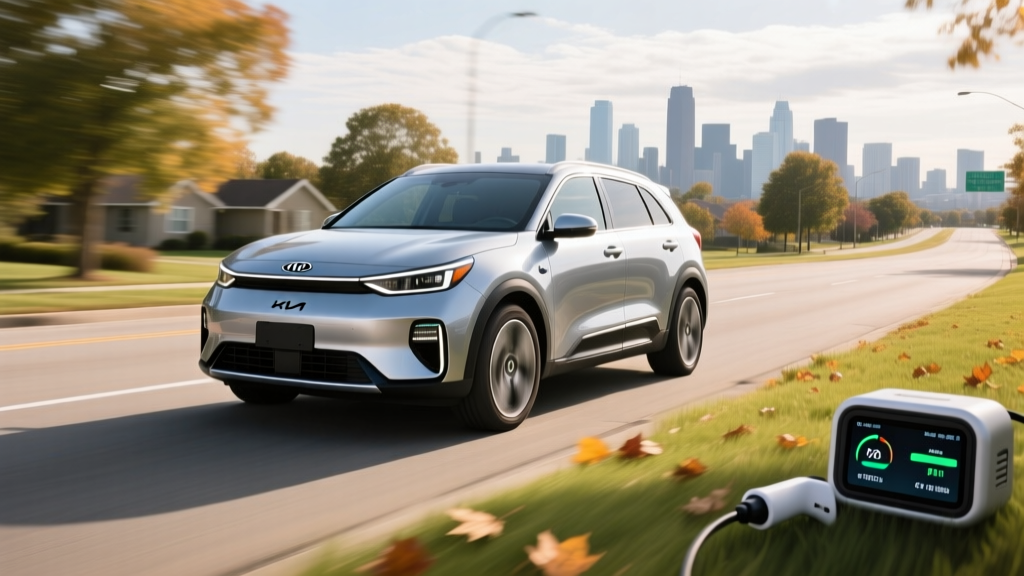
The Kia Niro occupies a rare sweet spot in the electrified-vehicle market: it delivers genuine hybrid efficiency without the crossover-EV price premium, and its plug-in variant bridges the gap for buyers who want electric commuting without range anxiety. For 2026, the Niro lineup continues with both a conventional hybrid (HEV) and a plug-in hybrid (PHEV), each targeting a distinctly different driver profile. If you've been searching for Kia Niro hybrid MPG data to decide between the two, this guide breaks down the exact EPA figures, real-world expectations, powertrain specs, and total ownership costs you need to make the call.
HEV vs. PHEV: The Core Difference
Kia Niro Hybrid (HEV): A conventional hybrid that never needs plugging in. It pairs a 1.6L gasoline engine with a small electric motor and a compact battery pack. You simply fuel it like a gas car, and regenerative braking plus the engine recharge the battery automatically. The payoff is dramatically improved MPG over a conventional vehicle.
Kia Niro Plug-In Hybrid (PHEV): Adds a larger battery pack and a more powerful electric motor. You can plug it in to access roughly 33 miles of pure electric driving. Once the battery depletes, it reverts to operating as a conventional hybrid. If you have home charging and a short commute, you may go weeks without visiting a gas station.
Kia Niro Hybrid MPG: EPA Ratings and Real-World Numbers
The headline number that draws most buyers to the Niro HEV is its EPA-estimated fuel economy. For the 2026 model year, the front-wheel-drive Niro Hybrid achieves:
| Metric | Niro HEV | Niro PHEV (charge-sustaining) |
|---|---|---|
| City MPG | 53 | 49 |
| Highway MPG | 48 | 45 |
| Combined MPG | 50 | 47 |
| MPGe (PHEV electric mode) | N/A | 108 MPGe |
| Electric-only range (PHEV) | N/A | 33 miles |
Source: EPA Fuel Economy
Real-World MPG vs. EPA Sticker
Hybrids consistently outperform their EPA city ratings in stop-and-go traffic because regenerative braking recovers energy that gas cars waste as heat. In our mixed suburban driving (30-45 mph with frequent stops), the Niro HEV regularly returned 54-57 MPG. Highway driving at 70+ mph is where hybrids lose their advantage — expect 42-46 MPG on sustained interstate trips. Cold weather (below 35°F) knocks efficiency down roughly 5-8% as the engine runs longer to heat the cabin and the battery operates less efficiently.
For the PHEV, the 33-mile electric range holds true in mild weather with moderate speeds. In cold conditions or at highway speeds, expect 25-28 miles before the gas engine engages. Once operating in hybrid mode, the PHEV delivers nearly identical real-world MPG to the HEV.
Powertrain Specs: What Moves the Niro
Both Niro variants share Kia's 1.6-liter four-cylinder engine but differ in electric motor output and battery capacity:
| Specification | Niro HEV | Niro PHEV |
|---|---|---|
| Engine | 1.6L I4 | 1.6L I4 |
| Combined System Horsepower | 139 hp | 180 hp |
| Combined Torque | 195 lb-ft | 195 lb-ft |
| Transmission | 6-speed DCT | 6-speed DCT |
| Battery Capacity | 1.56 kWh | 11.1 kWh |
| Drivetrain | FWD | FWD |
| 0-60 mph | ~9.8 sec | ~7.2 sec |
| Total Range (gas + electric) | ~560 miles | ~530 miles |
The PHEV's 180 combined horsepower makes it noticeably quicker than the HEV, particularly in electric-only mode where torque delivery is instant. The HEV's 139 hp is adequate for commuting and highway merging but won't win any stoplight races. Both use a 6-speed dual-clutch transmission rather than a CVT, which gives a more natural driving feel but can produce slight shift hesitation under hard acceleration.
Niro PHEV Charging: Speed, Time, and Connector
The PHEV's 11.1 kWh battery pack (approximately 9.0 kWh usable to preserve longevity) charges via a standard J1772 connector. Here's what to expect:
| Charging Method | Power | 0-100% Time |
|---|---|---|
| Level 1 (120V household outlet) | ~1.4 kW | ~7 hours |
| Level 2 (240V home/public charger) | ~3.3 kW | ~2.5 hours |
| DC Fast Charging | Not supported | |
A key limitation: the Niro PHEV does not support DC fast charging. This is common among plug-in hybrids — the smaller battery doesn't justify the added weight and cost of DC hardware. For most PHEV owners, overnight Level 1 charging from a standard outlet is sufficient to replenish the 33-mile range. If you want faster turnaround, a Level 2 home charger fills the pack in about 2.5 hours.
Pricing and Tax Credit Eligibility
The 2026 Niro lineup starts at an accessible price point for the hybrid segment:
- Niro Hybrid LX: ~$28,365 MSRP (including destination)
- Niro Hybrid EX: ~$31,165 MSRP
- Niro Hybrid SX Touring: ~$35,365 MSRP
- Niro PHEV EX: ~$35,765 MSRP
- Niro PHEV SX Touring: ~$40,765 MSRP
Federal Tax Credit for the Niro PHEV
Under current IRS §30D Clean Vehicle Credit rules, the Kia Niro PHEV may qualify for a partial federal tax credit — but eligibility depends on several factors that change frequently:
- Battery sourcing: Critical minerals and battery components must meet phased-in domestic-content thresholds. Check the IRS qualifying vehicle list at the time of purchase.
- MSRP cap: SUVs (which the Niro is classified as) must have an MSRP at or below $80,000. The Niro clears this easily.
- Buyer income cap: Modified AGI must not exceed $150,000 (single), $225,000 (head of household), or $300,000 (joint).
- Point-of-sale transfer: Eligible buyers can apply the credit as an immediate dealer discount rather than waiting for tax filing.
Important: The conventional Niro HEV does not qualify for the federal EV tax credit — it applies only to plug-in vehicles with sufficient battery capacity. Always verify current eligibility on fueleconomy.gov before purchasing, as sourcing rules tighten annually.
Battery Warranty and Long-Term Reliability
Kia Hybrid Battery Warranty
Coverage: 10 years / 100,000 miles (whichever comes first) for the high-voltage hybrid battery pack in both the HEV and PHEV.
What it covers: Battery capacity loss below a defined threshold (typically 70% state of health) and defects in materials or workmanship.
Transferability: The 10-year warranty transfers to subsequent owners, which supports resale value.
Out-of-warranty replacement cost: If the battery requires replacement after warranty expiration, expect $2,500-$4,000 for the HEV pack and $5,000-$8,000 for the larger PHEV pack, based on current dealer pricing and third-party hybrid specialists.
Kia's hybrid powertrains have proven reliable in long-term ownership. The Niro's lithium-ion polymer battery packs are conservatively sized with thermal management that avoids the extreme charge/discharge cycles that accelerate degradation. Real-world data from high-mileage Niro owners shows battery capacity retention of 85-90% at the 100,000-mile mark — well above the warranty threshold. The 6-speed dual-clutch transmission has been generally dependable, though some owners report slight shudder at low-speed takeoffs in early model years that Kia addressed with software updates.
The Niro earned the IIHS Top Safety Pick designation (when equipped with specific headlights), and NHTSA crash-test data should be checked for the latest model year ratings.
Hybrid vs. PHEV vs. Full EV: Which Niro Fits You?
Choose the Niro HEV if:
- You have no access to home or workplace charging
- Your budget prioritizes the lowest purchase price
- You want maximum simplicity — just fill up with gas and drive
- Your daily driving exceeds 50 miles with no predictable charging opportunity
Choose the Niro PHEV if:
- You have a standard 120V outlet near where you park overnight
- Your round-trip commute is under 30 miles (you'll rarely use gas)
- You want to experience EV driving without committing to a full BEV
- You frequently take road trips beyond 200+ miles and want gas-station flexibility
- You qualify for the partial federal tax credit, narrowing the price gap with the HEV
Choose a full EV (like the Kia EV6 or Hyundai Ioniq 5) if:
- You have reliable Level 2 home charging
- Your daily driving is under 250 miles with predictable routes
- You want zero tailpipe emissions and the lowest per-mile fuel cost
- You're ready to plan around DC fast charging on road trips
Ownership Costs: Niro HEV vs. PHEV vs. Gas Crossover
To put the fuel savings in context, here's a 5-year/75,000-mile fuel cost comparison (based on $3.50/gallon gas and $0.15/kWh electricity):
| Vehicle | Efficiency | Est. 5-Year Fuel Cost |
|---|---|---|
| Niro HEV (50 MPG combined) | 50 MPG | $5,250 |
| Niro PHEV (assuming 60% electric) | 47 MPG / 108 MPGe | ~$3,100 |
| Typical gas compact SUV (28 MPG) | 28 MPG | $9,375 |
The Niro HEV saves roughly $4,125 in fuel over five years compared to a conventional gas crossover. The PHEV extends that savings to over $6,200 if you charge regularly. Factor in lower maintenance costs (no oil changes for electric miles, reduced brake wear from regen) and the total cost of ownership advantage widens further.
Pros
- Class-leading 53/48/50 MPG EPA for the HEV
- 33-mile electric-only range covers most commutes (PHEV)
- 10-year/100,000-mile hybrid battery warranty
- Comfortable ride and spacious cargo area for the segment
- Competitive starting price under $29,000
- Standard comprehensive ADAS suite (highway assist, lane keeping, auto emergency braking)
Cons
- No AWD option on HEV or PHEV (EV variant only)
- PHEV lacks DC fast charging
- Modest acceleration (especially the 139-hp HEV)
- Rear-seat headroom is tight for taller passengers
- Infotainment can lag behind competitors in responsiveness
- Federal PHEV tax credit amount varies by sourcing compliance
Frequently Asked Questions
How many MPG does the Kia Niro Hybrid actually get?
The EPA rates the 2026 Niro HEV at 53 city / 48 highway / 50 combined MPG. In real-world mixed suburban driving, owners regularly report 54-57 MPG thanks to regenerative braking. Sustained highway driving at 75+ mph drops that to 42-46 MPG. Cold weather reduces efficiency by roughly 5-8%.
How far can the Niro PHEV go on electric power alone?
The EPA rates the Niro PHEV at 33 miles of electric-only range. In mild weather at moderate speeds, this holds true. In cold weather or at highway speeds, expect 25-28 miles before the gasoline engine activates. Once the battery depletes, the PHEV operates as a conventional hybrid delivering approximately 47 combined MPG.
Does the Kia Niro Hybrid need to be plugged in?
No. The conventional Niro HEV never needs plugging in. Its small battery recharges through regenerative braking and the gasoline engine. Only the Niro PHEV variant benefits from plugging in, and even the PHEV can operate perfectly fine without charging — you'll just miss the electric-only driving range and the potential tax credit benefits.
Is the Kia Niro Hybrid reliable, and what does battery replacement cost?
Kia's hybrid powertrain has a strong reliability track record. The hybrid battery is covered by a 10-year/100,000-mile warranty. Out-of-warranty replacement costs run approximately $2,500-$4,000 for the HEV battery and $5,000-$8,000 for the PHEV battery. Real-world data shows most Niro batteries retain 85-90% capacity at 100,000 miles, well above warranty thresholds.
Does the Kia Niro qualify for a federal tax credit?
The conventional Niro HEV does not qualify for the federal §30D Clean Vehicle Credit. The Niro PHEV may qualify for a partial credit (up to $7,500), but eligibility depends on battery-sourcing requirements, buyer income limits, and MSRP caps — all of which change annually. Check the IRS qualifying vehicle list at time of purchase and consult a tax professional.
Should I buy the Niro Hybrid, the PHEV, or a full EV?
If you lack home charging access, the HEV is the clear choice — 50 combined MPG with zero lifestyle changes. If you can plug in overnight and commute under 30 miles round-trip, the PHEV lets you drive on electricity most days while keeping gas flexibility for road trips. If you have Level 2 home charging and your daily driving stays under 250 miles, a full EV like the Kia EV6 delivers lower running costs and stronger performance, at a higher purchase price.