2026 Kia Niro Hybrid Mileage: What the EPA Says vs. What You'll Actually Get
If you've been searching for Kia Niro hybrid mileage data, you've likely seen the headline number: 53 MPG combined. That's the EPA estimate for the most efficient Niro HEV trim, and it's legitimate — but real-world fuel economy depends heavily on how and where you drive. The Niro also comes as a plug-in hybrid (PHEV) with 33 miles of electric-only range, which changes the math entirely for commuters with home charging.
This guide breaks down every efficiency number for the 2026 Kia Niro lineup — HEV and PHEV — including real-world adjustments, powertrain specs, battery warranty details, and whether either version qualifies for federal tax credits under current IRS §30D rules.
HEV vs. PHEV: Understanding the Two Niro Hybrids
Kia sells the Niro in two distinct hybrid configurations. Confusing them is the most common mistake buyers make, so let's be precise:
| Feature | Niro HEV (Conventional Hybrid) | Niro PHEV (Plug-In Hybrid) |
|---|---|---|
| Plugs in? | No — charges via regenerative braking and engine | Yes — J1772 connector, Level 2 compatible |
| Battery size | 1.56 kWh (lithium-ion) | 11.1 kWh (lithium-ion) |
| Electric-only range | Not applicable (EV mode limited to ~1 mi at low speed) | 33 miles (EPA) |
| Combined horsepower | 139 hp | 180 hp |
| Starting MSRP (2026) | ~$28,390 (LX) | ~$35,890 (EX) |
| Federal tax credit | Not eligible | Up to $3,750 (see eligibility below) |
The HEV operates like a traditional hybrid — the gasoline engine and electric motor work together, and the small battery recharges through regenerative braking. You never plug it in. The PHEV has a much larger battery that you charge externally, enabling pure electric driving for short commutes before the gasoline engine kicks in.
Kia Niro HEV Fuel Economy: EPA Numbers and Real-World MPG
| Trim | City MPG | Highway MPG | Combined MPG |
|---|---|---|---|
| FE (base, aero wheels) | 53 | 54 | 53 |
| LX / EX / Touring | 49 | 47 | 48 |
Source: EPA Fuel Economy
Real-World MPG: What Owners Report
Hybrids like the Niro HEV frequently exceed their EPA city estimates in real-world stop-and-go driving because regenerative braking recaptures energy that a gas car wastes as heat. In urban commuting with frequent stops, owners regularly report 52–58 MPG in FE trim.
However, highway efficiency tells a different story. At sustained 70–80 mph speeds, the electric motor contributes less and aerodynamic drag dominates. Expect 43–47 MPG on long highway trips in the FE trim, and 40–44 MPG in higher trims with wider tires and added weight. Cold weather (below 40°F) reduces fuel economy by roughly 10–15% as the engine runs more frequently to provide cabin heat and maintain battery temperature.
Kia Niro PHEV: Electric-Only Range and Combined Efficiency
The Niro PHEV pairs the same 1.6-liter four-cylinder engine with a more powerful 83-hp electric motor and an 11.1 kWh lithium-ion battery pack. The result is 180 combined horsepower — noticeably quicker than the HEV — and the ability to drive on electricity alone.
| Metric | Value |
|---|---|
| Electric-only range (EPA) | 33 miles |
| MPGe (electric + gas combined) | 108 MPGe |
| Gas-only MPG (after battery depleted) | 48 city / 45 hwy / 46 combined |
| Total combined range | ~510 miles |
| Battery capacity | 11.1 kWh |
| Level 2 charge time (0–100%) | ~2 hours 45 minutes (at 3.3 kW) |
| DC fast charging | Not supported |
Source: EPA Fuel Economy
Charging the Niro PHEV at Home
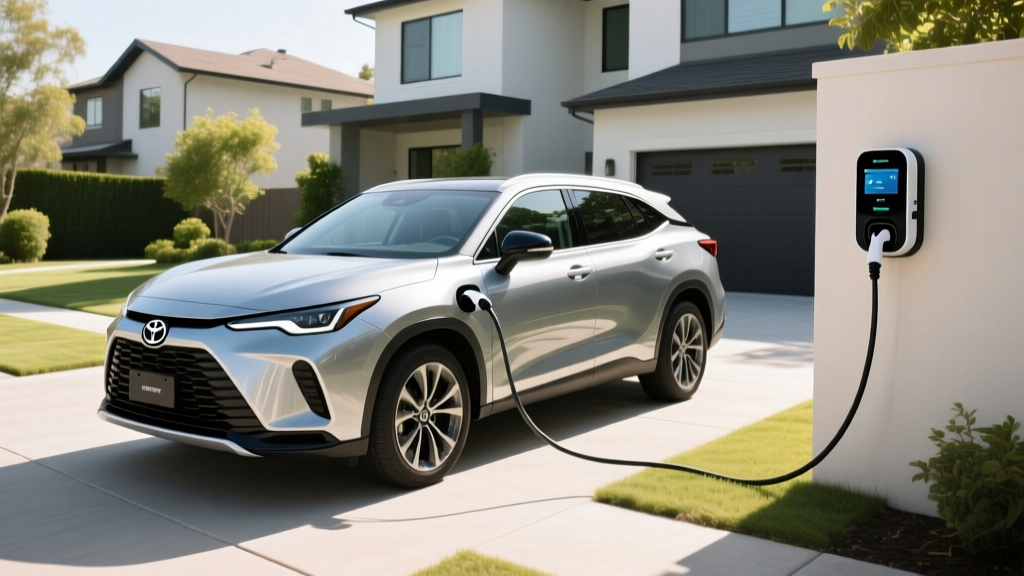
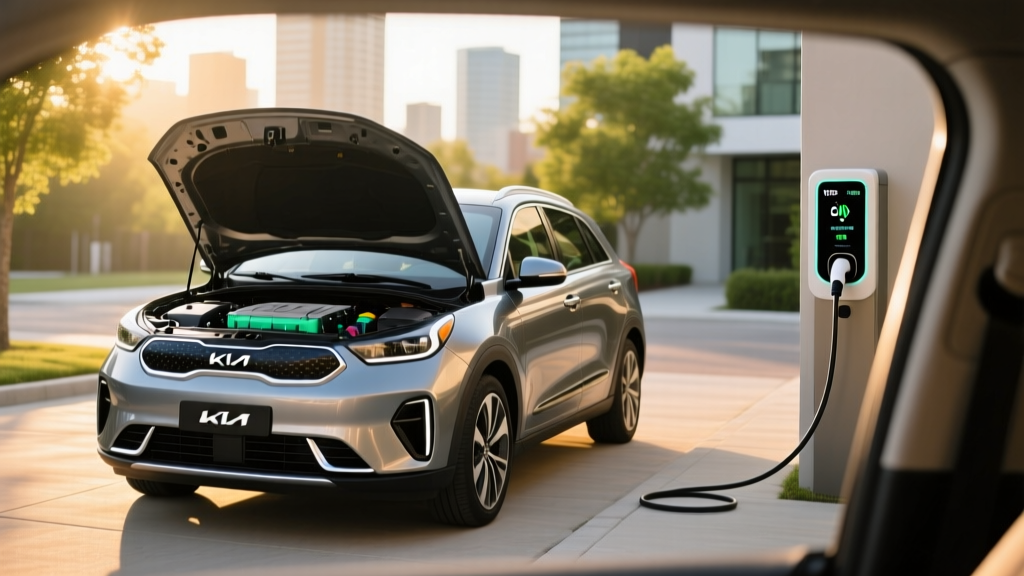
The Niro PHEV charges via a standard J1772 connector. On a Level 2 home charger (240V, 16A), a full charge takes approximately 2 hours and 45 minutes. On a standard 120V household outlet (Level 1), expect 8–9 hours — which still works for overnight charging if your daily commute is under 33 miles.
Critical note: the Niro PHEV does not support DC fast charging. This is typical for PHEVs — the battery is too small to benefit from high-power charging infrastructure. All charging happens at Level 1 or Level 2 speeds.
Powertrain Specs: What Moves the Niro
Both Niro hybrids use Kia's 1.6-liter GDI four-cylinder engine paired with a 6-speed dual-clutch automatic transmission (DCT) — not a CVT like many competitors. This gives the Niro more natural-feeling acceleration and better highway passing response.
| Spec | HEV | PHEV |
|---|---|---|
| Engine | 1.6L GDI 4-cyl (104 hp) | 1.6L GDI 4-cyl (104 hp) |
| Electric motor | 43 hp permanent-magnet | 83 hp permanent-magnet |
| Combined output | 139 hp / 195 lb-ft | 180 hp / 195 lb-ft |
| Transmission | 6-speed DCT | 6-speed DCT |
| Drivetrain | FWD | FWD |
| 0–60 mph (est.) | ~9.3 sec | ~7.4 sec |
The PHEV's extra electric motor power gives it a meaningful 0–60 advantage — roughly 2 seconds quicker than the HEV. For merging onto highways or climbing grades with passengers, the PHEV feels considerably more confident.
Pricing, Tax Credits, and Cost to Drive
2026 Kia Niro Pricing
| Model / Trim | MSRP |
|---|---|
| Niro HEV LX | $28,390 |
| Niro HEV EX | $30,090 |
| Niro HEV EX Touring | $33,090 |
| Niro HEV SX Touring | $35,490 |
| Niro PHEV EX | $35,890 |
| Niro PHEV SX Touring | $39,090 |
Federal Tax Credit Eligibility
The Niro HEV does not qualify for any federal tax credit — it's a conventional hybrid with no plug-in capability.
The Niro PHEV may qualify for a partial federal tax credit under IRS §30D rules, but eligibility is complex and subject to change. As of current rules:
- The credit amount depends on battery capacity and critical mineral/battery component sourcing requirements — the Niro PHEV's 11.1 kWh battery typically qualifies for a partial credit of up to $3,750 (not the full $7,500), depending on current-year sourcing compliance.
- Your adjusted gross income must fall below IRS caps: $150,000 (single), $225,000 (head of household), or $300,000 (joint).
- The vehicle MSRP must be under $80,000 for SUVs (the Niro qualifies easily).
- The credit can be transferred to the dealer at point of sale as a purchase discount, or claimed on your tax return.
Always verify current eligibility on IRS.gov and consult a tax professional before relying on credit amounts.
Annual Fuel Cost Comparison
Assuming 15,000 miles/year, $3.50/gallon gas, and $0.14/kWh electricity:
| Vehicle | Annual Fuel Cost |
|---|---|
| Niro HEV (48 MPG combined) | ~$1,094 |
| Niro PHEV (charged nightly, 30 mi electric daily) | ~$680 (electric + gas) |
| Comparable gas crossover (28 MPG combined) | ~$1,875 |
Battery Warranty, Reliability, and Replacement Costs
How Long Do Niro Hybrid Batteries Last?
Modern lithium-ion hybrid batteries are engineered for longevity. The Niro's battery management system maintains a charge buffer — the battery never fully charges to 100% or discharges to 0% — which significantly reduces degradation stress. Based on data from Kia's hybrid fleet since 2017, most Niro hybrid batteries retain 85–95% of original capacity after 100,000 miles.
Out-of-warranty battery replacement for the Niro HEV currently runs approximately $2,500–$3,800 (parts and labor). The PHEV's larger battery pack costs roughly $4,500–$6,500 to replace. These are estimates; actual costs vary by dealer and region.
General Reliability
The Niro's powertrain — 1.6L GDI engine + electric motor + 6-speed DCT — has been in production since 2017 with iterative improvements. The DCT is a proven design, and the hybrid system has fewer wear components than a conventional gas car (no traditional starter motor, no alternator, regenerative braking reduces brake pad wear). IIHS has rated recent Niro models well in crash testing.
Hybrid vs. PHEV vs. Full EV: Which Niro Fits You?
Choose the Niro HEV if:
- You don't have reliable access to home or workplace charging
- Your budget is under $33,000
- You drive a mix of city and highway with no predictable short commute
- You want maximum simplicity — no plugs, no charging apps
- Your priority is lowest possible cost per mile without lifestyle change
Choose the Niro PHEV if:
- You can install a Level 2 charger at home or charge at work daily
- Your round-trip commute is under 30 miles (you'll rarely use gas)
- You want EV-like daily driving but need gas flexibility for road trips
- You value the 180 hp powertrain for highway merging
- You can capture the partial federal tax credit
Pros and Cons at a Glance
Pros
- Class-leading 53 MPG combined (HEV FE trim)
- 10-year/100,000-mile hybrid battery warranty
- Practical hatchback cargo space (22.8 cu ft rear seats up)
- PHEV offers 33-mile EV range — enough for most commutes
- 6-speed DCT feels more natural than CVT competitors
- Low annual fuel cost (~$1,094/yr HEV)
Cons
- Higher trims drop to 48 MPG combined (FE efficiency is trim-specific)
- PHEV does not support DC fast charging
- FWD only — no AWD option for snow-belt buyers
- Modest 139 hp (HEV) — adequate but not quick
- PHEV premium ($7,500+ over HEV) requires years to recoup in fuel savings
- Partial tax credit only — not the full $7,500
Frequently Asked Questions
How many MPG does the Kia Niro hybrid get?
The 2026 Kia Niro HEV in FE trim achieves 53 city / 54 highway / 53 combined MPG per the EPA. Higher trims (LX, EX, Touring) are rated at 49/47/48 MPG. Real-world city driving often exceeds EPA estimates, while sustained highway driving at 75+ mph typically yields 43–47 MPG.
How far can the Niro PHEV go on electric only?
The EPA rates the Niro PHEV at 33 miles of electric-only range. In warm weather with moderate driving, expect 30–35 miles. In cold weather or at highway speeds, expect 22–28 miles before the gasoline engine engages.
Does the Kia Niro hybrid qualify for a tax credit?
The conventional Niro HEV does not qualify for any federal tax credit. The Niro PHEV may qualify for a partial credit of up to $3,750 under IRS §30D, subject to income limits, battery sourcing requirements, and current-year rules. Always verify on fueleconomy.gov and consult a tax professional.
Is the Kia Niro hybrid reliable, and what does a battery replacement cost?
The Niro hybrid powertrain has been in production since 2017 with a strong reliability record. Kia covers the hybrid battery for 10 years/100,000 miles (10/150,000 in CARB states). Out-of-warranty replacement runs approximately $2,500–$3,800 for the HEV and $4,500–$6,500 for the PHEV.
Should I buy the Niro hybrid, the PHEV, or a full electric vehicle?
If you lack home charging or regularly drive over 300 miles between fill-ups, the Niro HEV is the safest choice. If you have home charging and a sub-30-mile commute, the PHEV lets you drive electrically most days while keeping gas flexibility. If your daily driving is predictable and under 250 miles and you have reliable charging, a full BEV eliminates gasoline entirely and may offer a larger federal tax credit — but requires lifestyle commitment to charging.
Do I need to plug in the Niro HEV?
No. The conventional Niro HEV charges its small 1.56 kWh battery entirely through regenerative braking and the gasoline engine. There is no plug and no charging cord. Only the Niro PHEV requires external charging.