Quick Verdict: The Efficiency Champion of Compact Crossovers
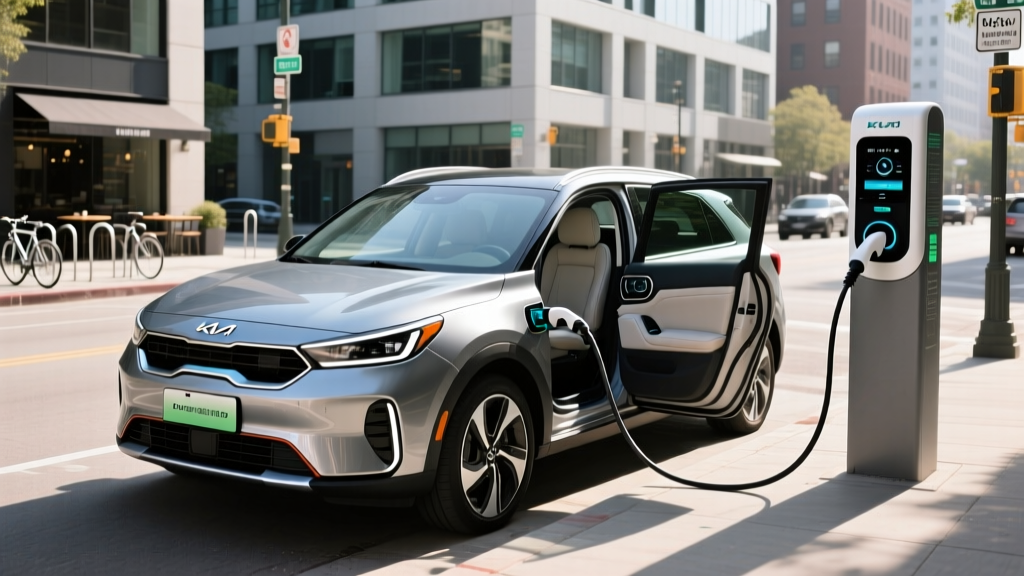
The 2023 Kia Niro Hybrid occupies a precise niche: a practical compact crossover that delivers genuinely exceptional fuel economy without requiring a plug, a lifestyle change, or a premium price tag. Redesigned for the 2023 model year on Kia's third-generation K platform, the Niro HEV pairs a 1.6-liter four-cylinder with an electric motor to achieve an EPA-estimated 53 MPG combined — a number that few non-plug-in vehicles can match. For buyers who want electrified efficiency but lack home charging access or face range anxiety, the conventional Niro Hybrid remains one of the most compelling choices on the market.
This guide covers the conventional hybrid (HEV) variant in depth. We also address the Niro Plug-In Hybrid (PHEV) and all-electric Niro EV where comparisons help clarify which version fits your needs.
HEV vs PHEV: Which 2023 Kia Niro Is Which?
Kia sells the 2023 Niro in three electrified forms. Confusing them at the dealership is easy — here's the breakdown:
| Attribute | Niro Hybrid (HEV) | Niro Plug-In Hybrid (PHEV) | Niro EV |
|---|---|---|---|
| Needs a plug? | No — self-charging | Yes — plug for EV range | Yes — plug required |
| EPA Combined MPG | 53 MPG (49 city / 55 hwy on FE trim) | 48 MPG combined (gas mode) | N/A — 113 MPGe |
| Electric-only range | None (EV assist only) | 33 miles EPA | 239 miles EPA |
| Battery capacity | 1.56 kWh (not usable for EV driving) | 11.1 kWh | 64.8 kWh |
| Combined horsepower | 139 hp | 180 hp | 201 hp |
| Base MSRP (2023) | $28,015 | $35,365 | $40,875 |
Key distinction: The conventional Niro HEV never plugs in. It recovers energy through regenerative braking and the gasoline engine to charge its small battery. The PHEV version has a larger battery you charge via a plug, enabling 33 miles of electric-only driving before the gas engine engages.
Fuel Economy: EPA Numbers and Real-World MPG
The 2023 Niro Hybrid's headline number is its efficiency, but the EPA figures vary by trim due to wheel size and equipment weight:
| Trim | City MPG | Highway MPG | Combined MPG |
|---|---|---|---|
| LX / EX (16" wheels) | 53 | 54 | 53 |
| EX Touring / SX / SX Touring (18" wheels) | 49 | 52 | 50 |
Source: EPA fueleconomy.gov
Real-World MPG: What Owners Actually See
Hybrids often exceed their EPA estimates in city driving because stop-and-go traffic maximizes regenerative braking and electric-motor assist. On the flip side, sustained highway speeds above 70 mph reduce the hybrid advantage.
Owner-reported data and independent testing suggest:
- City driving: 50–58 MPG is common, with some drivers exceeding 55 MPG in warm weather with light acceleration
- Highway driving (70-75 mph): Expect 44–50 MPG — the hybrid system provides less benefit at sustained high speed
- Cold weather penalty: Roughly 5–10% reduction in winter months due to cabin heating demands and reduced battery efficiency
- Combined real-world average: Most owners report 47–53 MPG over a full tank, closely tracking the EPA combined number
The 1.56 kWh lithium-ion battery in the HEV is small by design — it buffers energy for acceleration assist and regenerative capture, not for standalone electric driving. This keeps weight down and avoids the degradation concerns associated with larger traction batteries.
Powertrain and Performance Specifications
| Specification | 2023 Kia Niro Hybrid |
|---|---|
| Engine | 1.6L GDI 4-cylinder (104 hp / 109 lb-ft) |
| Electric motor | 32 kW permanent magnet (43 hp / 125 lb-ft) |
| Combined system output | 139 hp / 195 lb-ft torque |
| Transmission | 6-speed dual-clutch automatic (DCT) |
| Drivetrain | Front-wheel drive |
| Hybrid battery | 1.56 kWh lithium-ion |
| 0-60 mph | ~9.6 seconds |
| Fuel tank | 11.1 gallons |
| Total driving range | ~588 miles (EPA combined) |
| Cargo volume | 22.8 cu ft (rear seats up) / 54.5 cu ft (folded) |
| Curb weight | ~3,164–3,307 lbs (varies by trim) |
The 6-speed dual-clutch transmission is a notable choice. Unlike the continuously variable transmissions (CVTs) in the Toyota Prius or Honda Accord Hybrid, the DCT delivers more natural-feeling gear shifts and avoids the "rubber band" drone common to CVTs. The trade-off is slightly less seamless low-speed behavior, though Kia's tuning minimizes this in normal driving.
Battery Warranty, Reliability, and Replacement Cost
2023 Niro Hybrid Battery & Powertrain Warranty
- Hybrid battery warranty: 10 years / 100,000 miles (whichever comes first)
- Hybrid system components: 10 years / 100,000 miles (motor, inverter, BMS)
- Powertrain warranty: 10 years / 100,000 miles
- Basic bumper-to-bumper: 5 years / 60,000 miles
- Capacity retention threshold: Kia covers the hybrid battery if it falls below approximately 70% of original capacity during the warranty period
Note: In states that follow California Air Resources Board (CARB) emissions standards (CA, CO, CT, ME, MD, MA, NJ, NY, OR, RI, VT, WA), the hybrid battery warranty extends to 10 years / 150,000 miles.
Is the Niro Hybrid Reliable?
The 2023 Niro's 1.6L hybrid powertrain is Kia's second-generation system and has proven dependable across the Niro, Hyundai Ioniq, and Kia Sorento Hybrid lineups. The small 1.56 kWh battery undergoes shallow charge-discharge cycles — it rarely drops below 40% or above 80% state of charge — which significantly extends cell life compared to a full EV battery.
Kia's hybrid system has no history of widespread battery failures in the Niro line. The 10-year / 100,000-mile warranty provides strong protection, and the battery is expected to last the life of the vehicle under normal use.
Battery Replacement Cost
If the hybrid battery fails outside of warranty, replacement costs are relatively modest compared to a full EV:
- Hybrid battery pack (parts): $2,000–$3,500
- Labor: $500–$1,000
- Total out-of-pocket estimate: $2,500–$4,500
For context, this is roughly one-quarter the cost of replacing a full EV traction battery. Given the 10-year warranty and the shallow-cycle design, most Niro Hybrid owners will never face this expense.
Pricing, Trims, and Tax Credit Eligibility
The 2023 Kia Niro Hybrid is offered in five trims. Here's the MSRP breakdown at launch:
| Trim | MSRP (incl. destination) | Key Features |
|---|---|---|
| LX | $28,015 | 16" wheels, 8" touchscreen, wireless CarPlay/Android Auto, Smart Cruise Control |
| EX | $29,715 | Adds Smart Key, heated front seats, blind-spot monitoring, rear cross-traffic alert |
| EX Touring | $32,115 | 18" wheels, sunroof, power driver seat, leatherette upholstery |
| SX | $33,415 | 10.25" dual displays, Harman Kardon audio, highway driving assist, navigation |
| SX Touring | $36,115 | Adds ventilated seats, heated steering wheel, head-up display, parking collision avoidance |
Does the 2023 Niro Hybrid Qualify for a Federal Tax Credit?
No. The conventional Niro Hybrid (HEV) does not qualify for the federal §30D Clean Vehicle Credit. Under current IRS rules, the §30D credit applies only to plug-in electric vehicles — battery-electric vehicles (BEVs) and plug-in hybrids (PHEVs) with at least 7 kWh of battery capacity.
The Niro HEV's 1.56 kWh battery does not meet this threshold. However:
- The Niro Plug-In Hybrid may qualify for a partial or full §30D credit (up to $3,750), depending on battery sourcing and critical mineral requirements — check current-year IRS guidance for eligibility
- Some state and local incentives may apply to conventional hybrids — check your state's energy office or DMV for details
- Fuel savings over time can offset the lack of a tax credit. At 53 MPG vs. a 28 MPG gas crossover, a driver covering 15,000 miles/year saves roughly $1,100–$1,400 annually at $3.50/gallon fuel
Niro HEV vs PHEV vs EV: Which One Fits You?
Choose the Niro Hybrid (HEV) if:
- You cannot charge at home (apartment, street parking, no garage outlet)
- You want maximum range without stopping — 588+ miles per tank
- Your budget is under $30,000 for a well-equipped crossover
- You drive more highway miles than city miles (the hybrid advantage is smaller but still real)
- You want zero behavior change from a gas car — just fill up and go
Choose the Niro Plug-In Hybrid (PHEV) if:
- You can charge at home (Level 1 or Level 2) and most daily trips are under 33 miles
- You want electric-only commuting with gas-engine flexibility for road trips
- You may qualify for the §30D federal tax credit (check IRS sourcing rules)
- You want 180 hp — the PHEV's larger motor makes it noticeably quicker
Choose the Niro EV if:
- You have reliable home Level 2 charging and want zero tailpipe emissions
- Your daily driving is under 200 miles and you rarely road-trip beyond 239 miles without a charging stop
- You want the lowest per-mile fuel cost (electricity at $0.13/kWh = ~$0.04/mile vs. ~$0.07/mile for the HEV)
- You want the full §30D credit (eligibility dependent on sourcing rules and income caps)
Pros and Cons at a Glance
Pros
- 53 MPG EPA combined — among the best of any crossover, hybrid or otherwise
- No plug required — zero infrastructure dependency
- 588-mile total range eliminates fuel stops on long road trips
- 10-year / 100,000-mile hybrid battery warranty (150k in CARB states)
- Dual-clutch transmission avoids CVT drone
- Generous standard safety tech (Smart Cruise Control, lane-keeping, forward collision avoidance)
- 22.8 cu ft cargo space beats many compact crossovers
Cons
- 139 hp makes highway merging and passing feel sluggish
- No AWD option — front-wheel drive only
- FWD limits appeal in heavy snow regions
- No federal tax credit for the HEV variant
- 18" wheel trims drop efficiency to 50 MPG combined
- Road noise at highway speeds is noticeable
- Base LX trim feels sparse compared to competitors
Frequently Asked Questions
How many MPG does the 2023 Kia Niro Hybrid get?
The EPA rates the Niro Hybrid LX and EX trims at 53 city / 54 highway / 53 combined MPG. Trims with 18-inch wheels (EX Touring, SX, SX Touring) are rated at 49 city / 52 highway / 50 combined. Real-world owner averages typically fall between 47 and 55 MPG combined depending on driving style, terrain, and climate.
Does the Niro Hybrid need to be plugged in?
No. The conventional Niro Hybrid (HEV) is a self-charging hybrid. It recovers energy through regenerative braking and the gasoline engine. You never plug it in — you simply refuel at any gas station. Only the Niro Plug-In Hybrid (PHEV) and Niro EV require a charging cable.
How far can the Niro Hybrid drive on electric power alone?
The conventional Niro HEV cannot drive on electric power alone for any meaningful distance. Its 1.56 kWh battery assists the gas engine during acceleration and enables brief low-speed electric creep, but it is not designed for EV-only driving. If you want electric-only capability, the Niro PHEV offers 33 miles of EV range, and the Niro EV offers 239 miles.
Is the 2023 Kia Niro Hybrid reliable?
The Niro Hybrid's second-generation 1.6L powertrain has a strong reliability record across Kia and Hyundai's hybrid lineup. The lithium-ion hybrid battery uses shallow charge cycles (roughly 40–80% state of charge), which minimizes degradation. Kia backs the hybrid battery and related components with a 10-year / 100,000-mile warranty (150,000 miles in CARB states). There are no widespread reports of premature hybrid system failures in the Niro line.
What does it cost to replace the Niro Hybrid battery?
Out-of-warranty replacement for the 1.56 kWh hybrid battery pack typically costs $2,500–$4,500 including parts and labor. This is significantly less than a full EV battery replacement. Given the 10-year warranty and the battery's shallow-cycle design, most owners will never need a replacement.
Does the Niro Hybrid qualify for any tax credit?
The conventional Niro Hybrid (HEV) does not qualify for the federal §30D Clean Vehicle Credit, which is reserved for plug-in vehicles with at least 7 kWh of battery capacity. The Niro PHEV may qualify for a partial credit depending on current-year IRS battery sourcing and critical mineral rules. Some states offer separate incentives for hybrid vehicles — check your state energy office or the Alternative Fuels Data Center for local programs.
How does the Niro Hybrid compare to the Toyota Prius?
The 2023 Toyota Prius achieves up to 57 MPG combined (LE trim) and offers available AWD, which the Niro does not. However, the Niro Hybrid provides more cargo space (22.8 vs 20.2 cu ft), a more traditional crossover seating position, and Kia's longer 10-year powertrain warranty vs. Toyota's 8-year hybrid warranty. The Prius wins on pure MPG; the Niro wins on utility and warranty coverage.
Can the 2023 Niro Hybrid tow?
Kia does not rate the Niro Hybrid for towing in the US market. It is designed as a fuel-efficient commuter crossover, not a hauler. If you need towing capacity, consider a hybrid SUV like the Toyota RAV4 Hybrid (1,500 lbs) or the Kia Sorento Hybrid (2,000 lbs).