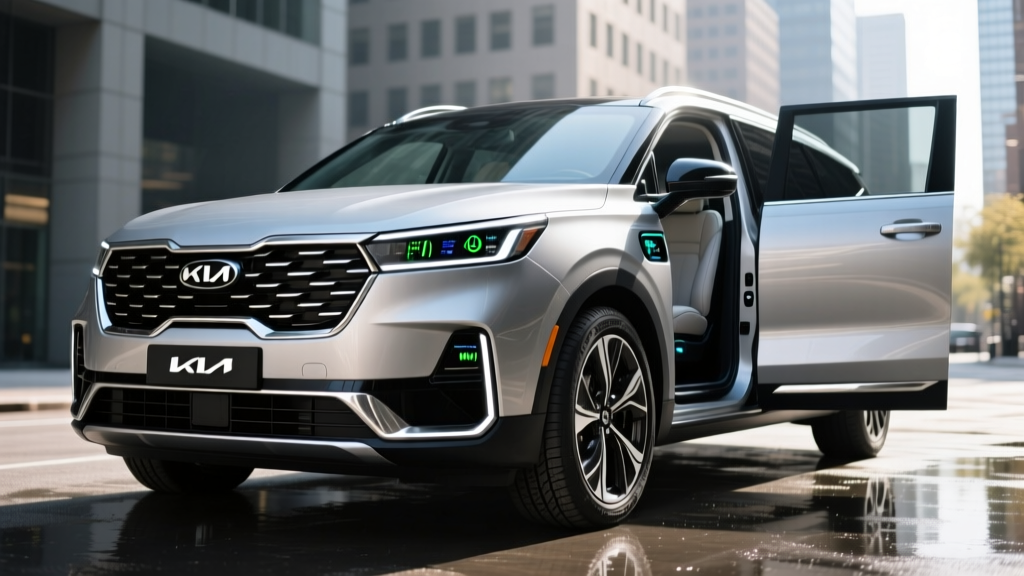
The minivan segment has finally gone hybrid. For 2026, the Kia Carnival arrives with a conventional hybrid (HEV) powertrain that promises to slash fuel costs for families who rack up highway miles and city school-run loops alike. Unlike a plug-in hybrid or a full battery-electric vehicle, the Kia Hybrid Carnival requires no plug, no behavior change, and no range anxiety — it simply sips fuel through a turbocharged 1.6-liter engine paired with an electric motor.
But does the real-world fuel economy match the EPA sticker? What does ownership actually look like when you factor in warranty coverage, maintenance, and the lack of a federal tax credit? This guide breaks down every number you need to decide whether the 2026 Kia Hybrid Carnival is the right family hauler — or whether a PHEV or full EV makes more sense for your driveway.
2026 Kia Hybrid Carnival: Powertrain and Performance Specs
The 2026 Carnival Hybrid uses Kia's proven 1.6-liter turbocharged GDI four-cylinder engine mated to an electric motor and a 6-speed automatic transmission. This is a conventional hybrid system — the battery recharges through regenerative braking and engine power. You never plug it in.
| Specification | Value |
|---|---|
| Engine | 1.6L Turbo GDI 4-cylinder |
| Electric Motor | 47 kW (63 hp) permanent-magnet synchronous |
| Combined System Output | 245 hp / 271 lb-ft torque |
| Transmission | 6-speed automatic |
| Drivetrain | FWD (AWD not available) |
| Hybrid Battery | ~1.49 kWh lithium-ion (self-charging HEV) |
| Seating Capacity | 7 or 8 passengers |
| Cargo Volume (behind 3rd row) | 33.9 cu ft |
| Max Cargo Volume | 145.1 cu ft |
| Towing Capacity | 3,500 lbs |
| 0–60 mph (est.) | ~7.8 seconds |
The 245 combined horsepower is a meaningful bump over the outgoing V6's 290 hp rating in terms of low-end torque delivery. The electric motor fills in the torque gap at low RPMs, making the Hybrid Carnival feel surprisingly responsive off the line — something you notice immediately at stoplights and during highway merges. The trade-off is the absence of all-wheel drive; if you need AWD in a hybrid minivan, the Toyota Sienna remains the only option in the segment.
Fuel Economy: EPA Ratings vs. Real-World MPG
Fuel economy is the headline reason this van exists. Here is how the EPA rates the 2026 Kia Carnival Hybrid, per fueleconomy.gov:
| Driving Cycle | EPA MPG |
|---|---|
| City | 34 MPG |
| Highway | 31 MPG |
| Combined | 33 MPG |
Compared to the gas-only Carnival's 22 MPG combined, the hybrid delivers a 50% improvement in fuel efficiency. Over 15,000 miles per year, that translates to roughly 227 fewer gallons of fuel — about $750–$900 in annual savings at $3.50/gallon.
Real-World MPG Expectations
EPA Combined: 33 MPG
In real-world mixed driving, owners of Kia's 1.6T hybrid system (shared with the Sorento Hybrid and Sportage Hybrid) typically report 31–36 MPG combined. City-heavy routes with frequent stops favor the hybrid system — expect 34–37 MPG in suburban driving. Sustained highway cruising at 75+ mph drops efficiency to roughly 28–30 MPG due to the minivan's aerodynamic profile and 4,600-lb curb weight. In cold weather (below 30°F), expect a 5–8% efficiency reduction as the engine runs more frequently for cabin heat.
One advantage conventional hybrids hold over PHEVs and EVs: cold weather barely impacts total range. The engine provides heat, and the small battery isn't subject to the same cold-induced range loss as a 70+ kWh EV pack.
Hybrid vs. PHEV vs. Full EV: Which Family Vehicle Fits?
Before committing to the Carnival Hybrid, it is worth understanding where it sits in the electrification spectrum. The Carnival is only offered as a conventional HEV — there is no plug-in hybrid (PHEV) variant for 2026.
| Factor | HEV (Carnival Hybrid) | PHEV (e.g., Chrysler Pacifica Hybrid) | BEV (e.g., Kia EV9) |
|---|---|---|---|
| Plug-in Required? | No | Yes (Level 1/2) | Yes (Level 2/DC) |
| Electric-Only Range | N/A | 32 miles | 270–304 miles |
| Total Range | ~600 miles | ~460 miles | 270–304 miles |
| Combined Efficiency | 33 MPG | 30 MPG / 82 MPGe | 85–89 MPGe |
| Home Charging Needed? | No | Recommended | Essential |
| Federal Tax Credit | None | Up to $7,500 (§30D) | Up to $7,500 (§30D) |
| Starting MSRP | ~$41,000 | ~$51,000 | ~$55,000 |
Which Should You Choose?
Choose the Kia Carnival Hybrid (HEV) if: You want maximum range with zero lifestyle changes, no home charger installation, and the lowest entry price. Ideal for apartment dwellers, frequent road-trippers, and buyers who want minivan practicality without plug-in logistics.
Choose a PHEV minivan if: You can charge at home, your daily driving is under 30 miles, and you want electric-only commuting with gas-engine backup for road trips. The $7,500 federal credit can offset the higher MSRP.
Choose a full EV (like the Kia EV9) if: You have reliable home Level 2 charging, want the lowest per-mile energy cost, and your road trips are planned around DC fast charging. The EV9 offers three-row seating but less cargo flexibility than the Carnival.
Pricing, Trims, and Tax Credit Eligibility
The 2026 Kia Carnival Hybrid is available across multiple trims. Pricing below reflects manufacturer MSRP before destination charges:
| Trim | MSRP (est.) |
|---|---|
| LXS | $40,900 |
| EX | $43,500 |
| SX | $47,200 |
| SX Prestige | $52,500 |
Does the Kia Carnival Hybrid Qualify for a Federal Tax Credit?
No. The Kia Carnival Hybrid is a conventional HEV, not a plug-in vehicle. Under IRS §30D rules, the federal clean vehicle credit applies only to battery-electric vehicles (BEVs) and plug-in hybrids (PHEVs) that meet battery capacity, critical-mineral sourcing, MSRP cap, and buyer income requirements. Conventional hybrids do not qualify for any federal purchase incentive.
Some states may offer modest rebates or HOV-lane access for hybrid vehicles, but these vary by jurisdiction. Check your state's energy or DMV website for current programs. There is no federal incentive for HEV purchases in 2026.
Battery Warranty, Reliability, and Replacement Cost
Hybrid battery longevity remains the top concern for first-time hybrid buyers. Here is what Kia provides:
Kia Hybrid Battery Warranty
Hybrid/EV Battery: 10 years / 100,000 miles (whichever comes first)
Hybrid System Components: 10 years / 100,000 miles — includes electric motor, inverter, and related electronics
Bumper-to-Bumper: 5 years / 60,000 miles
Powertrain: 10 years / 100,000 miles
Kia's 10-year/100,000-mile hybrid battery warranty is among the strongest in the industry and applies to the original owner. For subsequent owners, the warranty typically transfers at 5 years/60,000 miles — verify with your dealer.
How Long Will the Hybrid Battery Last?
The Carnival Hybrid's ~1.49 kWh battery pack is small and operates within a narrow state-of-charge window (typically 40–80%), which dramatically reduces stress and degradation. Based on data from Kia and Hyundai's 1.6T hybrid systems in the Sorento, Tucson, and Ioniq Hybrid, most owners experience less than 5% capacity loss over 100,000 miles. These packs are engineered to outlast 150,000–200,000 miles under normal use.
Battery Replacement Cost
If a hybrid battery does fail outside warranty, replacement costs for Kia's 1.6T hybrid system battery typically range from $2,000 to $3,500 including labor — far less than a full EV battery replacement. Individual module replacement may be possible for under $1,000 in some cases. This is a fraction of the $10,000–$20,000+ EV battery replacement costs that worry some buyers.
Reliability Track Record
Kia's 1.6L turbo hybrid powertrain has been in production since 2022 across multiple models. Early reports from the IIHS and owner surveys indicate strong reliability for the hybrid system. The conventional hybrid architecture is mechanically simpler than a PHEV (no onboard charger, no large battery cooling system, no plug hardware), which reduces potential failure points. The 6-speed automatic is a proven unit shared across the Hyundai-Kia lineup.
Daily Ownership: What Living with the Carnival Hybrid Is Like
The ownership experience of the Carnival Hybrid differs from a full EV in important ways:
- No charging logistics: Fill up at any gas station. No home charger installation ($500–$2,000), no public charging apps, no range planning for road trips.
- Maintenance: Oil changes still required, but less frequent than a pure gas car (the engine runs less). Expect 7,500–10,000-mile intervals. Brake pads last significantly longer due to regenerative braking — many hybrid owners report 80,000+ miles on original pads.
- Insurance: Hybrid minivans typically carry insurance premiums 5–10% higher than their gas counterparts due to higher repair costs for hybrid components. Get quotes before purchasing.
- Driving feel: The electric motor provides instant low-end torque, making the Carnival Hybrid feel more responsive than the gas V6 around town. Highway passing power is adequate but not thrilling — the 245 hp system output has to motivate nearly 4,700 lbs.
Pros and Cons of the 2026 Kia Carnival Hybrid
Pros
- 33 MPG combined — 50% better than gas Carnival
- No plug-in required; zero lifestyle change
- 245 hp with strong low-end electric torque
- 10-year/100,000-mile hybrid battery warranty
- Class-leading cargo space (145.1 cu ft max)
- Available premium features (dual sunroof, VIP rear seats)
- Low battery replacement cost ($2,000–$3,500)
Cons
- No AWD option (Toyota Sienna Hybrid offers AWD)
- No federal tax credit eligibility
- Highway MPG drops to ~28–30 at 75+ mph
- ~$3,000–$4,000 premium over gas Carnival
- FWD only may limit snow-belt appeal
- No PHEV variant available for electric commuting
Frequently Asked Questions
How many MPG does the 2026 Kia Carnival Hybrid get?
The EPA rates the 2026 Kia Carnival Hybrid at 34 MPG city, 31 MPG highway, and 33 MPG combined. Real-world results vary: city-heavy driving often yields 34–37 MPG thanks to regenerative braking, while sustained 75+ mph highway driving drops to approximately 28–30 MPG.
Does the Kia Carnival Hybrid need to be plugged in?
No. The Carnival Hybrid is a conventional hybrid (HEV). Its small battery recharges through regenerative braking and the gasoline engine. You never plug it in — just fill it with regular unleaded fuel.
Is the Kia Carnival available as a plug-in hybrid (PHEV)?
Not for 2026. Kia offers the Carnival exclusively as a conventional hybrid. If you need a plug-in hybrid minivan, the Chrysler Pacifica PHEV (32 miles electric-only range) is currently the only option in the segment.
Does the Kia Carnival Hybrid qualify for any tax credit?
No federal tax credit applies. The IRS §30D clean vehicle credit is limited to plug-in vehicles (BEVs and PHEVs). Conventional hybrids like the Carnival HEV are ineligible. Some states may offer minor incentives — check your local energy office.
How reliable is the Kia Carnival Hybrid battery?
Kia backs the hybrid battery with a 10-year/100,000-mile warranty. The small ~1.49 kWh pack operates in a narrow charge window, minimizing degradation. Based on data from Kia's 1.6T hybrid platform, most owners see less than 5% capacity loss over 100,000 miles, with packs designed to last 150,000–200,000+ miles.
What does it cost to replace the hybrid battery?
Out-of-warranty replacement for the Carnival Hybrid battery typically costs $2,000–$3,500 including labor. Individual cell module repairs may cost less. This is significantly cheaper than full EV battery replacements, which can exceed $15,000.
How does the Carnival Hybrid compare to the Toyota Sienna Hybrid?
The Toyota Sienna Hybrid is rated at 36 MPG combined (FWD) and offers available AWD, which the Carnival does not. However, the Sienna produces only 245 hp from its naturally aspirated hybrid system and has less maximum cargo volume. The Carnival Hybrid offers a more premium interior, more cargo space, and a stronger warranty — but the Sienna wins on fuel economy and AWD availability.
Is the hybrid worth the price premium over the gas Carnival?
At roughly $3,000–$4,000 more than the gas-only Carnival, the hybrid premium pays for itself in approximately 4–5 years for drivers covering 15,000 miles annually at $3.50/gallon. If you plan to keep the van for 7+ years, the fuel savings and stronger resale value of the hybrid make it the clear financial choice.