Quick Verdict: The Minivan That Finally Makes Hybrid Standard
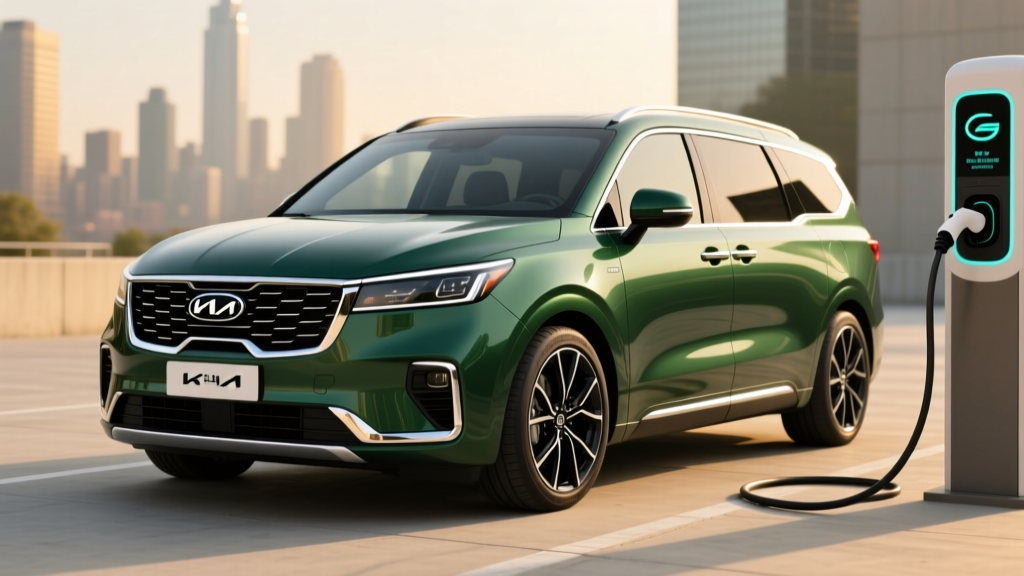
The 2026 Kia Carnival SX Prestige Hybrid sits at the top of Kia's minivan lineup, pairing a 1.6-liter turbocharged hybrid powertrain with premium cabin tech and three-row practicality. For families weighing a minivan purchase, the Carnival Hybrid eliminates the fuel-cost sting of a 4,600-pound people-hauler without requiring any plug-in routine or range compromises. It is a conventional hybrid (HEV), not a plug-in hybrid (PHEV) — meaning it charges itself through regenerative braking and the gasoline engine, never needing a wall outlet.
The SX Prestige trim layers on VIP lounge seating, a dual-screen panoramic display, Highway Driving Assist 2, and a hands-free power liftgate over the already generous Hybrid equipment list. At an MSRP near $51,000, it undercuts a comparably equipped Toyota Sienna Platinum while delivering competitive fuel economy and more horsepower.
Powertrain and Performance Specs
| Attribute | Value |
|---|---|
| Powertrain Type | Conventional Hybrid (HEV) — no plug required |
| Engine | 1.6L Turbocharged 4-Cylinder + Electric Motor |
| Combined Horsepower | 245 hp |
| Combined Torque | 271 lb-ft |
| Transmission | 6-Speed Automatic |
| Drivetrain | Front-Wheel Drive |
| Hybrid Battery | ~1.49 kWh Lithium-Ion (self-charging) |
| 0–60 mph (est.) | ~7.5 seconds |
| Towing Capacity | 3,500 lbs |
| Cargo Volume (behind 3rd row) | 41.1 cu ft |
| Cargo Volume (max) | 145.1 cu ft |
The 245-horsepower output gives the Carnival Hybrid a meaningful edge over the Toyota Sienna's 245 hp (but Sienna achieves it with a naturally aspirated 2.5L), and the turbo torque makes highway merging and loaded-up hill climbs feel confident. The electric motor fills in the low-end torque gap that smaller turbo engines often exhibit, resulting in smooth acceleration from stops — a trait you'll appreciate in school-dropoff traffic.
Fuel Economy: EPA Ratings vs. Real-World MPG
| Cycle | MPG |
|---|---|
| City | 34 MPG |
| Highway | 31 MPG |
| Combined | 33 MPG |
Source: EPA fueleconomy.gov
Over 15,000 miles per year, the Carnival Hybrid's 33 MPG combined saves roughly $600–$800 annually compared to the non-hybrid Carnival (which returns about 22 MPG combined) at $3.50/gallon regular unleaded. That fuel savings compounds to $3,000–$4,000 over a five-year ownership period — a significant offset to the hybrid premium.
HEV vs. PHEV vs. EV: Which Powertrain Fits Your Family?
Minivan buyers face three electrification paths. The Carnival is offered as a conventional hybrid (HEV). Here's how each powertrain type compares for family duty:
Conventional Hybrid (HEV)
Example: Kia Carnival Hybrid, Toyota Sienna Hybrid
Plug required? No
Electric-only range: Less than 1 mile at low speeds
Best for: Families without home charging access, road-trip-heavy schedules, those who want fuel savings with zero behavior change.
Plug-in Hybrid (PHEV)
Example: Chrysler Pacifica Hybrid
Plug required? Yes (for full benefit)
Electric-only range: ~32 miles
Best for: Families with home Level 2 charging who do most daily driving under 30 miles but need gas flexibility for long trips.
Battery Electric (BEV)
Example: No three-row BEV minivan currently sold in the US (upcoming models expected)
Plug required? Yes — always
Range: N/A in this segment currently
Best for: Not yet viable for minivan buyers unless a crossover SUV works as a substitute.
The Carnival Hybrid is the right call if you want set-it-and-forget-it efficiency. You'll never search for a charger, never worry about plug availability on vacation, and never experience range anxiety. The trade-off is that you can't do school runs on pure electricity like a PHEV — but you also avoid the $5,000–$8,000 price premium and heavier curb weight that PHEVs carry.
Pricing, SX Prestige Equipment, and Tax Credit Eligibility
The 2026 Kia Carnival Hybrid is offered across multiple trims. The SX Prestige sits at the top:
| Trim | Approx. MSRP |
|---|---|
| LXS | $40,500 |
| EX | $43,500 |
| SX | $47,000 |
| SX Prestige | $51,000 |
The SX Prestige adds VIP second-row lounge seats with pop-up ottomans and heated/ventilated cushions, a 12.3-inch digital cluster paired with a 12.3-inch infotainment screen, a 12-speaker Bose premium audio system, a head-up display, a digital key, Highway Driving Assist 2 (HDA2), and remote smart parking assist.
Battery Warranty, Reliability, and Replacement Cost
- Hybrid Battery Warranty: 10 years / 100,000 miles (10 years/150,000 miles in CARB states including CA, CO, CT, ME, MA, NJ, NY, OR, RI, VT, WA)
- Hybrid System Components: 10 years / 100,000 miles
- Powertrain Warranty: 10 years / 100,000 miles
- Limited Vehicle Warranty: 5 years / 60,000 miles
Kia's hybrid battery warranty is among the strongest in the industry and matches Hyundai's coverage. The 1.49 kWh lithium-ion pack in the Carnival Hybrid is relatively small — it's a power-assist battery, not the large energy-storage pack found in a BEV. This smaller size means lower thermal stress, fewer charge cycles at high depth, and historically better longevity.
Reliability outlook: Kia's 1.6T hybrid powertrain has been deployed across the Sorento Hybrid, Sportage Hybrid, and now the Carnival since the 2025 model year. Early data is limited, but the architecture shares components with Hyundai-Kia's well-established TMED-II (Transmission-Mounted Electric Device) system that has proven durable in the Niro and Ioniq Hybrid before it. Common failure points in any hybrid are the 12V auxiliary battery (same as any car) and the inverter coolant system — neither is unique to Kia.
Battery replacement cost: If the hybrid battery fails outside warranty, expect a replacement cost of approximately $2,000–$3,500 for the battery module pack, plus labor. This is significantly less than BEV battery replacements ($8,000–$20,000+) because the pack is far smaller. Individual cell modules can sometimes be replaced rather than the entire pack, reducing cost further. Most hybrid batteries in modern vehicles last well beyond 150,000 miles with normal use.
SX Prestige Features That Matter for Families
The SX Prestige trim justifies its ~$10,500 premium over the base LXS Hybrid with features that translate directly to daily family life:
- VIP Lounge Seating (2nd row): Heated and ventilated captain's chairs with power recline, pop-up leg rests, and slide-forward "relaxation mode." For long highway trips, this is the most comfortable second-row experience in any mainstream minivan.
- Highway Driving Assist 2 (HDA2): A Level 2 (SAE) driver-assistance system combining adaptive cruise control with stop-and-go, lane-centering, and navigation-based speed adjustment. The driver must remain engaged with hands on the wheel — this is not autonomous driving.
- Dual 12.3-inch panoramic displays: The integrated curved panel houses both the instrument cluster and infotainment, with wireless Apple CarPlay and Android Auto.
- Rear-seat entertainment (available): Dual 14.6-inch rear screens with streaming capability and screen mirroring — critical for long family road trips.
- Surround View Monitor + Remote Parking: A 360-degree camera with a bird's-eye view simplifies parking this 16-foot vehicle. Remote Smart Parking Assist lets you move the Carnival in and out of tight garage spots from outside the vehicle using the key fob.
- Hands-free power sliding doors and liftgate: Approach with the key fob and the doors open automatically — invaluable when your hands are full of children and groceries.
Pros and Cons: The Honest Assessment
Pros
- 33 MPG combined in a 4,600-lb minivan — no plugging in required
- 245 hp with turbo torque makes it the most powerful hybrid minivan available
- 10-year/100,000-mile hybrid battery warranty (150K in CARB states)
- SX Prestige VIP seating is genuinely premium — rivals luxury SUVs
- 3,500-lb towing capacity (matches or exceeds competitors)
- Strong safety tech standard across all trims
Cons
- No all-wheel-drive option (Toyota Sienna offers AWD hybrid)
- No PHEV variant available — can't do electric-only school runs
- No federal §30D tax credit eligibility
- Highway MPG dips to ~29–31 real-world at 75 mph
- SX Prestige at $51K approaches luxury-SUV territory
- Third-row space slightly tighter than Honda Odyssey
Who Should Buy the Carnival SX Prestige Hybrid?
Choose the Carnival SX Prestige Hybrid if:
- You need three rows and want the best fuel economy without plug-in hassle
- Your daily driving mixes city errands and highway commuting
- You want premium second-row comfort for kids or aging parents
- You don't have reliable home or workplace EV charging
- You value Kia's 10-year powertrain warranty
Look elsewhere if:
- You need all-wheel drive (consider Toyota Sienna AWD Hybrid)
- You want 30+ miles of electric-only driving (consider Chrysler Pacifica PHEV)
- You qualify for and want to maximize the $7,500 federal EV tax credit (requires a BEV or PHEV)
- You prioritize maximum third-row and cargo space (Honda Odyssey offers slightly more)
Frequently Asked Questions
How many MPG does the 2026 Kia Carnival Hybrid get?
The EPA rates the Carnival Hybrid at 34 MPG city, 31 MPG highway, and 33 MPG combined. In real-world suburban driving, many owners see 35–37 MPG thanks to aggressive regenerative braking in stop-and-go traffic. Highway-only trips at 75 mph tend to return 29–31 MPG.
Does the Kia Carnival Hybrid need to be plugged in?
No. The Carnival Hybrid is a conventional hybrid (HEV). Its small 1.49 kWh battery recharges through regenerative braking and the gasoline engine. You simply fill it with regular unleaded gasoline and drive. There is no charging port.
How far can the Carnival Hybrid drive on electric power alone?
Less than one mile at very low speeds (under 25 mph). The electric motor primarily assists the gas engine during acceleration and enables brief engine-off coasting — it is not designed for sustained electric-only driving. If electric-only range is a priority, you need a PHEV like the Chrysler Pacifica Hybrid (32 miles EV range).
Is the Kia Carnival Hybrid reliable?
Kia's 1.6T hybrid system shares architecture with proven powertrains in the Sorento and Sportage Hybrid lines. The hybrid battery is covered by a 10-year/100,000-mile warranty (150,000 miles in CARB states). Modern hybrid batteries routinely last 150,000+ miles. The most common maintenance items are identical to any gasoline vehicle: tires, brakes (which last longer thanks to regenerative braking), and fluid changes.
What does the hybrid battery replacement cost?
Out of warranty, expect $2,000–$3,500 for the hybrid battery module pack plus labor. This is far less than a BEV battery replacement because the pack is small (~1.49 kWh). Many hybrid battery failures involve individual modules rather than the entire pack, and independent hybrid shops can often replace modules for under $1,500.
Does the Kia Carnival Hybrid qualify for any tax credit?
The Carnival Hybrid does not qualify for the federal §30D Clean Vehicle Credit because it is a conventional hybrid, not a plug-in vehicle. The §30D credit (up to $7,500) is reserved for BEVs and PHEVs meeting battery-sourcing, MSRP, and income requirements per IRS guidelines. Some states and local utilities offer hybrid purchase incentives or reduced registration fees — check your state energy office.
How does the Carnival Hybrid compare to the Toyota Sienna Hybrid?
Both are hybrid-only minivans. The Sienna achieves 36 MPG combined (slightly better) but produces 245 hp from a naturally aspirated 2.5L with less low-end torque. The Carnival Hybrid offers more horsepower feel, a more premium SX Prestige cabin, and a longer warranty. The Sienna's advantage is available AWD and slightly higher EPA MPG. Neither offers a plug-in option.
Can the Carnival Hybrid tow?
Yes. The Carnival Hybrid is rated for 3,500 pounds of towing capacity when properly equipped — sufficient for a small boat trailer, a pair of personal watercraft, or a lightweight camping trailer. This matches the non-hybrid Carnival and is competitive with the Sienna and Odyssey.