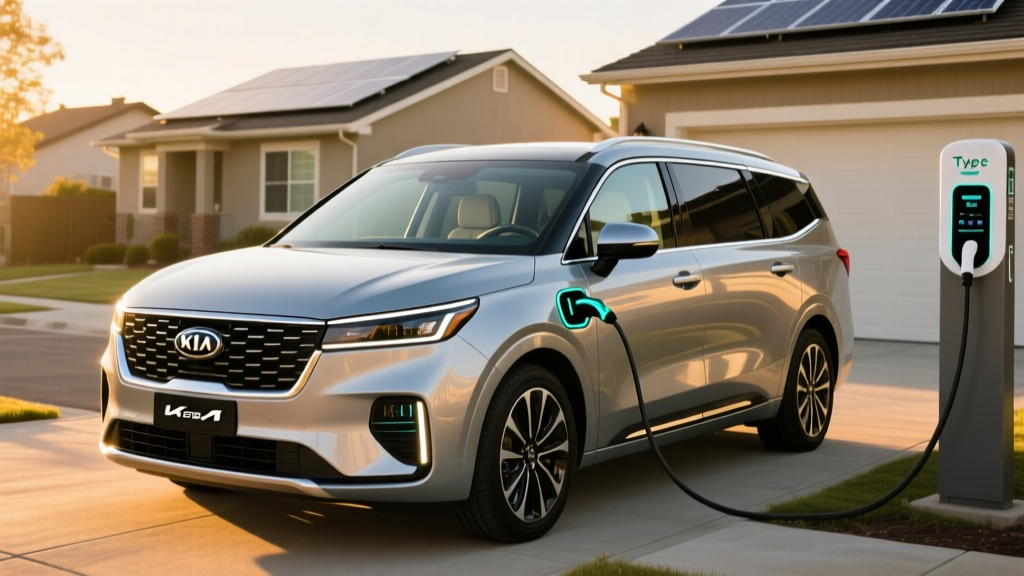
The minivan segment is undergoing a quiet revolution, and the 2026 Kia Carnival MPV Hybrid sits squarely in the middle of it. Kia dropped the turbocharged V6 that defined the Carnival's first two model years in the U.S. and replaced it with a 1.6-liter turbo hybrid four-cylinder paired with an electric motor. The result: a meaningful jump in fuel economy without sacrificing the three-row, eight-passenger practicality that made the Carnival a family-hauler favorite. But does a turbo-four hybrid have the muscle to move a 4,700-pound van, and is the MPG gain worth the trade-off?
We've analyzed EPA data, real-world driving impressions, and total ownership costs to give you the full picture. Here's everything you need to know before putting down a deposit.
What Is the Kia Carnival MPV Hybrid Powertrain?
The 2026 Kia Carnival Hybrid uses a conventional hybrid electric vehicle (HEV) powertrain — not a plug-in hybrid (PHEV). That means you never plug it in. The system recovers energy through regenerative braking and uses a small battery to assist the gasoline engine, exactly like a Toyota Sienna Hybrid or Honda CR-V Hybrid. If you're looking for electric-only driving, this isn't the vehicle for that — but if you want better fuel economy without changing your fueling habits, it's precisely the point.
Conventional Hybrid (HEV): The Carnival Hybrid uses a ~1.5 kWh battery charged by the engine and regenerative braking. No plug required. Expect 33 MPG combined.
Plug-in Hybrid (PHEV): Vehicles like the Chrysler Pacifica PHEV use a larger ~16 kWh battery you plug in to charge, offering 30+ miles of electric-only range before the gas engine kicks in. Kia does not currently offer the Carnival as a PHEV in the U.S. market.
Under the hood, the Carnival Hybrid pairs a 1.6-liter turbocharged inline-four with a 47.7 kW (64 hp) electric motor integrated into the transmission housing. Combined system output is 242 horsepower and 271 lb-ft of torque. That's a drop from the previous V6's 290 hp, but the electric motor's instant torque fills in the low-end gap that small turbo engines typically suffer from. The six-speed automatic transmission carries over, and front-wheel drive is standard across all trims — there is no AWD option on the hybrid.
| Spec | Value |
|---|---|
| Powertrain | 1.6L turbo I-4 + electric motor (HEV) |
| Combined Horsepower | 242 hp |
| Combined Torque | 271 lb-ft |
| Transmission | 6-speed automatic |
| Drivetrain | Front-wheel drive (FWD only) |
| Hybrid Battery | ~1.5 kWh lithium-ion |
| EPA MPG (City / Hwy / Combined) | 34 / 31 / 33 |
| Fuel Tank | 16.9 gallons |
| Total Range (est.) | ~557 miles |
| Towing Capacity | 3,500 lbs |
| Seating | 7 or 8 passengers |
| Cargo (behind 3rd row) | 41.1 cu ft |
| Base MSRP (LXS Hybrid) | $41,900 |
Fuel Economy: How Many MPG Does the Carnival Hybrid Get?
The EPA rates the 2026 Kia Carnival Hybrid at 34 MPG city, 31 MPG highway, and 33 MPG combined, according to fueleconomy.gov. For a vehicle this size, that's genuinely impressive — and it represents a roughly 50% improvement over the outgoing V6's 22 MPG combined.
| Driving Cycle | EPA MPG | Real-World Expectation |
|---|---|---|
| City | 34 | 35–37 (hybrids excel in stop-and-go) |
| Highway | 31 | 28–30 (aero drag at 70+ mph) |
| Combined | 33 | 31–34 depending on driving mix |
Here's where hybrid physics works in your favor: conventional hybrids like the Carnival actually tend to exceed their EPA city rating in real-world stop-and-go driving because the electric motor does the heavy lifting at low speeds, and regenerative braking recaptures energy that a gas-only vehicle wastes as heat. On a suburban school-run loop with frequent stops, owners of similar Kia/Hyundai turbo-hybrid systems routinely report 35–37 MPG.
Highway driving tells a different story. The Carnival's boxy minivan profile and 4,700-pound curb weight mean aerodynamic drag and rolling resistance work against it at sustained speeds above 65 mph. Expect highway numbers to land closer to 28–30 MPG on flat terrain, dropping further in mountainous routes or when fully loaded with passengers and cargo. If your commute is 90% highway, the real-world advantage over the V6 narrows — but for the typical family mix of city errands and highway road trips, the 33 MPG combined figure is well within reach.
How Does the Carnival Hybrid Compare to Rival Minivans?
The minivan hybrid field is surprisingly thin. The Toyota Sienna has been hybrid-only since its 2021 redesign, making it the Carnival Hybrid's most direct rival. The Chrysler Pacifica offers both a conventional V6 and a plug-in hybrid variant, but no conventional HEV. Here's how the numbers stack up:
| Vehicle | Combined MPG | HP | AWD Available? | Base MSRP |
|---|---|---|---|---|
| Kia Carnival Hybrid | 33 | 242 | No | $41,900 |
| Toyota Sienna Hybrid | 36 | 245 | Yes | $39,885 |
| Chrysler Pacifica PHEV | 30 (gas) / 82 MPGe | 260 | No (PHEV) | $51,095 |
| Honda Odyssey (gas only) | 22 | 280 | No | $39,635 |
The Toyota Sienna wins on fuel economy by 3 MPG combined and offers AWD — a significant advantage for snow-belt buyers. The Carnival Hybrid counters with a more premium interior, a quieter cabin at highway speeds, and Kia's available VIP lounge seating in the second row that the Sienna can't match. The Chrysler Pacifica PHEV is a different animal entirely: if you can charge at home and your daily driving is under 32 miles, you'll burn almost no gasoline on most days. But at $51,000+ to start, it's a steep premium over either conventional hybrid.
Pricing, Trims, and Tax Credit Eligibility
The 2026 Kia Carnival Hybrid is offered in four trims:
- LXS Hybrid: $41,900 — 8-passenger seating, 12.3-inch infotainment, power sliding doors
- EX Hybrid: $44,900 — 8-passenger, leatherette seats, hands-free power liftgate, Highway Driving Assist
- SX Hybrid: $48,500 — 7 or 8-passenger, navigation, Bose 12-speaker audio, surround-view monitor
- SX Prestige Hybrid: $52,900 — 7-passenger VIP lounge seating, Nappa leather, dual sunroofs, rear entertainment
All prices include destination. The hybrid powertrain is now standard across the entire Carnival lineup for 2026 — Kia no longer offers the V6.
The Kia Carnival Hybrid is a conventional hybrid (HEV), not a plug-in vehicle. It does not qualify for the federal §30D Clean Vehicle Credit, which requires a minimum 7 kWh battery and plug-in capability. The §30D credit (up to $7,500) applies only to BEVs and PHEVs meeting battery sourcing, MSRP caps ($80,000 for vans/SUVs), and buyer income limits per IRS guidelines.
Some states offer separate incentives for conventional hybrids, but these are increasingly rare as state programs shift toward plug-in vehicles. Check your state's energy office or DMV for any local hybrid rebates.
Battery Warranty, Reliability, and Replacement Cost
Hybrid battery longevity is consistently the top concern among first-time hybrid buyers. Here's the reassuring data: Kia provides one of the strongest hybrid battery warranties in the industry.
- Hybrid/EV Battery: 10 years / 100,000 miles (whichever comes first)
- Hybrid System Components: 10 years / 100,000 miles
- Powertrain (engine, transmission): 10 years / 100,000 miles
- Bumper-to-Bumper: 5 years / 60,000 miles
The warranty covers battery capacity falling below approximately 70% of original capacity. In states that follow California emissions standards (CARB states), hybrid battery coverage extends to 10 years / 150,000 miles.
The Carnival Hybrid uses a relatively small ~1.5 kWh lithium-ion battery pack. Unlike the large packs in full EVs, HEV batteries undergo shallow charge/discharge cycles — they rarely drop below 40% or charge above 80% state of charge. This "buffer" strategy dramatically reduces degradation stress. Toyota Sienna hybrid taxis have logged 300,000+ miles on original batteries, and Kia/Hyundai's turbo-hybrid system uses similar battery management principles.
If you do eventually need a hybrid battery replacement out of warranty, industry estimates for a minivan-class HEV battery currently range from $2,000 to $3,500 including labor — far less than the $10,000–$20,000 EV battery replacements that make headlines. Third-party refurbishers offer reconditioned packs for even less. Given the 10-year warranty and the shallow-cycle design, most original owners will never face this cost.
Real-World Driving: Performance and Livability
The 242-horsepower combined output is adequate for the Carnival Hybrid's duties, but "adequate" is doing some heavy lifting here. The 0–60 mph sprint clocks in around 7.8 seconds — roughly 1.5 seconds slower than the old V6. Highway merging is confident thanks to the electric motor's instant torque fill, but fully loaded uphill passing requires planning. The six-speed automatic is smooth but occasionally hunts for gears under hard acceleration where a CVT (like the Sienna's) would simply hold an optimal RPM.
Ride quality is where the Carnival has always excelled, and the hybrid conversion doesn't compromise it. The added weight of the hybrid system (roughly 100 pounds over the old V6) is negligible, and the battery pack is mounted low, preserving the flat floor and interior volume. Cargo space remains 41.1 cubic feet behind the third row, expanding to 145.1 cubic feet with both rear rows folded.
The Carnival's available Highway Driving Assist 2 (HDA2) is a competent Level 2 driver-assistance system that pairs adaptive cruise control with lane-centering steering. It handles well on divided interstates but requires continuous driver attention — this is not a hands-free system like GM's Super Cruise or Ford's BlueCruise. Keep your hands on the wheel.
Pros and Cons at a Glance
- 33 MPG combined — 50% improvement over V6
- Best-in-class interior quality and tech
- Industry-leading 10-year/100,000-mile hybrid warranty
- Excellent cargo volume preserved (no battery intrusion)
- Strong real-world city MPG (often exceeds EPA)
- VIP lounge seating unavailable in rivals
- No AWD option (Sienna Hybrid offers it)
- Slower acceleration vs. old V6 (~7.8s 0-60)
- 3 MPG behind Toyota Sienna Hybrid combined
- No federal tax credit (HEV, not PHEV)
- Highway MPG drops when fully loaded
- SX Prestige trim pushes $53K
Who Should Buy the Carnival Hybrid vs. a Full EV or Gas Minivan?
Choose the Kia Carnival Hybrid if: You want a three-row family hauler with dramatically better fuel economy than a gas minivan, you can't charge at home (or don't want to), and you value Kia's interior quality and warranty. It's the right call for families who do a mix of city errands and road trips without wanting to think about charging.
Choose the Toyota Sienna Hybrid if: You need AWD, prioritize maximum fuel economy (36 MPG combined), or want a lower starting price. The Sienna trades some interior refinement and tech for better efficiency and all-weather capability.
Choose the Chrysler Pacifica PHEV if: You can install a Level 2 home charger, your daily driving is mostly under 32 miles, and you want to drive on electricity most days while keeping a gas engine for road trips. You'll also qualify for the $7,500 federal tax credit (subject to IRS §30D eligibility rules), which narrows the price gap considerably.
Choose a full EV (like the upcoming electric minivans) if: You have reliable home charging, your daily driving is predictable, you want zero tailpipe emissions, and you're ready to plan around charging on road trips. Full EVs offer the lowest per-mile fuel cost but require lifestyle adaptation for long trips.
Frequently Asked Questions
Does the Kia Carnival Hybrid need to be plugged in?
No. The Carnival Hybrid is a conventional hybrid (HEV). Its small battery charges through regenerative braking and the gasoline engine. You fuel it exactly like a regular gas car — just with much better MPG.
How many MPG does the Kia Carnival MPV Hybrid get in real-world driving?
The EPA rates it at 34 city / 31 highway / 33 combined. In real-world city-heavy driving, many owners see 35–37 MPG thanks to regenerative braking. Highway-only driving at 75+ mph may drop to 28–30 MPG, especially when fully loaded with passengers and cargo.
Is the Kia Carnival Hybrid reliable?
Kia's 1.6L turbo-hybrid powertrain has been in production since 2022 across the Sorento Hybrid, Sportage Hybrid, and now the Carnival. Early reliability data is positive, and the 10-year/100,000-mile hybrid battery and powertrain warranty is among the best in the industry. The hybrid system adds complexity but eliminates the traditional starter motor and reduces brake wear through regenerative braking.
What does a hybrid battery replacement cost for the Carnival?
Out-of-warranty HEV battery replacement is estimated at $2,000–$3,500 including labor. However, Kia's 10-year/100,000-mile warranty covers the battery, and the shallow-cycle battery management strategy means most hybrid batteries outlast the vehicle's useful life.
Does the Kia Carnival Hybrid qualify for any tax credit?
No. The federal §30D Clean Vehicle Credit requires plug-in capability and a minimum 7 kWh battery. The Carnival Hybrid's ~1.5 kWh battery and HEV configuration make it ineligible. Some states may offer minor hybrid incentives — check your state energy office. If tax credits are a priority, consider the Chrysler Pacifica PHEV, which may qualify for up to $7,500 depending on your income, the vehicle's battery sourcing, and current IRS rules.
Can I get all-wheel drive on the Carnival Hybrid?
No. The 2026 Carnival Hybrid is front-wheel drive only across all trims. If AWD is a must-have, the Toyota Sienna Hybrid offers available electronic AWD (though it uses a different hybrid system that slightly reduces MPG to 35 combined).
How much can the Carnival Hybrid tow?
The 2026 Carnival Hybrid is rated for 3,500 pounds of towing capacity when properly equipped — adequate for a small boat, motorcycle trailer, or light camping trailer, but not for larger travel trailers.
Sources: EPA fuel economy data from fueleconomy.gov; federal tax credit rules from IRS.gov; vehicle specifications from Kia America press materials. Pricing and incentive rules are subject to change — verify current figures before purchasing.