The Sahara 4xe: Where Trail-Rated Meets Plug-In Efficiency
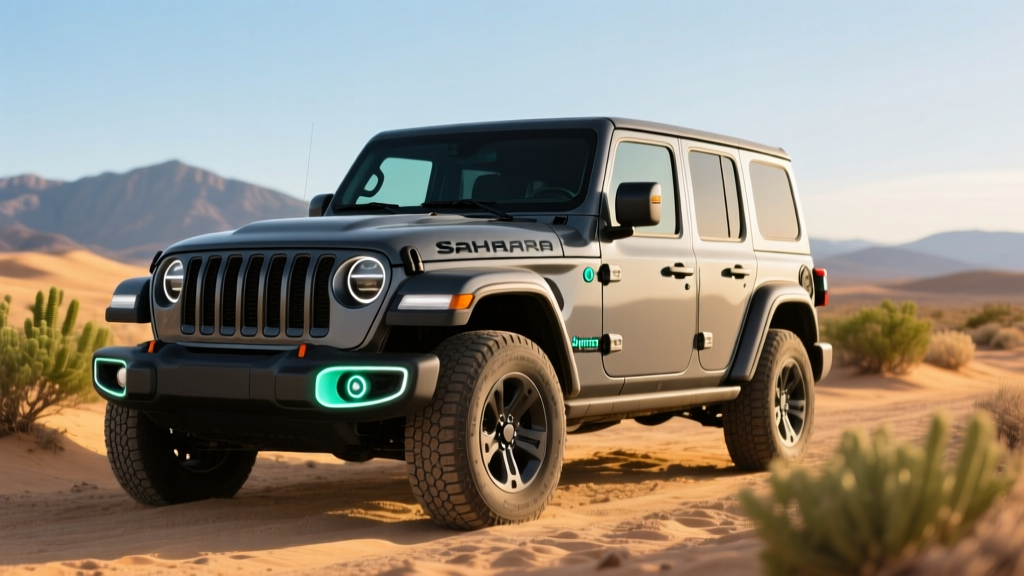
The Jeep Wrangler lineup has long been the benchmark for off-road capability, but the Sahara trim paired with the 4xe plug-in hybrid powertrain adds a dimension that pure gasoline Wranglers simply cannot match: the ability to commute on electric power alone while retaining every ounce of Trail Rated® hardware. For the 2026 model year, the Wrangler Sahara 4xe remains the volume-selling PHEV in Jeep's portfolio, and it occupies a unique niche — no other body-on-frame, solid-axle SUV offers a plug-in hybrid variant.
But does the real-world efficiency justify the price premium over the gas-only Sahara? And how does the 4xe powertrain hold up when you take it off the pavement? This guide breaks down every number that matters — from EPA MPG to battery warranty — so you can decide whether the Sahara 4xe fits your driveway.
HEV vs PHEV: Why the Wrangler 4xe Is Strictly Plug-In
Before diving into specs, it is critical to understand the distinction between a conventional hybrid (HEV) and a plug-in hybrid (PHEV), because the Wrangler lineup only offers the latter.
| Feature | Conventional Hybrid (HEV) | Plug-In Hybrid (PHEV) — Wrangler 4xe |
|---|---|---|
| Battery Size | 1–2 kWh (small buffer) | 17.3 kWh gross / ~14.3 kWh usable |
| Plug-In Charging | No — recharges via engine & regen only | Yes — Level 1 (120V) and Level 2 (240V) |
| Electric-Only Driving | Not possible (motor assists engine only) | Up to 22 miles EPA at speeds up to ~55 mph |
| Fuel Economy (charge-depleted) | Typically 35–50 MPG combined | 20 MPG combined (gas-only mode) |
| Federal Tax Credit (§30D) | Not eligible | Eligible — up to $3,750 (battery sourcing rules apply) |
The Wrangler does not offer a conventional HEV variant. If you see "Wrangler hybrid" referenced online, it is always the 4xe PHEV. You will need access to a 120V outlet (minimum) to capture the electric-range benefit — without plugging in, you are simply driving a heavier gas-only Wrangler at 20 MPG combined.
Powertrain Specs: 375 Horsepower From Two Sources
The 2026 Wrangler Sahara 4xe pairs a 2.0-liter turbocharged inline-four gasoline engine with two electric motor-generators integrated into the ZF 8-speed automatic transmission. Here is how the power breaks down:
| Specification | Detail |
|---|---|
| Gasoline Engine | 2.0L turbo I4 — 270 hp / 295 lb-ft |
| Electric Motors (combined) | 134 hp / 181 lb-ft (integrated into transmission) |
| Combined System Output | 375 hp / 470 lb-ft |
| Transmission | ZF 8HP75 8-speed automatic |
| Battery Pack | 17.3 kWh gross (NMC lithium-ion), 400V architecture |
| Drivetrain | Selec-Trac full-time 4WD (Sahara), Dana axles |
| 0–60 mph | ~6.0 seconds (hybrid mode, battery charged) |
| Towing Capacity | 3,500 lbs (same as gas V6 Sahara) |
| Curb Weight | ~5,322 lbs (approx. 650 lbs heavier than gas Sahara) |
The torque figure — 470 lb-ft available from low RPM — is the 4xe's party trick. On the trail, the electric motor delivers instant, controllable torque at the wheels before the turbo spools, making low-speed rock crawling smoother than the gas-only powertrain. On the highway, that torque translates into confident passing without the transmission hunting for gears.
Fuel Economy and Electric-Only Range: The EPA Numbers vs. Reality
Efficiency is where the 4xe requires honest framing. A plug-in hybrid's economy depends entirely on how often you charge it. Here is what the EPA says, followed by what you should actually expect.
| Metric | EPA Rating | Real-World Expectation |
|---|---|---|
| MPGe (electric + gas combined) | 49 MPGe | 40–49 MPGe on short commutes with daily charging |
| Electric-Only Range | 22 miles | 17–20 miles (highway); 20–22 miles (city, mild weather) |
| Gas-Only MPG (charge-depleted) | 20 combined (city 20 / hwy 20) | 18–19 combined highway driving; 20–21 city with gentle use |
| Total Combined Range | ~370 miles (full tank + full battery) | ~340–360 miles mixed driving |
The 22-mile electric-only range is modest compared to PHEV competitors like the Toyota RAV4 Prime (42 miles) or the Chrysler Pacifica Hybrid (32 miles). The Wrangler's boxy aerodynamics, 5,300+ lb curb weight, and all-terrain tires work against electric efficiency. In cold weather (below 30°F), expect electric range to drop to roughly 14–16 miles as the battery management system limits discharge rate and cabin heating draws from the pack.
However, the 4xe's electric mode is most valuable in a specific scenario: a daily commute under 20 miles round-trip, with overnight Level 2 charging at home. In that use case, you could burn zero gasoline on weekdays and use the 2.0L turbo only for weekend trips — a real-world effective fuel cost that approaches a full EV's for weekday driving.
Charging the 4xe: Level 1, Level 2, and the No-DC-Fast-Charge Limitation
The Wrangler 4xe uses a 400-volt battery architecture and accepts AC charging only. There is no DC fast charging capability — a deliberate engineering trade-off to keep weight and complexity manageable in a vehicle already carrying a solid-axle suspension and a transfer case.
| Charging Level | Power (kW) | 0–100% Time | Practical Use Case |
|---|---|---|---|
| Level 1 (120V household outlet) | ~1.4 kW | ~12 hours | Overnight top-up if no Level 2 available |
| Level 2 (240V, 32A) | ~7.7 kW (onboard charger max) | ~2.5 hours (0–100%) | Home wall charger — full recharge while you sleep or work |
| DC Fast Charge | Not supported | N/A | N/A |
The 7.7 kW onboard charger is adequate for a 17.3 kWh battery — a full charge in roughly 2.5 hours on Level 2 means you can realistically charge during a workday and drive home on electric power again. The J1772 connector is standard, and Jeep includes a dual-voltage Level 1 charging cord with the vehicle.
For home Level 2 installation, budget $800–$1,500 for a quality 32-amp or 40-amp wall connector plus electrician labor, assuming your electrical panel has capacity. A 240V/50A circuit is recommended. If your home requires a panel upgrade (common in older homes with 100A service), add $1,500–$3,000. Consult a licensed electrician for a site-specific quote.
Battery Warranty, Lifespan, and Replacement Cost
Hybrid battery longevity is consistently the top concern among PHEV buyers, and Jeep addresses this with a warranty that meets industry norms.
- Coverage: 8 years / 100,000 miles (whichever comes first)
- Capacity Threshold: Battery is covered if it falls below 70% of original capacity during the warranty period
- Powertrain Warranty: 5 years / 60,000 miles (engine, transmission, electric motors)
- Basic Vehicle Warranty: 3 years / 36,000 miles bumper-to-bumper
Source: Jeep Warranty Information
The 8-year/100,000-mile battery warranty is federally mandated for PHEVs and EVs sold in the United States, and Jeep complies fully. The 70% capacity retention threshold is consistent with Toyota, Ford, and Hyundai — though some competitors (like Hyundai) offer a 10-year/100,000-mile battery warranty that provides additional peace of mind.
For out-of-warranty battery replacement, current estimates for the Wrangler 4xe pack range from $7,000 to $9,500 (parts and labor) at a dealership. However, NMC lithium-ion packs in PHEVs that are regularly charged within the 20–80% State of Charge window typically retain 85–90% capacity at the 8-year mark, based on fleet data from similar 400V architectures. The 4xe's battery management system includes a buffer (roughly 3 kWh reserved at the bottom of the pack) that protects the cells from deep discharge damage — a key longevity feature.
According to NHTSA, the Wrangler 4xe carries no open battery-related recalls as of early 2026, and owner-reported battery failure rates remain low relative to the vehicle's sales volume.
Pricing, Trims, and Federal Tax Credit Eligibility
The 2026 Wrangler Sahara 4xe starts at an MSRP of $53,990 (including destination charge). Key trims and pricing:
| Trim | MSRP | Key 4xe-Specific Features |
|---|---|---|
| Sahara 4xe | $53,990 | 4xe powertrain, Selec-Trac 4WD, 20" wheels, Alpine audio |
| Willys 4xe | $51,990 | 4xe powertrain, Command-Trac 4WD, off-road tires, rock rails |
| Rubicon 4xe | $58,590 | 4xe powertrain, Rock-Trac 4WD, front/rear lockers, sway-bar disconnect |
| High Altitude 4xe | $62,490 | 4xe powertrain, premium leather, body-color hardtop, 20" black wheels |
Federal Tax Credit (§30D) — Current Rules
Under the IRS §30D Clean Vehicle Credit, the Wrangler 4xe may qualify for a partial federal tax credit, but eligibility is constrained by several requirements:
- MSRP Cap: SUVs must have an MSRP at or below $80,000 — all 4xe trims qualify
- Buyer Income Cap: Modified AGI must not exceed $150,000 (single), $225,000 (head of household), or $300,000 (joint filers)
- Battery Sourcing: Critical minerals and battery components must meet phased-in domestic-content thresholds — as of 2026, this requirement significantly reduces the credit for many PHEVs
- Current Credit Amount: Based on battery sourcing compliance, the 4xe is expected to qualify for $3,750 (half-credit) for the 2026 tax year — confirm with your tax professional before purchase
- Point-of-Sale Transfer: Eligible buyers can transfer the credit to the dealer at purchase, reducing the out-of-pocket price directly
The credit is non-refundable, meaning you must have sufficient federal tax liability to claim it. State-level incentives vary widely — California's CVRP, Colorado's innovative motor vehicle credit, and other state programs may stack on top. Check your state's energy office for current amounts.
Who Should Buy the Sahara 4xe — And Who Should Look Elsewhere
The Wrangler Sahara 4xe is not a universally optimal purchase. Its value proposition depends heavily on your driving pattern, charging access, and priorities. Here is a practical decision framework:
Pros
- 375 hp / 470 lb-ft — the most powerful non-392 Wrangler available
- 22 miles of electric-only commuting eliminates weekday fuel use for short trips
- Full Trail Rated capability retained — no ground-clearance or articulation compromise
- Electric motor torque enhances low-speed off-road control
- Familiar Wrangler open-air freedom (removable doors, soft/hard top options)
- Partial §30D tax credit reduces effective price
Cons
- 20 MPG gas-only is worse than the V6 gas Wrangler (22 MPG combined) when battery is depleted
- 22-mile electric range is short vs. RAV4 Prime (42 mi) or Pacifica Hybrid (32 mi)
- No DC fast charging — road trips rely entirely on gasoline
- 650+ lbs of added weight impacts handling and braking feel on pavement
- ~$7,000–$9,500 battery replacement cost out of warranty
- Higher starting price than the gas Sahara (~$8,500 premium)
Decision Framework
Choose the Sahara 4xe if: You have a short daily commute (under 20 miles round-trip), can charge at home overnight, want Wrangler off-road capability, and value instant electric torque on the trail. The 4xe makes financial sense when you actually plug it in daily.
Choose the gas-only Sahara if: You lack home charging access, regularly drive long highway distances, or prioritize lower upfront cost over electric commuting. The 3.6L V6 eTorque Sahara at ~$45,495 delivers 22 MPG combined without plug-in dependency.
Choose a full EV (like the Ford Bronco Sport-based EV or Rivian R1S) if: You want zero tailpipe emissions, have reliable home and public charging, and do not need solid-axle articulation for extreme trails. A BEV eliminates the maintenance complexity of a dual-powertrain vehicle entirely.
Real-World Ownership: What the Spec Sheet Does Not Tell You
After extensive time with the 4xe platform, several ownership patterns emerge that buyers should weigh:
The charge-depleted penalty is real. When the battery is empty and the 2.0L turbo is doing all the work while hauling 5,300+ lbs of Wrangler, you will see 18–19 MPG on the highway. This is worse than the V6 gas model. The 4xe only delivers its efficiency promise when you charge it — treat it like an EV that happens to have a gas backup, not a hybrid you can ignore.
Regen braking is adjustable but not one-pedal. The 4xe offers three regen levels via steering-wheel paddles, but even at maximum regen, the vehicle will not come to a complete stop without using the friction brakes. Drivers accustomed to one-pedal driving in a full EV will need to adjust expectations.
Cold weather impacts are significant. Below 20°F, the gasoline engine will frequently start to provide cabin heat (the 4xe does not include a standard heat pump for the cabin). This reduces electric-only range to 14–16 miles and increases fuel consumption in hybrid mode. Preconditioning the cabin while still plugged in mitigates this — use the Jeep app to warm the vehicle before unplugging.
Insurance premiums run 8–15% higher than the gas-only Sahara, reflecting the added powertrain complexity and higher repair costs associated with the high-voltage system. Get a quote before purchasing to factor this into your total cost of ownership.
Frequently Asked Questions
How many MPG does the Jeep Wrangler Sahara 4xe get?
The EPA rates the 2026 Wrangler 4xe at 49 MPGe when combining electric and gasoline operation. Once the battery is depleted, it drops to 20 MPG combined (20 city / 20 highway) running on gasoline alone. Real-world gas-only driving typically yields 18–21 MPG depending on driving style and conditions. For comparison, see fueleconomy.gov.
How far can the Wrangler 4xe go on electric power only?
The EPA rates the 4xe at 22 miles of electric-only range. In real-world driving, expect 17–20 miles at highway speeds and up to 22 miles in stop-and-go city traffic in mild weather. Cold temperatures (below 30°F) reduce this to approximately 14–16 miles.
Does the Wrangler 4xe qualify for a federal tax credit?
Yes, partially. Under current IRS §30D rules, the 4xe is expected to qualify for a $3,750 credit (half of the maximum $7,500) due to battery-component sourcing requirements that tighten annually. Eligibility also depends on your income (MSRP and AGI caps apply). The credit can be transferred to the dealer at point of sale. Consult a tax professional to confirm your specific eligibility.
Is the Wrangler 4xe reliable, and what does battery replacement cost?
The 4xe powertrain has been in production since the 2021 model year, and major failure rates remain low. The high-voltage battery is covered by an 8-year/100,000-mile warranty (replacing the pack if capacity falls below 70%). Out-of-warranty battery replacement is estimated at $7,000–$9,500. The conventional powertrain components (2.0L turbo, ZF 8-speed) have a longer track record and are generally well-regarded, though the turbo engine requires diligent oil-change maintenance.
Can I take the Wrangler 4xe through water like a gas Wrangler?
Yes. Jeep rates the 4xe for the same water fording depth as the gas Sahara (approximately 30 inches with the hardtop installed). The high-voltage battery pack is sealed and positioned above the frame rails. However, Jeep recommends a post-submersion inspection of the charging port and electrical connections if the vehicle is fully submerged beyond the axle hubs.
Hybrid vs PHEV vs EV — which powertrain fits me?
If you can charge at home and your daily driving is under 25 miles, the 4xe PHEV lets you commute electrically while keeping gas for road trips and trails. If you lack home charging or drive long distances daily, the gas-only Wrangler is simpler and cheaper. If you want zero gasoline use and have reliable charging infrastructure, consider a full EV like the Rivian R1S — though you sacrifice the Wrangler's removable doors and solid-axle articulation.