2026 Jeep Wrangler 4xe: The Hybrid That Climbs Rocks and Plugs In
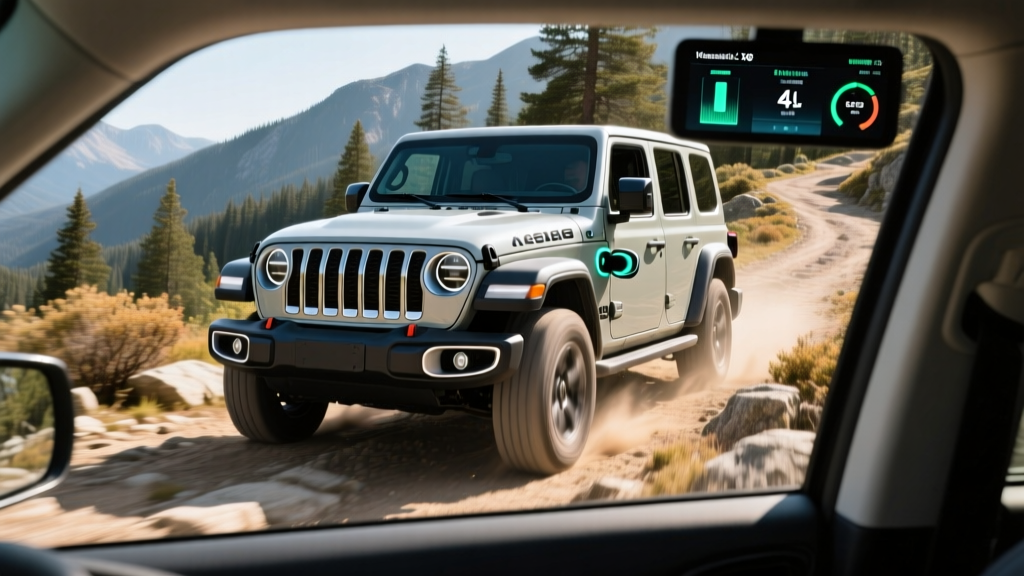
The Jeep Wrangler 4xe is not your typical plug-in hybrid. While most PHEVs prioritize commuter efficiency, the 4xe wraps a 17-kWh battery pack and two electric motors around a turbocharged 2.0-liter engine — then adds solid axles, locking differentials, and 33-inch mud-terrain tires. For 2026, the Wrangler 4xe remains the only plug-in hybrid body-on-frame off-roader you can buy new in the U.S., and it continues to outsell nearly every other PHEV on the market.
But the numbers tell a complicated story. The EPA rates it at 49 MPGe combined when factoring in electric driving, yet real-world gasoline-only fuel economy hovers around 20 MPG. The 22-mile electric range covers short commutes, but the boxy aerodynamics and 5,000-plus-pound curb weight punish efficiency at highway speed. If you're cross-shopping the Jeep Wrangler hybrid, here's the data you need to decide whether the 4xe's plug-in powertrain fits your life — or whether a gas Wrangler, a conventional hybrid SUV, or a full EV makes more sense.
HEV vs. PHEV: What the Wrangler 4xe Actually Is
Before diving into specs, it's critical to distinguish the two hybrid architectures available in the broader SUV market:
Conventional Hybrid (HEV)
- No plug — recharges via regenerative braking and the engine
- Small battery (typically 1–2 kWh)
- Cannot drive on electric power alone for meaningful distance
- Improves MPG by 15–40% vs. gas-only equivalent
- Example: Toyota RAV4 Hybrid (39 MPG combined)
Plug-In Hybrid (PHEV)
- Plugs into a wall outlet or Level 2 charger
- Larger battery (typically 10–25 kWh)
- 20–45 miles of electric-only driving before the engine engages
- Operates as a conventional hybrid once the battery is depleted
- Example: Jeep Wrangler 4xe (22 mi electric, 20 MPG gas-only)
The Wrangler 4xe is exclusively a PHEV. There is no conventional HEV version of the Wrangler. Jeep's mild-hybrid eTorque system (a small belt-driven motor-generator) was offered on earlier gas V6 models but does not provide meaningful electric propulsion or fuel economy gains — it's a stop-start assist, not a true hybrid.
Powertrain, Horsepower, and Off-Road Hardware
| Specification | 2026 Jeep Wrangler 4xe |
|---|---|
| Engine | 2.0L turbocharged inline-4 |
| Electric Motors | 2 integrated (motor-generator + traction motor) |
| Combined System Output | 375 hp / 470 lb-ft torque |
| Transmission | 8-speed automatic (TorqueFlite 8P75PH) |
| Battery (Usable) | 17.3 kWh (NMC lithium-ion) |
| Battery Location | Under rear seat (sealed, waterproof) |
| 0–60 mph | 6.0 seconds (est.) |
| Towing Capacity | 3,500 lbs |
| Drivetrain | 4WD (Selec-Trac or Rock-Trac depending on trim) |
| Water Fording | 31.5 inches (battery sealed for submersion) |
The 4xe's combined 470 lb-ft of torque is its party trick. Electric motors deliver peak torque at zero RPM, which makes rock crawling and low-speed technical trails remarkably controllable. In Electric mode, the 4xe is nearly silent on the trail — a genuine advantage for wildlife areas and noise-sensitive environments. The battery sits under the rear seat in a sealed enclosure, allowing the 4xe to maintain its full water-fording depth.
Fuel Economy: EPA Ratings vs. Real-World MPG
| Driving Mode | EPA Rating | Real-World Expectation |
|---|---|---|
| Combined (electric + gas, MPGe) | 49 MPGe | 35–45 MPGe (depends on charging frequency) |
| Gasoline-only Combined | 20 MPG | 17–20 MPG (highway often lower) |
| City (gasoline-only) | 20 MPG | 20–23 MPG (regen helps in stop-and-go) |
| Highway (gasoline-only) | 20 MPG | 16–19 MPG (aero drag at 70+ mph) |
The 49 MPGe figure, sourced from fueleconomy.gov, assumes you start with a full charge and blend electric and gasoline driving over the test cycle. In practice, your MPGe depends entirely on how often you plug in. If you charge nightly and commute under 22 miles, you may burn almost no gasoline on weekdays. If you never plug in, expect a solid 20 MPG — which is roughly what a gas-only 2.0L turbo Wrangler achieves.
The Wrangler's brick-like aerodynamics dominate highway efficiency. At 75 mph, the removable hardtop, flat windshield, and all-terrain tires create substantial drag. Owners consistently report 16–18 MPG on sustained highway road trips with a depleted battery. In city driving, regenerative braking recovers energy more effectively, and some drivers see 21–23 MPG in stop-and-go traffic.
Electric Range, Charging Speed, and Battery Specs
EPA Electric-Only Range: 22 miles
Real-World Electric Range: 16–20 miles (highway/cold weather can drop to 12–15 miles)
Total Combined Range (electric + gas): ~370 miles
The 17.3 kWh NMC battery provides 22 miles of EPA-rated electric driving. In real-world use — especially at highway speeds or in temperatures below 40°F — expect 15–18 miles before the gasoline engine fires up. This is enough for a short commute or a trip to the trailhead, but it won't replace a full EV for daily driving beyond 10–12 miles each way.
Charging the Wrangler 4xe:
| Charging Level | Power (kW) | Time (0–100%) | Notes |
|---|---|---|---|
| Level 1 (120V household) | ~1.4 kW | ~12 hours | Emergency/trickle only |
| Level 2 (240V, 32A) | ~7.2 kW | ~2.5 hours | Recommended home charging |
| DC Fast Charging | Not supported | N/A | No DC fast-charge capability |
The 4xe charges exclusively via AC — Level 1 (standard 120V outlet) or Level 2 (240V). There is no DC fast-charging port. At Level 2, a full charge takes roughly 2.5 hours, which is adequate for overnight home charging or topping up at a workplace charger. The lack of DC fast charging means you won't rapidly replenish the battery on road trips, but given the 17-kWh pack size, fast charging would be overkill for most use cases.
Pricing, Trims, and Federal Tax Credit Eligibility
For the 2026 model year, the Wrangler 4xe starts around $51,790 (including destination) for the Sport S trim and climbs to approximately $63,790 for the Rubicon — the off-road-focused variant most buyers want.
Federal §30D Tax Credit (2026 rules per IRS.gov):
- Credit Amount: Up to $3,750 (Wrangler 4xe qualifies for the critical minerals portion; battery component sourcing may limit it below the full $7,500)
- MSRP Cap: SUVs must be under $80,000 — all 4xe trims qualify
- Buyer Income Cap: $150,000 single / $300,000 married filing jointly (modified AGI)
- Point-of-Sale Transfer: Available — you can apply the credit as a down-payment reduction at the dealer
- North American Assembly: Assembled in Toledo, OH — qualifies
Important: Tax credit eligibility depends on battery component and critical mineral sourcing requirements that change annually. The Wrangler 4xe has historically qualified for $3,750 of the potential $7,500 credit due to battery sourcing rules. Always verify current-year eligibility with a tax professional or the IRS Clean Vehicle Credit page before purchasing.
Battery Warranty, Reliability, and Replacement Cost
Hybrid Battery Warranty: 8 years / 100,000 miles (whichever comes first)
Capacity Retention Threshold: Warranty covers repair/replacement if the battery falls below ~70% of original capacity
Powertrain Warranty: 5 years / 60,000 miles
Estimated Out-of-Warranty Battery Replacement: $8,000–$12,000 (parts + labor)
The Wrangler 4xe's high-voltage battery is warrantied for 8 years or 100,000 miles — the standard for PHEV and hybrid battery packs under federal emissions warranty guidelines. Jeep's warranty covers the battery if it degrades below a defined capacity threshold (typically around 70% state of health). In practice, NMC batteries in PHEVs with active thermal management tend to degrade slowly; most owners report minimal range loss over the first 3–5 years.
Reliability for the 4xe powertrain has been generally acceptable, though the Wrangler platform carries some historical concerns with electrical gremlins and build quality. The PHEV system itself — motors, inverter, battery — has proven durable. The more common complaints involve the 8-speed transmission's shift logic and the infotainment system, not the hybrid hardware. According to NHTSA, there have been no widespread battery-related recalls for the 4xe.
If the battery does need replacement out of warranty, expect a bill between $8,000 and $12,000. This is a significant cost, but it's comparable to other PHEVs and far less than full EV battery replacements. Most 4xe batteries should last well beyond 150,000 miles with normal use.
Who Should Buy the Wrangler 4xe — and Who Shouldn't
Choose the Wrangler 4xe if:
- You need serious off-road capability (solid axles, lockers, 33-inch tires) AND want to plug in
- Your daily commute is under 20 miles round-trip and you can charge at home
- You want torque-rich, silent electric crawling on technical trails
- You tow a small trailer or boat (3,500-lb capacity)
- You live in a state with HOV-lane access for PHEVs
Look elsewhere if:
- You prioritize fuel economy above all else (a Toyota RAV4 Prime gets 38 MPG gas + 42 mi electric)
- You never go off-road and want a comfortable, quiet daily driver
- You need more than 22 miles of electric range for your commute
- You want DC fast charging for road-trip flexibility
- You're budget-sensitive — the 4xe carries a $6,000–$8,000 premium over a gas Wrangler
Pros
- 470 lb-ft instant torque — exceptional off-road and towing
- 22-mile electric range covers short commutes gas-free
- Sealed battery maintains full water-fording capability
- Eligible for partial federal tax credit + state incentives
- No other PHEV matches its off-road hardware
Cons
- Only 17–20 MPG on gasoline alone — no better than gas Wrangler
- 22-mile electric range is short for a PHEV at this price
- No DC fast charging
- High base price (~$52K) before options
- Windy, noisy cabin at highway speeds (removable top trade-off)
Frequently Asked Questions
How many MPG does the Jeep Wrangler 4xe get?
The EPA rates the 2026 Wrangler 4xe at 49 MPGe combined (blending electric and gas driving) and 20 MPG combined on gasoline alone. In real-world highway driving with a depleted battery, expect 16–19 MPG. City driving with regenerative braking can yield 20–23 MPG.
How far can the Wrangler 4xe go on electric only?
The EPA rates the 4xe at 22 miles of electric-only range. Real-world results vary: 18–20 miles in mild city driving, 14–16 miles at highway speed or in cold weather. Once the battery is depleted, the gasoline engine takes over seamlessly.
Does the Jeep Wrangler hybrid qualify for a tax credit?
The Wrangler 4xe qualifies for a partial federal §30D Clean Vehicle Credit — typically $3,750 under current sourcing rules, not the full $7,500. You must meet income caps ($150K single / $300K joint) and the vehicle's MSRP must be under $80,000 (all trims qualify). The credit can be transferred to the dealer as a point-of-sale discount. Check IRS.gov for current-year rules.
Is the Wrangler 4xe reliable, and what does a battery replacement cost?
The PHEV powertrain has proven reasonably reliable, with the hybrid battery and electric motors showing good durability. The high-voltage battery is warrantied for 8 years/100,000 miles. Out-of-warranty replacement costs are estimated at $8,000–$12,000. Most NMC PHEV batteries last well beyond 150,000 miles.
Should I get the Wrangler 4xe, a gas Wrangler, or a full EV?
If you need off-road capability and have a short, chargeable commute, the 4xe is uniquely capable. If you never go off-road and want maximum efficiency, a full EV like the Ford Bronco Sport (when available) or Rivian R1S offers better daily-driving economics. If you can't charge at home and don't need electric torque on the trail, a gas Wrangler saves you the $6,000+ PHEV premium.
Can I charge the Wrangler 4xe at a DC fast charger?
No. The Wrangler 4xe supports only AC charging — Level 1 (120V) and Level 2 (240V). A full Level 2 charge takes approximately 2.5 hours. There is no DC fast-charging hardware on the 4xe.