The Jeep PHEV Lineup in 2026: What You Need to Know
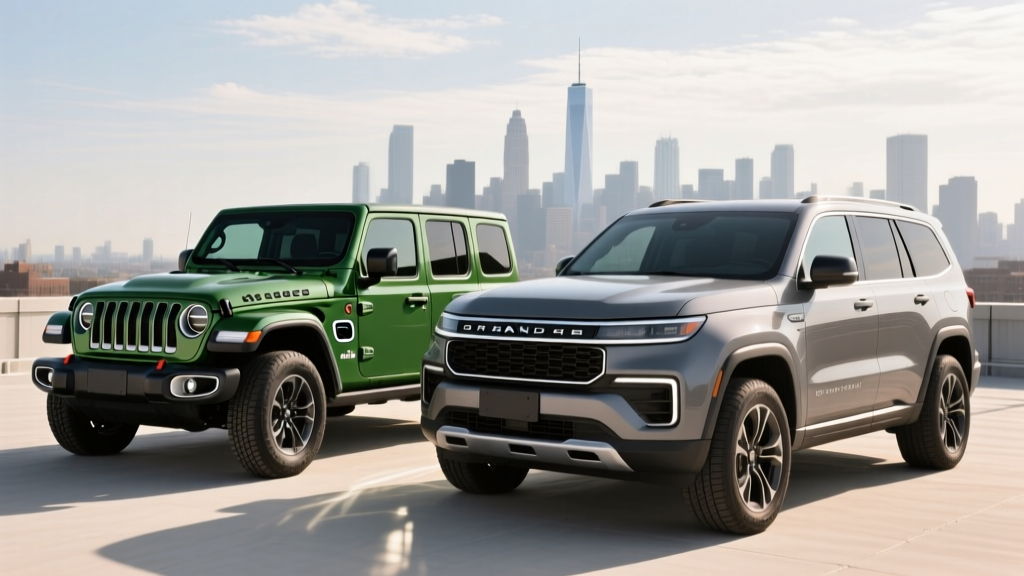
If you want off-road capability with an electric commute, Jeep's 4xe plug-in hybrid lineup occupies a unique niche. For the 2026 model year, Jeep continues to offer two core PHEV models in the U.S. market: the Wrangler 4xe and the Grand Cherokee 4xe. Both pair a turbocharged engine with electric motors and a usable battery pack that enables short-range electric-only driving — typically enough to cover daily errands or a commute without burning a drop of gas.
But a Jeep PHEV is not a full electric vehicle, and it's not a conventional hybrid either. Understanding exactly what you're getting — the real electric range, the fuel economy once the battery is depleted, the charging requirements, and the tax credit landscape — is essential before you sign a purchase agreement. This guide breaks down every spec that matters.
HEV vs PHEV: What Jeep Actually Offers
Before diving into specs, it's worth clarifying terminology because confusion between hybrid types is common:
Conventional Hybrid (HEV)
- Small battery (typically 1–2 kWh) recharged by regenerative braking and the engine
- No plug — you never charge it externally
- Electric motor assists the gas engine; cannot drive on electric alone for meaningful distance
- Example: Toyota RAV4 Hybrid
Plug-In Hybrid (PHEV) — What the Jeep 4xe Is
- Larger battery (17–20+ kWh usable) that you plug in to recharge
- Can drive 20–30+ miles on electricity alone before the gas engine kicks in
- Once battery is depleted, operates as a conventional hybrid
- Qualifies for partial or full federal tax credit depending on battery capacity and sourcing
Jeep does not currently sell a conventional HEV in the U.S. market. When you see "Jeep PHEV" or "4xe," you're looking at a plug-in hybrid that requires (or at least benefits enormously from) being plugged in regularly. If you never plug it in, you're carrying hundreds of pounds of dead battery weight and getting worse fuel economy than a comparable gas-only model.
2026 Wrangler 4xe: Specs, Range, and Real-World MPG
| Spec | Value |
|---|---|
| Powertrain | 2.0L turbo I-4 + 2 electric motors (integrated into 8-speed auto) |
| Combined Horsepower | 375 hp / 470 lb-ft torque |
| Battery (usable) | ~17 kWh (NMC lithium-ion) |
| EPA Electric-Only Range | 21 miles |
| Total Combined Range | ~370 miles (electric + gas) |
| EPA MPGe (electric+gas) | 49 MPGe |
| EPA MPG (gas only, battery depleted) | 20 combined (20 city / 20 highway) |
| Level 2 Charging (240V) | ~7.2 kW; 0–100% in ~2.5 hours |
| DC Fast Charging | Not available |
| 0–60 mph | ~6.0 seconds |
| Towing Capacity | 3,500 lbs |
| Base MSRP (Willys 4xe) | ~$51,790 (incl. destination) |
Real-World Electric Range vs. EPA
The Wrangler 4xe's EPA-rated 21 miles of electric range assumes moderate temperatures and mixed driving. In real-world conditions:
- City driving (mild weather): Expect 22–25 miles — regenerative braking helps in stop-and-go traffic
- Highway (65–75 mph): Expect 14–17 miles — the boxy aerodynamics and heavy curb weight (~5,400 lbs) work against you
- Cold weather (below 32°F): Expect 12–15 miles — battery chemistry loses efficiency, and cabin heating draws from the pack
If your one-way commute is under 15 miles, the Wrangler 4xe can realistically cover it on electricity year-round. Beyond that, the gas engine takes over seamlessly.
Real-World MPG Once the Battery Is Depleted
The EPA rates the Wrangler 4xe at 20 MPG combined once the battery is empty. This is where real-world experience diverges from the sticker:
- City driving: Owners frequently report 22–24 MPG in urban stop-and-go, where regenerative braking recaptures energy effectively
- Highway cruising: Expect 18–20 MPG at 70 mph — the Wrangler's brick-like aerodynamics are a significant penalty
- Off-road or towing: 12–15 MPG is typical under heavy load
For context, the gas-only Wrangler with the 2.0L turbo achieves 22 MPG combined per fueleconomy.gov. The 4xe's charge-sustaining fuel economy is comparable but not better unless you're regularly plugging in.
2026 Grand Cherokee 4xe: Specs, Range, and Real-World MPG
| Spec | Value |
|---|---|
| Powertrain | 2.0L turbo I-4 + 2 electric motors (integrated into 8-speed auto) |
| Combined Horsepower | 375 hp / 470 lb-ft torque |
| Battery (usable) | ~17.3 kWh (NMC lithium-ion) |
| EPA Electric-Only Range | 25 miles |
| Total Combined Range | ~440 miles (electric + gas) |
| EPA MPGe (electric+gas) | 56 MPGe |
| EPA MPG (gas only, battery depleted) | 23 combined (23 city / 24 highway) |
| Level 2 Charging (240V) | ~7.2 kW; 0–100% in ~2.5 hours |
| DC Fast Charging | Not available |
| 0–60 mph | ~6.0 seconds |
| Towing Capacity | 6,000 lbs |
| Base MSRP (4xe) | ~$61,665 (incl. destination) |
The Grand Cherokee 4xe delivers meaningfully better efficiency than the Wrangler 4xe thanks to its more aerodynamic profile and slightly larger battery. The EPA's 25-mile electric range is more usable in practice — expect 22–28 miles in real-world mixed driving, with highway efficiency closer to 18–20 miles and city driving potentially stretching to 28–30 miles with liberal regen use.
Once the battery depletes, the Grand Cherokee 4xe's 23 MPG combined is competitive with the V6 gas-only Grand Cherokee (22 MPG combined). If you charge nightly and your commute falls within 20 miles each way, you may visit a gas station only for longer road trips.
Charging: What You Need at Home
Neither Jeep 4xe model supports DC fast charging — this is a deliberate limitation of the platform. All charging is AC-only:
| Level | Voltage | Power (kW) | 0–100% Time | Miles of Range Added per Hour |
|---|---|---|---|---|
| Level 1 (standard outlet) | 120V | ~1.4 kW | ~12–14 hours | ~4–5 miles |
| Level 2 (home/public AC) | 240V | ~7.2 kW | ~2.5 hours | ~20 miles |
Practical recommendation: A Level 2 home charger is essentially mandatory for Jeep PHEV ownership. Level 1 charging from a standard 120V outlet technically works but requires 12+ hours for a full charge — adequate only if you drive very little and can leave it plugged in overnight every night. A Level 2 charger (240V, 32–40 amp circuit) will fully replenish either 4xe in roughly 2.5 hours, meaning you can top off during the workday or between errands.
Home Level 2 installation typically costs $800–$2,500 depending on your electrical panel's capacity, the distance from panel to charger location, and local permit requirements. If your panel is already near capacity (common in older homes), a 200-amp panel upgrade can add $1,500–$3,000. Always get a quote from a licensed electrician before committing.
Federal Tax Credit Eligibility for the Jeep PHEV
The Jeep 4xe models have historically qualified for partial or full federal tax credits under IRS §30D, but eligibility depends on several factors that change regularly. As of the 2026 tax year, here's what you need to know:
§30D Federal PHEV Tax Credit Requirements
- Credit amount: Up to $7,500, split into two halves — $3,750 for critical minerals sourcing and $3,750 for battery component sourcing
- Vehicle MSRP cap: SUVs must have an MSRP at or below $80,000 (both Wrangler and Grand Cherokee 4xe generally qualify; verify by trim)
- Buyer income cap: Modified AGI must not exceed $150,000 (single), $225,000 (head of household), or $300,000 (married filing jointly)
- Battery sourcing: Critical minerals and battery components must meet escalating domestic/free-trade-agreement sourcing thresholds — this is where some PHEVs lose half or all of the credit
- Point-of-sale transfer: You can transfer the credit to the dealer at purchase, reducing your out-of-pocket cost immediately rather than waiting for tax filing
- Final assembly: Must occur in North America (both 4xe models are assembled in the U.S.)
Critical caveat: Battery sourcing requirements tighten each year under the Inflation Reduction Act. A vehicle that qualified for the full $7,500 in 2024 may qualify for only $3,750 or nothing in 2026 depending on where its battery cells and critical minerals originate. Always verify current eligibility on the fueleconomy.gov tax credit page and consult a tax professional before relying on the credit in your purchase decision.
Battery Warranty, Lifespan, and Replacement Cost
Jeep 4xe Battery Warranty
- Coverage: 8 years / 100,000 miles (whichever comes first)
- Capacity retention threshold: Stellantis warrants the high-voltage battery against defects and excessive capacity loss — typically defined as falling below ~70% of original capacity within the warranty period
- What's covered: Battery cell defects, battery management system failures, and related high-voltage components
- What's not covered: Normal gradual degradation beyond the threshold, damage from accidents, or improper charging modifications
How Long Will the Battery Last?
The NMC (nickel manganese cobalt) batteries in the Jeep 4xe models are designed for daily cycling. Based on data from similar PHEV platforms across the Stellantis portfolio and the broader industry, expect:
- Years 1–5: Minimal degradation — typically 5–8% capacity loss
- Years 5–10: Gradual decline to roughly 80–85% of original capacity
- Beyond 10 years: Battery remains functional but with noticeably reduced electric range (perhaps 15–17 miles instead of 21–25)
The relatively small battery (17 kWh) undergoes more frequent full charge-discharge cycles than a large EV battery, which can accelerate wear. However, the PHEV system's thermal management and conservative buffer (the car never uses 100% of the pack) help mitigate this.
Out-of-Warranty Replacement Cost
If the battery fails after the warranty expires, replacement costs are significant. Based on current Stellantis service data and industry estimates for PHEV battery packs in the 15–20 kWh range:
- Battery pack replacement: $8,000–$14,000 (parts + labor)
- Individual module replacement: Some shops can replace failed modules rather than the full pack, reducing cost to $2,000–$5,000
This is a meaningful long-term ownership cost to factor in, especially if you plan to keep the vehicle past 150,000 miles. For reference, NHTSA reliability data and owner forums suggest most 4xe batteries have held up well within the warranty period, but long-term data (10+ years) is still accumulating.
Reliability: What Owners Report
The Wrangler 4xe and Grand Cherokee 4xe share the same powertrain architecture, and both have drawn mixed reliability feedback since their introduction. Common issues reported by owners and tracked by automotive reliability databases include:
- Electrical system gremlins: Intermittent infotainment freezes, instrument cluster resets, and 12V auxiliary battery drain — often software-related and addressable via dealer updates
- Charging port issues: Some owners report slow charging handshake or failure to initiate Level 2 charging, typically traced to the onboard charger or port contacts
- Engine/transmission integration: Occasional rough transitions between electric and gas modes, particularly in cold weather when the engine starts for cabin heat
Neither model has earned a top rating from IIHS for overall crashworthiness across all test categories — the Wrangler in particular has historically scored lower in certain overlap tests due to its body-on-frame design. The Grand Cherokee performs better but buyers should review the latest IIHS and NHTSA ratings for the specific model year.
Jeep PHEV vs. Full EV vs. Gas: Which Should You Choose?
Choose the Jeep 4xe PHEV If:
- You need genuine off-road capability (Wrangler) or towing capacity (Grand Cherokee) and no current BEV matches those requirements in your budget
- You can charge at home nightly and your daily driving is under 25 miles — you'll run mostly on electricity
- You regularly take road trips where charging infrastructure is sparse or unreliable
- You want to reduce fuel consumption without committing to range planning
Choose a Full EV (BEV) If:
- You have reliable home charging and your daily driving is under 250 miles
- You want zero tailpipe emissions and minimal maintenance (no oil changes, no engine)
- You want access to DC fast charging for road trips (Jeep 4xe cannot DC fast charge)
- Long-term battery replacement cost concerns you — EV batteries are larger but degrade more slowly per cycle
Choose a Gas-Only Jeep If:
- You cannot charge at home (apartment, no garage, no outlet access)
- You drive mostly long highway miles where the PHEV's electric range provides negligible benefit
- You want the lowest upfront purchase price and simpler maintenance
- You plan to keep the vehicle 10+ years and want to avoid high-voltage battery replacement risk
Jeep 4xe Pros
- 21–25 miles electric range covers most daily commutes
- 375 hp / 470 lb-ft — the most torque in the Wrangler lineup
- Retains full off-road capability (Wrangler 4xe has same ground clearance, articulation, and water fording as gas models)
- No range anxiety — gas engine provides 370+ total miles
- Potential federal tax credit reduces effective price
Jeep 4xe Cons
- No DC fast charging — road trip charging is Level 2 only
- Gas-only MPG is mediocre (20–23 combined) when battery is depleted
- High curb weight hurts efficiency and tire wear
- Premium price over gas-only trims ($8,000–$12,000 more)
- Reliability track record is still maturing
Frequently Asked Questions
How many MPG does the Jeep PHEV get?
The 2026 Wrangler 4xe gets 20 MPG combined (gas only, battery depleted) and 49 MPGe when factoring in electric driving. The Grand Cherokee 4xe gets 23 MPG combined and 56 MPGe. Real-world city MPG often exceeds EPA estimates by 2–4 MPG thanks to regenerative braking, while highway MPG may fall 1–2 MPG short.
How far can the Jeep PHEV go on electric only?
The Wrangler 4xe is EPA-rated for 21 miles electric-only; the Grand Cherokee 4xe for 25 miles. Real-world range varies from 14–17 miles (highway, cold weather) to 25–30 miles (city, mild weather with regen). For most commuters with a sub-20-mile one-way trip, electric-only mode is practical year-round.
Does the Jeep PHEV qualify for a tax credit?
Both 4xe models may qualify for up to $7,500 under the federal §30D credit, but the actual amount depends on battery sourcing requirements, buyer income limits, and MSRP caps — all of which are subject to change. Check fueleconomy.gov for the current status and consult a tax professional. Some states also offer additional PHEV rebates (e.g., California, Colorado, New York).
Is the Jeep 4xe reliable?
Reliability has been mixed. The powertrain itself (engine + motors) is generally robust, but electrical system software issues and occasional charging faults have been reported. The high-voltage battery carries an 8-year/100,000-mile warranty. Long-term data (10+ years) is still limited. Check the latest reliability ratings from Consumer Reports and owner forums before purchasing.
What does it cost to replace the Jeep 4xe battery?
Out-of-warranty replacement runs $8,000–$14,000 for the full pack, though individual module replacement may be possible for $2,000–$5,000. Most owners will not need replacement within the 8-year warranty period. This cost is higher than a conventional car's maintenance but comparable to a full EV battery replacement on a per-kWh basis.
Can I charge the Jeep 4xe at a DC fast charger?
No. Neither the Wrangler 4xe nor the Grand Cherokee 4xe supports DC fast charging. Maximum charge rate is 7.2 kW on Level 2 (240V AC), taking about 2.5 hours for a full charge. This is a significant limitation for road trips — you cannot quickly top up at a highway charging station the way a full EV can.
Should I buy the Jeep PHEV or a full EV?
If you need Wrangler-level off-road capability or Grand Cherokee towing (6,000 lbs) and cannot compromise, the 4xe is the right choice — no current BEV matches both. If your priority is daily efficiency, low running costs, and you don't need extreme off-road or towing specs, a full EV like the Ford F-150 Lightning, Rivian R1S, or Hyundai Ioniq 5 will deliver lower cost-per-mile, DC fast charging, and simpler long-term maintenance.