Quick Verdict: The Grand Cherokee Hybrid That Plugs In
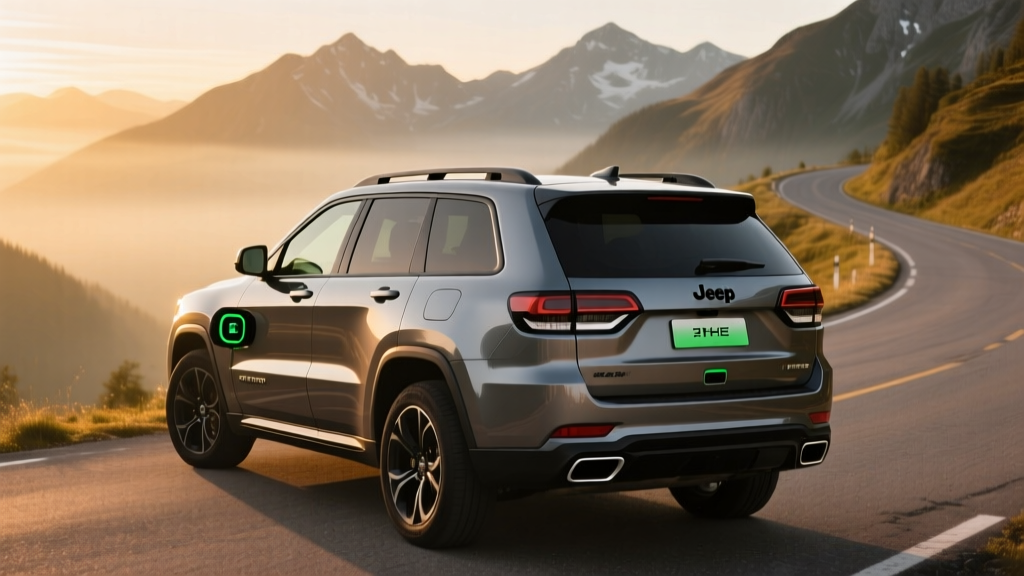
If you've been searching for a "grand cherokee hybrid," you're almost certainly looking at the Jeep Grand Cherokee 4xe — the plug-in hybrid (PHEV) variant of Jeep's flagship three-row-capable SUV. It's not a conventional hybrid like a Toyota RAV4 Hybrid that simply sips less gas. The 4xe carries a 17.3 kWh battery pack, an electric motor integrated into the transmission, and the ability to drive roughly 25 miles on electricity alone before the turbocharged four-cylinder engine fires up.
For 2026, the Grand Cherokee 4xe remains one of the few plug-in hybrid midsize SUVs that pairs genuine off-road capability (available Quadra-Trac II 4WD, Selec-Terrain modes) with daily electric commuting. But it's not without trade-offs: real-world electric range falls short in cold weather, the four-cylinder engine sounds strained under hard acceleration, and the price premium over the gas-only Grand Cherokee is significant. Here's every number you need to decide if it fits your driveway.
| Spec | Value |
|---|---|
| Powertrain | 2.0L turbo I-4 + electric motor (P2 hybrid) |
| Combined Horsepower | 375 HP / 470 lb-ft torque |
| Battery (usable) | 17.3 kWh (NMC lithium-ion) |
| EPA Electric Range | 25 miles |
| EPA MPGe (elec + gas) | 56 MPGe |
| EPA MPG (gas only, combined) | 23 MPG combined (21 city / 24 highway) |
| Total Combined Range | |
| Level 2 Charge Time (0-100%) | ~2 hours at 7.2 kW |
| DC Fast Charging | Not available |
| 0-60 mph | 6.0 seconds (est.) |
| Towing Capacity | 6,000 lbs (properly equipped) |
| Battery Warranty | 10 years / 100,000 miles |
| Base MSRP (2026) | $60,495 (Limited 4xe) before incentives |
HEV vs. PHEV: There Is No Conventional Grand Cherokee Hybrid
A critical clarification up front: Jeep does not sell a conventional hybrid (HEV) Grand Cherokee. If you want hybrid-like efficiency in this nameplate, the 4xe plug-in hybrid is your only option. This is different from competitors like the Toyota Highlander, which offers a traditional self-charging hybrid that never needs plugging in.
| Feature | Conventional Hybrid (HEV) | Plug-In Hybrid (PHEV) — Grand Cherokee 4xe |
|---|---|---|
| Plug in to charge? | No — regenerative braking only | Yes — plug in for full electric range |
| Electric-only driving | Minimal (low-speed assist only) | ~25 miles at highway speeds |
| Battery size | 1-2 kWh | 17.3 kWh |
| Federal tax credit | None (discontinued after 2010) | Up to $3,750 (subject to §30D rules) |
| Home charging needed | No | Recommended for full benefit |
| Example vehicles | Toyota Highlander Hybrid, Honda CR-V Hybrid | Jeep Grand Cherokee 4xe, Toyota RAV4 Prime |
The bottom line: if you can't plug in at home or work, the 4xe still functions as a heavy, moderately efficient hybrid once the battery depletes — returning around 23 MPG combined on gas alone. But you're paying a premium for electric capability you won't use.
Fuel Economy: EPA Numbers and Real-World MPG
| Mode | City | Highway | Combined |
|---|---|---|---|
| Electric + Gas (MPGe) | — | — | 56 MPGe |
| Gas Only (charge-depleted MPG) | 21 | 24 | 23 |
The 56 MPGe figure applies only when you're regularly charging and driving within the 25-mile electric window. Once the battery is depleted, the 2.0L turbo four-cylinder takes over full-time, and you'll see 21-24 MPG depending on conditions. According to fueleconomy.gov, the Grand Cherokee 4xe's combined gas-only MPG is 23 — a modest improvement over the V6 gas Grand Cherokee's 22 MPG combined, but not a dramatic one.
Real-World MPG: What Owners Actually Report
PHEV real-world efficiency depends entirely on your driving pattern:
- Short commutes under 25 miles with daily charging: You may use almost zero gasoline for weeks at a time. Effective "MPG" is essentially infinite for those trips.
- Mixed driving (30-50 mile days, regular charging): Expect 35-45 MPGe effective, blending electric and gas miles.
- Long road trips, no charging: Expect 20-23 MPG on the highway — roughly matching a gas-only Grand Cherokee V6. The added weight of the battery and electric motor (curb weight ~5,200 lbs) works against you here.
- Cold weather (below 30°F): Electric range drops to approximately 17-20 miles as battery efficiency decreases and cabin heating draws energy. Gas-only MPG may dip to 18-20 MPG in short-trip winter city driving.
This is the PHEV paradox: spectacular efficiency for short, chargeable commutes; unremarkable efficiency on road trips. Your mileage — literally — depends on your outlet access.
Electric Range, Battery, and Charging Details
The Grand Cherokee 4xe's 17.3 kWh battery pack (NMC chemistry) delivers an EPA-rated 25 miles of electric-only range. In practice, expect 20-25 miles in moderate temperatures and 17-20 miles in freezing conditions. The electric motor can propel the SUV to speeds above 75 mph in EV mode — this isn't a golf-cart-speed neighborhood crawler.
Charging Speed and Options
| Level | Power | Time (0-100%) | Notes |
|---|---|---|---|
| Level 1 (120V household) | ~1.4 kW | ~12 hours | Emergency / overnight trickle |
| Level 2 (240V home/public) | 7.2 kW | ~2 hours | Recommended daily charging method |
| DC Fast Charge | N/A | N/A | Not supported |
The 4xe uses a standard J1772 connector for Level 1 and Level 2 AC charging. There is no DC fast-charging capability — a limitation worth noting if you hoped to top up quickly on road trips. However, given the modest 17.3 kWh battery, a full Level 2 charge in roughly two hours is practical for overnight home charging or workplace top-ups.
Home charging setup: A Level 2 home charger (240V, 32A circuit minimum) is strongly recommended. Installation costs typically range from $500-$2,000 depending on your electrical panel capacity and the distance from panel to garage. If you're relying solely on a 120V outlet, a full charge takes roughly 12 hours — feasible for overnight but inconvenient if you need multiple full charges per day.
Powertrain Performance: 375 HP With a Caveat
The 4xe powertrain pairs a 2.0-liter turbocharged inline-four (272 HP on its own) with a 134-HP electric motor integrated between the engine and the eight-speed automatic transmission (a P2 hybrid architecture). Combined output is 375 HP and 470 lb-ft of torque, routed through Jeep's Quadra-Trac II full-time 4WD system.
The torque figure is genuinely impressive — electric motors deliver peak torque at zero RPM, giving the 4xe strong launch feel from a stoplight. The 0-60 mph time of approximately 6.0 seconds puts it ahead of the V6 gas Grand Cherokee (~7.4 seconds) and close to the old 5.7L V8 Hemi variant.
The caveat: Once the battery is depleted, you're hauling 5,200+ lbs with a turbocharged four-cylinder making 272 HP. Highway passing and mountain grades reveal the engine working hard, with noticeable turbo lag and a coarse four-cylinder sound under load. Buyers coming from a V8 Grand Cherokee will notice the difference. The electric motor fills in the low-end torque gap beautifully when charged, but the gas-only experience is merely adequate.
Pricing, Tax Credit Eligibility, and Total Cost
For 2026, the Grand Cherokee 4xe starts at approximately $60,495 (Limited trim, including destination). Higher trims climb steeply:
- Limited 4xe: ~$60,495
- Overland 4xe: ~$66,495
- Summit 4xe: ~$71,495
- Summit Reserve 4xe: ~$76,495
That's a roughly $7,000-$8,000 premium over equivalent gas-only Grand Cherokee trims, which you'll need to recoup through fuel savings and any available incentives.
Federal Tax Credit (§30D) — PHEV Eligibility
The Grand Cherokee 4xe may qualify for a partial federal tax credit under IRS §30D rules, but eligibility is constrained by several factors for 2026:
- Battery capacity requirement: Must have ≥ 7 kWh — the 4xe's 17.3 kWh qualifies ✓
- MSRP cap: SUVs must be ≤ $80,000 — most 4xe trims qualify ✓ (Summit Reserve may exceed)
- Buyer income cap: AGI ≤ $150,000 (single) / $300,000 (joint) ✓ varies by buyer
- Critical minerals & battery component sourcing: Must meet escalating domestic-content thresholds — the 4xe's credit amount has been reduced as of 2024-2025 sourcing rule changes. Expect up to $3,750 (partial credit), not the full $7,500
- Point-of-sale transfer: Eligible buyers can apply the credit at purchase, reducing out-of-pocket cost immediately
Always verify current eligibility on IRS.gov clean vehicle credits and consult a tax professional before relying on credit amounts.
Cost-to-Own Comparison: 4xe vs. Gas Grand Cherokee
If your daily commute is under 25 miles and you charge nightly, you could save roughly $1,200-$1,800 per year in fuel costs versus the gas V6 Grand Cherokee (assuming $3.50/gal gas and $0.14/kWh electricity). At that rate, the price premium pays for itself in roughly 4-6 years before the tax credit — or 3-5 years with a $3,750 credit applied. If you rarely charge, the fuel savings shrink to near zero and the premium is never recovered.
Battery Warranty, Reliability, and Replacement Cost
Hybrid Battery Warranty
Stellantis covers the Grand Cherokee 4xe's high-voltage battery for 10 years or 100,000 miles (whichever comes first), with a capacity retention threshold typically set at 70% of original capacity. This is consistent with PHEV industry standards and provides strong protection for the first decade of ownership.
The powertrain (engine, transmission, electric motor) is covered for 5 years / 60,000 miles. The basic bumper-to-bumper warranty is 3 years / 36,000 miles.
Reliability Track Record
The Grand Cherokee 4xe has been on sale since the 2022 model year, giving us several years of real-world reliability data. Early 2022-2023 models saw some software-related recalls and complaints around the hybrid powertrain control module and battery management system — issues that Stellantis addressed through software updates and service campaigns. The 2.0L turbo engine itself is a proven unit shared across multiple Stellantis vehicles.
Check NHTSA.gov for any open recalls on specific model years before purchasing. Overall, the 4xe's reliability is average for the segment — not as bulletproof as a Toyota hybrid system, but not problematic by European luxury SUV standards either.
Battery Replacement Cost
If the high-voltage battery fails outside warranty, replacement costs are estimated between $8,000 and $12,000 (parts and labor) based on current Stellantis service pricing. This is a worst-case scenario — PHEV batteries are designed to last the life of the vehicle under normal use, and degradation in the 17.3 kWh pack has been minimal in owner reports through 100,000+ miles. However, it's a figure to factor into long-term ownership planning, particularly for second owners buying out of warranty.
Who Should Buy the Grand Cherokee 4xe (And Who Shouldn't)
Pros
- 25-mile electric range covers most daily commutes gas-free
- 375 HP / 470 lb-ft with strong low-end electric torque
- Genuine off-road capability (Quadra-Trac II, Selec-Terrain, available air suspension)
- 6,000-lb towing capacity (rare for a PHEV SUV)
- Premium interior with available Summit Reserve luxury
- Partial federal tax credit eligibility
- 10-year / 100,000-mile hybrid battery warranty
Cons
- No DC fast charging
- Electric range drops to ~17-20 miles in cold weather
- Gas-only MPG (23 combined) is only marginally better than the V6 gas model
- 4-cylinder engine sounds strained under heavy load once battery depletes
- $7,000+ price premium over gas-only Grand Cherokee
- Heavy curb weight (~5,200 lbs) hurts highway efficiency
- Full $7,500 tax credit not available due to sourcing rules
Decision Framework: Is the Grand Cherokee 4xe Right for You?
Choose the Grand Cherokee 4xe if:
- Your daily round-trip commute is under 25 miles and you can charge at home every night
- You need a midsize SUV with real towing capacity (6,000 lbs) and off-road ability
- You want to reduce gas consumption without committing to a full EV and its range limitations on road trips
- You live in an area with limited DC fast-charging infrastructure and need the gas-engine safety net
Choose the gas-only Grand Cherokee if:
- You can't charge at home or work
- You primarily drive long highway miles where the PHEV advantage disappears
- The $7,000+ price premium doesn't pencil out for your annual mileage
Choose a full EV (e.g., Rivian R1S, Tesla Model X) if:
- You have reliable home charging and access to DC fast-charging networks
- You want 250+ miles of range and zero tailpipe emissions
- You're ready to eliminate oil changes and gas-engine maintenance entirely
Choose a conventional HEV (e.g., Toyota Highlander Hybrid) if:
- You want better MPG without ever plugging in
- Your budget is under $50,000
- You prioritize proven long-term reliability over off-road capability
Frequently Asked Questions
How many MPG does the Grand Cherokee hybrid get?
The 2026 Jeep Grand Cherokee 4xe is rated at 56 MPGe when combining electric and gas driving, and 23 MPG combined (21 city / 24 highway) once the battery is depleted and you're running on gasoline alone. Real-world gas-only MPG typically ranges from 20-24 depending on driving conditions, with cold weather and city driving pulling it toward the lower end.
How far can the Grand Cherokee 4xe go on electric only?
The EPA rates the Grand Cherokee 4xe at 25 miles of electric-only range. In real-world driving, expect 20-25 miles in mild weather and 17-20 miles in freezing temperatures. The electric motor can sustain highway speeds (75+ mph) in EV mode, so this isn't limited to low-speed city driving.
Does the Grand Cherokee 4xe qualify for a tax credit?
The Grand Cherokee 4xe may qualify for a partial federal tax credit of up to $3,750 under IRS §30D rules for 2026, depending on your income, the vehicle's MSRP, and battery component/critical mineral sourcing requirements. The full $7,500 credit is not available due to current sourcing thresholds. Eligibility can be applied at point of sale. Always verify on IRS.gov and consult a tax professional.
Is the Grand Cherokee 4xe reliable, and what does a battery replacement cost?
The 4xe has average reliability for its class. Early models (2022-2023) had some software-related recalls that were addressed by Stellantis. The high-voltage battery is warrantied for 10 years / 100,000 miles. Out-of-warranty battery replacement is estimated at $8,000-$12,000, though PHEV batteries are designed to outlast the typical ownership period with minimal degradation.
Can I drive the Grand Cherokee 4xe without ever plugging it in?
Yes. If you never plug it in, the 4xe operates as a conventional (albeit heavy) hybrid, using regenerative braking to capture small amounts of energy and running primarily on the 2.0L turbo gas engine. You'll get around 21-24 MPG — similar to the gas-only Grand Cherokee. However, you'll be paying a $7,000+ premium for electric hardware you're not using, so plugging in is strongly recommended to capture the vehicle's value proposition.
What's the difference between the Grand Cherokee 4xe and a regular hybrid?
A conventional hybrid (HEV) like the Toyota Highlander Hybrid has a small battery (~1-2 kWh) that recharges only through regenerative braking and the gas engine. It cannot drive on electricity alone for meaningful distances and never needs plugging in. The Grand Cherokee 4xe is a plug-in hybrid (PHEV) with a much larger 17.3 kWh battery, giving it 25 miles of electric-only range — but it requires regular plug-in charging to capture that benefit. Jeep does not offer a conventional HEV Grand Cherokee.
Does the Grand Cherokee 4xe have DC fast charging?
No. The Grand Cherokee 4xe supports Level 1 (120V) and Level 2 (240V) AC charging only, with a maximum charge rate of 7.2 kW. A full Level 2 charge takes approximately 2 hours. DC fast charging is not available on this vehicle, which is common for PHEVs with smaller battery packs.