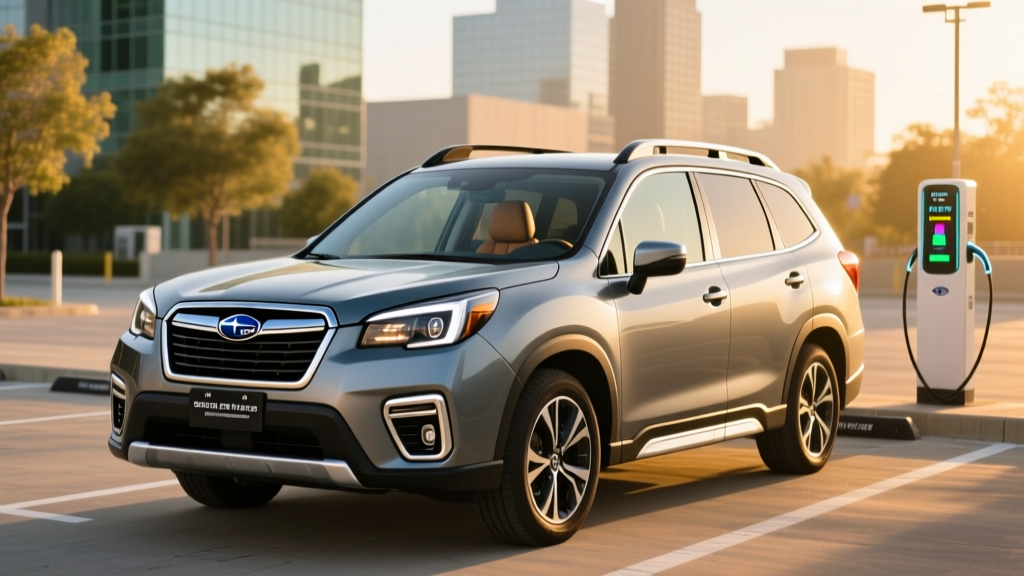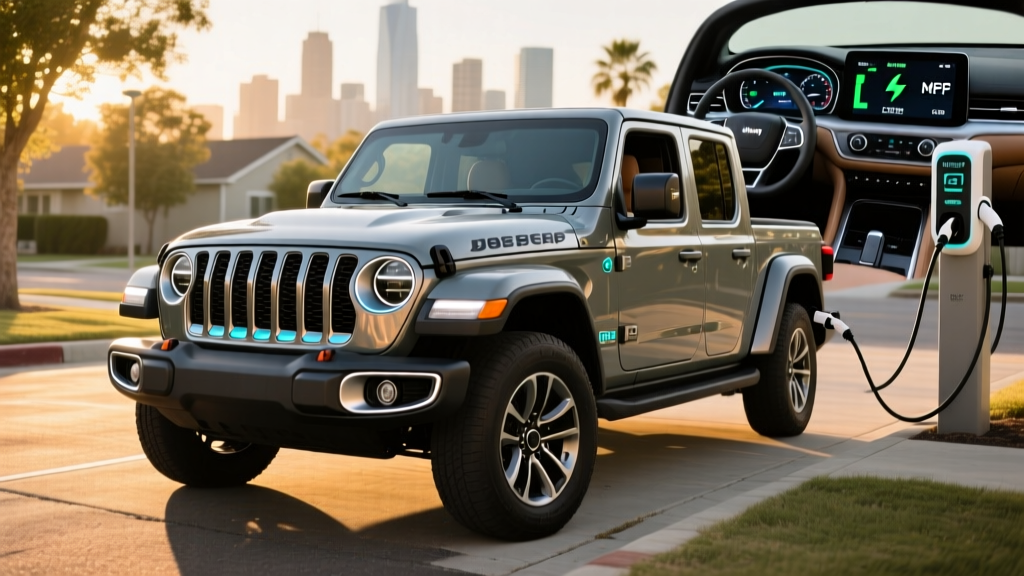
If you've been waiting for a midsize truck that can run errands on electricity all week and tow a boat on gas all weekend, the 2026 Jeep Gladiator Hybrid—officially the Gladiator 4xe (plug-in hybrid)—finally answers that ask. Built on the same Stellantis 4xe architecture that powers the Wrangler 4xe, the Gladiator 4xe pairs a 2.0-liter turbocharged four-cylinder with two electric motors and a frame-mounted lithium-ion battery pack. The result: short electric-only commutes, meaningful fuel savings versus the gas-only Gladiator, and full truck capability intact.
But the Gladiator 4xe isn't a magic bullet. It costs more up front, trades some payload for battery weight, and its electric-only range won't cover a long rural commute. Below, we break down every spec that matters—from EPA MPG and kWh capacity to real-world towing efficiency and §30D tax credit eligibility—so you can decide whether this plug-in hybrid truck earns a spot in your driveway.
HEV vs PHEV: What the Gladiator Hybrid Actually Is
Before we get into the numbers, it's worth clarifying the terminology. When shoppers search for a "Jeep Gladiator hybrid," they could mean two very different things:
Conventional Hybrid (HEV)
- How it works: A small battery and electric motor assist the gas engine. The battery recharges via regenerative braking and the engine—no plug required.
- Electric-only driving: None or negligible (maybe 1-2 miles at very low speed).
- Example: Toyota Tacoma i-FORCE MAX hybrid.
Plug-In Hybrid (PHEV) — This Is the Gladiator 4xe
- How it works: A larger battery pack powers dedicated electric-only driving. You plug it in to recharge (Level 1 or Level 2). Once the battery depletes, it operates as a conventional hybrid.
- Electric-only driving: Meaningful range for daily commutes—typically 20-30 miles in this class.
- Example: Jeep Gladiator 4xe, Ford F-150 PowerBoost (note: F-150 PowerBoost is HEV, not PHEV—the Maverick PHEV and Tacoma PHEV are closer competitors).
The 2026 Gladiator Hybrid is a PHEV. It requires plug-in charging to unlock its full efficiency potential, though it will still function as a hybrid (with reduced fuel savings) if you never plug it in.
Powertrain, Horsepower, and Towing Specs
| Specification | 2026 Jeep Gladiator 4xe |
|---|---|
| Powertrain | 2.0L turbo I4 + 2 electric motors + 8-speed automatic |
| Combined Horsepower | 375 hp |
| Combined Torque | 470 lb-ft |
| Battery (usable) | ~17.3 kWh, lithium-ion (NMC chemistry) |
| Drivetrain | 4WD (Selec-Trac or Rock-Trac depending on trim) |
| Max Towing Capacity | ~6,000 lbs (reduced from ~7,700 lbs gas model) |
| Payload Capacity | ~1,100 lbs (battery weight reduces payload vs gas) |
| 0-60 mph | ~6.5 seconds (est.) |
The 2.0L turbo four-cylinder might sound undersized for a body-on-frame truck, but the electric motors fill in the torque curve instantly. With 470 lb-ft available from low RPM, the Gladiator 4xe pulls confidently from stoplights and merges. The trade-off is towing: the added battery mass (~600 lbs) and slightly lower gas-engine output versus the 3.6L V6 reduce the max tow rating to approximately 6,000 pounds. If you regularly tow above that threshold, the gas-only Gladiator with the diesel or V6 remains the better tool.
EPA MPG, Electric-Only Range, and Real-World Efficiency
| Metric | EPA Estimate | Real-World Expectation |
|---|---|---|
| Electric-only range | 28 miles | 22-26 mi (highway/cold weather reduces to ~18-20 mi) |
| Combined MPGe (electric + gas) | 50 MPGe | Varies widely by driving mix |
| Gas-only MPG (city) | 20 mpg | 18-21 mpg (city regen helps) |
| Gas-only MPG (highway) | 20 mpg | 17-19 mpg (aerodynamics hurt at 70+ mph) |
| Gas-only MPG (combined) | 20 mpg | 18-20 mpg |
| Total combined range | ~370 miles | ~330-360 miles (gas tank + full battery) |
The key efficiency insight: your commute distance determines whether the Gladiator 4xe saves you money. If your daily round trip is under 25 miles and you charge at home every night, you'll burn almost no gasoline on weekdays. If your commute is 60 miles each way, the battery depletes in the first 25 miles and the remaining 95 miles run on gas at 20 MPG—barely better than the conventional Gladiator.
Charging: Battery Size, Charge Times, and DC Fast Charging
The Gladiator 4xe's ~17.3 kWh battery pack (approximately 15-16 kWh usable, with the buffer protecting longevity) charges via a J1772/CCS1 port located on the driver-side front fender.
| Charging Level | Power (kW) | 0-100% Time | Notes |
|---|---|---|---|
| Level 1 (120V household) | ~1.4 kW | ~12 hours | Overnight top-up; not ideal for daily full recharge |
| Level 2 (240V, 32A) | ~7.7 kW | ~2.5 hours | Recommended for daily home charging |
| DC Fast Charge | Not supported | N/A | PHEVs in this class typically lack DC fast charging |
The lack of DC fast charging is standard for PHEVs—most plug-in hybrids prioritize Level 2 home charging since the battery is small enough to refill overnight. A Level 2 home charger (240V, 32-amp circuit) is strongly recommended. Expect to invest $500-$1,200 for a quality Level 2 EVSE and $800-$2,500 for professional installation, depending on whether your electrical panel needs an upgrade. According to data from fueleconomy.gov, a full home charge at the national average of $0.16/kWh costs roughly $2.60—cheaper than a gallon of gas for 25 miles of driving.
Pricing, Trims, and Federal Tax Credit Eligibility
The 2026 Jeep Gladiator 4xe starts at an MSRP of approximately $52,995 (including destination) for the Sport S trim, climbing to roughly $62,000+ for the Rubicon and High Altitude trims. That's a $6,000-$8,000 premium over the equivalently equipped gas-only Gladiator.
- Credit amount: Up to $7,500, split into $3,750 for critical minerals sourcing and $3,750 for battery component sourcing (per IRS.gov §30D).
- MSRP cap: Trucks/vans/SUVs must be under $80,000 MSRP. The Gladiator 4xe qualifies.
- Buyer income cap: AGI must not exceed $150,000 (single), $225,000 (head of household), or $300,000 (joint).
- Battery sourcing: Critical minerals and battery components must meet escalating domestic/FHA-sourcing thresholds. Stellantis has worked to qualify, but specific trim/batch eligibility varies—verify at purchase.
- Point-of-sale transfer: You can transfer the credit to the dealer at purchase for an immediate price reduction, rather than waiting for tax filing.
Eligibility is not guaranteed. Always verify current sourcing compliance with your dealer and consult a tax professional before relying on the credit.
If the full $7,500 credit applies, the effective starting price drops to roughly $45,500—narrowing the gap with the gas-only Gladiator significantly. Many states also offer additional PHEV rebates (California's CVRP, Colorado's state credit, etc.), though these vary by jurisdiction and income. Check your state energy office for current programs.
Reliability, Battery Warranty, and Replacement Cost
- Coverage: 8 years / 100,000 miles (whichever comes first)
- Capacity retention threshold: Battery must retain at least 70% of original capacity. If it drops below 70% within the warranty period, Stellantis will repair or replace it.
- Powertrain warranty: 5 years / 60,000 miles on the engine, transmission, and electric motors.
The 2.0L turbo engine and 8-speed automatic transmission are proven components shared across the Stellantis lineup. The electric motors and power electronics have been in the Wrangler 4xe since the 2021 model year, giving the platform a multi-year reliability track record. Early Wrangler 4xe models had some software-related recalls (check NHTSA.gov for open recalls by VIN), but no systemic battery-pack failures have been widely reported.
Out-of-warranty battery replacement is the big unknown. Based on current Stellantis parts pricing and comparable PHEV packs, expect a replacement cost between $8,000 and $12,000 (parts and labor) if the battery degrades past the 70% threshold after the warranty expires. For most owners who charge properly (avoiding daily 100% holds and extreme heat soaking), the pack should last well beyond 100,000 miles with manageable degradation.
Who Should Buy the Gladiator 4xe vs a Gas Truck or Full EV?
Choose the Gladiator 4xe (PHEV) If:
- Your daily commute is under 30 miles round-trip and you can charge at home.
- You want truck capability (4WD, ~6,000-lb tow, 5-foot bed) but want to cut weekday fuel costs.
- You take road trips where EV charging infrastructure is sparse—gas backup eliminates range anxiety.
- You qualify for the §30D tax credit, making the price premium manageable.
Choose the Gas-Only Gladiator If:
- You regularly tow above 6,000 lbs or need maximum payload.
- You can't charge at home (apartment, street parking, no garage).
- Your budget is firm below $45,000 and you don't qualify for the tax credit.
Choose a Full EV Truck (e.g., Rivian R1T, Ford F-150 Lightning) If:
- Your daily driving is under 250 miles and you want zero tailpipe emissions.
- You have reliable home and/or workplace charging.
- You want the lowest per-mile fuel cost and minimal maintenance (no oil changes, fewer moving parts).
- You don't need a body-on-frame truck for severe off-road use.
Pros and Cons at a Glance
Pros
- 28 miles of electric-only range covers most short commutes
- 375 hp / 470 lb-ft delivers strong acceleration for a midsize truck
- Full Gladiator capability: removable doors/roof, solid axles, Trail Rated (Rubicon)
- Eligible for up to $7,500 federal tax credit (if sourcing/buyer requirements met)
- No range anxiety on road trips—gas engine takes over seamlessly
Cons
- ~20 MPG gas-only is barely better than the V6 gas Gladiator
- Towing reduced to ~6,000 lbs (from ~7,700 lbs)
- No DC fast charging
- $52,995+ starting MSRP is steep for a midsize truck
- Real-world electric range drops to ~18-20 miles in cold weather or at highway speeds
Frequently Asked Questions
How many MPG does the Jeep Gladiator Hybrid get?
The 2026 Gladiator 4xe is rated at 50 MPGe combined when factoring in electric-only driving, and 20 MPG combined (city/highway) once the battery is depleted and it runs on gasoline alone. In real-world driving, expect 18-21 MPG on gas depending on terrain, speed, and temperature. Your actual fuel consumption depends heavily on how often you charge and how short your trips are.
How far can the Gladiator 4xe go on electric only?
The EPA rates it at 28 miles of electric-only range. In real-world conditions—especially highway driving, cold weather, or hilly terrain—expect 18-26 miles. This is enough for short errands and commutes but not a full day of mixed driving without the gas engine engaging.
Does the Jeep Gladiator Hybrid qualify for a tax credit?
The Gladiator 4xe may qualify for up to $7,500 under the IRS §30D Clean Vehicle Credit, subject to battery sourcing requirements, buyer income caps ($150K single / $300K joint), and the $80,000 MSRP cap for trucks. Eligibility can change based on Stellantis's supply chain compliance—always verify with your dealer at the time of purchase and consult a tax professional. The credit can be transferred to the dealer at point of sale for an immediate price reduction.
Is the Gladiator 4xe reliable, and what does battery replacement cost?
The 4xe powertrain has been in production since 2021 in the Wrangler, giving it a multi-year track record. The battery is covered by an 8-year/100,000-mile warranty with a 70% capacity retention guarantee. Out-of-warranty replacement is estimated at $8,000-$12,000. Proper charging habits (avoiding prolonged 100% state of charge, using Level 2 over Level 1 when possible) help maximize battery life.
Can I charge the Gladiator 4xe at a public DC fast charger?
No. Like most plug-in hybrids, the Gladiator 4xe does not support DC fast charging. It charges via Level 1 (120V, ~12 hours for a full charge) or Level 2 (240V, ~2.5 hours). This is typical for PHEVs—the battery is small enough that overnight Level 2 charging is sufficient for daily use.
Hybrid vs PHEV vs EV — which truck is right for me?
If you can charge at home and your daily driving is under 30 miles, a PHEV like the Gladiator 4xe offers the best of both worlds: electric commuting with gas-powered road trips. A conventional hybrid (HEV) like the Tacoma i-FORCE MAX doesn't plug in and offers modest MPG gains (2-4 MPG better than gas) with zero behavior change. A full EV (Rivian R1T, F-150 Lightning) delivers the lowest operating cost and zero tailpipe emissions but requires reliable charging access and planning for longer trips. Your choice depends on charging access, daily mileage, and towing needs.