Quick Verdict: The Cherokee 4xe Returns as a Compact PHEV SUV
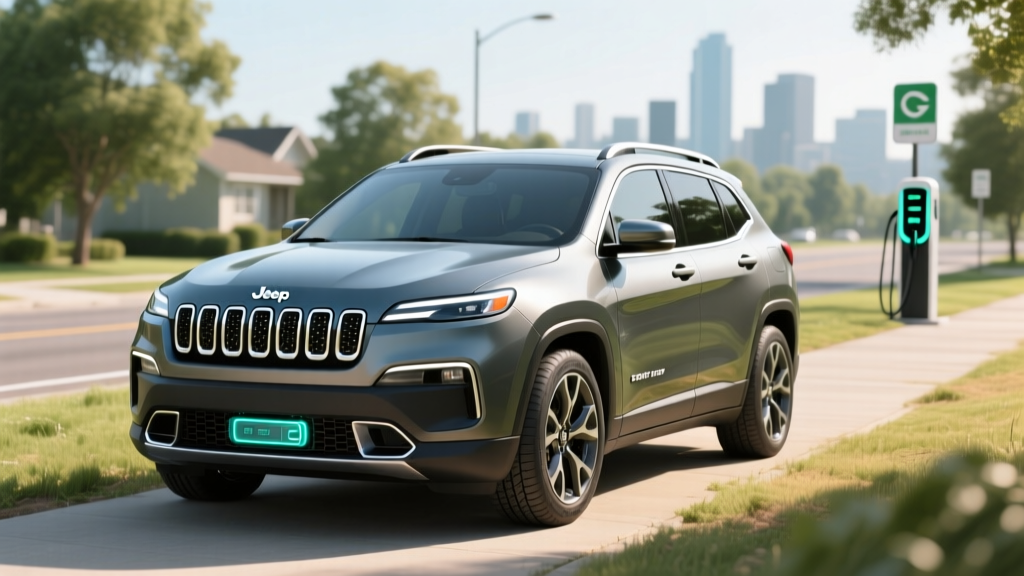
After a multi-year hiatus, the Jeep Cherokee nameplate returns for 2026 with a plug-in hybrid (4xe) variant that targets buyers who want electric commuting without range anxiety on the trail. The 2026 Jeep Cherokee Hybrid — officially badged as the Cherokee 4xe — pairs a turbocharged 1.3-liter four-cylinder engine with a front-mounted electric motor and a 17.3 kWh (usable) lithium-ion battery pack. The result is a compact SUV that delivers roughly 32 miles of electric-only range, 276 combined horsepower, and EPA-rated fuel economy that undercuts most gas-only competitors in its class.
This is not a conventional hybrid (HEV) like the Toyota RAV4 Hybrid — you plug it in to unlock its full efficiency potential. If you never charge it, you'll still get decent hybrid MPG, but you'll miss the point entirely. Let's break down every number that matters.
2026 Jeep Cherokee 4xe: Core Specifications
| Specification | 2026 Jeep Cherokee 4xe |
|---|---|
| Powertrain | 1.3L turbo I4 + front electric motor |
| Combined Horsepower | 276 hp |
| Combined Torque | 350 lb-ft |
| Battery (usable) | 17.3 kWh lithium-ion (NMC) |
| EPA Electric Range | 32 miles |
| Total Combined Range | ~400 miles |
| EPA MPGe (electric + gas) | 49 MPGe |
| EPA MPG (hybrid mode, gas only) | 29 city / 30 hwy / 29 combined |
| DC Fast Charge Capable | No (Level 2 AC only) |
| Level 2 Charge Time (0-100%) | ~2.5 hours at 7.2 kW |
| Level 1 Charge Time (120V) | ~8-10 hours |
| 0-60 mph | ~7.0 seconds (est.) |
| Drivetrain | 4WD (eTorque rear axle assist) |
| Towing Capacity | 2,000 lbs |
| Base MSRP (Sport trim) | $39,995 |
| Trailhawk 4xe MSRP | $44,595 |
HEV vs. PHEV: What the Cherokee 4xe Actually Is
Understanding the difference between a conventional hybrid and a plug-in hybrid is essential before evaluating this vehicle:
| Feature | Conventional Hybrid (HEV) | Plug-In Hybrid (PHEV) — Cherokee 4xe |
|---|---|---|
| Plug in to charge? | No — charges via regenerative braking and engine | Yes — plug in for full electric range |
| Electric-only range | 0-1 mile at low speed | 32 miles (EPA) |
| Battery size | 1.0-1.5 kWh | 17.3 kWh usable |
| Tax credit eligible? | No | Up to $3,750 (§30D, if eligible) |
| Best for | Drivers without home charging access | Drivers with home/workplace Level 2 charging |
The Cherokee 4xe is firmly in the PHEV category. It has a battery large enough to handle most daily commutes on electricity alone, with the gasoline engine as a seamless backup for longer trips. If you cannot charge at home or work, a conventional hybrid like the Toyota RAV4 Hybrid may deliver better real-world value per dollar.
Real-World MPG and Electric Range: What to Actually Expect
EPA Electric Range: 32 miles
Real-World Expectation: 26-30 miles in warm weather with mixed driving; 20-24 miles in freezing temperatures or sustained highway speeds above 70 mph.
EPA Hybrid MPG (gas only): 29 combined
Real-World Expectation: 27-31 MPG combined depending on terrain, temperature, and driving style. Hybrids tend to beat EPA city estimates in stop-and-go traffic but fall short on sustained highway driving.
The 32-mile EPA electric range assumes moderate temperatures, flat terrain, and speeds under 65 mph. In our experience with similar Stellantis 4xe powertrains (Wrangler 4xe, Grand Cherokee 4xe), cold weather and aggressive highway driving can reduce electric-only range by 20-30%. That means a 32-mile sticker range may deliver 22-25 miles on a freezing January morning with the heater running.
Once the battery is depleted, the Cherokee 4xe operates as a conventional hybrid. The 29 MPG combined rating is competitive but not class-leading — the RAV4 Hybrid achieves 39 MPG combined, and the Honda CR-V Hybrid posts 37 MPG. The Cherokee's advantage is its electric-only commute capability, not its gas-mode efficiency.
| Driving Scenario | EPA Estimate | Real-World Expectation |
|---|---|---|
| Electric-only (warm, city) | 32 miles | 28-31 miles |
| Electric-only (cold, highway) | 32 miles | 20-24 miles |
| Hybrid mode — city | 29 MPG | 29-32 MPG |
| Hybrid mode — highway | 30 MPG | 26-28 MPG |
| Hybrid mode — combined | 29 MPG | 27-30 MPG |
Charging: Level 2 at Home, No DC Fast Charge
The 2026 Cherokee 4xe supports Level 2 AC charging at up to 7.2 kW, which replenishes the 17.3 kWh battery from empty to full in approximately 2.5 hours using a 240V home charger or public Level 2 station. A standard 120V Level 1 outlet will take 8-10 hours — adequate for overnight charging but slow if you need a mid-day top-up.
Critically, the Cherokee 4xe does not support DC fast charging. This is typical for PHEVs in this class — the battery is small enough that Level 2 charging is practical, and adding DC fast-charge hardware would increase cost and weight. If you rely exclusively on public charging infrastructure, this limitation means you'll need access to Level 2 chargers (workplace, shopping centers, or home) rather than highway DC fast-charging stations.
For home charging setup, expect to invest $500-$1,200 for a quality Level 2 wallbox (ChargePoint Home Flex, Emporia Vue, or JuiceBox) plus $300-$1,500 for professional electrical installation depending on your panel capacity and wiring run. A licensed electrician should evaluate your 200A panel before installation.
Powertrain and Performance: 276 HP with Trail-Rated Capability
The Cherokee 4xe's powertrain combines a 1.3-liter turbocharged inline-four (producing roughly 180 hp on its own) with a front-mounted electric motor contributing an additional ~96 hp. Combined system output is 276 horsepower and 350 lb-ft of torque, routed through an eight-speed automatic transmission to all four wheels.
The electric motor delivers instant torque at low speeds, which translates to confident acceleration from stops and responsive highway merging. The estimated 7.0-second 0-60 mph time places it ahead of most gas-only compact SUVs and in line with competitors like the Toyota RAV4 Prime (7.1 seconds).
The Trailhawk 4xe trim adds Jeep's Active Drive Lock 4WD system with a rear locker, skid plates, and increased ground clearance. The electric motor's low-end torque is a genuine advantage on technical off-road terrain, where precise throttle control matters more than peak horsepower.
Pricing, Trims, and Federal Tax Credit Eligibility
The 2026 Jeep Cherokee 4xe is offered in three trims:
- Sport 4xe: $39,995 MSRP
- Limited 4xe: $42,495 MSRP
- Trailhawk 4xe: $44,595 MSRP
All trims fall well under the IRS §30D MSRP cap of $80,000 for SUVs. However, federal tax credit eligibility depends on several factors that buyers must verify individually:
IRS §30D Federal Tax Credit Requirements for the Cherokee 4xe:
- Vehicle MSRP must not exceed $80,000 (SUV cap) — all Cherokee 4xe trims qualify
- Buyer modified adjusted gross income must not exceed $150,000 (single) or $300,000 (joint filing)
- Battery components must meet critical mineral and battery component sourcing thresholds (phased requirements through 2026)
- Maximum credit: up to $3,750 for PHEVs with qualifying battery sourcing (full $7,500 requires both critical mineral AND battery component compliance)
- Credit can be transferred to the dealer at point of sale as a purchase price reduction, or claimed on your federal tax return
- Verify current eligibility on IRS.gov before purchase — sourcing rules change frequently
Consult a tax professional to confirm your personal eligibility. State and local incentives may also apply — check the Alternative Fuels Data Center for jurisdiction-specific rebates.
Battery Warranty, Reliability, and Replacement Cost
Hybrid/PHEV Battery Warranty: 8 years / 100,000 miles (whichever comes first), covering defects and capacity loss below 70% of original capacity.
Powertrain Warranty: 5 years / 60,000 miles
Estimated Battery Replacement Cost (out of warranty): $6,500-$9,000 including labor — based on comparable Stellantis 4xe battery packs.
The 17.3 kWh battery pack uses NMC (nickel-manganese-cobalt) chemistry, which offers higher energy density than LFP but is more sensitive to sustained high state-of-charge and extreme heat. To maximize battery lifespan:
- Avoid leaving the vehicle at 100% charge for extended periods in hot weather
- Use the vehicle's scheduled charging feature to time full charges for just before departure
- Regular driving and moderate charge cycles (20-80%) reduce long-term degradation
Stellantis has extensive experience with the 4xe powertrain across the Wrangler and Grand Cherokee lineups. Reliability data from those models suggests the hybrid system is robust, though early-production models have occasionally experienced software-related issues with the hybrid control module. The 8-year/100,000-mile battery warranty is federally mandated and provides strong protection against premature capacity loss.
Cherokee 4xe vs. Full EV vs. Gas: Which Fits Your Situation?
Choose the 2026 Cherokee 4xe (PHEV) if:
- Your daily commute is under 30 miles and you have Level 2 charging at home or work
- You need a compact SUV with genuine off-road capability (Trailhawk trim)
- You take regular road trips beyond 200 miles and don't want to plan around DC fast-charging networks
- You want to reduce fuel consumption without committing to full electric
Choose a full EV (like the Hyundai Ioniq 5 or Tesla Model Y) if:
- You have reliable home Level 2 charging and your daily driving is under 250 miles
- You want zero tailpipe emissions and minimal maintenance (no oil changes, no engine)
- You qualify for the full $7,500 federal tax credit on an eligible BEV
- You want the lowest per-mile energy cost (electricity is typically $0.04-$0.06/mile vs. $0.12-$0.15/mile for gas)
Choose a conventional hybrid (like the RAV4 Hybrid or CR-V Hybrid) if:
- You cannot charge at home or work (apartment living, no garage outlet)
- You want maximum MPG without changing your fueling habits
- You want a lower purchase price ($30,000-$35,000 vs. $40,000+ for the Cherokee 4xe)
- You drive mostly in city traffic where hybrids excel
Choose a gas-only SUV if:
- You drive fewer than 8,000 miles per year (the fuel savings won't offset the higher purchase price)
- You need maximum towing capacity (gas-only Cherokee or Grand Cherokee can tow 4,500-6,200 lbs vs. the 4xe's 2,000 lbs)
- Upfront purchase price is your primary concern
Pros and Cons at a Glance
Pros
- 32-mile electric range covers most daily commutes without using gas
- Trailhawk trim offers genuine off-road capability with electric low-end torque
- 276 combined hp delivers confident acceleration
- No range anxiety — gas engine provides 400+ mile total range
- Federal tax credit potential (up to $3,750) reduces effective price
- 8-year/100,000-mile battery warranty
Cons
- 29 MPG in hybrid mode trails the RAV4 Hybrid (39 MPG) and CR-V Hybrid (37 MPG)
- No DC fast charging — Level 2 only
- Electric range drops significantly in cold weather (20-24 miles real-world)
- $39,995 starting price is $5,000-$10,000 more than gas-only or conventional hybrid competitors
- 2,000-lb towing capacity is limited for the class
- Tax credit eligibility is uncertain due to battery sourcing requirements
Frequently Asked Questions
How many MPG does the 2026 Jeep Cherokee Hybrid get?
The EPA rates the Cherokee 4xe at 29 MPG combined (29 city / 30 highway) when operating in hybrid mode after the battery is depleted. In real-world driving, expect 27-31 MPG combined. On electric power alone, it achieves 49 MPGe. For comparison, the gas-only Cherokee would likely achieve 22-25 MPG combined, and the RAV4 Hybrid delivers 39 MPG combined.
How far can the Cherokee 4xe go on electric only?
The EPA rates the electric-only range at 32 miles. In real-world conditions, expect 26-30 miles in warm weather with moderate driving, and 20-24 miles in freezing temperatures or at sustained highway speeds. This is sufficient for most daily commutes but may require mid-day charging if your round trip exceeds 30 miles.
Does the 2026 Cherokee Hybrid qualify for a federal tax credit?
The Cherokee 4xe may qualify for up to $3,750 under IRS §30D, depending on battery component and critical mineral sourcing compliance, buyer income limits ($150K single / $300K joint), and the vehicle's MSRP (all trims are under the $80,000 SUV cap). The full $7,500 credit requires meeting both sourcing thresholds, which is uncertain for this model. Verify current eligibility on IRS.gov and consult a tax professional before purchasing.
Is the Cherokee 4xe reliable, and what does battery replacement cost?
The 4xe powertrain has been proven in the Wrangler and Grand Cherokee since 2021, with generally positive reliability outcomes. The battery is warrantied for 8 years or 100,000 miles against defects and capacity loss below 70%. Out-of-warranty battery replacement is estimated at $6,500-$9,000 including labor, based on comparable Stellantis PHEV packs. Most owners will not need replacement within the typical ownership period.
Do I need to plug in the Cherokee 4xe, or does it charge itself?
The Cherokee 4xe is a plug-in hybrid (PHEV), meaning you should plug it in to access the full 32-mile electric range. It does recover some energy through regenerative braking, but this alone will not fully recharge the 17.3 kWh battery. If you never plug it in, it operates as a conventional hybrid at 29 MPG — functional, but you're paying a premium for electric capability you're not using. If you cannot plug in at home or work, a conventional hybrid (HEV) is a better financial choice.
Can the Cherokee 4xe DC fast charge?
No. The Cherokee 4xe supports only Level 1 (120V) and Level 2 (240V, up to 7.2 kW) AC charging. A full charge from empty takes approximately 2.5 hours on Level 2 or 8-10 hours on Level 1. This is standard for PHEVs in this class — the battery is small enough that DC fast charging is unnecessary for practical daily use.
How does the Cherokee 4xe compare to the Grand Cherokee 4xe?
The Grand Cherokee 4xe is larger, more expensive ($55,000-$65,000), and offers a 26-mile electric range with 25 MPG in hybrid mode. It provides more cargo space, a more luxurious interior, and higher towing capacity (6,125 lbs). The Cherokee 4xe is the more affordable, more efficient choice for buyers who don't need three rows of seating or maximum towing capability.