If you have ever typed "is Prius hybrid" into a search bar, you are not alone. The Toyota Prius essentially invented the mainstream hybrid segment, and for the 2026 model year, it remains one of the most efficient vehicles you can buy — but the landscape around it has shifted dramatically. With EVs now offering 300+ miles of range and competitors like the Hyundai Elantra Hybrid and Honda Accord Hybrid pushing the MPG envelope, does the Prius still deserve a spot in your driveway?
This guide answers that question with hard data. We will cover both the conventional Prius Hybrid (HEV) and the plug-in Prius Prime (PHEV), comparing their real-world fuel economy, battery longevity, ownership costs, and tax credit eligibility so you can make an informed decision.
Prius Hybrid vs Prius Prime: What Is the Difference?
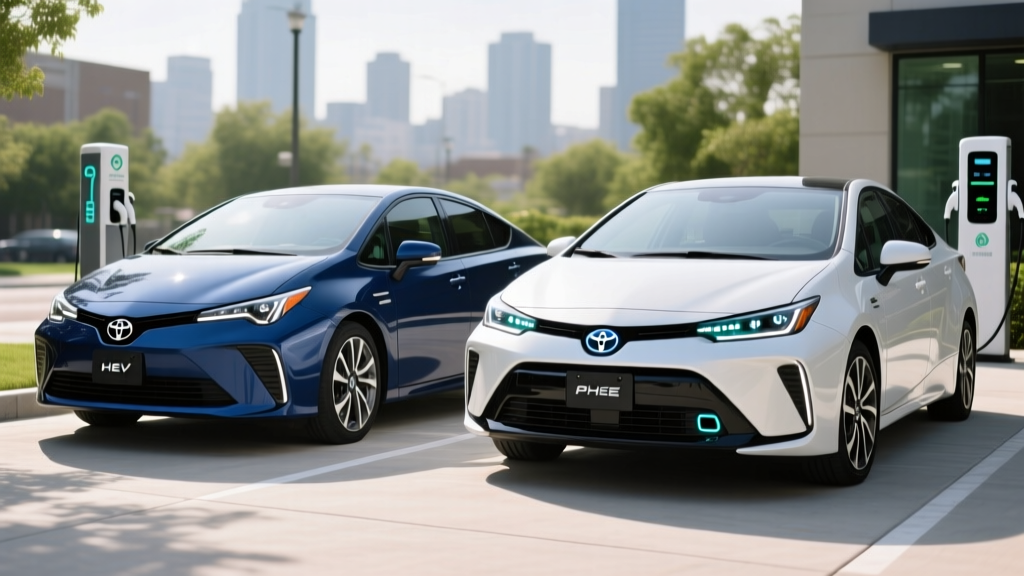
Before we get into the numbers, it is critical to understand that Toyota sells two fundamentally different vehicles under the Prius name. Confusing them is the most common mistake shoppers make.
Prius Hybrid (HEV)
- Powertrain: Gasoline engine + electric motor, no plug
- Battery: Small lithium-ion (~1.0 kWh usable)
- Refueling: Gas station only — the battery charges via regenerative braking and the engine
- Electric-only driving: Very short distances at low speeds (under 1 mile typically)
- Tax credit: Not eligible for the federal §30D new EV credit
Prius Prime (PHEV)
- Powertrain: Larger gasoline engine + more powerful electric motor, plugs in
- Battery: 13.6 kWh lithium-ion pack
- Refueling: Plug in to charge + gas station for longer trips
- Electric-only driving: Up to 44 miles EPA on a full charge
- Tax credit: Up to $3,750 federal credit (subject to IRS sourcing and income rules)
The HEV is a "fill it and forget it" proposition — you never need to think about charging. The PHEV rewards you for plugging in with substantial electric-only commuting but still carries a gas engine for road trips. Your daily driving pattern and home charging access should determine which one you choose.
Fuel Economy: How Many MPG Does the Prius Get?
The Prius has long been the benchmark for fuel efficiency, and the current fifth-generation platform (introduced for 2023, refreshed through 2026) delivers impressive numbers across the lineup. Below are the official EPA figures as published on fueleconomy.gov.
| Model / Trim | City MPG | Highway MPG | Combined MPG | Combined Range |
|---|---|---|---|---|
| Prius LE (FWD) | 57 | 56 | 57 | ~620 mi |
| Prius XLE / Limited (FWD) | 52 | 52 | 52 | ~570 mi |
| Prius AWD (all trims) | 49 | 50 | 49 | ~530 mi |
| Prius Prime SE (PHEV) | — | — | 52 (hybrid mode) / 127 MPGe | 44 mi EV + ~420 mi gas |
| Prius Prime XSE / XSE Premium | — | — | 50 (hybrid mode) / 119 MPGe | 40 mi EV + ~400 mi gas |
Real-World MPG: What Owners Actually See
Here is where the Prius surprises people. Unlike many vehicles that fall short of their EPA estimates, the Prius HEV frequently exceeds them in real-world city driving. This is because the EPA city cycle involves frequent stops — exactly where regenerative braking and electric-motor assist shine.
In mixed suburban and city driving, owners of the Prius LE consistently report 55–62 MPG on owner forums and fuel-tracking apps. Highway-only driving at 75+ MPH tends to drop efficiency to the mid-to-high 40s due to aerodynamic drag. In cold weather (below 30°F), expect a 5–10% reduction as the engine runs more frequently to provide cabin heat and maintain battery temperature.
For the Prius Prime, real-world electric range closely tracks the EPA estimate in mild weather: 40–45 miles on the SE trim is achievable on a full charge at suburban speeds. Highway driving at 70+ MPH while in EV mode will reduce that to roughly 32–36 miles. Once the battery is depleted, the Prime operates as a conventional hybrid and delivers 48–52 MPG depending on trim and conditions.
Powertrain and Performance Specs
The current Prius is not the underpowered appliance of decades past. Toyota's fifth-generation hybrid system pairs a 2.0-liter four-cylinder engine with electric motors for genuinely responsive acceleration.
| Specification | Prius HEV (FWD) | Prius HEV (AWD) | Prius Prime (PHEV) |
|---|---|---|---|
| Engine | 2.0L I4 | 2.0L I4 | 2.0L I4 |
| Combined Net Horsepower | 194 hp | 196 hp | 220 hp |
| 0–60 MPH | 7.2 sec | 7.0 sec | 6.6 sec |
| Drivetrain | FWD | AWD (electronic rear motor) | FWD |
| Transmission | eCVT | eCVT | eCVT |
| Towing Capacity | Not rated | Not rated | Not rated |
The Prime's 220 combined horsepower and 6.6-second 0–60 time make it the quickest Prius ever sold, and it is genuinely quick enough to merge onto highways without drama. The HEV's 194 hp is also a substantial improvement over prior generations. The electronic CVT (eCVT) is not a traditional belt-and-cone CVT — it uses a planetary gearset to blend engine and motor power, which contributes to its reputation for durability.
Prius Prime PHEV: Battery, Charging, and Electric Range
If you are considering the Prime, charging logistics matter. Here is the full picture.
Battery and Electric Range
The Prius Prime uses a 13.6 kWh lithium-ion battery pack. Usable capacity is approximately 10.8 kWh (Toyota maintains a buffer to protect long-term health). That translates to:
- Prius Prime SE: 44 miles EPA electric-only range
- Prius Prime XSE / XSE Premium: 40 miles EPA (heavier wheels and equipment reduce efficiency slightly)
Charging Speeds
| Charging Method | Power | 0–100% Time | Notes |
|---|---|---|---|
| Level 1 (120V household outlet) | ~1.4 kW | ~11 hours | Works overnight for most commuters |
| Level 2 (240V home/public) | ~3.3 kW (onboard charger limit) | ~4 hours | Requires J1772 connector |
| DC Fast Charging | N/A | N/A | Prius Prime does NOT support DC fast charging |
The lack of DC fast charging is a notable limitation. The Prime's 3.3 kW onboard charger means even a 150 kW public charger will only deliver 3.3 kW to the battery. For the Prime's small battery, however, this is less of a practical issue than it might seem — a Level 2 charge during a workday or overnight at home easily refills the pack. The vehicle is designed for daily plug-in commuting, not road-trip fast charging.
Is the Prius Reliable? Battery Warranty and Replacement Cost
Reliability is the Prius's calling card, and it is the question I hear most often from cautious buyers. Let's address it directly.
Toyota Hybrid Battery Warranty
Coverage: 10 years / 150,000 miles (whichever comes first) for the hybrid battery on all 2026 Prius and Prius Prime models. This applies in all 50 states — California's previous 10yr/150k mandate is now Toyota's national standard.
What it covers: Battery capacity loss below a defined threshold, cell failure, and related hybrid system components.
Additional powertrain warranty: 5 years / 60,000 miles for the powertrain; 3 years / 36,000 miles bumper-to-bumper.
Real-World Battery Longevity
Data from fleet operators, taxi services, and long-term owners consistently shows Toyota hybrid batteries lasting 150,000–200,000+ miles before significant degradation. The fifth-generation Prius uses a lithium-ion pack (prior generations used NiMH), which offers better energy density and thermal stability. Toyota's battery management system is conservative — it never allows the pack to charge to 100% or discharge to 0%, which dramatically extends cycle life.
Battery Replacement Cost
If your battery does eventually need replacement outside warranty:
- New OEM battery (Toyota dealer): $2,500–$4,000 installed, depending on model and labor rates
- Refurbished/reconditioned battery: $1,000–$2,000 installed from independent hybrid specialists
- Individual module replacement: Some shops replace only failed modules for $500–$1,200, though this is more common on older NiMH packs
For context, a conventional vehicle's transmission replacement often costs $3,000–$5,000. The hybrid battery is not the financial bogeyman many assume it to be, especially given the 10-year warranty.
Pricing, Trims, and Tax Credit Eligibility
| Model / Trim | MSRP | Federal §30D Credit | Effective Price (est.) |
|---|---|---|---|
| Prius LE | $28,350 | $0 (HEV — not eligible) | $28,350 |
| Prius XLE | $31,695 | $0 | $31,695 |
| Prius Limited | $35,095 | $0 | $35,095 |
| Prius Prime SE | $33,445 | Up to $3,750* | ~$29,695 |
| Prius Prime XSE | $36,745 | Up to $3,750* | ~$32,995 |
| Prius Prime XSE Premium | $40,145 | Up to $3,750* | ~$36,395 |
*Federal §30D credit eligibility for the Prius Prime depends on current IRS rules including buyer income caps (AGI ≤ $150,000 single / $300,000 joint), battery critical-mineral and component sourcing requirements, and MSRP caps ($55,000 for sedans). The conventional Prius HEV does not qualify because it cannot be plugged in. Credit can be transferred to the dealer at point of sale as a purchase-price reduction. Always verify current eligibility at IRS.gov and consult a tax professional.
Some states offer additional rebates for PHEVs — California's CVRP program, for example, has historically offered rebates for qualifying plug-in vehicles, though funding and eligibility vary. Check your state energy office for current programs.
Prius vs the Competition: Where It Stands
Pros
- Best-in-class combined MPG (57 EPA on LE trim)
- Proven, decade-spanning reliability record
- 10-year / 150,000-mile hybrid battery warranty
- Strong 0–60 time for the segment (6.6 sec on Prime)
- Low starting price for the efficiency delivered
- No charging infrastructure needed (HEV)
- Excellent cargo versatility with hatchback design
Cons
- Rear seat headroom is tight for taller passengers
- Prius Prime has no DC fast charging capability
- AWD only available on HEV, not Prime
- Infotainment is functional but not class-leading
- Road noise is noticeable at highway speeds
- HEV not eligible for any federal tax credit
- Prime's EV range may be insufficient for longer commutes
Compared to the Hyundai Elantra Hybrid (54 MPG combined), the Prius LE edges it out by 3 MPG. The Honda Accord Hybrid offers more interior space but rates at 48 MPG combined. The Kia Niro Hybrid is a close competitor in the crossover-hybrid space at 53 MPG but sacrifices the low-slung hatchback cargo flexibility.
Against full EVs like the Chevrolet Equus EV or Tesla Model 3, the Prius trades zero-emission driving and lower per-mile energy costs for the elimination of range anxiety and the need for home charging infrastructure. The right choice depends entirely on your situation.
Who Should Buy the Prius — and Who Should Look Elsewhere?
Choose the Prius HEV if:
- You want maximum MPG with zero change to your refueling habits
- You do not have access to home or workplace charging
- You drive 15,000+ miles per year and want the lowest fuel cost without plugging in
- You want AWD availability for snow-belt climates
- Your budget is under $35,000 and you want a proven, reliable vehicle
Choose the Prius Prime PHEV if:
- Your daily commute is under 40 miles round-trip and you can charge at home
- You want electric-only weekday driving but gas flexibility for weekend road trips
- You qualify for the federal tax credit and want to reduce your effective purchase price
- You want the quickest Prius available (220 hp, 6.6-sec 0–60)
- You are not ready to commit to a full EV but want to reduce gasoline consumption
Choose a Full EV (BEV) instead if:
- You have reliable Level 2 home charging and your daily driving is under 250 miles
- You want zero tailpipe emissions and the lowest per-mile energy cost
- You qualify for the full $7,500 federal credit on a qualifying BEV
- You want to eliminate oil changes and engine maintenance entirely
Stick with a Gas Car if:
- You drive fewer than 8,000 miles per year (the fuel savings do not justify the hybrid premium)
- You need maximum towing capacity or heavy-duty utility
Frequently Asked Questions
How many MPG does the Toyota Prius hybrid get?
The 2026 Prius LE achieves an EPA-estimated 57 MPG combined (57 city / 56 highway). The XLE and Limited trims rate at 52 combined. Real-world city driving often matches or exceeds these numbers, while sustained highway driving above 75 MPH typically yields 44–48 MPG.
How far can the Prius Prime go on electric only?
The Prius Prime SE delivers 44 miles of EPA-rated electric-only range. The XSE and XSE Premium trims deliver 40 miles. In mild weather at suburban speeds, 40–45 miles is achievable; cold weather and highway speeds reduce this by 15–25%.
Does the Toyota Prius qualify for a tax credit?
The conventional Prius HEV does not qualify for the federal §30D clean vehicle credit because it is not a plug-in vehicle. The Prius Prime PHEV may qualify for up to $3,750 depending on current IRS battery-sourcing rules, your income (AGI limits apply), and the vehicle's MSRP falling under the $55,000 sedan cap. Always verify at IRS.gov.
Is the Prius hybrid battery expensive to replace?
A new OEM replacement hybrid battery costs approximately $2,500–$4,000 installed. Refurbished options run $1,000–$2,000. However, Toyota's 10-year / 150,000-mile hybrid battery warranty covers most owners, and real-world data shows these batteries frequently lasting 150,000–200,000+ miles.
Do I need to plug in the regular Prius hybrid?
No. The standard Prius HEV charges its small battery entirely through regenerative braking and the gasoline engine. You never plug it in. Only the Prius Prime PHEV requires (and benefits from) plugging in.
Is the Prius a good car for long road trips?
Yes, with caveats. The Prius HEV's 620-mile total range means fewer fuel stops — roughly every 11 hours of driving at highway speeds. The Prime offers 440+ total miles when combining EV and gas. The main limitation is rear-seat comfort on very long journeys and noticeable road noise. Cargo space with the rear seats folded is practical for luggage.
Hybrid vs PHEV vs EV — which is right for me?
If you cannot charge at home and want simplicity, choose the HEV. If you can charge at home and your commute is under 40 miles, the PHEV gives you electric weekday driving with gas-trip flexibility. If you have home charging, drive under 250 miles daily, and want the lowest running costs and zero tailpipe emissions, a full BEV is the best long-term choice. The Prius lineup covers the first two scenarios exceptionally well.