Quick Verdict: Is There a 2026 Infiniti Q50 Hybrid?
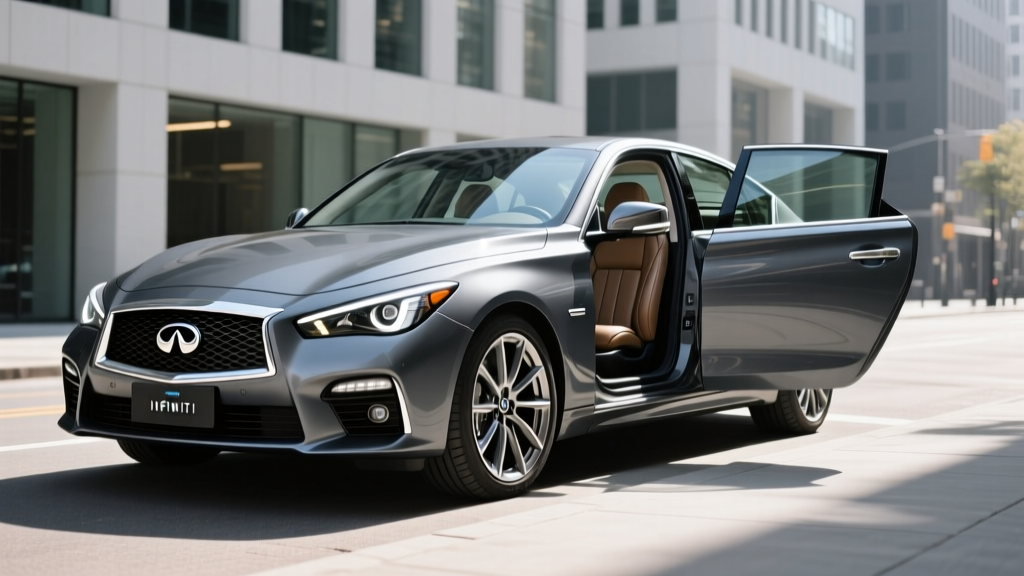
If you've been searching for a Q50 hybrid, here's the essential truth: Infiniti has not produced a hybrid variant of the Q50 sedan since the 2019 model year. The Q50 lineup for 2026 is powered exclusively by a twin-turbocharged 3.0-liter V6 producing up to 400 hp in the Red Sport 400 trim. There is no HEV or PHEV option available new from Infiniti dealerships.
However, the used market still holds well-preserved examples of the Infiniti Q50 Hybrid (model years 2014–2019), and understanding what that powertrain delivered — and what it costs to own today — remains valuable for buyers cross-shopping luxury hybrid sedans. This guide covers the Q50 Hybrid's specs, real-world MPG, battery longevity, and how it compares to current alternatives you can actually buy new in 2026.
Q50 Hybrid Powertrain: What Infiniti Actually Built
The Infiniti Q50 Hybrid paired a 3.5-liter V6 gasoline engine with a 67-hp electric motor integrated into the transmission housing. Combined output was rated at 360 horsepower and 457 lb-ft of torque, routed through a 7-speed automatic to either rear or all four wheels.
| Specification | Value |
|---|---|
| Engine | 3.5L V6 (302 hp, 258 lb-ft) |
| Electric Motor | 67 hp / 214 lb-ft |
| Combined Output | 360 hp / 457 lb-ft |
| Transmission | 7-speed automatic |
| Hybrid Battery | ~1.4 kWh lithium-ion (conventional HEV) |
| Drivetrain | RWD or AWD |
| 0–60 mph | ~4.9 seconds (RWD) |
Fuel Economy: EPA Ratings vs. Real-World MPG
The EPA rated the rear-wheel-drive Q50 Hybrid at 27 city / 32 highway / 29 combined MPG. The AWD variant dropped slightly to 26/31/28 MPG. For context, the non-hybrid Q50 with the 3.0L twin-turbo V6 returns roughly 20/29/23 MPG combined, making the hybrid roughly 26% more efficient in mixed driving.
| Configuration | City MPG | Highway MPG | Combined MPG |
|---|---|---|---|
| RWD Hybrid | 27 | 32 | 29 |
| AWD Hybrid | 26 | 31 | 28 |
| RWD Gas (3.0T, 2026) | 20 | 29 | 23 |
Real-world expectations: Hybrid sedans typically exceed their EPA city rating in stop-and-go traffic because regenerative braking recaptures energy that a gas-only car wastes as heat. Owners on fueleconomy.gov report averages between 26–31 MPG combined, with city-heavy commuters occasionally touching 33 MPG. Highway cruising at 75+ mph will drop you closer to 27–28 MPG, where the electric motor contributes less assistance.
Battery Longevity, Warranty, and Replacement Cost
The Q50 Hybrid's lithium-ion pack is small (~1.4 kWh) and operates within a narrow state-of-charge window — typically between 40% and 80% — which reduces stress on the cells and extends lifespan. Infiniti originally warranted the hybrid battery for 8 years / 100,000 miles, consistent with industry standards for hybrid components.
Replacement cost: A refurbished or new hybrid battery pack for the Q50 Hybrid typically runs $2,500–$4,500 including labor at an independent hybrid specialist. Dealership pricing can exceed $5,500. The good news: the Q50 Hybrid's battery is far smaller and less expensive to replace than a full EV pack (which can cost $8,000–$20,000+). Most owner reports suggest these packs last 120,000–150,000 miles before significant capacity loss, and because the pack is small, even moderate degradation has a limited effect on fuel economy compared to EV range loss.
Pricing: Used Q50 Hybrid vs. 2026 Alternatives
Used 2017–2019 Infiniti Q50 Hybrid sedans trade between $16,000 and $24,000 depending on mileage, condition, and trim (Premium, Sport, or Red Sport). The last model year (2019) in well-kept, low-mileage form can command up to $27,000.
Tax credit status: The Q50 Hybrid does not qualify for the federal §30D new clean vehicle credit — that credit applies only to new plug-in vehicles (BEVs and PHEVs) meeting battery sourcing, MSRP, and buyer income requirements per current IRS rules. As a conventional HEV purchased used, no federal tax credit applies. Some states offer modest rebates for used hybrids, but these vary by jurisdiction — check your state's energy office for current programs.
Who Should Choose the Q50 Hybrid — And Who Shouldn't
Choose the Q50 Hybrid If:
- You want a luxury sport sedan with strong acceleration (360 hp) and better fuel economy than a gas-only equivalent
- You cannot charge at home or work — no plug required
- You're comfortable buying used and budgeting for potential battery replacement
- City-heavy commuting is your primary use case (where hybrid efficiency shines)
Skip the Q50 Hybrid If:
- You want electric-only driving or plug-in capability — look at a PHEV like the BMW 330e or Lexus ES 300h for HEV-only
- You prefer a current-model vehicle with active warranty coverage
- You want to minimize long-term maintenance risk on a niche hybrid powertrain
- You drive predominantly highway miles where the hybrid advantage narrows
2026 Alternatives: What to Buy Instead
If you want a luxury hybrid sedan available new in 2026, here are the direct competitors to consider:
| Model | Type | Combined MPG / MPGe | Electric Range | Starting MSRP |
|---|---|---|---|---|
| Lexus ES 300h | HEV | 44 MPG combined | N/A (HEV) | ~$44,000 |
| BMW 330e xDrive | PHEV | 28 MPG + 75 MPGe | ~23 mi electric | ~$48,000 |
| Genesis G80 Electrified | BEV | 97 MPGe | 282 mi (EPA) | ~$80,000 |
| Mercedes C 300e (if available) | PHEV | TBD | ~60 mi (WLTP) | TBD |
The Lexus ES 300h delivers dramatically better fuel economy (44 vs. 29 MPG combined), full new-vehicle warranty, and Toyota/Lexus hybrid reliability reputation — but it trades the Q50's rear-drive sportiness for front-drive comfort. The BMW 330e offers genuine plug-in capability with ~23 miles of electric-only range, meaning short commutes can be zero-gas — and it may qualify for partial §30D credit depending on current-year sourcing rules. Both are meaningfully more efficient and modern than a used Q50 Hybrid.
Hybrid vs. PHEV vs. EV: Which Fits Your Situation?
Decision Framework
Choose a conventional hybrid (HEV) if you have no access to charging at home or work, drive long highway routes, and want fuel savings with zero behavior change. The Q50 Hybrid falls here.
Choose a plug-in hybrid (PHEV) if you can install a Level 2 charger at home, your daily commute is under 30 miles (coverable on electric), but you still want gas-engine range flexibility for road trips. Examples: BMW 330e, Toyota RAV4 Prime.
Choose a full EV (BEV) if you have reliable home charging, want the lowest per-mile fuel cost (~$0.04/mi vs. ~$0.14/mi for hybrid on gas), and your longest regular trip fits within ~250 miles of real-world range. Examples: Tesla Model 3, Hyundai Ioniq 6, BMW i4.
Frequently Asked Questions
How many MPG does the Infiniti Q50 Hybrid get?
The EPA rates the RWD Q50 Hybrid at 27 city / 32 highway / 29 combined MPG. Real-world owners report 26–31 MPG combined, with city-heavy drivers occasionally exceeding the EPA city figure thanks to regenerative braking.
Can the Q50 Hybrid drive on electric power only?
Only at very low speeds for very short distances (under ~1 mile). The Q50 Hybrid is a conventional HEV with a 1.4 kWh battery — it cannot be plugged in and does not offer meaningful electric-only range. The motor primarily assists the gas engine during acceleration.
Is the Q50 Hybrid reliable, and what does battery replacement cost?
The Q50 Hybrid's powertrain is generally reliable, though it's a lower-volume configuration with fewer specialists than Toyota/Lexus hybrids. Battery replacement runs $2,500–$4,500 at independent shops. Original 8-year/100,000-mile hybrid battery warranties on 2014–2017 models have expired.
Does the Q50 Hybrid qualify for any federal tax credit?
No. The federal §30D credit applies only to new plug-in vehicles (BEVs and PHEVs) meeting specific battery sourcing, MSRP caps, and buyer income limits. The Q50 Hybrid is a conventional HEV and was never eligible. No federal credit applies to used hybrid purchases.
What should I buy instead of a used Q50 Hybrid in 2026?
For a new luxury hybrid sedan, the Lexus ES 300h (44 MPG, ~$44,000) offers vastly superior efficiency and full warranty. For plug-in capability, the BMW 330e (~23 mi electric, ~$48,000) provides genuine EV commuting with gas backup. Both represent significant technology advances over the Q50 Hybrid's 2014-era system.
Sources: EPA fuel economy data via fueleconomy.gov; IRS §30D clean vehicle credit rules via irs.gov.