Quick Verdict: The Sporty Hybrid That Doesn't Sacrifice Efficiency
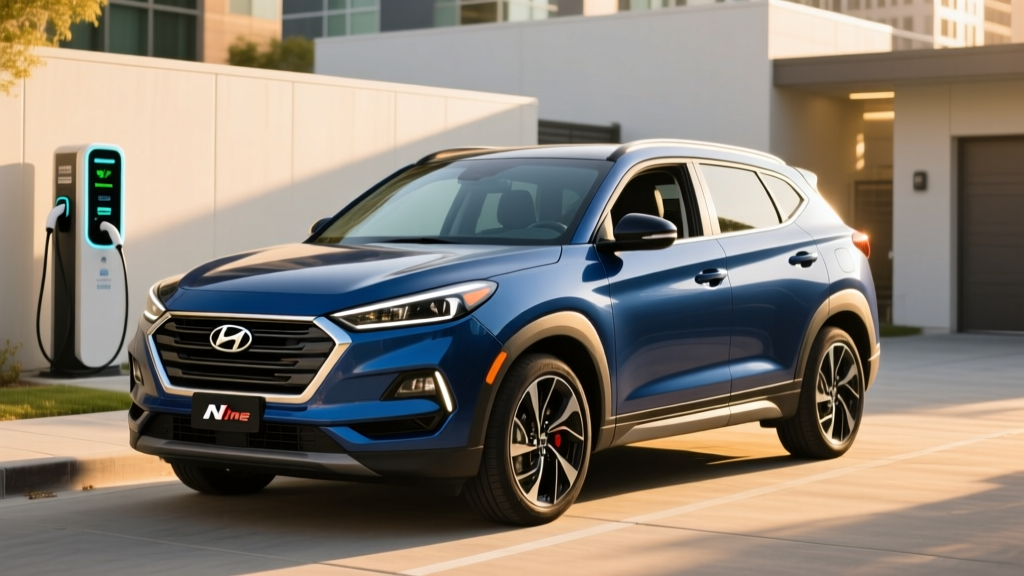
The 2026 Hyundai Tucson Hybrid N Line occupies a specific niche in the compact SUV segment: buyers who want the fuel economy of a hybrid, the practicality of a small crossover, and a dash of sporty styling — without ever plugging in. Under its aggressive N Line bodywork sits the same proven 1.6-liter turbocharged hybrid powertrain found in the standard Tucson Hybrid, producing 231 combined horsepower and an EPA-estimated 38 MPG combined.
This is a conventional hybrid (HEV), not a plug-in hybrid (PHEV). You never need to plug it in. The small battery recharges through regenerative braking and the gasoline engine. If you want electric-only driving range, you need the Tucson Plug-in Hybrid instead — more on that distinction below.
For the N Line trim specifically, you're paying a modest premium over the base Tucson Hybrid for sport-tuned suspension, unique 19-inch wheels, N Line exterior and interior styling, and additional features. The question this review answers: does the N Line's sporty packaging compromise the efficiency that makes the Tucson Hybrid appealing in the first place?
HEV vs PHEV: Understanding What the Tucson Hybrid N Line Actually Is
Before diving into specs, it's critical to understand that Hyundai sells two different electrified Tucsons, and they serve different use cases:
| Feature | Tucson Hybrid (HEV) — N Line | Tucson Plug-in Hybrid (PHEV) |
|---|---|---|
| Battery Size | 1.49 kWh (small, self-charging) | 13.8 kWh (large, plug-in capable) |
| Plug In Required? | No — never | Yes — for EV range benefit |
| Electric-Only Range | None (EV assists only) | ~33 miles EPA |
| EPA Combined MPG | 38 MPG | 35 MPG (gas) / 80 MPGe (with charge) |
| Total Range | ~430 miles | ~400 miles (gas + electric) |
| Combined Horsepower | 231 hp | 261 hp |
| DC Fast Charge? | No | No (Level 2 AC only) |
| Federal Tax Credit (§30D) | No | Up to $3,750* |
| Starting MSRP (2026) | ~$38,725 (N Line) | ~$40,750 |
The Tucson Hybrid N Line is a self-charging hybrid. Its small 1.49 kWh lithium-ion battery captures energy from braking and deceleration, then deploys it to assist the gas engine during acceleration and enable brief low-speed electric driving (typically under 1 mile at very low speeds). Think of the electric motor as a torque booster and efficiency optimizer — not as a standalone EV mode.
If you have home charging access and a commute under 30 miles, the Tucson PHEV makes more financial sense. If you live in an apartment, park on the street, or simply don't want to think about plugging in, the HEV is your move.
Fuel Economy: EPA Ratings vs Real-World MPG
| Driving Cycle | EPA Estimate | Real-World Expectation |
|---|---|---|
| City | 38 MPG | 37–41 MPG |
| Highway | 38 MPG | 34–37 MPG |
| Combined | 38 MPG | 35–39 MPG |
According to fueleconomy.gov, the 2026 Tucson Hybrid achieves 38 MPG across all three EPA test cycles — city, highway, and combined. This uniformity is somewhat unusual and reflects Hyundai's hybrid tuning strategy.
Real-world city driving often exceeds the EPA estimate. Hybrids shine in stop-and-go traffic where regenerative braking captures kinetic energy that would otherwise be lost as heat. In moderate-temperature city driving with frequent stops, owners regularly report 39–41 MPG. The electric motor handles low-speed launches, and the engine shuts off at stops, eliminating idle fuel burn entirely.
Highway driving is where the Tucson Hybrid gives back some efficiency. At sustained 70–80 MPH speeds, the electric motor contributes less and the 1.6-liter turbo does most of the work. Expect 34–37 MPG on long highway trips. The N Line's sport-tuned suspension and 19-inch alloy wheels (vs. 18-inch on lower trims) add marginally to rolling resistance and weight, which may cost you roughly 0.5–1 MPG compared to the SEL Convenience trim — a negligible real-world difference.
Cold weather impact: In sub-40°F temperatures, expect a 5–10% MPG reduction. The engine runs more frequently to maintain cabin heat (there's no heat pump on the HEV), and the battery's charge/discharge efficiency drops in cold conditions. Winter city MPG may dip to 34–36, still strong for a 3,600-lb SUV.
Powertrain Deep Dive: 231 HP From a Turbo Hybrid
| Specification | Detail |
|---|---|
| Engine | 1.6L turbocharged 4-cylinder (GDI) |
| Engine Output | 178 hp / 195 lb-ft torque |
| Electric Motor | 44.2 kW (59 hp) / 195 lb-ft |
| Combined System Output | 231 hp / 271 lb-ft torque |
| Transmission | 6-speed automatic (torque-converter) |
| Drivetrain | HTRAC AWD (standard on N Line) |
| 0–60 MPH | ~7.1 seconds (est.) |
| Battery (traction) | 1.49 kWh lithium-ion polymer |
| Curb Weight | ~3,680 lbs |
| Towing Capacity | 2,000 lbs |
Hyundai pairs its Smartstream 1.6-liter turbo with a 44.2 kW electric motor integrated into the 6-speed automatic transmission housing. Unlike Toyota's planetary-gear hybrid system (which uses a CVT-like power-split device), Hyundai uses a conventional stepped automatic. The result is more natural-feeling acceleration with distinct gear shifts — a deliberate choice that aligns with the N Line's sporty positioning.
The 271 lb-ft of combined torque is the real story. Electric motors deliver peak torque at 0 RPM, so the Tucson Hybrid pulls strongly from a stop. The turbo adds its own torque surge once spooled. Together, this powertrain delivers confident highway merging and passing — the 7.1-second 0–60 time is genuinely quick for a hybrid compact SUV.
The HTRAC all-wheel-drive system on the N Line uses a traditional rear driveshaft and rear-mounted electric motor-generator to distribute torque. It's not a through-the-road hybrid system (where the rear axle is electrically driven independent of the front). Under normal conditions, it operates primarily as front-wheel drive, sending torque rearward when slip is detected.
Pricing, Trims, and Tax Credit Eligibility
The 2026 Hyundai Tucson Hybrid is offered in three trims. The N Line sits in the middle of the lineup:
| Trim | MSRP | Key Additions Over Base |
|---|---|---|
| Blue (base) | ~$34,225 | 18" wheels, 10.25" touchscreen, wireless CarPlay/Android Auto |
| N Line | ~$38,725 | N Line styling, 19" wheels, sport suspension, leather/suede seats, panoramic sunroof |
| Limited | ~$42,325 | Ventilated front seats, Bose audio, surround-view monitor, Highway Driving Assist 2 |
Federal tax credit (§30D): The Tucson Hybrid N Line does NOT qualify for the federal EV tax credit. Under current IRS §30D rules, only plug-in electric vehicles with a minimum battery capacity of 7 kWh are eligible. The Tucson HEV's 1.49 kWh battery falls far short of this threshold. The Tucson Plug-in Hybrid, with its 13.8 kWh battery, may qualify for a partial credit (up to $3,750 depending on battery component and critical mineral sourcing requirements), but even that amount is subject to income caps ($150K single / $300K joint), MSRP caps ($80K for SUVs), and domestic-content rules that shift annually.
State incentives: Some states offer rebates for conventional hybrids. Check your state's energy office or DMV website — programs vary widely and change frequently. A handful of states offer HOV lane access for hybrids regardless of plug-in status.
Battery Warranty, Reliability, and Replacement Cost
Hyundai Hybrid Battery Warranty
- Hybrid battery: 10 years / 100,000 miles (original owner, CARB states)
- Hybrid battery: 8 years / 100,000 miles (original owner, non-CARB states)
- Hybrid system components: 10 years / 100,000 miles
- Vehicle warranty: 5 years / 60,000 miles basic; 10 years / 100,000 miles powertrain
Source: Hyundai USA
Hyundai's hybrid battery warranty is among the best in the industry. The 1.49 kWh battery is small, lightly stressed, and uses proven lithium-ion polymer chemistry. Unlike full EVs that regularly cycle between 10% and 90% state of charge, the Tucson HEV's battery operates in a narrow band — typically between 40% and 70% SoC. This shallow-cycling approach dramatically extends cell life.
Real-world degradation data: Based on fleet and owner reports from earlier-generation Hyundai/Kia hybrids (Ioniq, Sonata Hybrid), hybrid battery capacity loss is typically 5–8% over the first 100,000 miles. Most hybrid batteries outlast the vehicle itself. Early failures are rare and covered under warranty.
Battery replacement cost (out of warranty): If the hybrid battery does eventually need replacement beyond the warranty period, expect a dealer-installed replacement to cost between $2,000 and $3,500 including labor. This is significantly less than EV battery replacement ($8,000–$20,000+) because the pack is small. Independent hybrid specialists can often refurbish or replace individual modules for $800–$1,500.
Reliability track record: Hyundai's turbo-hybrid powertrain has been in production since the 2022 model year across the Tucson, Santa Fe, and Sonata lines. Consumer Reports and J.D. Power data show average to slightly above-average reliability for the Tucson Hybrid. The most common complaints involve the infotainment system, not the powertrain. The 6-speed automatic is a conventional design with a long service history.
Driving the N Line: What the Sport Trim Adds (and Costs)
The N Line's sport-tuned suspension lowers the ride height by 0.4 inches and firms up the damping compared to the base Blue trim. The result is flatter cornering and more responsive steering — genuinely noticeable on twisty back roads. The trade-off is a slightly firmer ride over rough pavement. For most buyers, the comfort level remains well within daily-driver acceptable, but you will feel sharp impacts from potholes and expansion joints more than in the base hybrid.
The 19-inch N Line wheels wear 235/55R19 all-season tires. These provide adequate grip but prioritize low noise and efficiency over outright performance. Upgrading to a performance all-season tire improves cornering confidence at the cost of perhaps 0.5 MPG.
Inside, the N Line gets sport seats with a leather/suede combination, a flat-bottom steering wheel, N Line badging, alloy pedals, and a black headliner. The 10.25-inch digital instrument cluster includes a hybrid-specific energy flow display showing real-time power distribution between the engine and electric motor. The 10.25-inch infotainment touchscreen supports wireless Apple CarPlay and Android Auto.
Hyundai's SmartSense safety suite is standard across all trims: forward collision-avoidance assist, lane keeping assist, blind-spot monitoring, rear cross-traffic alert, and driver attention warning. The N Line adds Highway Driving Assist (HDA), which combines adaptive cruise control with lane centering — a Level 2 driver-assist system that requires hands on the wheel and eyes on the road at all times.
Hybrid vs PHEV vs EV: Which Tucson Fits Your Life?
Choose the Tucson Hybrid N Line (HEV) if:
- You cannot charge at home or work (apartment, street parking)
- You want zero behavior change from a gas car — just fill up and drive
- Your annual mileage is 10,000–15,000 miles and you want low fuel cost
- You want AWD for snow/rain without the PHEV price premium
- You value sporty styling and don't need EV-only commuting
Look at the Tucson PHEV or a full EV instead if:
- You have a garage/driveway and can install a Level 2 charger
- Your commute is under 30 miles round-trip (PHEV covers it on electric)
- You want to minimize engine maintenance by running electric most days
- You want to qualify for federal or state EV/PHEV incentives
- You're ready for a full EV like the Ioniq 5 (303 mi range, ~$42K) and never visit a gas station
The economics are straightforward. At 38 MPG combined and $3.50/gallon gas, the Tucson Hybrid costs roughly $0.092 per mile in fuel. A comparable gas-only Tucson AWD at 26 MPG combined costs $0.135 per mile. Over 15,000 miles per year, the hybrid saves approximately $645 annually in fuel. Against the PHEV driven mostly on electric (at ~$0.04/mile with home charging), the HEV costs about $780 more per year — but the PHEV requires charging infrastructure and a higher purchase price.
5-Year Ownership Cost Snapshot
| Cost Category | Tucson Hybrid N Line (HEV) | Tucson PHEV | Tucson Gas AWD (SEL) |
|---|---|---|---|
| Purchase Price (MSRP) | $38,725 | $40,750 | $34,500 |
| Federal Tax Credit | $0 | Up to $3,750* | $0 |
| Effective Purchase Price | $38,725 | ~$36,000 | $34,500 |
| 5-Year Fuel/Energy (15K mi/yr) | ~$6,900 | ~$3,000–$5,500 | ~$10,100 |
| 5-Year Maintenance (est.) | ~$2,800 | ~$2,400 | ~$3,200 |
| 5-Year Total (excl. insurance) | ~$48,425 | ~$41,400–$43,900 | ~$47,800 |
*PHEV tax credit amount depends on battery sourcing compliance and buyer income. Verify eligibility at irs.gov before purchasing.
The hybrid breaks even against the gas model within roughly 4 years through fuel savings, even without any tax credit. The PHEV wins on total cost only if you can charge at home consistently and qualify for the credit.
Frequently Asked Questions
How many MPG does the Hyundai Tucson Hybrid N Line get?
The EPA rates the 2026 Tucson Hybrid at 38 MPG city, 38 MPG highway, and 38 MPG combined. In real-world driving, expect 37–41 MPG in the city (hybrids excel in stop-and-go traffic) and 34–37 MPG on the highway. Cold weather reduces these figures by roughly 5–10%.
Does the Tucson Hybrid N Line need to be plugged in?
No. The Tucson Hybrid is a conventional self-charging hybrid (HEV). Its small 1.49 kWh battery recharges through regenerative braking and the gasoline engine. You fuel it at a gas station exactly like a conventional car. There is no charging port and no plug.
How far can the Tucson Hybrid drive on electric power alone?
Very short distances — typically under 1 mile at low speeds (under 25 MPH). The electric motor primarily assists the gas engine during acceleration and enables engine-off coasting. If you want meaningful electric-only range (about 33 miles), you need the Tucson Plug-in Hybrid instead.
Is the Tucson Hybrid reliable, and what does battery replacement cost?
Hyundai's hybrid system has a solid reliability record since its 2022 introduction. The hybrid battery is covered by a 10-year/100,000-mile warranty (8 years in non-CARB states). Based on fleet data, hybrid batteries typically lose only 5–8% capacity over 100,000 miles. Out-of-warranty replacement costs $2,000–$3,500 at a dealer, or $800–$1,500 through an independent hybrid specialist.
Does the Tucson Hybrid N Line qualify for any tax credit?
The Tucson Hybrid (HEV) does not qualify for the federal §30D clean vehicle tax credit, which requires a minimum 7 kWh battery and plug-in capability. Some states offer hybrid-specific rebates or HOV lane access — check your state energy office. The Tucson Plug-in Hybrid may qualify for up to $3,750 federally, subject to income, MSRP, and battery sourcing rules.
How does the N Line trim affect fuel economy?
Minimally. The N Line's 19-inch wheels, sport suspension, and additional equipment add roughly 50 lbs and marginally increase rolling resistance compared to the base Blue trim with 18-inch wheels. Expect a difference of 0.5–1 MPG at most — not enough to influence a purchase decision. The EPA ratings are the same across all Tucson Hybrid trims.
Can I tow with the Tucson Hybrid N Line?
Yes. The Tucson Hybrid is rated for 2,000 lbs of towing capacity when properly equipped with a dealer-installed hitch. This is adequate for a small utility trailer, bike rack, or lightweight pop-up camper. It's not rated for heavier boat or travel-trailer towing — for that, consider the Santa Fe Hybrid (3,500-lb rating).