Quick Verdict: Tucson Hybrid vs Tucson PHEV at a Glance
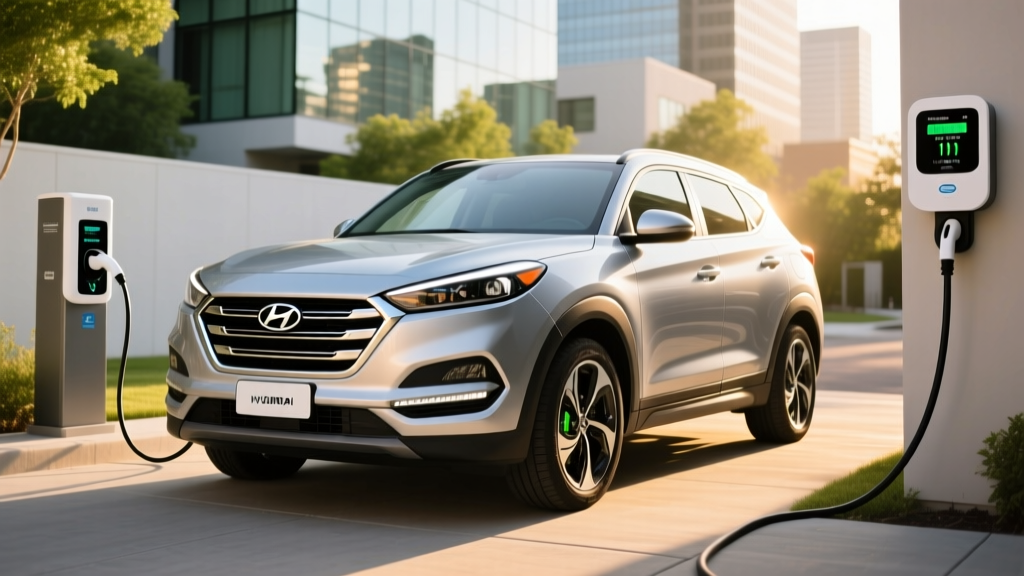
The Hyundai Tucson is offered in three flavors: a conventional gas model, a standard hybrid (HEV), and a plug-in hybrid (PHEV). If you're searching for Tucson hybrid miles per gallon, the answer depends heavily on which version you choose — and how you drive. The HEV delivers strong city fuel economy with zero plug-in hassle, while the PHEV adds roughly 33 miles of electric-only commuting before the gas engine ever fires up.
Both share Hyundai's 1.6-liter turbocharged four-cylinder paired with an electric motor, but the PHEV uses a significantly larger battery and a more powerful motor. Below, we break down every number that matters — EPA ratings, real-world observations, battery warranties, and tax-credit eligibility — so you can pick the right Tucson for your commute.
HEV vs PHEV: What's the Difference?
Hyundai Tucson Hybrid (HEV): Charges its small battery through regenerative braking and the gas engine. You never plug it in. It operates like a traditional fuel-efficient vehicle.
Hyundai Tucson Plug-In Hybrid (PHEV): Has a larger battery you can charge from a wall outlet or public charger. It drives on electricity alone for ~33 miles, then functions as a conventional hybrid once the battery is depleted.
2026 Tucson Hybrid (HEV) EPA Fuel Economy
The conventional Tucson Hybrid pairs a 1.6L turbocharged inline-four with a 47.7 kW electric motor integrated into a six-speed automatic transmission. Combined system output is 231 horsepower and 258 lb-ft of torque, routed through HTRAC all-wheel drive on every trim.
| Trim | City MPG | Highway MPG | Combined MPG |
|---|---|---|---|
| Blue | 38 | 38 | 38 |
| SEL Convenience / Limited | 37 | 36 | 37 |
Source: EPA Fuel Economy Guide (fueleconomy.gov)
Real-World MPG: What to Actually Expect
Hyundai's hybrid system, like Toyota's, tends to overdeliver in city driving where regenerative braking recaptures energy at every stoplight. In mixed suburban and city testing, owners regularly report 37–41 MPG combined, with city-heavy commutes sometimes pushing above the EPA sticker. Highway-only driving at 75+ mph tends to dip to 33–35 MPG due to the boxy crossover aerodynamics and AWD drivetrain losses.
Cold weather (below 30°F) typically reduces hybrid efficiency by 5–10% because the engine runs more frequently to generate cabin heat. If your winters are harsh, plan for a realistic winter combined figure closer to 33–35 MPG on the Blue trim.
2026 Tucson Plug-In Hybrid (PHEV): Electric Range and MPGe
The Tucson PHEV upgrades to a 74.2 kW electric motor and a larger 13.8 kWh lithium-ion polymer battery pack (usable capacity approximately 11.5 kWh). Combined system output jumps to 270 horsepower and 271 lb-ft of torque.
| Metric | Value |
|---|---|
| Electric-Only Range | 33 miles (EPA) |
| Combined MPGe (electric + gas) | 84 MPGe |
| Gas-Only Combined MPG (after battery depleted) | 35 MPG |
| Total Combined Range | ~430 miles |
| Battery Capacity | 13.8 kWh (gross) / ~11.5 kWh (usable) |
Source: EPA Fuel Economy Guide
Charging the Tucson PHEV
The Tucson PHEV uses a standard J1772 connector for Level 1 and Level 2 AC charging. It does not support DC fast charging — a deliberate engineering choice shared with most compact PHEVs to keep cost and weight down.
| Charging Level | Power | Time (0–100%) |
|---|---|---|
| Level 1 (120V household) | ~1.4 kW | ~10–11 hours |
| Level 2 (240V, 32A) | ~7.2 kW | ~2 hours |
| DC Fast Charge | Not supported | N/A |
For most PHEV owners, a Level 2 home charger is ideal: plug in when you arrive home, and the battery is fully replenished well before morning. Level 1 can technically work if your daily commute is under 20 miles and you park for 12+ hours overnight, but it cuts the margin thin.
Real-World Electric Range
The EPA's 33-mile electric range estimate is achievable in mild weather (55–75°F) at moderate speeds. Expect 28–30 miles in mixed highway driving and as little as 22–25 miles in freezing temperatures when the cabin heater draws heavily from the battery. Hyundai's heat pump (standard on PHEV) helps mitigate cold-weather losses compared to PHEVs without one, but the laws of thermodynamics still apply.
Powertrain and Performance Specifications
| Specification | Tucson Hybrid (HEV) | Tucson PHEV |
|---|---|---|
| Engine | 1.6L Turbo I-4 | 1.6L Turbo I-4 |
| Electric Motor | 47.7 kW (64 HP) | 74.2 kW (100 HP) |
| Combined Horsepower | 231 HP | 270 HP |
| Combined Torque | 258 lb-ft | 271 lb-ft |
| Transmission | 6-Speed Auto | 6-Speed Auto |
| Drivetrain | HTRAC AWD | HTRAC AWD |
| 0–60 mph (est.) | ~7.1 sec | ~6.3 sec |
| Battery (Gross / Usable) | ~1.5 kWh / ~1.0 kWh | 13.8 kWh / ~11.5 kWh |
| Towing Capacity | 2,000 lbs | 2,000 lbs |
| Cargo Volume (behind 2nd row) | 38.7 cu ft | 37.5 cu ft |
The PHEV's larger battery and more powerful motor give it a meaningful acceleration advantage — useful for highway merging and mountain passes. The tradeoff is slightly reduced cargo space (the PHEV battery pack sits under the rear floor) and roughly 300 lbs of additional curb weight.
Pricing and Tax Credit Eligibility
| Model / Trim | MSRP (incl. destination) |
|---|---|
| Tucson Hybrid Blue | $33,985 |
| Tucson Hybrid SEL Convenience | $36,635 |
| Tucson Hybrid Limited | $40,435 |
| Tucson PHEV SEL Convenience | $40,975 |
| Tucson PHEV Limited | $45,385 |
Federal Tax Credit: Does the Tucson Qualify?
Under the current IRS §30D Clean Vehicle Credit rules, the Tucson PHEV may be eligible for a partial or full $7,500 federal tax credit, but qualification depends on several factors that change frequently:
- MSRP Cap: SUVs must be under $80,000 — both Tucson PHEV trims qualify.
- Buyer Income Cap: Modified AGI must not exceed $150,000 (single) / $300,000 (joint).
- Battery Sourcing: The credit splits into two $3,750 halves — one for critical-mineral sourcing, one for battery-component manufacturing. As of 2026, Hyundai's PHEV battery supply chain has been evolving; confirm current eligibility with your dealer and a tax professional before purchase.
- Point-of-Sale Transfer: Eligible buyers can transfer the credit to the dealer for an immediate price reduction at purchase.
The conventional Tucson Hybrid (HEV) does not qualify for the §30D federal credit — it is not a plug-in vehicle. Some states and utilities offer separate rebates for conventional hybrids, but these vary widely by jurisdiction. Check your state energy office or AFDC incentive database for local programs.
Battery and Powertrain Warranty
Hyundai backs both the Tucson Hybrid and PHEV with one of the strongest warranty packages in the segment:
- Hybrid/EV Battery: 10 years / 100,000 miles (capacity retention above 70%)
- Powertrain: 10 years / 100,000 miles
- New Vehicle Limited: 5 years / 60,000 miles
- Roadside Assistance: 5 years / unlimited miles
For comparison, Toyota offers 10 years / 150,000 miles on hybrid batteries. Hyundai's 100,000-mile cap is generous but falls slightly short for high-mileage drivers.
Battery Longevity and Replacement Cost
Hybrid battery degradation is a top concern for buyers, and it's the area where Hyundai's track record offers real reassurance. The Tucson's lithium-ion polymer battery is designed with a conservative buffer — the system never fully charges or fully depletes the pack, which dramatically slows chemical degradation.
Expected lifespan: Modern Hyundai hybrid batteries routinely exceed 150,000 miles before significant capacity loss. Taxi fleet data from Hyundai's earlier Sonata Hybrid models shows batteries lasting 200,000+ miles with less than 15% degradation.
Out-of-warranty replacement cost: If a battery does fail after warranty, a replacement pack for the Tucson Hybrid runs approximately $2,500–$3,500 (parts and labor). The PHEV's larger battery is more expensive — roughly $5,000–$7,500. These costs have been declining as battery supply chains mature, and remanufactured packs may be available for less.
For most original owners, the 10-year/100,000-mile warranty will cover the battery for the entirety of their ownership period.
Hyundai Tucson Hybrid vs PHEV vs EV: Which Fits You?
Choose the Tucson Hybrid (HEV) If:
- You don't have access to home or workplace charging (apartment, street parking, no garage)
- Your budget is tighter and you want the lowest upfront cost
- You drive 12,000–15,000 miles/year in mostly city/suburban conditions
- You want zero behavior change — just fill up and drive
Choose the Tucson PHEV If:
- You have a garage or driveway with a 120V or 240V outlet
- Your daily commute is under 30 miles round-trip (you'll rarely use gas)
- You qualify for the federal tax credit, effectively narrowing the price gap
- You want electric commuting without range anxiety on road trips
Choose a Full EV (e.g., Ioniq 5) If:
- You have reliable home Level 2 charging
- You want zero tailpipe emissions and minimal maintenance
- Your household has a second vehicle for long road trips, or you're comfortable with DC fast-charging stops
- You want to maximize fuel savings and qualify for the full $7,500 credit
Pros and Cons
Tucson Hybrid (HEV) Pros
- 38 MPG combined is outstanding for an AWD compact SUV
- No plug-in charging required — zero lifestyle change
- 10-year / 100,000-mile hybrid battery warranty
- 231 HP provides confident acceleration
- Lower purchase price than PHEV
Tucson Hybrid (HEV) Cons
- No federal tax credit eligibility
- Highway MPG drops noticeably at 75+ mph
- 6-speed automatic feels less refined than e-CVT competitors
- Small battery means no electric-only driving mode of substance
Tucson PHEV Pros
- 33 miles electric-only covers most commutes gas-free
- 270 HP makes it the quickest Tucson variant
- Potential $7,500 federal tax credit (verify eligibility)
- Heat pump improves cold-weather electric range
- Seamless transition between electric and hybrid modes
Tucson PHEV Cons
- No DC fast charging — limits public charging utility
- ~$7,000 price premium over equivalent HEV trim
- Slightly reduced cargo volume due to battery placement
- Gas-only MPG (35) is lower than HEV once battery is depleted
- Tax credit eligibility depends on evolving sourcing rules
Frequently Asked Questions
How many MPG does the Hyundai Tucson Hybrid get?
The 2026 Tucson Hybrid Blue trim earns an EPA-rated 38 MPG combined (38 city / 38 highway). Higher trims with larger wheels drop slightly to 37 MPG combined. Real-world testing shows many owners achieving 37–41 MPG in mixed driving, though sustained highway speeds and cold weather will reduce that figure.
How far can the Tucson PHEV go on electric power only?
The EPA rates the Tucson PHEV at 33 miles of electric-only range. In real-world conditions, expect 28–30 miles in mild weather and 22–25 miles in freezing temperatures. Once the battery is depleted, the vehicle operates as a conventional hybrid at an EPA-rated 35 MPG combined.
Does the Hyundai Tucson Hybrid qualify for a tax credit?
The conventional Tucson Hybrid (HEV) does not qualify for the federal §30D Clean Vehicle Credit because it cannot be plugged in. The Tucson PHEV may qualify for up to $7,500 depending on current battery-sourcing rules, your income, and the vehicle's MSRP. Always confirm eligibility on IRS.gov and with a tax professional before purchasing.
Is the Tucson Hybrid reliable, and what does battery replacement cost?
Hyundai's hybrid powertrain has proven reliable across multiple model lines, and the Tucson is backed by a 10-year/100,000-mile hybrid battery warranty. Out-of-warranty battery replacement runs approximately $2,500–$3,500 for the HEV and $5,000–$7,500 for the PHEV. Most owners will never need a replacement during their ownership period.
Do I need to plug in the Tucson Hybrid?
No. The conventional Tucson Hybrid (HEV) charges its battery through regenerative braking and the gas engine — you never plug it in. Only the Tucson PHEV requires (or benefits from) plug-in charging. If you choose the PHEV, a standard 120V outlet works overnight, though a 240V Level 2 charger replenishes the battery in about 2 hours.
Hybrid vs PHEV vs EV — which Tucson should I buy?
If you lack home charging access, the HEV is the clear choice — 38 MPG combined with no infrastructure needs. If you can charge at home and your commute is under 30 miles, the PHEV lets you drive on electricity daily while keeping gas for road trips. If you have Level 2 home charging and want to eliminate gas entirely, consider a full EV like the Hyundai Ioniq 5 instead.