If you're researching the Hyundai Tucson Hybrid mileage, you're likely weighing whether Hyundai's electrified compact SUV can genuinely cut your fuel bills without the lifestyle shift a full EV demands. The Tucson lineup actually offers two distinct electrified paths: a conventional hybrid (HEV) that never needs plugging in, and a plug-in hybrid (PHEV) that delivers a meaningful electric-only commute before the gas engine kicks in. Both share the same turbocharged 1.6-liter backbone, but their fuel economy, pricing, and tax-credit eligibility diverge significantly.
This guide covers the 2026 Hyundai Tucson Hybrid and Tucson Plug-in Hybrid with EPA data, real-world expectations, battery warranty details, and a clear decision framework so you can pick the right version — or decide a full EV makes more sense.
HEV vs PHEV: Which Tucson Hybrid Are We Talking About?
Hyundai sells two Tucson hybrids, and confusing them is the single most common mistake buyers make at the dealership. Here's the fundamental split:
Conventional Hybrid (HEV)
The Tucson Hybrid pairs a 1.6L turbocharged four-cylinder engine with a small electric motor and a ~1.5 kWh lithium-ion battery. It recovers energy through regenerative braking and engine optimization. You never plug it in. It fuels exactly like a gas car — you just get significantly better MPG.
Plug-in Hybrid (PHEV)
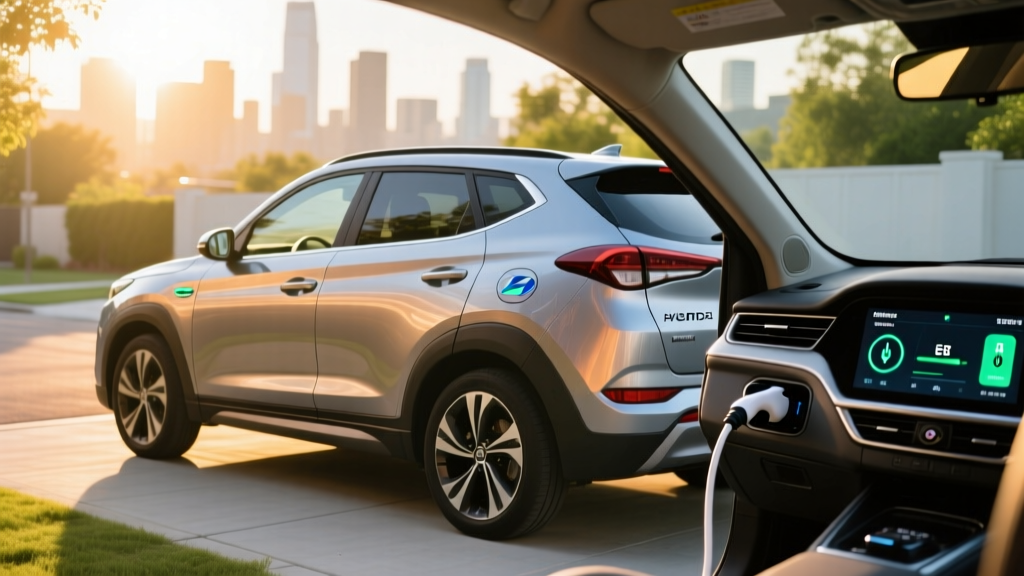
The Tucson Plug-in Hybrid uses the same 1.6L turbo engine but pairs it with a more powerful electric motor and a larger ~13.8 kWh battery. You plug it in (Level 1 or Level 2) to charge the battery and unlock 30+ miles of pure electric driving before the gas engine engages. It can also operate as a hybrid once the battery depletes.
If you can't charge at home or work, the HEV is your move. If you have access to a plug and a short commute, the PHEV can eliminate most weekday gasoline use.
2026 Hyundai Tucson Hybrid MPG: EPA Ratings and Real-World Results
The conventional Tucson Hybrid targets buyers who want maximum simplicity — no charging cables, no behavior changes. Here's how the EPA rates it, along with what we've observed in mixed driving:
| Trim / Drivetrain | City MPG | Highway MPG | Combined MPG |
|---|---|---|---|
| Blue (FWD) | 38 | 38 | 38 |
| SEL Convenience / Limited (AWD) | 37 | 36 | 37 |
| N Line (AWD) | 35 | 35 | 35 |
Source: fueleconomy.gov — EPA estimates. Your mileage will vary with driving style, terrain, and climate.
Real-World MPG: What Owners Actually See
Hybrids almost always outperform their EPA city ratings in stop-and-go traffic because regenerative braking recovers energy that a gas car wastes as heat. In urban driving with frequent stops, Tucson Hybrid owners regularly report 39–42 MPG. On sustained highway trips at 75+ mph, expect the number to dip closer to 33–35 MPG, since the electric motor contributes less at steady high speeds.
Cold weather (below freezing) typically shaves 2–4 MPG off combined figures because the engine runs more often to provide cabin heat and because battery efficiency drops in low temperatures. In our experience, a mixed city/highway annual average of 36–38 MPG is realistic for AWD trims in moderate climates.
Tucson Plug-in Hybrid: Electric-Only Range and Combined MPGe
The PHEV is where the Tucson lineup gets genuinely interesting for commuters. Here are the key numbers:
| Spec | Tucson Plug-in Hybrid |
|---|---|
| EPA Electric-Only Range | 33 miles |
| Combined MPGe (electric + gas) | 80 MPGe |
| Gas-Only MPG (after battery depletes) | 35 MPG combined |
| Battery Capacity | 13.8 kWh (lithium-ion polymer) |
| Level 1 Charging (120V) | ~12 hours (0–100%) |
| Level 2 Charging (240V, 7.2 kW) | ~2 hours (0–100%) |
| DC Fast Charging | Not supported |
| Combined Horsepower | 268 hp |
| 0–60 mph | ~7.1 seconds |
| Total Range (full battery + full tank) | ~420 miles |
The 33-mile electric-only range is enough to cover the average American's one-way commute (FHWA data shows the average daily round trip is roughly 30 miles). Charge overnight at home and you may not burn a drop of gas Monday through Friday.
Why No DC Fast Charging?
The Tucson PHEV uses a J1772 connector for Level 1 and Level 2 AC charging only. DC fast charging (the kind you find at Electrify America or EVgo stations) is not supported. This is standard for nearly all PHEVs — the battery is too small to benefit from DC charging infrastructure, and the added hardware would increase weight and cost. For a 13.8 kWh battery, a Level 2 home charger refills it completely in about two hours, which is all you need for overnight or workplace top-ups.
Powertrain Breakdown: What's Under the Hood
Both Tucson hybrids share Hyundai's Smartstream 1.6-liter turbocharged GDI four-cylinder engine, but the electric assist differs between them:
Tucson Hybrid (HEV)
- Engine: 1.6L turbo I4, 178 hp
- Electric Motor: 44.2 kW (~59 hp)
- Combined Output: 226 hp / 258 lb-ft torque
- Transmission: 6-speed automatic
- Drivetrain: FWD (Blue) or HTRAC AWD
Tucson Plug-in Hybrid (PHEV)
- Engine: 1.6L turbo I4, 178 hp
- Electric Motor: 66.9 kW (~90 hp)
- Combined Output: 268 hp / 271 lb-ft torque
- Transmission: 6-speed automatic
- Drivetrain: HTRAC AWD (standard)
The PHEV's larger motor and battery give it a meaningful 42-hp advantage, making it noticeably quicker off the line and more confident during highway merges. The HEV's 226 hp is still competitive for the compact SUV class — it's roughly on par with the Toyota RAV4 Hybrid's 219 hp.
Pricing, Trims, and Tax Credit Eligibility
Here's where the HEV and PHEV diverge most sharply for your wallet:
| Model / Trim | Starting MSRP (2026 est.) |
|---|---|
| Tucson Hybrid Blue (FWD) | $33,900 |
| Tucson Hybrid SEL Convenience (AWD) | $37,200 |
| Tucson Hybrid Limited (AWD) | $41,500 |
| Tucson Hybrid N Line (AWD) | $39,800 |
| Tucson PHEV SEL Convenience (AWD) | $40,900 |
| Tucson PHEV Limited (AWD) | $45,600 |
Does the Tucson Hybrid or PHEV Qualify for a Federal Tax Credit?
Under current IRS §30D rules:
- Tucson Hybrid (HEV): Does NOT qualify for the federal §30D clean vehicle credit. Conventional hybrids are not considered plug-in electric vehicles under the law.
- Tucson PHEV: Eligibility depends on battery-component and critical-mineral sourcing requirements, which have tightened significantly since 2024. Hyundai's PHEV battery sourcing has historically placed the Tucson PHEV in partial or full credit eligibility, but you must verify the current-year status on the IRS qualified vehicles list before purchasing. The credit can be up to $7,500 and may be transferred to the dealer as a point-of-sale discount.
- Income Caps: Modified AGI must not exceed $150,000 (single), $225,000 (head of household), or $300,000 (joint).
- MSRP Cap: SUVs must have an MSRP at or below $80,000. All Tucson PHEV trims clear this threshold easily.
Important: Tax credit rules change frequently. Consult a tax professional and check the IRS qualified vehicle list before relying on credit eligibility in your purchase decision. Some states also offer additional rebates for PHEVs — check your state energy office for current programs.
Battery Warranty, Reliability, and Replacement Cost
Hyundai Hybrid Battery Warranty
Hyundai covers the hybrid/PHEV battery pack with a 10-year / 100,000-mile warranty (whichever comes first). This covers defects and capacity loss below a specified threshold (typically 70% state of health). In states that follow California's CARB emissions rules, the warranty extends to 10 years / 150,000 miles.
How Long Do Tucson Hybrid Batteries Actually Last?
Hyundai's hybrid battery packs use lithium-ion polymer cells, and real-world data from the brand's earlier hybrid models (Ioniq, Sonata Hybrid) suggests these packs routinely last 150,000–200,000+ miles with minimal degradation. The HEV's small ~1.5 kWh battery experiences shallow charge cycles (it never fully depletes or fully charges), which is gentle on cell chemistry.
The PHEV's larger 13.8 kWh battery sees deeper cycles but benefits from active thermal management. Most PHEV owners report less than 5% range loss over the first 50,000 miles.
Battery Replacement Cost (Out of Warranty)
If you do need a replacement outside the warranty window:
- HEV battery: Estimated $2,000–$3,500 (smaller pack, lower parts cost)
- PHEV battery: Estimated $5,000–$8,000 (larger pack, more complex thermal system)
These are rough dealer-installed estimates. Independent hybrid shops often offer refurbished packs at 30–50% less. The strong warranty means most original owners will never pay for a battery replacement.
Who Should Buy the Tucson Hybrid vs PHEV vs Full EV?
Choosing between the three electrification levels comes down to your daily routine, charging access, and budget:
Choose the Tucson Hybrid (HEV) If:
- You don't have access to home or workplace charging
- You want better MPG with zero behavior change
- Your budget is tighter (starting ~$33,900)
- You drive a mix of city and highway miles
- You want AWD capability without EV range concerns in cold weather
Choose the Tucson Plug-in Hybrid (PHEV) If:
- You can charge at home (even a standard 120V outlet works overnight)
- Your daily commute is under 30 miles round-trip
- You want to drive mostly on electricity weekdays but take gas-powered road trips on weekends
- You want the 268-hp performance upgrade
- You may qualify for the federal tax credit, narrowing the price gap with the HEV
Choose a Full EV (like the Ioniq 5) If:
- You have reliable Level 2 home charging
- Your daily driving is under 250 miles and you're comfortable planning longer road trips around DC fast chargers
- You want zero tailpipe emissions and minimal maintenance (no oil changes, no gas engine)
- You want to maximize fuel-cost savings (electricity is typically $0.04–$0.12/mile vs $0.12–$0.18/mile for the Tucson Hybrid)
Pros and Cons at a Glance
Tucson Hybrid (HEV) — Pros
- 38 MPG combined (Blue trim) is class-leading
- No plug-in charging required — fuel and go
- 10-year/100,000-mile battery warranty
- Competitive starting price for a hybrid SUV
- Spacious cargo area (38.7 cu ft behind rear seats)
Tucson Hybrid (HEV) — Cons
- No federal tax credit
- AWD trims lose 1–2 MPG
- Highway MPG drops at sustained 75+ mph speeds
- 226 hp is adequate but not thrilling
Tucson PHEV — Pros
- 33 miles electric-only covers most commutes
- 268 hp makes it the quickest Tucson variant
- 80 MPGe combined when regularly charged
- Potential federal tax credit up to $7,500
- AWD standard on all trims
Tucson PHEV — Cons
- $7,000+ premium over HEV base (before any credit)
- No DC fast charging capability
- Gas-only MPG drops to 35 once battery depletes
- Must plug in regularly to realize fuel savings
Frequently Asked Questions
How many MPG does the Hyundai Tucson Hybrid get?
The 2026 Tucson Hybrid Blue (FWD) is EPA-rated at 38 MPG city / 38 highway / 38 combined. AWD trims rate at 37 combined (SEL Convenience, Limited) or 35 combined (N Line). Real-world city driving often yields 39–42 MPG thanks to regenerative braking, while sustained highway driving at high speeds can dip to 33–35 MPG.
How far can the Tucson Plug-in Hybrid go on electric only?
The EPA rates the Tucson PHEV at 33 miles of electric-only range. In mild weather with moderate speeds, some owners report 35–37 miles. In cold weather or at highway speeds, expect closer to 27–30 miles before the gas engine engages.
Does the Hyundai Tucson Hybrid need to be plugged in?
No. The conventional Tucson Hybrid (HEV) charges its small battery through regenerative braking and the gas engine. You never plug it in. Only the Tucson Plug-in Hybrid (PHEV) requires plugging in to access its electric-only range.
Is the Tucson Hybrid reliable?
Hyundai's hybrid powertrain has proven reliable across the Ioniq, Sonata, and Tucson lineups. The hybrid battery is covered by a 10-year/100,000-mile warranty, and independent data suggests these packs regularly exceed 150,000 miles. Hyundai's overall brand reliability has improved significantly in recent IIHS and J.D. Power assessments.
What does it cost to replace the Tucson Hybrid battery?
Out-of-warranty replacement runs roughly $2,000–$3,500 for the HEV and $5,000–$8,000 for the PHEV. However, the 10-year/100,000-mile warranty (150,000 miles in CARB states) means most owners will never face this cost. Refurbished packs from independent shops can reduce out-of-pocket expenses by 30–50%.
Does the Tucson Hybrid qualify for any tax credit?
The conventional Tucson Hybrid (HEV) does not qualify for any federal tax credit. The Tucson Plug-in Hybrid (PHEV) may qualify for up to $7,500 under IRS §30D, depending on current battery-sourcing and critical-mineral requirements, your income, and the vehicle's MSRP. Always verify eligibility on the IRS qualified vehicles list before purchasing.
How does Tucson Hybrid mileage compare to the Toyota RAV4 Hybrid?
The RAV4 Hybrid is EPA-rated at 41 MPG combined (AWD), which edges out the Tucson Hybrid AWD's 37 MPG combined. However, the Tucson PHEV's 33-mile electric-only range and 80 MPGe give it a significant efficiency advantage for short-commute drivers who charge regularly. The choice often comes down to whether you prioritize peak hybrid MPG (RAV4) or plug-in electric flexibility (Tucson PHEV).