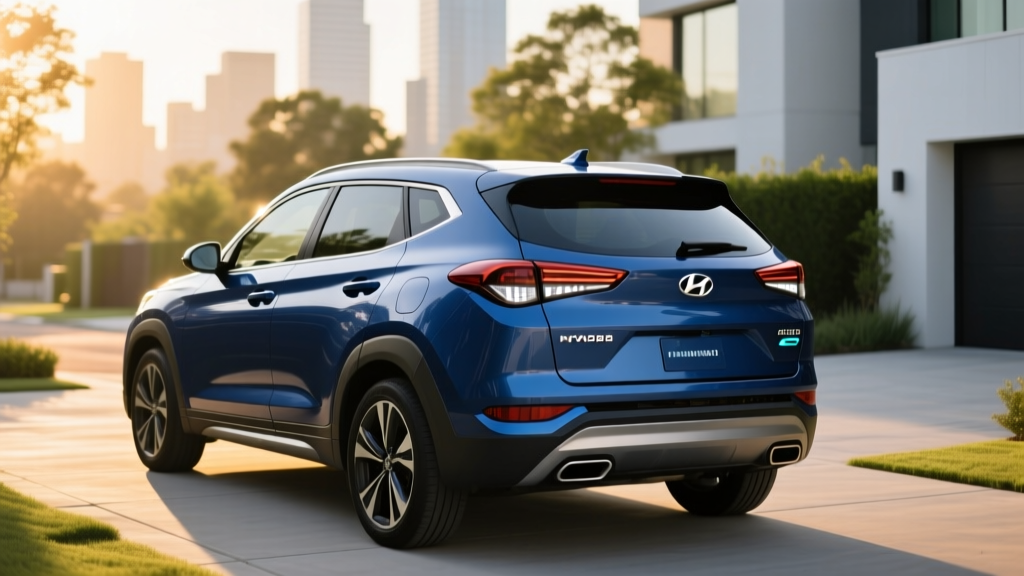
If you're researching a Hyundai Tucson Hybrid lease, you're likely weighing fuel savings against monthly payments — and wondering whether the conventional hybrid (HEV) or the plug-in hybrid (PHEV) makes more financial sense. The 2026 Tucson Hybrid lineup offers both, and the lease economics differ sharply between them. This guide breaks down exact EPA fuel economy, real-world MPG expectations, powertrain specs, battery warranties, and federal tax credit eligibility so you can negotiate your lease with confidence.
Hyundai Tucson HEV vs PHEV: Which Powertrain Are You Leasing?
Hyundai sells two electrified Tucson variants for 2026. Confusing them is the most common mistake shoppers make, because the lease terms, fuel economy, and tax incentives differ dramatically.
| Feature | Tucson Hybrid (HEV) | Tucson Plug-in Hybrid (PHEV) |
|---|---|---|
| Plug-in required? | No — self-charging via regenerative braking | Yes — plug in to access electric-only range |
| Battery capacity | ~1.49 kWh (small buffer) | 13.8 kWh usable (NMC lithium-ion) |
| Electric-only range | N/A (EV assist only at low speeds) | EPA-est. 33 miles |
| Total range | ~420+ miles (gas tank) | ~400+ miles (electric + gas combined) |
| DC fast charging | N/A | No — Level 2 AC only |
| Federal tax credit (§30D) | Not eligible | Up to $7,500 (subject to income/sourcing rules) |
| Typical lease MSRP base | ~$33,500 | ~$40,500 |
The HEV is the simpler play: no charging habits to change, lower sticker price, and strong city MPG. The PHEV demands access to a plug (home or workplace) but rewards you with 33 miles of electric-only commuting and potential tax credit benefits that can be applied at the point of sale — which may lower your lease's capitalized cost.
Fuel Economy: EPA Numbers and Real-World MPG
The headline question for any hybrid lease is fuel cost savings. Here's the EPA breakdown for the 2026 Tucson Hybrid and Tucson PHEV, sourced from fueleconomy.gov:
| Model | City MPG / MPGe | Highway MPG / MPGe | Combined MPG / MPGe |
|---|---|---|---|
| Tucson Hybrid (HEV) AWD | 38 MPG | 38 MPG | 38 MPG |
| Tucson PHEV AWD (charge-sustaining) | 35 MPG | 35 MPG | 35 MPG |
| Tucson PHEV AWD (electric mode) | 84 MPGe combined (33 mi electric range) | ||
Real-World MPG: What to Actually Expect
Hyundai's turbocharged 1.6-liter hybrid powertrain excels in stop-and-go traffic where regenerative braking recaptures energy. In real-world city driving, many Tucson HEV owners report 39–42 MPG — slightly above the EPA sticker. Highway driving at 75+ mph, however, typically drops to 33–36 MPG because the turbo engine works harder and aerodynamic drag increases.
For the PHEV, the 33-mile electric range holds up well in moderate temperatures (50–80°F). In cold weather (below 30°F), expect that range to shrink to roughly 25–28 miles due to cabin heating demands and reduced battery efficiency. Once the battery depletes, the PHEV operates as a conventional hybrid at approximately 35 MPG combined — slightly less than the HEV because of the extra weight from the larger battery pack.
Powertrain Specs: Horsepower, Acceleration, and Drivetrain
| Specification | Tucson Hybrid (HEV) | Tucson Plug-in Hybrid (PHEV) |
|---|---|---|
| Engine | 1.6L Turbo I-4 + electric motor | 1.6L Turbo I-4 + larger electric motor |
| Combined horsepower | 232 hp | 268 hp |
| Combined torque | 258 lb-ft | 258 lb-ft |
| Transmission | 6-speed automatic | 6-speed automatic |
| Drivetrain | AWD (standard) | AWD (standard) |
| 0–60 mph (est.) | ~7.1 seconds | ~6.3 seconds |
| Towing capacity | 2,000 lbs | 2,000 lbs |
The PHEV's 268 hp gives it noticeably stronger acceleration, particularly in electric mode where instant torque from the motor makes it feel quicker than the numbers suggest. Both models come standard with HTRAC all-wheel drive, which is a factor in the slightly lower MPG compared to some front-wheel-drive hybrid crossovers.
Lease Pricing and Tax Credit Impact
Lease deals fluctuate by region, dealer, and Hyundai's monthly incentive programs, but here's the structural pricing framework for 2026:
Tucson Hybrid (HEV) Lease Economics
Base MSRP on the Blue trim starts around $33,500. A typical 36-month lease with 12,000 miles/year and $2,500 due at signing lands in the $380–$440/month range depending on your credit tier and local incentives. Since the HEV is a conventional hybrid, it does not qualify for the federal §30D clean vehicle tax credit.
Tucson Plug-in Hybrid (PHEV) Lease Economics
The PHEV starts around $40,500 for the SEL trim. However, the lease calculus changes significantly because of the federal tax credit. Under current IRS §30D rules, the Tucson PHEV may qualify for up to $7,500 — provided the buyer meets income caps, the vehicle MSRP is under $80,000 (SUVs), and the battery meets critical-mineral and component-sourcing requirements.
- Adjusted gross income: ≤$150,000 (single) / ≤$300,000 (joint)
- Vehicle MSRP: ≤$80,000 for SUVs like the Tucson
- Battery critical minerals: Must meet phased-in sourcing thresholds
- Battery components: Must meet North American assembly thresholds
- Point-of-sale transfer: Credit can be applied at purchase or, in a lease, passed through by the lessor to reduce monthly payments
Lease loophole advantage: Under the "commercial vehicle" provision (§45W), leased EVs and PHEVs may pass the tax credit through to the lessee even if the buyer wouldn't qualify under §30D's income or sourcing restrictions. Hyundai Motor Finance has historically passed this credit through as a capitalized-cost reduction on Tucson PHEV leases. Confirm with your dealer whether this applies to current offers, as OEM policies shift.
Battery Warranty, Reliability, and Replacement Cost
Hybrid battery longevity is the top concern for shoppers considering a Tucson Hybrid lease — especially those who plan to purchase at lease-end.
- HEV battery: 10 years / 100,000 miles (whichever comes first)
- PHEV battery: 10 years / 100,000 miles
- Hybrid system components (motor, inverter): 10 years / 100,000 miles
- Standard vehicle warranty: 5 years / 60,000 miles bumper-to-bumper
Hyundai's 10-year hybrid battery warranty is among the strongest in the industry. The HEV's small 1.49 kWh battery undergoes shallow charge/discharge cycles, which significantly extends its lifespan. The PHEV's 13.8 kWh pack sees deeper cycling, but Hyundai engineers in a generous buffer (you'll never use 100% of the pack) to mitigate degradation.
Is the Tucson Hybrid Reliable?
The Tucson Hybrid's 1.6L turbo-hybrid powertrain has been in Hyundai's lineup since the 2022 model year, giving it several years of field data. IIHS has historically rated the Tucson well for crash safety. Owner-reported reliability for the hybrid system has been solid, with most complaints centering on infotainment quirks rather than powertrain issues.
Battery Replacement Cost (Out of Warranty)
If you buy out your lease and keep the vehicle past the 10-year warranty, replacement costs are worth knowing:
- HEV battery replacement: Estimated $2,000–$3,500 (small pack, simpler chemistry)
- PHEV battery replacement: Estimated $6,000–$9,000 (larger NMC pack)
In practice, modern hybrid batteries are lasting 150,000–200,000+ miles with minimal degradation. Most lessees will never face this cost.
PHEV Charging: What You Need to Know
The Tucson PHEV uses a standard J1772 connector for Level 1 (120V) and Level 2 (240V) AC charging. It does not support DC fast charging — a limitation shared with most PHEVs in this class due to the smaller battery size.
| Charging Level | Power (kW) | 0–100% Time | Practical Use |
|---|---|---|---|
| Level 1 (120V household) | ~1.4 kW | ~10 hours | Overnight top-up from a standard outlet |
| Level 2 (240V home/work) | ~7.2 kW | ~2 hours | Full recharge during workday or overnight |
If your commute is under 33 miles round-trip and you can install a Level 2 charger at home (or charge at work), the PHEV lets you drive on electricity almost every day while keeping the gas engine for weekend road trips. Without regular plug-in access, the PHEV becomes a heavier, slightly less efficient HEV — making the conventional Tucson Hybrid the smarter lease choice.
Who Should Lease the Tucson Hybrid (HEV) vs. the PHEV?
- You lack reliable access to a plug at home or work
- You want a lower monthly payment and lower MSRP
- Your driving is mostly city/suburban where the HEV's 38 MPG shines
- You prefer the simplest ownership experience — no charging to think about
- You can charge at home (garage/driveway) or at your workplace
- Your daily commute is under 33 miles round-trip (you'll rarely use gas)
- You qualify for the §30D tax credit or can benefit from the lease loophole
- You want stronger acceleration (268 hp) and don't mind a higher sticker price
- You have home Level 2 charging and rarely take road trips over 250 miles
- You want zero gasoline expenses and maximum federal/state incentives
- You're ready to commit fully to electric driving
- 38 MPG combined — strong for an AWD compact SUV
- No charging infrastructure needed
- Lower MSRP and lease payments than PHEV
- 10-year/100,000-mile hybrid battery warranty
- 232 hp with standard AWD is competitive
- No federal tax credit eligibility
- Highway MPG drops to ~33-36 at 75+ mph
- No electric-only driving capability
- Turbo engine can sound strained under hard acceleration
Frequently Asked Questions
How many MPG does the Hyundai Tucson Hybrid get?
The 2026 Tucson Hybrid (HEV) is EPA-rated at 38 MPG city, 38 MPG highway, and 38 MPG combined. In real-world city driving, owners often see 39–42 MPG thanks to regenerative braking. Highway driving at sustained high speeds typically yields 33–36 MPG.
How far can the Tucson PHEV go on electric only?
The 2026 Tucson Plug-in Hybrid has an EPA-estimated 33 miles of electric-only range. In cold weather (below 30°F), expect approximately 25–28 miles due to heating loads and reduced battery efficiency. Once depleted, it operates as a conventional hybrid at ~35 MPG combined.
Does the Hyundai Tucson Hybrid qualify for a tax credit?
The conventional Tucson Hybrid (HEV) does not qualify for the federal §30D tax credit. The Tucson Plug-in Hybrid (PHEV) may qualify for up to $7,500 depending on your income, the vehicle's battery sourcing compliance, and MSRP caps. Leasing a PHEV may unlock the credit through the commercial-vehicle (§45W) loophole even if you wouldn't qualify under §30D's personal-income restrictions. Always confirm current eligibility with your dealer and consult IRS guidelines.
Is the Tucson Hybrid reliable, and what does battery replacement cost?
The Tucson Hybrid has proven reliable since its 2022 introduction, with Hyundai's 10-year/100,000-mile hybrid battery warranty providing strong protection. Out-of-warranty HEV battery replacement is estimated at $2,000–$3,500; PHEV replacement runs $6,000–$9,000. Most hybrid batteries last 150,000+ miles in normal use.
Should I lease the Tucson Hybrid or buy?
Leasing makes sense if you want lower monthly payments, plan to stay under 12,000–15,000 miles/year, and prefer to upgrade every 3 years. Buying (or leasing with intent to purchase at lease-end) is better if you drive high annual miles, want to keep the vehicle past the 5-year bumper-to-bumper warranty, or want to capture the full value of the hybrid battery's 10-year warranty coverage.
Do I need to plug in the Tucson Hybrid (HEV)?
No. The conventional Tucson Hybrid (HEV) charges its small battery through regenerative braking and the gasoline engine. You never plug it in — just fill up at the gas station like a conventional vehicle. Only the Tucson Plug-in Hybrid (PHEV) requires plugging in to access its 33-mile electric-only range.