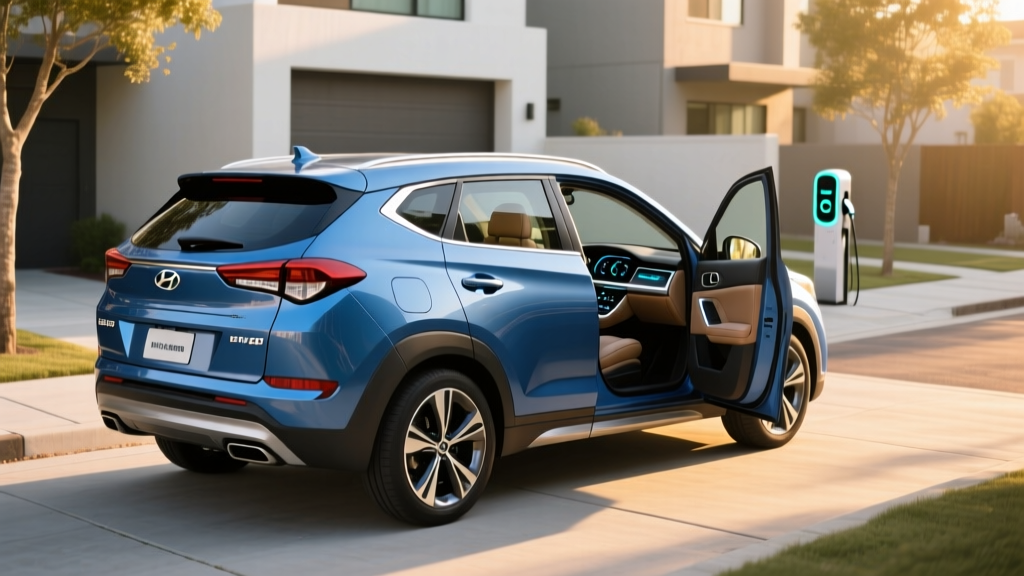
The Hyundai Tucson Hybrid has quietly become one of the most compelling entries in the compact SUV segment for buyers who want electrified efficiency without the charging-cord commitment. The Blue SE trim sits at the intersection of value and fuel economy, offering the highest EPA MPG rating in the Tucson Hybrid lineup while keeping the starting price within reach of mainstream buyers. For 2026, Hyundai continues to refine this powertrain, and the Blue SE trim remains the efficiency sweet spot.
If you've been cross-shopping the Tucson Hybrid against the Tucson PHEV, a full battery-electric vehicle, or a conventional gas-only compact SUV, this guide breaks down exactly what the Blue SE delivers — with real-world numbers, not just brochure claims.
HEV vs. PHEV: Which Tucson Is Right for You?
Before diving into the Blue SE specifically, it's critical to understand that Hyundai sells the Tucson in three distinct powertrain configurations, and confusing them is the most common mistake shoppers make:
| Feature | Tucson Hybrid (HEV) | Tucson Plug-In Hybrid (PHEV) | Tucson (Gas Only) |
|---|---|---|---|
| Plug-in charging required? | No — self-charging | Yes — 13.8 kWh battery | No |
| EPA Combined MPG / MPGe | 38 MPG (Blue trim) | 80 MPGe (elec+gas) / 35 MPG (gas only) | |
| Electric-only range | N/A | ~33 miles | |
| Combined horsepower | 231 HP | 268 HP | |
| Battery capacity | 1.49 kWh (small buffer) | 13.8 kWh | |
| Federal tax credit (§30D) | Not eligible | Up to $7,500 (eligibility varies) | |
| Starting MSRP (2026 est.) | ~$33,200 | ~$39,900 |
The Blue SE is a conventional hybrid (HEV). It does not plug in. It regenerates energy during braking and deceleration to charge its small battery, and the gasoline engine handles the rest. You fuel it like any other car — but it sips fuel far more efficiently, especially in city driving where the electric motor does the heavy lifting at low speeds.
The Tucson PHEV, by contrast, has a much larger battery that you charge via a wall outlet or Level 2 charger, giving you roughly 33 miles of pure electric driving before the gas engine kicks in. If you have home charging access and a short commute, the PHEV can run weeks without visiting a gas station. But it costs significantly more upfront.
Fuel Economy: EPA Ratings and Real-World MPG
The headline number for the Tucson Hybrid Blue SE is its EPA rating, and it's genuinely impressive for a compact SUV with all-wheel drive:
| Driving Cycle | EPA Estimate | Real-World Expectation |
|---|---|---|
| City | 38 MPG | 38–42 MPG (hybrids often exceed EPA in city) |
| Highway | 38 MPG | 34–37 MPG (sustained high speed reduces hybrid advantage) |
| Combined | 38 MPG | 36–40 MPG depending on driving mix |
A few notes from real-world testing patterns with this generation Tucson Hybrid:
- City driving is where this powertrain shines. The 47-kW electric motor handles low-speed acceleration, stop-and-go traffic, and parking-lot maneuvers. In heavy urban traffic, owners frequently report exceeding the EPA city estimate — sometimes reaching 40+ MPG on warm-weather commutes under 40 mph.
- Highway efficiency tapers. At sustained 70-80 mph speeds, the 1.6-liter turbocharged engine does most of the work. Expect 34-37 MPG on long interstate trips, which is still strong for an AWD compact SUV but less dramatic than the city gains.
- Cold weather costs you 5-10%. In sub-freezing temperatures, the engine runs more often to provide cabin heat and maintain battery temperature. Winter MPG typically drops to 33-36 combined.
- The Blue trim advantage. The Blue SE uses slightly lower-rolling-resistance tires and specific aerodynamic tuning versus higher trims (SEL Convenience, Limited), which accounts for its 1-2 MPG edge over those trims (rated at 37 MPG combined).
Total driving range: With a 13.7-gallon fuel tank and 38 MPG combined, the Tucson Hybrid Blue SE delivers approximately 520 miles of total range per tank. Real-world mixed driving: expect 480-530 miles. This is a significant advantage over most EVs for road-trip flexibility — no charging stops required.
Powertrain Specs: What's Under the Hood
| Specification | 2026 Tucson Hybrid Blue SE |
|---|---|
| Engine | 1.6L Turbocharged GDI 4-cylinder |
| Engine output | 180 HP / 195 lb-ft torque |
| Electric motor | 47 kW (64 HP) / 195 lb-ft torque |
| Combined system output | 231 HP / 271 lb-ft torque |
| Transmission | 6-speed automatic (no CVT) |
| Drivetrain | HTRAC All-Wheel Drive (standard) |
| 0-60 mph | ~7.1 seconds |
| Towing capacity | 2,000 lbs |
| Hybrid battery | 1.49 kWh lithium-ion polymer |
| EPA Combined MPG | 38 MPG |
| Fuel tank | 13.7 gallons |
Hyundai's decision to use a conventional 6-speed automatic rather than a CVT is a notable differentiator. Many competitors (Toyota RAV4 Hybrid, Honda CR-V Hybrid) use CVTs or e-CVTs that can produce a droning sensation under hard acceleration. The Tucson Hybrid shifts through actual gears, giving it a more natural, engaging feel — particularly when merging onto highways or climbing grades.
The 231 combined horsepower puts the Tucson Hybrid ahead of the RAV4 Hybrid (219 HP) and roughly on par with the Ford Escape Hybrid (210 HP standard, 250 HP in the PHEV). It's genuinely quick for a hybrid SUV, and the instant torque from the electric motor makes it feel even more responsive in everyday driving than the 0-60 time suggests.
Pricing, Trims, and Tax Credit Eligibility
The Blue SE positions as the entry point to the Tucson Hybrid lineup, and for 2026 it remains competitively priced:
- Blue SE: ~$33,200 MSRP (includes destination)
- SEL Convenience: ~$36,000 MSRP
- Limited: ~$40,500 MSRP
The Blue SE comes well-equipped for its price: 18-inch alloy wheels, a 10.25-inch touchscreen with wireless Apple CarPlay and Android Auto, heated front seats, proximity key with push-button start, LED headlights, and Hyundai's full SmartSense safety suite (forward collision-avoidance assist, lane-keeping assist, blind-spot monitoring, rear cross-traffic alert, and adaptive cruise control with stop-and-go).
Federal Tax Credit Status
The Tucson Hybrid (HEV) does NOT qualify for the federal §30D Clean Vehicle Credit. This credit applies only to plug-in electric vehicles (BEVs and PHEVs) that meet specific requirements. Conventional hybrids are excluded.
If you want federal incentive eligibility in the Tucson lineup, you'd need to step up to the Tucson Plug-In Hybrid, which may qualify for up to $7,500 under current IRS rules — subject to:
- Buyer income caps ($150K single / $300K joint AGI)
- MSRP cap ($80,000 for SUVs — Tucson PHEV clears this easily)
- Battery critical-mineral and component sourcing requirements (which have tightened significantly since 2024)
- Point-of-sale transfer option available through participating dealers
Always verify current eligibility at IRS.gov before purchasing, as sourcing rules change annually.
Some states offer their own hybrid incentives or rebates — check your state energy office or fueleconomy.gov's incentives tool for local programs.
Battery Warranty, Reliability, and Replacement Cost
This is the question that surfaces in every hybrid purchase conversation, and it deserves a direct answer:
| Coverage | Terms |
|---|---|
| Hybrid battery warranty | 10 years / 100,000 miles (original owner) |
| Hybrid battery warranty (subsequent owner) | Typically 8 years / 80,000 miles — verify by state |
| Hybrid system components | 10 years / 100,000 miles |
| Basic vehicle warranty | 5 years / 60,000 miles |
| Powertrain warranty | 10 years / 100,000 miles |
Hyundai's hybrid battery warranty is among the best in the industry. The 10-year/100,000-mile coverage applies to the lithium-ion hybrid battery pack and all hybrid-specific components (inverter, motor, controller).
How Long Will the Hybrid Battery Last?
The Tucson Hybrid's 1.49 kWh battery is small and operates within a narrow state-of-charge window — Hyundai's battery management system never fully charges or fully depletes it. This shallow-cycling approach dramatically extends cell life. Based on data from Hyundai's earlier hybrid models (Ioniq Hybrid, Sonata Hybrid) and industry-wide failure-rate data:
- Expected lifespan: 150,000-200,000+ miles before meaningful degradation
- Failure rate within warranty: Very low — under 2% based on industry averages for modern lithium-ion hybrid packs
- Replacement cost (out of warranty): Estimated $2,500-$4,000 for the hybrid battery pack, plus labor (~$500-$800). This is significantly cheaper than a full EV battery replacement ($8,000-$20,000+) because the pack is small.
For context, Toyota's hybrid taxis routinely surpass 300,000 miles on original battery packs, and Hyundai's hybrid system uses similar lithium-ion chemistry with conservative charge management. Battery replacement should not be a primary concern for typical ownership periods of 5-10 years.
Overall Reliability
The Tucson Hybrid earns solid reliability marks. Hyundai's 1.6L turbo engine has been in production since 2021 and has accumulated a strong track record. The 6-speed automatic transmission is a proven unit. The main areas where owners report minor issues involve infotainment software glitches (addressed via OTA updates) and occasional HTRAC AWD system calibration complaints in early 2022-2023 models, which have been refined in subsequent model years. The NHTSA vehicle page tracks any active recalls.
Who Should Choose the Tucson Hybrid Blue SE?
Choose the Tucson Hybrid Blue SE if:
- You want 38+ MPG without any change to your fueling routine — no plugs, no charging apps, no route planning around chargers
- You live in an apartment or lack access to home charging, making a PHEV or EV impractical
- You regularly take road trips exceeding 300 miles and don't want to deal with public DC fast charging
- You want AWD for snow/rain climates without the fuel-economy penalty of a gas-only AWD SUV
- You want a lower purchase price than a PHEV or EV while still getting meaningful efficiency gains
Consider the Tucson PHEV instead if:
- You have home charging (Level 2) and a daily commute under 30 miles — you could drive months on electricity alone
- You qualify for the federal §30D tax credit, which can offset the PHEV's higher MSRP
- You want the option of zero-emission local driving while retaining gas-engine range for longer trips
Consider a full EV (like the Ioniq 5) if:
- You have reliable home charging and your daily driving stays under 250 miles
- You want zero tailpipe emissions and the lowest per-mile fuel cost (electricity at $0.04-$0.06/mile vs. gas at $0.12-$0.18/mile)
- You're ready to plan road trips around DC fast-charging infrastructure
Real-World Ownership Costs: Hybrid vs. Gas vs. EV
To put the Blue SE's efficiency in perspective, here's a 5-year cost comparison assuming 15,000 miles/year (75,000 total), gas at $3.50/gallon, and electricity at $0.14/kWh:
| Vehicle | Fuel/Energy Cost (5 yr) | Purchase Price | Est. Maintenance (5 yr) |
|---|---|---|---|
| Tucson Hybrid Blue SE (38 MPG) | ~$10,360 | ~$33,200 | ~$2,800 |
| Tucson Gas AWD (28 MPG) | ~$14,060 | ~$30,500 | ~$3,200 |
| Tucson PHEV (35 MPG gas + elec) | ~$6,800 | ~$39,900 | ~$2,600 |
| Ioniq 5 EV (115 MPGe) | ~$4,100 | ~$42,500 | ~$1,500 |
The hybrid saves roughly $3,700 in fuel over 5 years compared to the gas-only Tucson AWD, which nearly offsets the hybrid's higher purchase price. The PHEV and EV save more on energy but require higher upfront investment and (for the EV) lifestyle adaptation to charging.
Pros
- 38 MPG combined — best-in-class for AWD compact SUV hybrids
- 231 HP provides confident highway merging and passing
- 6-speed automatic (no CVT drone)
- 520+ mile total range per tank
- 10-year/100,000-mile hybrid battery warranty
- No plug-in charging required — zero lifestyle change
- Well-equipped Blue SE at ~$33,200
Cons
- No federal tax credit (HEV exclusion)
- Highway MPG drops to 34-37 (less hybrid advantage at sustained speed)
- Cargo space slightly reduced vs. gas Tucson (~38.7 cu ft behind rear seats)
- Blue SE lacks some premium features (ventilated seats, panoramic roof) available on higher trims
- Towing limited to 2,000 lbs
Frequently Asked Questions
How many MPG does the Hyundai Tucson Hybrid Blue SE get?
The EPA rates the Tucson Hybrid Blue SE at 38 MPG city, 38 MPG highway, and 38 MPG combined. In real-world driving, expect 38-42 MPG in city conditions (hybrids excel at low speeds with frequent stops) and 34-37 MPG on sustained highway trips. Cold weather typically reduces combined MPG by 5-10%.
Does the Tucson Hybrid need to be plugged in?
No. The Tucson Hybrid is a conventional hybrid (HEV), not a plug-in hybrid. It charges its small 1.49 kWh battery through regenerative braking and the gasoline engine. You fuel it exclusively at gas stations, just like a conventional car. Only the Tucson PHEV requires plug-in charging to access its electric-only range.
How far can the Tucson Hybrid drive on a full tank?
With its 13.7-gallon fuel tank and 38 MPG combined rating, the Tucson Hybrid Blue SE can travel approximately 520 miles between fill-ups. Real-world range typically falls between 480 and 530 miles depending on driving conditions, terrain, and temperature.
Is the Hyundai Tucson Hybrid reliable?
Yes. The Tucson Hybrid uses a proven 1.6L turbo engine paired with a 6-speed automatic and a well-managed hybrid system. Hyundai backs the hybrid battery and components with a 10-year/100,000-mile warranty. Industry data shows modern hybrid battery failure rates below 2% within the warranty period, and these packs routinely last 150,000-200,000+ miles.
What does it cost to replace the Tucson Hybrid battery?
Out-of-warranty replacement of the Tucson Hybrid's 1.49 kWh lithium-ion battery pack is estimated at $2,500-$4,000 for parts plus $500-$800 in labor. This is far less expensive than an EV battery replacement because the pack is small. Most owners will never need this service within the 10-year warranty period.
Does the Tucson Hybrid qualify for any tax credits?
The conventional Tucson Hybrid (HEV, including the Blue SE) does not qualify for the federal §30D Clean Vehicle Credit, which is limited to plug-in vehicles. Some states offer separate hybrid incentives — check fueleconomy.gov for state-specific programs. The Tucson PHEV may qualify for up to $7,500 federally, subject to income, MSRP, and battery-sourcing requirements.
Hybrid vs. PHEV vs. EV — which Tucson should I buy?
If you lack home charging or regularly drive 300+ miles without stopping, the Hybrid (HEV) is the simplest choice — no infrastructure changes needed. If you have home charging and a sub-30-mile commute, the PHEV lets you drive mostly on electricity while keeping gas-engine range for longer trips, and it may qualify for federal tax credits. If you have reliable home charging, want the lowest per-mile cost, and can plan road trips around DC fast chargers, a full EV like the Ioniq 5 offers the lowest long-term operating cost.
For official EPA fuel economy data on the Tucson Hybrid, visit fueleconomy.gov. For Hyundai's current specifications and pricing, check HyundaiUSA.com.