Quick Verdict: The Tucson Hybrid Balances Efficiency and Practicality
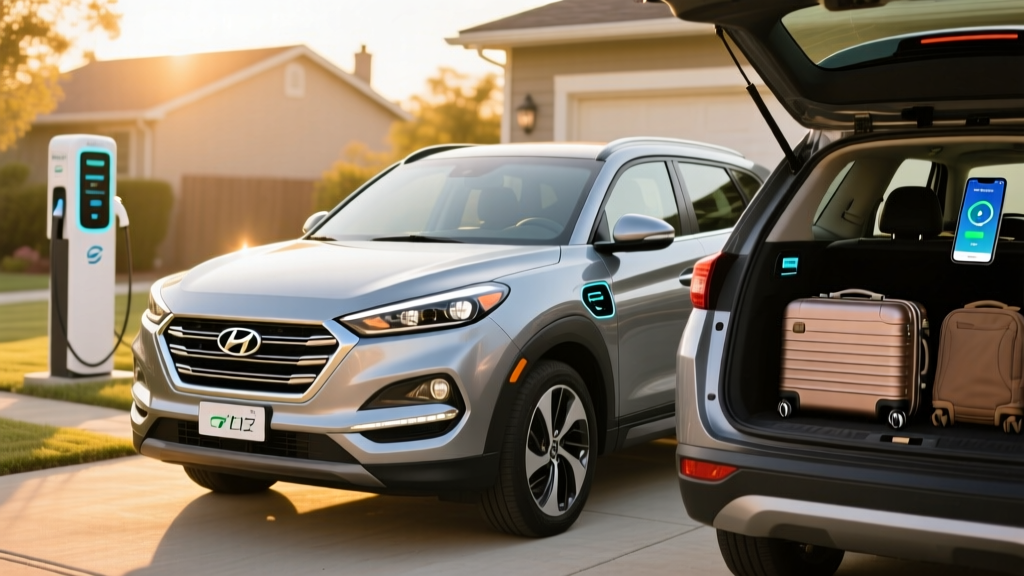
The 2023 Hyundai Tucson Hybrid arrives in two distinct flavors: a conventional hybrid (HEV) that needs no plug and delivers an EPA-estimated 38 MPG combined, and a plug-in hybrid (PHEV) offering 33 miles of electric-only driving before the gas engine kicks in. Both share the same 1.6-liter turbocharged four-cylinder paired with an electric motor, but their battery sizes, efficiency profiles, and ownership economics diverge significantly.
For buyers who can't install a home charger or who want zero lifestyle change from their gas car, the HEV is the straightforward pick. For those with home charging access and a short commute, the PHEV can eliminate most weekday gas stops. Here's the full breakdown with real-world numbers, not just brochure specs.
HEV vs PHEV: What's the Difference?
Conventional Hybrid (HEV): Charges its small battery through regenerative braking and the gas engine. You never plug it in. It improves fuel economy across all driving conditions, especially city stop-and-go.
Plug-In Hybrid (PHEV): Has a larger battery you charge by plugging in (Level 1 or Level 2). It drives on electricity alone for a set range (33 miles EPA for the Tucson PHEV), then operates as a conventional hybrid once the battery depletes. Requires home or workplace charging to maximize value.
Fuel Economy: EPA Numbers and Real-World MPG
Hyundai's hybrid system pairs a 180-hp 1.6L turbo four with a 60-hp electric motor integrated into the six-speed automatic transmission, yielding 226 combined horsepower and 258 lb-ft of torque. The HEV uses a 1.49 kWh lithium-ion battery; the PHEV steps up to a 13.8 kWh pack.
| Metric | HEV (Blue Trim) | HEV (SEL/Limited) | PHEV (Electric Mode) | PHEV (Hybrid Mode) |
|---|---|---|---|---|
| City MPG | 38 | 37 | — | 35 |
| Highway MPG | 38 | 36 | — | 35 |
| Combined MPG | 38 | 37 | — | 35 |
| MPGe (PHEV Electric) | — | — | 80 MPGe | — |
| Total Range | ~530 mi | ~515 mi | 33 mi EV + ~390 mi gas | ~420 mi combined |
Source: EPA fueleconomy.gov
Real-World MPG: What Owners Actually See
The Tucson HEV's EPA rating of 38 MPG combined is one of the more honest stickers in the segment. In real-world driving, many owners report 36–42 MPG depending on conditions. City-heavy routes with frequent stops allow regenerative braking to shine — some drivers consistently see 40+ MPG in urban commuting. Highway-only driving at 75+ MPH typically drops to 33–35 MPG, as the turbo engine works harder at sustained speeds. Cold weather (below 30°F) can reduce efficiency by 5–10% as the engine runs longer to generate cabin heat.
The PHEV's 33-mile electric range is realistic for mixed driving at moderate temperatures. Expect 28–30 miles in cold weather or aggressive acceleration, and up to 35 miles on gentle suburban routes in mild conditions.
PHEV Electric Range, Charging, and Battery Specs
The Tucson PHEV's 13.8 kWh lithium-ion battery provides an EPA-rated 33 miles of electric-only range. That covers the average American one-way commute (~16 miles per the Census Bureau), meaning most PHEV owners can complete daily driving on electricity alone if they charge at home overnight.
| Specification | Value |
|---|---|
| Battery Capacity | 13.8 kWh (lithium-ion) |
| EPA Electric Range | 33 miles |
| Level 1 Charging (120V) | ~12 hours (0–100%) |
| Level 2 Charging (240V, 7.2 kW) | ~2 hours (0–100%) |
| DC Fast Charging | Not available |
| Charge Port | J1772 (Level 1/2) |
Important: The Tucson PHEV does not support DC fast charging. This is typical for most PHEVs in this class — the smaller battery makes DC charging impractical and cost-prohibitive. You'll charge exclusively on Level 1 (standard 120V outlet) or Level 2 (240V home or public charger). A Level 2 home charger is strongly recommended; Level 1 at 120V takes roughly 12 hours for a full charge, which works for overnight but leaves little margin if you arrive home with a depleted battery in the evening.
Powertrain and Performance
Both the HEV and PHEV share Hyundai's Smartstream 1.6L turbocharged GDI four-cylinder engine producing 180 hp and 195 lb-ft of torque. A 60-hp (44.2 kW) electric motor is sandwiched between the engine and the six-speed automatic transmission, bringing combined system output to 226 hp and 258 lb-ft. The PHEV uses a slightly more powerful 66.9-hp (50 kW) electric motor but carries the same 226-hp combined rating.
All trims come standard with Hyundai's HTRAC all-wheel drive, which uses the electric motor to power the rear axle under certain conditions — there's no mechanical driveshaft to the rear wheels. This setup provides confident traction in rain and light snow without the fuel-economy penalty of a traditional AWD system.
The 0–60 MPH time lands around 7.1 seconds for the HEV and approximately 7.0 seconds for the PHEV (the electric motor's instant torque gives a slight launch advantage). Neither is a performance vehicle, but both feel responsive in daily driving, with the electric motor filling in the turbo lag that plagues some small-displacement engines.
Pricing, Trims, and Tax Credit Eligibility
| Model / Trim | MSRP | Federal Tax Credit |
|---|---|---|
| HEV Blue | $32,785 | None |
| HEV SEL Convenience | $36,185 | None |
| HEV Limited | $40,375 | None |
| PHEV SEL Convenience | $39,175 | Up to $7,500* |
| PHEV Limited | $43,365 | Up to $7,500* |
*Destination charges additional. Prices reflect 2023 MSRP at launch.
§30D Federal Tax Credit — Key Rules for the Tucson PHEV
- Conventional HEV: Does NOT qualify for the federal §30D Clean Vehicle Credit. Only plug-in vehicles with sufficient battery capacity are eligible.
- PHEV: The Tucson PHEV has historically qualified for the full $7,500 credit, but under current IRS rules (updated for 2024+), eligibility depends on battery component sourcing and critical mineral requirements that may reduce or eliminate the credit. Always verify current eligibility on fueleconomy.gov and consult a tax professional.
- Income caps: Modified AGI must not exceed $150,000 (single), $225,000 (head of household), or $300,000 (joint).
- MSRP cap: SUVs/vans/pickups must have an MSRP at or below $80,000. Both Tucson PHEV trims clear this threshold.
- Point-of-sale transfer: As of 2024, eligible buyers can transfer the credit to the dealer for an upfront price reduction rather than waiting for a tax refund.
Source: IRS.gov — Clean Vehicle Credits
Battery Warranty, Reliability, and Replacement Cost
Hyundai Hybrid Battery Warranty
HEV Battery: 10 years / 100,000 miles (whichever comes first)
PHEV Battery: 10 years / 100,000 miles (whichever comes first)
Hybrid System Components: 10 years / 100,000 miles — covers the electric motor, inverter, and related powertrain electronics
New Vehicle Warranty: 5 years / 60,000 miles bumper-to-bumper; 10 years / 100,000 miles powertrain
Hyundai's hybrid battery warranty is among the best in the industry, matching Toyota's coverage and exceeding most competitors. The 10-year/100,000-mile term provides strong peace of mind for a vehicle class where battery longevity is a top buyer concern.
Regarding real-world reliability: Hyundai's hybrid system has proven durable since its introduction in the Ioniq and Sonata Hybrid. The Tucson's 1.49 kWh (HEV) and 13.8 kWh (PHEV) batteries are relatively small compared to full EV packs, meaning thermal stress is lower and degradation is typically modest. Most hybrid battery failures occur outside the warranty period at 150,000+ miles, and even then, they're uncommon.
Battery replacement cost: If the hybrid battery needs replacement out of warranty, expect to pay approximately $2,000–$4,000 for the HEV pack and $5,000–$8,000 for the PHEV pack (parts and labor). These are estimates based on dealer pricing and independent hybrid repair shops; costs vary by region and whether you choose OEM or refurbished units. Given the 10-year warranty, most original owners will never face this expense.
Tucson Hybrid vs PHEV vs Full EV: Which Is Right for You?
Choose the HEV If:
- You can't charge at home (apartment, street parking)
- You want maximum simplicity — no plugs, no apps, no charging planning
- Your budget is tighter (starts ~$6,000 less than PHEV)
- You take frequent long road trips and want 530+ mile range
- You want the best highway fuel economy of the two
Choose the PHEV If:
- You have reliable home or workplace Level 2 charging
- Your daily round-trip commute is under 30 miles
- You want EV-like driving most days with gas backup for road trips
- You qualify for the $7,500 federal tax credit (effectively closing the price gap with the HEV)
- You want to reduce tailpipe emissions without range anxiety
Consider a Full EV Instead If:
- Your daily driving is predictable and under 250 miles
- You have home charging and access to DC fast chargers for trips
- You want to eliminate oil changes, gas station visits, and engine maintenance entirely
- You're drawn to models like the Hyundai Ioniq 5 (303 mi range, ~$42,000) or Tesla Model Y (330 mi range, ~$44,000)
- Lower long-term fuel and maintenance costs are your priority
The Tucson Hybrid makes the most sense as a bridge vehicle — offering meaningful fuel savings over a gas-only Tucson (which rates 26 MPG combined) without requiring any infrastructure investment. The PHEV is ideal for the growing segment of buyers who want electric daily driving but aren't ready to commit to a full EV for long trips or because of charging access limitations.
Frequently Asked Questions
How many MPG does the 2023 Hyundai Tucson Hybrid get?
The Tucson HEV Blue trim achieves an EPA-estimated 38 MPG city / 38 MPG highway / 38 MPG combined. Higher HEV trims (SEL, Limited) rate at 37 MPG combined due to additional weight from features. In real-world driving, expect 36–42 MPG depending on your city-vs-highway mix, with city driving often exceeding the EPA rating thanks to regenerative braking.
How far can the Tucson PHEV go on electric only?
The 2023 Tucson PHEV has an EPA-rated electric-only range of 33 miles. Real-world results vary from about 28 miles in cold weather or aggressive driving to 35 miles in mild conditions with gentle acceleration. Once the battery depletes, the vehicle seamlessly transitions to hybrid mode, delivering an EPA-estimated 35 MPG combined.
Does the 2023 Tucson Hybrid qualify for a tax credit?
The conventional Tucson HEV does not qualify for any federal tax credit. The Tucson PHEV has been eligible for up to $7,500 under the §30D Clean Vehicle Credit, but current IRS rules impose battery sourcing and critical mineral requirements that may affect eligibility. Income caps also apply ($150K single / $300K joint). Check fueleconomy.gov for the latest eligibility status and consult a tax professional before relying on the credit in your purchase decision.
Is the Tucson Hybrid reliable, and what does battery replacement cost?
Hyundai's hybrid system has a solid reliability track record, and the Tucson Hybrid is backed by a 10-year/100,000-mile hybrid battery warranty — one of the best in the industry. Out-of-warranty battery replacement runs approximately $2,000–$4,000 for the HEV and $5,000–$8,000 for the PHEV. Most owners will never need a replacement within the warranty period.
Does the Tucson Hybrid need to be plugged in?
The conventional Tucson HEV does not need to be plugged in — it charges its small battery through regenerative braking and the gas engine. Only the Tucson PHEV requires plugging in to access its 33-mile electric range. If you buy the PHEV and never plug it in, you'll still get 35 MPG as a hybrid, but you'll miss the entire point (and value) of the larger battery.
How does the Tucson Hybrid compare to the Toyota RAV4 Hybrid?
The RAV4 Hybrid rates at 40 MPG combined (vs. the Tucson's 38 MPG) and starts around $31,000. The Tucson Hybrid counters with a more premium interior, standard AWD on all trims, Hyundai's longer warranty coverage, and a more refined turbocharged powertrain. The RAV4 PHEV (RAV4 Prime) offers 42 miles of electric range vs. the Tucson PHEV's 33 miles, but it typically commands a significant price premium and has limited availability. Both are excellent choices — test-drive both before deciding.
Note: This review covers the 2023 model year Tucson Hybrid and PHEV as originally sold. Specifications, pricing, and tax credit eligibility reflect data available at launch. For the latest model year information, consult Hyundai's official specifications and IRS guidance.