Quick Verdict: A Hybrid Minivan That Actually Makes Sense
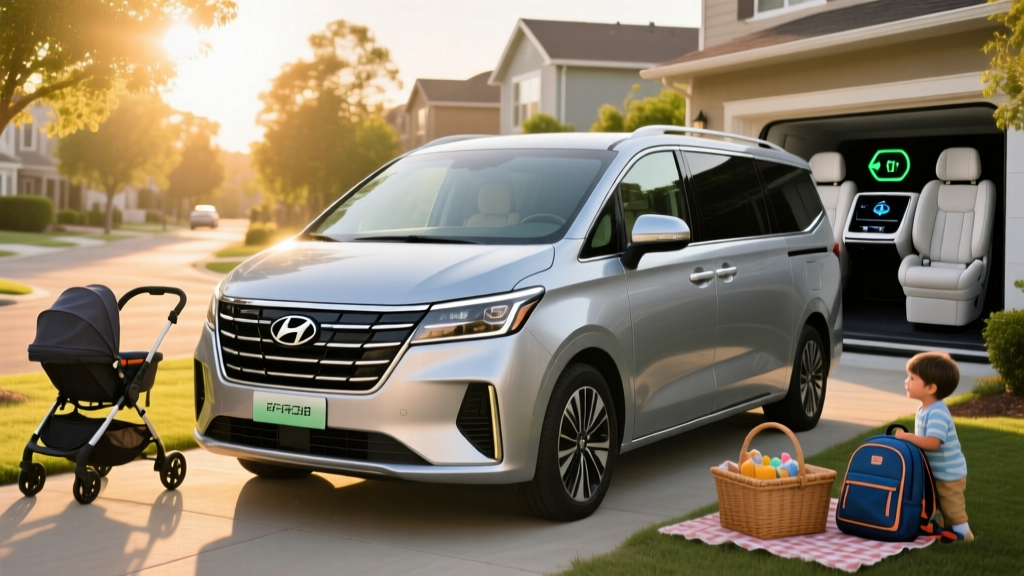
The 2026 Hyundai Staria Hybrid van targets families and fleet buyers who need serious cargo and passenger space but aren't ready to commit to a full battery-electric vehicle. With an EPA-estimated 31 MPG combined, three rows of seating for up to 11 passengers in some markets, and a starting MSRP around $39,500, the Staria Hybrid occupies a narrow but compelling niche: the fuel-efficient people-mover that never needs a plug.
Hyundai introduced the Staria globally in 2021 as a front-wheel-drive, unibody minivan platform, and the hybrid variant leverages the same 1.6-liter turbocharged Smartstream G4FT engine paired with an electric motor that powers the Tucson Hybrid and Santa Fe Hybrid. For 2026, the Staria Hybrid continues to be sold primarily in Asia-Pacific and select global markets — it is not officially available in the United States as of this writing, where Hyundai offers the Sienna-competing Palisade instead. That said, import availability, gray-market interest, and persistent U.S. demand for efficient minivans make this van worth a deep-dive for anyone watching Hyundai's global lineup.
Powertrain and Performance Specs
| Specification | Detail |
|---|---|
| Engine | 1.6L turbocharged inline-4 (Smartstream G4FT) |
| Electric Motor | 47.7 kW (64 hp) permanent-magnet synchronous |
| Combined System Output | 230 hp / 258 lb-ft torque |
| Transmission | 6-speed automatic (hybrid-optimized) |
| Drivetrain | Front-wheel drive (FWD); AWD available in select markets |
| Battery | 1.49 kWh lithium-ion (conventional HEV — not plug-in) |
| 0–100 km/h (0–62 mph) | ~9.5 seconds (estimated) |
| Towing Capacity | Up to 3,300 lbs (braked, market-dependent) |
The 1.6L turbo hybrid system is Hyundai's workhorse electrified powertrain. The engine itself produces roughly 180 hp, and the integrated electric motor adds 64 hp, for a combined system output of 230 hp. That's adequate for a loaded minivan, though don't expect the punchy acceleration of a Tucson PHEV. The small 1.49 kWh battery pack is sufficient for brief electric-only assist at low speeds (under 25 mph for short bursts), but this is a conventional hybrid (HEV), not a plug-in. You never plug it in — regenerative braking and the gasoline engine keep the battery charged.
Fuel Economy: EPA Estimates vs. Real-World MPG
| Driving Cycle | EPA-Estimated MPG | Real-World Expectation |
|---|---|---|
| City | 33 MPG | 34–37 MPG (hybrids excel in stop-and-go) |
| Highway | 29 MPG | 26–28 MPG (aerodynamic drag at 70+ mph) |
| Combined | 31 MPG | 29–33 MPG (depends on driving mix) |
Hybrid minivans tend to beat their EPA city estimates in real-world driving because regenerative braking recaptures energy during frequent stops. On a suburban school-run route with lots of stoplights, expect the Staria Hybrid to return 34–37 MPG. Highway driving is where the aerodynamic penalty of a tall, boxy van body shows — at sustained 75 mph speeds, 26–28 MPG is realistic.
For comparison, the Toyota Sienna Hybrid (the closest U.S.-market rival) achieves an EPA-estimated 36 MPG combined. The Staria Hybrid's slightly lower efficiency reflects its heavier curb weight (~4,700 lbs) and less aerodynamic profile compared to the Sienna's car-like crossover styling.
HEV vs. PHEV vs. Full EV: Which Minivan Is Right for You?
Conventional Hybrid (HEV)
Example: Hyundai Staria Hybrid, Toyota Sienna Hybrid
How it works: Gas engine + small electric motor + tiny battery. Never plugs in. Regenerative braking charges the battery.
Best for: Drivers without home charging access who want better fuel economy with zero lifestyle change.
Trade-off: No electric-only driving range. Still burns gas 100% of the time, just less of it.
Plug-In Hybrid (PHEV)
Example: Chrysler Pacifica PHEV, Kia Carnival PHEV (global)
How it works: Larger battery (typically 12–18 kWh) + gas engine. Plugs in for 25–40 miles of electric-only range, then operates as a hybrid.
Best for: Families with home charging who do short daily trips (school, groceries) but need gas-engine range for road trips.
Trade-off: Higher purchase price, needs a Level 2 home charger to maximize value.
Full EV (BEV)
Example: Kia EV9, Tesla Model X
How it works: Battery-only. No gas engine. 250–350 miles of range, charges at home or DC fast chargers.
Best for: Households with reliable home Level 2 charging and mostly predictable routes under 250 miles.
Trade-off: Long road trips require DC fast-charging stops. Higher upfront cost (offset by lower fuel/maintenance).
The Staria Hybrid is firmly in the HEV camp. If you want plug-in capability in a Hyundai minivan, you'd need to look at the global-market Kia Carnival PHEV (which shares a platform) or wait for Hyundai to potentially introduce a Staria PHEV variant. For U.S. buyers, the Chrysler Pacifica PHEV remains the only plug-in minivan option, offering 32 miles of electric-only range.
Pricing, Trim Levels, and Tax Credit Eligibility
| Trim | MSRP (Est.) | Key Features |
|---|---|---|
| Smart (Base) | $39,500 | 7-seat layout, 8-inch infotainment, Hyundai SmartSense ADAS |
| Premium | $43,200 | 10.25-inch dual screens, leather, power sliding doors, 9-seat option |
| Inspiration (Top) | $47,800 | Nappa leather, head-up display, digital key, 11-seat configuration (select markets) |
Pricing above reflects global-market MSRPs converted to USD. In markets like South Korea and Australia, the Staria Hybrid commands a roughly $3,000–$4,000 premium over the conventional 3.5L V6 gasoline Staria.
Federal Tax Credit: Does the Staria Hybrid Qualify?
The Hyundai Staria Hybrid is a conventional hybrid (HEV), not a plug-in vehicle. Under IRS §30D clean vehicle credit rules, only battery-electric vehicles (BEVs) and plug-in hybrids (PHEVs) with a minimum battery capacity of 7 kWh qualify for the federal tax credit. The Staria Hybrid's 1.49 kWh battery does not meet this threshold. No federal tax credit applies.
Additionally, the Staria is not sold through official U.S. Hyundai dealerships, which further disqualifies it from any U.S. point-of-sale incentive. Check your IRS §30D eligibility and consult a tax professional for your specific situation.
Reliability, Battery Warranty, and Long-Term Ownership
Hyundai covers the Staria Hybrid's lithium-ion battery pack under its standard hybrid component warranty: 8 years / 100,000 miles (whichever comes first) in most global markets, with some regions offering 10-year coverage. This warranty guarantees the battery will retain sufficient capacity to function as a hybrid system component — if it fails or degrades below a functional threshold, Hyundai replaces it at no cost.
Replacement cost out of warranty: Based on comparable Hyundai hybrid battery packs (Tucson Hybrid, Santa Fe Hybrid), a replacement 1.49 kWh HEV battery module is estimated at $2,000–$3,500 including labor. This is significantly less than a full EV battery replacement ($8,000–$20,000+) because the pack is small and simple.
Long-term degradation: Conventional hybrid batteries experience minimal degradation because they operate in a narrow state-of-charge window (typically 40–60% SoC). Hyundai's hybrid battery management system avoids deep discharge and full charge, which are the primary causes of lithium-ion wear. Expect the battery to last the life of the vehicle under normal use. According to Hyundai's warranty documentation, the hybrid system is designed for 150,000+ miles of service.
The 1.6L Smartstream turbo engine has been in Hyundai's lineup since 2020 and has proven reliable in the Tucson and Santa Fe families. The 6-speed automatic transmission is a conventional torque-converter unit — no CVT, no dual-clutch — which tends to be a reliability positive for long-term ownership. IIHS and NHTSA crash-test ratings for the Staria are limited because the van is not sold in the U.S., but global-market ANCAP and KNCAP results show strong structural performance.
Interior, Cargo, and Practical Features
The Staria's standout feature is its packaging. The unibody platform sits lower than a traditional body-on-frame van, giving it car-like entry height and a flat floor. In its most spacious configuration, the Staria offers:
- Cargo volume (behind 3rd row): 31.5 cu ft
- Cargo volume (all seats folded): 117.2 cu ft
- Seating configurations: 7, 9, or 11 seats depending on market and trim
- Sliding rear doors: Power-operated on Premium and above trims
- Infotainment: 8-inch (base) or 10.25-inch touchscreen with wireless Apple CarPlay/Android Auto
- ADAS suite: Hyundai SmartSense includes forward collision-avoidance assist, lane-keeping assist, blind-spot monitoring, rear cross-traffic collision-avoidance, and highway driving assist (SAE Level 2 — driver must remain engaged at all times)
The hybrid powertrain adds no compromise to cargo or passenger space — the battery pack is mounted under the front seats, preserving the flat floor and full interior volume that makes the Staria competitive with the Toyota Sienna and Kia Carnival.
Who Should Buy the Staria Hybrid — And Who Shouldn't
✓ Choose the Staria Hybrid If:
- You need a large, multi-passenger van with class-leading fuel economy
- You don't have access to home EV charging and don't want to plug in
- You drive a mix of city and highway with lots of stop-and-go
- You want proven Hyundai hybrid reliability with an 8-year battery warranty
- You're in a global market where the Staria is officially sold
✗ Look Elsewhere If:
- You're in the U.S. — the Staria isn't sold here; consider the Toyota Sienna Hybrid or Kia Carnival
- You want electric-only driving range — you need a PHEV or BEV for that
- You want to qualify for the §30D federal tax credit (up to $7,500 for qualifying BEVs/PHEVs)
- You prioritize driving dynamics — the Staria rides softly and isn't sporty
- You need AWD standard — it's only available in select global markets
Frequently Asked Questions
How many MPG does the Hyundai Staria Hybrid get?
The 2026 Hyundai Staria Hybrid achieves an EPA-estimated 33 MPG city, 29 MPG highway, and 31 MPG combined. In real-world city driving with frequent stops, owners report 34–37 MPG thanks to regenerative braking. Highway driving at sustained speeds drops to 26–28 MPG due to the van's boxy aerodynamics.
Does the Staria Hybrid need to be plugged in?
No. The Staria Hybrid is a conventional hybrid (HEV), not a plug-in hybrid (PHEV). Its small 1.49 kWh battery charges entirely through regenerative braking and the gasoline engine. You fuel it like any other gas vehicle — just with better mileage.
Is the Hyundai Staria Hybrid available in the United States?
As of 2026, Hyundai does not sell the Staria or Staria Hybrid through official U.S. dealerships. The closest U.S.-market alternatives are the Toyota Sienna Hybrid (36 MPG combined, ~$38,000), the Kia Carnival (gas-only, ~$34,000), and the Chrysler Pacifica PHEV (32 miles electric-only range, ~$50,000).
How long will the Staria Hybrid battery last, and what does replacement cost?
Hyundai warranties the hybrid battery for 8 years / 100,000 miles (some markets: 10 years). Because the HEV battery operates in a narrow charge window (40–60% SoC), degradation is minimal. Out-of-warranty replacement is estimated at $2,000–$3,500 — far less than a full EV battery because the pack is only 1.49 kWh.
Does the Hyundai Staria Hybrid qualify for any tax credit?
No. Under IRS §30D rules, only plug-in vehicles (BEVs and PHEVs with ≥7 kWh battery capacity) qualify for the federal clean vehicle tax credit. The Staria Hybrid's 1.49 kWh battery makes it ineligible. Some states may offer separate hybrid incentives — check your local department of revenue or energy office for details.
How does the Staria Hybrid compare to the Toyota Sienna Hybrid?
The Sienna Hybrid achieves 36 MPG combined (vs. the Staria's 31 MPG), is widely available in the U.S., and offers standard AWD. The Staria Hybrid counters with more flexible seating configurations (up to 11 seats in some markets), a more upright van-style cargo area, and Hyundai's longer warranty coverage. If you're in the U.S., the Sienna is the practical choice. Globally, the Staria offers a more van-like interior.