Quick Verdict: The Sonata PHEV Bridges the Gap
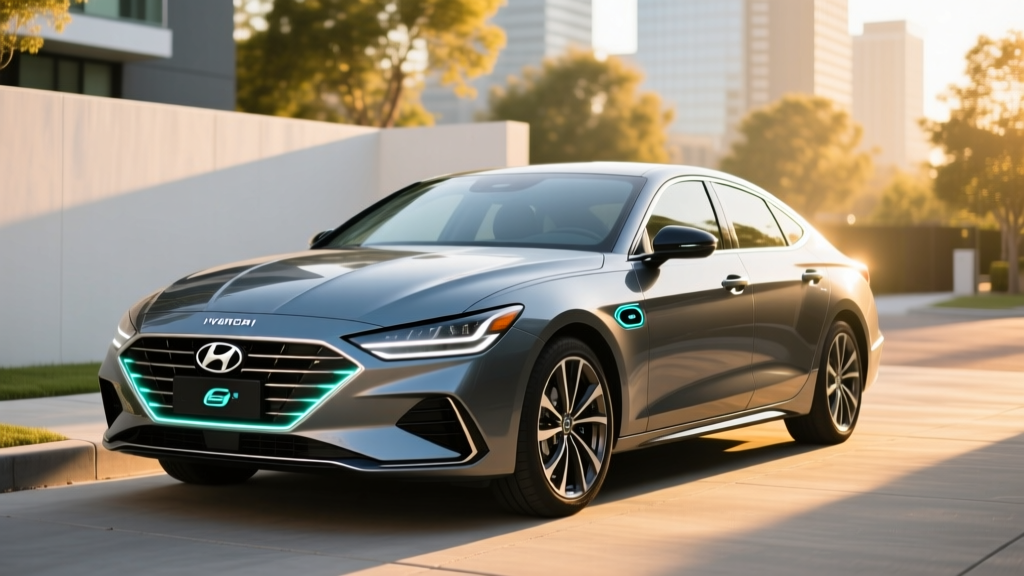
The 2026 Hyundai Sonata Plug-In Hybrid occupies a specific and increasingly rare niche in the midsize sedan segment: a plug-in hybrid that delivers genuine electric-only commuting range without sacrificing the long-distance flexibility of a gasoline engine. With an EPA-rated 32 miles of electric-only driving, a combined 204 horsepower from its hybrid powertrain, and 42 MPG combined once the battery depletes, the Sonata PHEV targets buyers who want EV-like daily driving but aren't ready to commit to a full battery-electric vehicle.
Hyundai has continued offering the plug-in variant of the Sonata alongside the conventional Sonata Hybrid (HEV), giving shoppers two distinct electrification paths in the same body. This guide breaks down exactly what the 2026 Sonata Plug-In Hybrid delivers — and where it falls short — so you can decide if it's the right fit.
HEV vs PHEV: Understanding the Two Sonata Hybrids
Before diving into specs, it's essential to distinguish the two Sonata hybrid models, because they serve different use cases and have different charging requirements.
| Feature | Sonata Hybrid (HEV) | Sonata Plug-In Hybrid (PHEV) |
|---|---|---|
| Plug-in charging required? | No — charges via regenerative braking and engine | Yes — plug in to access full electric-only range |
| Battery size | 1.6 kWh (small buffer) | 13.8 kWh usable |
| Electric-only range | None (EV assist only, ~1 mile at low speed) | 32 miles EPA |
| EPA combined MPG (gas mode) | 47 MPG | 42 MPG |
| Combined horsepower | 192 HP | 204 HP |
| Starting MSRP (2026) | ~$30,250 | ~$36,250 |
| Federal tax credit eligible? | No | Up to $3,750 (see details below) |
The conventional HEV is a "set it and forget it" hybrid — you never plug it in, and the small battery recovers energy through regenerative braking and the gasoline engine. The PHEV's larger 13.8 kWh battery gives you a meaningful electric-only commute, but you'll want access to a Level 2 home charger or workplace outlet to get the most value from it. If you can't plug in regularly, the PHEV's $6,000 price premium over the HEV is harder to justify, since you'd essentially be driving a heavier, less efficient conventional hybrid.
Electric-Only Range, Total Range, and Charging
The 2026 Sonata PHEV's 13.8 kWh battery pack (lithium-ion polymer, NMC chemistry) delivers an EPA-rated 32 miles of electric-only range. In real-world testing, expect closer to 26–30 miles on a mixed suburban commute with moderate climate control use. In cold weather (below 30°F), that figure can drop to approximately 20–24 miles as the battery's internal resistance increases and cabin heating draws additional power.
EPA electric-only range: 32 miles
Real-world expectation: 26–30 miles (mild weather), 20–24 miles (cold weather below 30°F)
Total combined range (electric + gas): ~550 miles
Once the battery depletes, the Sonata PHEV seamlessly transitions to hybrid mode, where the 2.0-liter four-cylinder engine and electric motor work together. The gasoline tank holds 13.7 gallons, and at 42 MPG combined, you'll cover roughly 520 additional miles before refueling — giving a total combined range of approximately 550 miles.
Charging Speed and Connectors
The Sonata PHEV uses a standard J1772 connector for AC charging. It does not support DC fast charging — a common limitation among PHEVs due to their smaller battery packs.
| Charging Method | Power | 0–100% Time | Notes |
|---|---|---|---|
| Level 1 (120V household outlet) | ~1.4 kW | ~9 hours | Convenient overnight option if daily drive is under 30 miles |
| Level 2 (240V, 32A) | ~3.3 kW (vehicle-limited) | ~4.5 hours | Recommended for daily full charges; onboard charger caps at 3.3 kW |
| DC Fast Charging | Not supported | N/A | PHEV battery too small for DCFC infrastructure |
A critical detail: the Sonata PHEV's onboard charger is limited to 3.3 kW, even when connected to a higher-capacity Level 2 station. This means a full charge takes approximately 4.5 hours regardless of whether your home charger is rated for 7.2 kW or 11.5 kW. For most owners, this is perfectly adequate — plug in when you get home, and the battery is full by morning. But it also means you can't top up quickly at a public Level 2 charger during a midday errand.
Fuel Economy: EPA Ratings vs. Real-World MPG
According to fueleconomy.gov, the 2026 Sonata Plug-In Hybrid posts the following EPA numbers:
| Driving Mode | City | Highway | Combined |
|---|---|---|---|
| Charge-depleting (electric + gas blended) | — | — | 130 MPGe |
| Charge-sustaining (hybrid mode, battery depleted) | 40 MPG | 44 MPG | 42 MPG |
The 42 MPG combined figure in hybrid mode is a strong result for a midsize sedan, though it trails the conventional Sonata Hybrid's 47 MPG combined. The difference comes down to weight: the PHEV carries roughly 300 additional pounds from its larger battery pack and associated power electronics.
Real-world MPG observations: Like most hybrids, the Sonata PHEV tends to exceed its EPA city rating in stop-and-go traffic, where regenerative braking recovers the most energy. Owners frequently report 44–48 MPG in city driving once the battery is depleted. Highway cruising at 75+ mph, however, often yields 38–40 MPG, slightly below the EPA highway estimate. If your commute is predominantly highway, expect the combined real-world figure to land around 39–41 MPG in hybrid mode.
For context, a comparable gasoline-only midsize sedan (such as the Toyota Camry 2.5L) averages about 32 MPG combined. The Sonata PHEV saves roughly 2.4 gallons per 100 miles in hybrid mode alone — and eliminates gasoline entirely for the first 32 miles of each trip when fully charged.
Powertrain and Performance
The 2026 Sonata PHEV pairs a 2.0-liter Atkinson-cycle four-cylinder gasoline engine with a permanent-magnet synchronous electric motor integrated into the six-speed automatic transmission. Here's the full breakdown:
| Specification | Value |
|---|---|
| Engine | 2.0L Atkinson-cycle I4 |
| Engine horsepower | 150 HP @ 6,000 RPM |
| Electric motor output | 50 kW (67 HP) |
| Combined system output | 204 HP / 271 lb-ft torque |
| Transmission | 6-speed automatic (no CVT) |
| 0–60 mph | ~7.5 seconds |
| Drivetrain | Front-wheel drive |
| Battery capacity (usable) | 13.8 kWh (NMC lithium-ion polymer) |
| Curb weight | ~3,780 lbs |
| Cargo volume | 13.3 cu ft (trunk, reduced slightly by battery placement) |
The six-speed automatic is a deliberate choice by Hyundai over the continuously variable transmissions (CVTs) used by many competitors. The result is more natural-feeling acceleration without the "rubber band" drone common to CVT hybrids. Acceleration is adequate for merging and passing — the 7.5-second 0–60 time is unremarkable but perfectly sufficient for a comfort-oriented sedan.
One practical note: the PHEV's battery pack is mounted behind the rear seat, which reduces trunk volume by about 2.7 cubic feet compared to the gasoline Sonata. At 13.3 cu ft, the trunk remains usable for weekly groceries and luggage but falls short of the 16.0 cu ft you'd get in the non-hybrid model. The rear seats do not fold flat due to the battery placement, which limits cargo flexibility for longer items.
Pricing, Tax Credits, and Ownership Costs
The 2026 Hyundai Sonata Plug-In Hybrid is offered in a single well-equipped SEL trim (Hyundai has streamlined PHEV availability in recent model years):
| Trim | MSRP | Key Features |
|---|---|---|
| SEL | $36,250 | Leather seats, 12.3" touchscreen, wireless CarPlay/Android Auto, Hyundai SmartSense ADAS suite, heated front seats, dual-zone climate |
The $36,250 starting price represents a ~$6,000 premium over the conventional Sonata Hybrid SEL. The question is whether the electric-only range and potential fuel savings justify that gap.
Federal Tax Credit: §30D Eligibility
Under current IRS §30D rules for 2026, the Sonata Plug-In Hybrid may qualify for a partial federal tax credit of up to $3,750, depending on battery component and critical mineral sourcing compliance. The PHEV qualifies because its 13.8 kWh battery exceeds the minimum 7 kWh threshold for sedans.
§30D eligibility checklist (2026):
- ✅ Battery capacity: 13.8 kWh (exceeds 7 kWh minimum)
- ✅ MSRP cap: $36,250 (under $55,000 sedan limit)
- ⚠️ Buyer income cap: Modified AGI must not exceed $150,000 (single) / $300,000 (joint)
- ⚠️ Battery sourcing: Credit split into $3,750 for critical minerals + $3,750 for battery components — Sonata PHEV currently meets one of two prongs for a partial $3,750 credit
- ✅ Point-of-sale transfer: Available — you can transfer the credit to the dealer for an upfront price reduction
Important caveat: Tax credit eligibility depends on your individual tax situation and the specific model year's battery sourcing documentation. Always verify current eligibility with a tax professional and consult the IRS Clean Vehicle Credit page before assuming the full credit amount. State and local incentives (such as California's CVRP or utility rebates) may stack on top but vary by jurisdiction — check your state energy office or utility provider for specifics.
Battery Warranty, Reliability, and Replacement Cost
Hybrid battery longevity remains a top concern for buyers transitioning from conventional vehicles. Hyundai addresses this with one of the strongest warranty packages in the segment:
Hybrid battery warranty: 10 years / 100,000 miles (whichever comes first)
Capacity retention guarantee: Battery warranted against failure to hold at least 70% of original capacity during the warranty period
Powertrain warranty: 10 years / 100,000 miles
Bumper-to-bumper: 5 years / 60,000 miles
The 10-year/100,000-mile hybrid battery warranty applies to the original owner and is transferable to subsequent owners (though it may reduce to 5 years/60,000 miles upon transfer — verify with your dealer). This is among the longest hybrid battery warranties available, matching Toyota's coverage and exceeding most competitors.
Reliability track record: Hyundai's hybrid systems have proven durable in real-world use. The Sonata PHEV's powertrain has been in production (with incremental updates) since the 2016 model year, meaning most common issues have been identified and resolved. The NMC battery chemistry used in the Sonata PHEV has demonstrated degradation rates of approximately 1.5–2.5% per year in moderate climates, meaning a 10-year-old pack might retain 75–85% of its original capacity — well within the warranty threshold.
Battery replacement cost: If the battery does require replacement outside warranty, expect a cost in the range of $4,000–$6,500 for the pack itself, plus $500–$1,000 in labor, based on current Hyundai parts pricing and independent hybrid shop estimates. This is a significant expense, but the 10-year warranty and proven degradation curves suggest most owners will never face it.
Who Should Choose the Sonata PHEV vs. a Full EV or Gas Car?
The Sonata Plug-In Hybrid isn't for everyone, but it fills a specific gap in the market. Here's a decision framework to help you evaluate:
Choose the Sonata PHEV if:
- Your daily commute is under 35 miles round-trip and you have home or workplace charging access
- You take regular road trips exceeding 200 miles and don't want to plan around DC fast-charging infrastructure
- You live in an apartment or area where reliable public EV charging is limited, but you can install a 120V or 240V outlet at home
- You want to reduce gasoline consumption significantly without the upfront cost of a long-range EV
Choose the conventional Sonata Hybrid (HEV) if:
- You cannot plug in at home or work
- Your budget is tighter and the $6,000 PHEV premium doesn't pencil out against fuel savings
- You want maximum MPG in hybrid mode (47 vs 42 combined) and don't need electric-only driving
Choose a full EV (such as the Hyundai Ioniq 6 or Tesla Model 3) if:
- You have reliable Level 2 home charging and access to DC fast-charging networks for road trips
- You want zero tailpipe emissions and minimal maintenance (no oil changes, fewer moving parts)
- You're eligible for the full $7,500 federal tax credit on a qualifying BEV, which can make the total cost competitive
Pros
- 32 miles of genuine electric-only range covers most commutes
- Strong 10-year/100,000-mile hybrid battery warranty
- Conventional 6-speed automatic avoids CVT drone
- 550+ miles total range eliminates road-trip charging anxiety
- Qualifies for partial $3,750 federal tax credit (subject to eligibility)
- Comprehensive Hyundai SmartSense ADAS suite standard
Cons
- Only 3.3 kW onboard charger — no fast top-up capability
- Trunk space reduced to 13.3 cu ft; rear seats don't fold flat
- $6,000 premium over the conventional Sonata Hybrid
- No DC fast charging support
- Electric-only range drops significantly in cold weather
- Single trim level limits customization options
Frequently Asked Questions
How many MPG does the Sonata Plug-In Hybrid get?
In hybrid mode (battery depleted), the 2026 Sonata PHEV achieves 40 city / 44 highway / 42 combined MPG per the EPA. Real-world city driving often exceeds the EPA estimate, reaching 44–48 MPG, while sustained highway driving at 75+ mph may return 38–40 MPG. During the first 32 miles on a full charge, the vehicle operates primarily on electricity, achieving 130 MPGe.
How far can the Sonata PHEV go on electric only?
The EPA rates the 2026 Sonata PHEV at 32 miles of electric-only range. In practice, expect 26–30 miles in mild weather and 20–24 miles in freezing temperatures. Once the battery is depleted, the gasoline engine engages seamlessly and you continue driving in hybrid mode with no interruption.
Does the Sonata PHEV qualify for a federal tax credit?
The 2026 Sonata Plug-In Hybrid may qualify for a partial federal tax credit of up to $3,750 under IRS §30D rules, subject to battery sourcing requirements, buyer income limits ($150,000 single / $300,000 joint MAGI), and the $55,000 MSRP cap for sedans. The credit can be transferred to the dealer at point of sale for an upfront price reduction. Always verify eligibility with a tax professional, as sourcing requirements change annually.
Is the Sonata PHEV reliable, and what does battery replacement cost?
Hyundai's hybrid systems have a strong reliability track record, and the Sonata PHEV's powertrain has been refined over multiple model years. The hybrid battery is warranted for 10 years/100,000 miles against capacity loss below 70%. Out-of-warranty battery replacement costs approximately $4,000–$6,500 for the pack plus $500–$1,000 in labor, though most owners will never need this service based on observed degradation rates of 1.5–2.5% per year.
Do I need to plug in the Sonata PHEV, or does it charge itself?
Unlike the conventional Sonata Hybrid (which charges its small battery solely through regenerative braking and the engine), the Sonata PHEV must be plugged in to access its full 32-mile electric-only range. If you never plug it in, it will still operate as a conventional hybrid at 42 MPG combined, but you'll miss the primary benefit of the PHEV's larger battery. A standard 120V outlet is sufficient for overnight charging; a 240V Level 2 charger reduces charge time to about 4.5 hours.
How does the Sonata PHEV compare to the Toyota Prius Prime?
The Toyota Prius Prime offers a longer electric-only range (44 miles EPA) and higher combined MPGe, but it's a compact hatchback with less rear-seat and trunk space than the Sonata PHEV. The Sonata delivers a more spacious, comfort-oriented midsize sedan experience with a conventional trunk, while the Prius Prime prioritizes maximum efficiency in a smaller footprint. Your choice depends on whether you value cabin space and ride comfort (Sonata) or maximum electric range and fuel economy (Prius Prime).