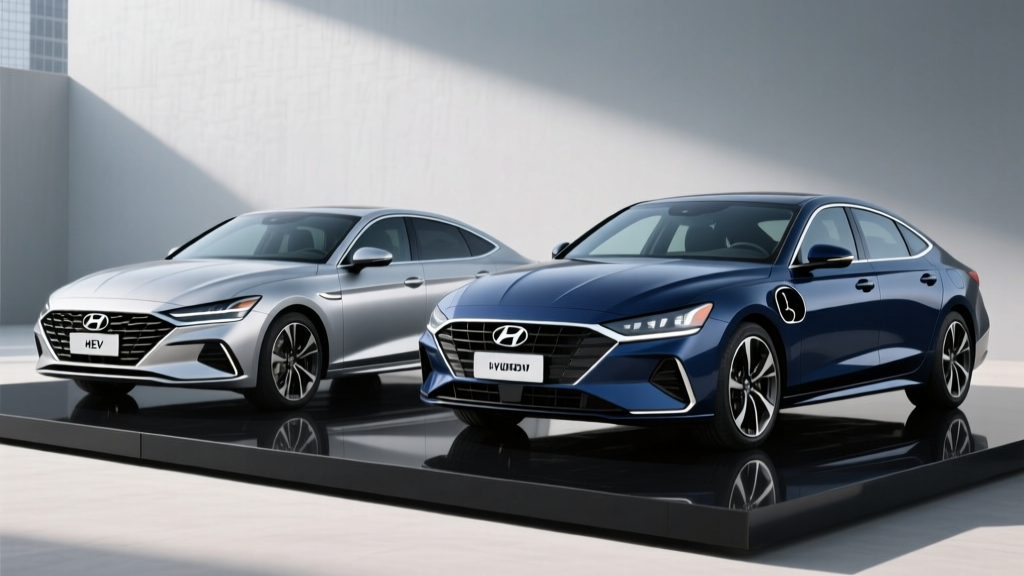
If you're searching for a Hyundai hybrid sedan, the 2026 Sonata lineup gives you two distinct paths: the conventional Sonata Hybrid (HEV) that never needs a plug, and the Sonata Plug-In Hybrid (PHEV) that can commute on electricity alone before the gas engine kicks in. Both share the same midsize-sedan bones, but their powertrains, fuel-economy profiles, and ownership costs diverge sharply. This guide breaks down the exact EPA numbers, real-world expectations, battery warranties, and tax-credit eligibility so you can pick the right one.
Sonata HEV vs Sonata PHEV: What's the Difference?
Before comparing specs, it's critical to understand the two hybrid architectures Hyundai offers in the Sonata:
Conventional Hybrid (HEV)
- No plug required. The battery recharges via regenerative braking and the gas engine.
- Small battery (~1.6 kWh) — you cannot drive on electric power alone for meaningful distances.
- Optimized for maximum MPG in all conditions.
- Lower purchase price, no charging infrastructure needed.
Plug-In Hybrid (PHEV)
- Plugs in to charge. A larger battery provides 30+ miles of electric-only driving.
- Bigger battery (~11.2 kWh usable) — covers most daily commutes without burning gas.
- Once the battery depletes, it operates as a conventional hybrid.
- Higher purchase price, but eligible for federal tax credits and lower fuel costs if you charge regularly.
If you can charge at home and your commute is under 30 miles round-trip, the PHEV can function as a daily EV with a gas-engine safety net for road trips. If you lack reliable charging access or want the simplest ownership experience, the HEV is the pragmatic pick.
EPA Fuel Economy: How Many MPG Does the Hyundai Hybrid Sedan Get?
| Model | City MPG | Highway MPG | Combined MPG | Combined MPGe (PHEV EV mode) |
|---|---|---|---|---|
| Sonata Hybrid Blue | 50 | 54 | 52 | — |
| Sonata Hybrid SEL/Limited | 44 | 51 | 47 | — |
| Sonata PHEV (all trims) | 35 MPG combined (hybrid mode, battery depleted) | 104 MPGe | ||
Source: fueleconomy.gov — verify trim-specific numbers as EPA data updates.
Real-World MPG vs EPA Sticker
HEV: Hyundai's hybrid system excels in city driving where regenerative braking recaptures energy frequently. Expect the Sonata Hybrid Blue to deliver 50–55 MPG in city traffic — sometimes exceeding the EPA estimate. Highway cruising at 75+ mph will drop that to the low-to-mid 40s, as the 2.0-liter engine works harder without regen assistance. In cold weather (below 30°F), expect a 5–10% reduction as the engine runs more often for cabin heat.
PHEV: On a full charge, the PHEV can operate in EV mode for its full electric range with zero gas consumption. Once depleted, real-world hybrid-mode fuel economy hovers around 33–37 MPG combined — close to the EPA's 35 MPG figure but sensitive to driving style and terrain.
Electric-Only Range and Total Range (PHEV)
The 2026 Sonata Plug-In Hybrid delivers an EPA-rated 33 miles of electric-only range on a full charge. For context, the average American one-way commute is roughly 16 miles, meaning many PHEV owners can complete daily round-trips entirely on electricity — never starting the gas engine on weekdays.
| Electric-only range (EPA) | 33 miles |
| Total combined range (EV + gas) | ~550 miles |
| Usable battery capacity | 11.2 kWh |
| Battery chemistry | Lithium-ion polymer (NMC) |
| Level 1 charge time (120V, 12A) | ~9 hours (0–100%) |
| Level 2 charge time (240V, 32A) | ~2.5 hours (0–100%) |
| DC fast charging | Not supported |
| Charge port | J1772 (Level 2) |
Important: The Sonata PHEV does not support DC fast charging — this is typical for plug-in hybrids, whose smaller batteries don't justify the cost and weight of DC hardware. Level 2 home charging is the practical standard: plug in when you get home, wake up to a full battery every morning. A standard 120V outlet (Level 1) works but takes overnight — plan accordingly if you lack a 240V circuit.
Real-world electric range caveat: In mild weather (55–75°F), expect 30–35 miles on a charge. In winter (below 30°F), cabin heating and battery inefficiency reduce that to 22–27 miles. Aggressive acceleration and high-speed highway driving also compress EV range.
Powertrain Specs: Horsepower and Drivetrain
| Spec | Sonata HEV | Sonata PHEV |
|---|---|---|
| Engine | 2.0L inline-4 GDI | 2.0L inline-4 GDI |
| Engine horsepower | 150 hp | 150 hp |
| Electric motor output | 51 hp (38 kW) | 83 hp (62 kW) |
| Combined system output | 192 hp | 202 hp |
| Transmission | 6-speed automatic | 6-speed automatic |
| Drivetrain | FWD | FWD |
| 0–60 mph (est.) | ~7.8 sec | ~7.2 sec |
Neither the HEV nor PHEV is a performance sedan — the emphasis is efficiency. That said, the PHEV's larger electric motor gives it a slight edge in responsiveness off the line, particularly in EV mode where instant torque makes city driving feel punchy. Both use a conventional 6-speed automatic rather than a CVT, which means more natural-feeling acceleration without the drone typical of continuously variable transmissions.
Pricing, Trims, and Tax Credit Eligibility
| Model / Trim | Base MSRP |
|---|---|
| Sonata Hybrid Blue | $30,250 |
| Sonata Hybrid SEL | $32,400 |
| Sonata Hybrid Limited | $37,100 |
| Sonata PHEV SEL | $36,500 |
| Sonata PHEV Limited | $40,200 |
Prices include destination. Verify current MSRP on Hyundai's official site as trims and pricing adjust throughout the model year.
Does the Hyundai Hybrid Sedan Qualify for a Federal Tax Credit?
- Sonata HEV (conventional hybrid): Does not qualify for the federal §30D clean vehicle credit. This credit applies only to plug-in vehicles (BEVs and PHEVs) with sufficient battery capacity.
- Sonata PHEV: May qualify for up to $3,750–$7,500 under IRS §30D, depending on battery-component and critical-minerals sourcing requirements. The PHEV's 11.2 kWh battery meets the minimum 7 kWh threshold.
- Buyer income caps (2026): Modified AGI must not exceed $150,000 (single), $225,000 (head of household), or $300,000 (joint).
- MSRP cap: The Sonata PHEV falls under the $55,000 sedan cap — all trims qualify on price.
- Point-of-sale transfer: You can apply the credit as an immediate discount at the dealership rather than waiting for tax filing.
- State incentives: Some states (CA, CO, NY, MA) offer additional rebates for PHEVs. Check your state energy office for current programs.
Credit rules are complex and change frequently. Consult the IRS clean vehicle credit page and a tax professional before purchasing.
Battery Warranty, Reliability, and Replacement Cost
Hyundai Hybrid Battery Warranty
| Hybrid/EV battery warranty | 10 years / 100,000 miles |
| Powertrain warranty | 10 years / 100,000 miles |
| Basic vehicle warranty | 5 years / 60,000 miles |
| Capacity retention threshold | Replacement if battery drops below ~70% of original capacity within warranty period |
Hyundai's 10-year/100,000-mile hybrid battery warranty is among the best in the industry, matching or exceeding Toyota, Honda, and most competitors. The lithium-ion polymer packs in both the HEV and PHEV are designed for long cycle life — the HEV's small 1.6 kWh battery undergoes shallow charge-discharge cycles that minimize degradation, while the PHEV's 11.2 kWh pack has more thermal management sophistication.
Is the Sonata Hybrid Reliable?
Hyundai's hybrid powertrain has matured significantly since its first Sonata Hybrid in 2011. The current-generation system uses a proven 2.0L naturally aspirated engine paired with a well-tested 6-speed automatic — no experimental components. The IIHS typically rates the Sonata highly for crash safety, and Hyundai's hybrid-specific warranty coverage reduces long-term financial risk.
Battery Replacement Cost (Out of Warranty)
If the hybrid battery fails after the 10-year warranty window, expect:
- Sonata HEV battery replacement: $2,000–$3,500 (smaller battery, simpler pack)
- Sonata PHEV battery replacement: $4,500–$7,000 (larger pack with more cells and thermal hardware)
These are ballpark figures based on current Hyundai hybrid battery pricing and independent shop labor rates. Dealer pricing will skew higher. In practice, most Hyundai hybrid batteries outlast 150,000+ miles with minimal degradation — replacement is uncommon before the car's end of life.
Who Should Buy the Hyundai Hybrid Sedan?
Sonata HEV — Choose This If:
- You want maximum MPG without changing your fueling habits
- You don't have access to home or workplace charging
- You want the lowest upfront price in a midsize hybrid sedan
- Your driving is mostly city and suburban (where the HEV excels)
- You plan to keep the car 8+ years (warranty coverage is excellent)
Sonata PHEV — Choose This If:
- You can install a Level 2 charger at home (240V circuit)
- Your daily round-trip commute is under 33 miles
- You want EV-like daily driving with gas-engine freedom for road trips
- You qualify for the federal §30D tax credit (effectively lowering price by $3,750–$7,500)
- You want to reduce gas consumption without full EV range anxiety
Hybrid vs PHEV vs Full EV — Which Fits You?
| Factor | Sonata HEV | Sonata PHEV | Full EV (e.g., Ioniq 6) |
|---|---|---|---|
| Home charging needed? | No | Recommended | Essential |
| Daily fuel cost (30-mi commute) | ~$2.50 gas | ~$0.90 electricity | ~$0.90 electricity |
| Road-trip convenience | Gas stations everywhere | Gas stations everywhere | Requires DC fast-charging planning |
| Federal tax credit | None | Up to $7,500 | Up to $7,500 |
| Maintenance cost | Low (oil changes, less brake wear) | Low–moderate | Very low (no oil, minimal brakes) |
| Best for | No-charging-access buyers | Home-charging commuters | Home-charging, EV-ready buyers |
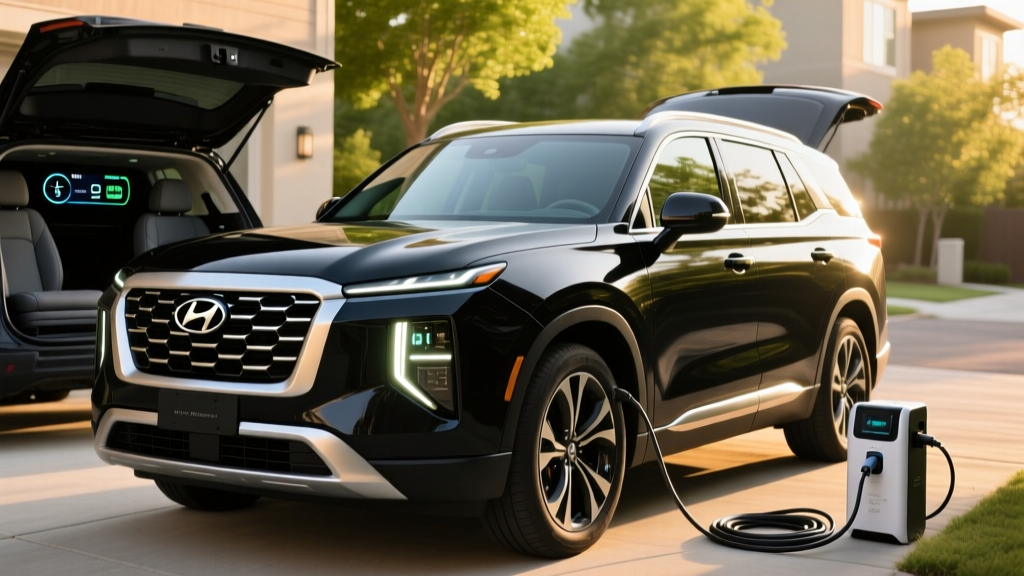
Charging the PHEV: Home Setup and Costs
| Level | Power (kW) | Time (0–100%) | Miles of EV Range per Hour |
|---|---|---|---|
| Level 1 (120V, 12A) | ~1.4 kW | ~9 hours | ~4 miles/hr |
| Level 2 (240V, 32A) | ~7.2 kW | ~2.5 hours | ~14 miles/hr |
| DC Fast Charge | N/A — not supported | N/A | N/A |
Cost to charge at home (Level 2): At the US average electricity rate of ~$0.16/kWh, fully charging the 11.2 kWh battery costs roughly $1.80. That's about $0.055 per electric mile — dramatically cheaper than the HEV's ~$0.08/mile on gas or a conventional sedan's ~$0.14/mile.
Home installation: A Level 2 home charger requires a dedicated 240V circuit (NEMA 14-50 or hardwired). Expect $500–$1,500 for the charger unit and $500–$2,000 for electrician installation, depending on panel capacity and distance from the breaker box. If your electrical panel needs an upgrade to 200A, add $1,500–$3,000. The PHEV's modest 7.2 kW onboard charger means you don't need the most expensive Level 2 unit — a basic 32A charger is sufficient.
Hyundai Hybrid Sedan FAQ
Does the Hyundai Sonata Hybrid need to be plugged in?
No. The conventional Sonata Hybrid (HEV) charges its own battery through regenerative braking and the gas engine. You fuel it like any other car — at a gas station. Only the Sonata Plug-In Hybrid (PHEV) benefits from plugging in.
How long does the Hyundai hybrid battery last?
Hyundai covers the hybrid battery for 10 years or 100,000 miles, whichever comes first. In real-world use, Hyundai hybrid batteries routinely last 150,000–200,000+ miles before significant degradation. The 10-year warranty provides strong protection against premature failure.
What happens if the hybrid battery dies while driving?
If the hybrid battery fails completely, the car will alert you and enter a limp mode that allows you to drive to a service location. However, catastrophic battery failure while driving is extremely rare. More commonly, the battery gradually loses capacity over many years, reducing fuel economy slightly rather than causing a sudden stop.
Is the Sonata Hybrid good for highway driving?
It's competent but not optimized for it. The Sonata Hybrid delivers its best MPG in city traffic (50+ in the Blue trim). At sustained 75–80 mph highway speeds, expect 42–48 MPG depending on trim, terrain, and temperature. A diesel or efficient gas sedan might match highway MPG, but the Hybrid's city advantage makes its combined number far superior.
Can the Sonata PHEV drive on electricity alone at highway speeds?
Yes. The PHEV can operate in pure EV mode at speeds up to approximately 75 mph, though electric range decreases significantly at highway speeds due to aerodynamic drag. For maximum EV range, use it on lower-speed commutes.
Does the Sonata Hybrid qualify for any incentives?
The conventional HEV does not qualify for the federal §30D clean vehicle credit. The PHEV may qualify for $3,750–$7,500 depending on battery sourcing rules and your income. Some states and utilities offer additional rebates for PHEVs — check AFDC's incentive database for your area.
How does the Sonata Hybrid compare to the Toyota Camry Hybrid?
The Camry Hybrid is the Sonata Hybrid's primary rival. The Camry HEV rates at 52 MPG combined (LE trim), essentially matching the Sonata Hybrid Blue. The Sonata offers a more tech-forward interior with Hyundai's larger infotainment options, while the Camry has a longer track record for hybrid reliability perception. Both carry 10-year/100,000-mile hybrid battery warranties. The PHEV is where Hyundai differentiates — Toyota does not currently offer a Camry Plug-In Hybrid in the US market.