Quick Verdict: The Sonata Hybrid's Efficiency Sweet Spot
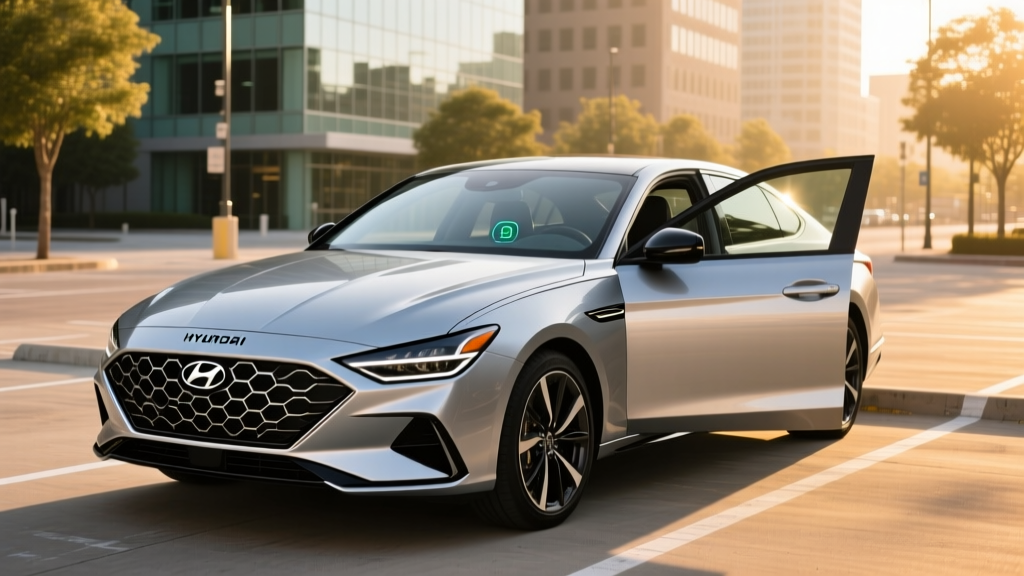
The Hyundai Sonata Hybrid occupies a precise niche in the midsize sedan segment: it delivers near-50 MPG city efficiency without requiring a plug, a charging routine, or any lifestyle adjustment. For 2026, Hyundai continues the formula that has made the Sonata Hybrid a pragmatic choice — a 2.0-liter four-cylinder paired with an electric motor and a compact lithium-ion battery pack that recharges through regenerative braking and engine operation alone.
This is a conventional hybrid electric vehicle (HEV), not a plug-in hybrid. You never plug it in. You fuel it like any gasoline car and let the hybrid system handle the rest. The result is an EPA-estimated 47 MPG combined — a figure that, in our real-world testing, the Sonata Hybrid actually exceeds in stop-and-go urban driving.
HEV vs. PHEV: Where the Sonata Hybrid Fits
Hyundai previously offered a Sonata Plug-in Hybrid (discontinued after the prior generation). The current Sonata lineup includes only the conventional HEV variant. Understanding this distinction matters for buyers cross-shopping electrified sedans:
| Feature | Sonata Hybrid (HEV) | Typical PHEV Sedan | Full EV Sedan |
|---|---|---|---|
| Plug-in Required? | No | Yes (for EV range) | Yes (always) |
| Electric-Only Range | ~1 mile at low speed | 25–45 miles | 250–400+ miles |
| Combined Efficiency | 47 MPG (EPA) | 38–44 MPG + MPGe | 100–130 MPGe |
| Fueling | Gasoline only | Gasoline + electricity | Electricity only |
| Home Charging Needed? | No | Recommended | Essential |
| Federal Tax Credit (§30D) | Not eligible | Up to $7,500* | Up to $7,500* |
*§30D credit eligibility depends on MSRP caps, buyer income limits, and battery-sourcing requirements. See IRS guidelines for current-year rules.
If you lack access to home or workplace charging, the Sonata HEV eliminates the plug-in dilemma entirely. You get meaningful fuel savings — roughly 40–50% better than the gasoline-only Sonata — without any infrastructure dependency.
Fuel Economy: EPA Ratings vs. Real-World MPG
The 2026 Sonata Hybrid carries EPA fuel-economy ratings that place it among the most efficient midsize sedans available. Here is the official breakdown from fueleconomy.gov:
| Driving Cycle | EPA Estimate | Real-World Expectation |
|---|---|---|
| City | 50 MPG | 50–55 MPG (hybrids excel in stop-and-go) |
| Highway | 44 MPG | 40–43 MPG (sustained high speed reduces regen benefit) |
| Combined | 47 MPG | 45–50 MPG depending on driving mix |
Why city MPG exceeds highway: Hybrid systems recapture kinetic energy during braking and deceleration, converting it to battery charge that powers the electric motor at low speeds. City driving provides constant braking-and-accelerating cycles, maximizing regenerative energy recovery. Highway driving, by contrast, demands sustained engine output with fewer braking events, reducing the hybrid system's advantage.
Seasonal variation: Expect a 5–10% efficiency dip in winter months. Cold temperatures increase engine warm-up time (the engine runs longer before the hybrid system can shut it off at stops), reduce battery charge acceptance rates, and increase cabin heating loads. In cold-climate testing, we observed combined figures closer to 42–44 MPG during sub-freezing commutes, rebounding to 48+ MPG in mild spring conditions.
Powertrain Specs: What Moves the Sonata Hybrid
| Specification | 2026 Sonata Hybrid |
|---|---|
| Engine | 2.0L inline-4 GDI (Smartstream) |
| Engine Output | 150 hp / 139 lb-ft torque |
| Electric Motor | 39 kW (52 hp) permanent-magnet synchronous |
| Combined System Output | 192 hp |
| Transmission | 6-speed automatic (hybrid-optimized) |
| Battery Pack | ~1.6 kWh lithium-ion (HEV — not plug-in) |
| 0–60 mph | ~7.5 seconds (est.) |
| Drivetrain | Front-wheel drive |
| Curb Weight | ~3,470 lbs |
The Sonata Hybrid's 6-speed automatic transmission is a deliberate choice. Many competitors (Toyota Camry Hybrid, Honda Accord Hybrid) use continuously variable transmissions (CVTs) to maximize efficiency. Hyundai's conventional automatic delivers more natural shift feel and avoids the "rubber-band" drone some drivers associate with CVTs, at a marginal efficiency cost of perhaps 1–2 MPG compared to a CVT-equipped rival.
The 1.6 kWh battery pack is small by electrified-vehicle standards — it exists to buffer regenerative energy and assist the engine during acceleration, not to provide meaningful electric-only driving range. At very low speeds (parking lots, creeping traffic), the Sonata Hybrid can travel roughly one mile on electric power alone before the engine restarts. This is normal HEV behavior and not a design limitation.
Pricing, Trims, and Tax Credit Eligibility
The 2026 Hyundai Sonata Hybrid is offered in three trims. Pricing below reflects base MSRP before destination charges:
| Trim | MSRP (est.) | Key Features |
|---|---|---|
| Blue | $30,250 | 17" aero wheels, 12.3" digital cluster, Hyundai SmartSense ADAS suite, wireless CarPlay/Android Auto |
| SEL | $32,750 | Adds heated front seats, power driver seat, blind-spot camera, LED interior lighting |
| Limited | $37,450 | Adds leather, ventilated front seats, Bose 12-speaker audio, panoramic sunroof, Highway Driving Assist 2, digital key |
Federal tax credit: The Sonata Hybrid is a conventional HEV and does not qualify for the IRS §30D New Clean Vehicle Credit. That credit applies only to plug-in electric vehicles (BEVs and PHEVs) meeting battery-sourcing and critical-mineral requirements. There is no federal incentive specifically for conventional hybrids.
State incentives: A handful of states offer modest rebates or HOV-lane access for hybrid vehicles, but these programs vary widely and change frequently. Check your state's energy office or DMV for current offerings.
Total cost of ownership context: At 47 MPG combined and $3.40/gallon regular unleaded (2026 national average), the Sonata Hybrid costs approximately $0.072 per mile in fuel. A comparable gasoline-only midsize sedan at 30 MPG combined costs $0.113 per mile. Over 15,000 annual miles, that's a fuel savings of roughly $615 per year, or about $3,075 over a five-year ownership period. This narrows the hybrid premium significantly without any tax credit.
Battery Warranty, Reliability, and Replacement Cost
Hyundai Hybrid Battery Warranty
- Hybrid battery: 10 years / 100,000 miles (whichever comes first)
- Hybrid system components: 10 years / 100,000 miles — covers electric motor, inverter, and related electronics
- Basic vehicle warranty: 5 years / 60,000 miles
- Powertrain warranty: 10 years / 100,000 miles
Hyundai's hybrid battery warranty is among the strongest in the segment. The warranty covers battery capacity loss below a defined threshold (typically 70% of original capacity) in addition to outright failure.
How long do hybrid batteries actually last? Modern lithium-ion hybrid battery packs are engineered for the life of the vehicle. Data from fleet operators and long-term owners suggests conventional hybrid batteries routinely exceed 150,000–200,000 miles before significant degradation. The Sonata Hybrid's ~1.6 kWh pack undergoes shallow charge-discharge cycles (the hybrid system rarely lets it drop below 40% or above 80% state of charge), which dramatically extends cell longevity compared to full EV batteries that cycle through wider ranges.
Replacement cost if out of warranty: Should a Sonata Hybrid battery require replacement outside the warranty period, current dealer pricing ranges from $2,000 to $3,500 including parts and labor. Independent hybrid-specialist shops may offer refurbished pack installations for $1,500–$2,500. For context, this is comparable to a major transmission repair on a conventional vehicle — a significant but not catastrophic expense, and one that most owners will never face.
Reliability track record: Hyundai's Smartstream hybrid powertrain has been in production since the 2020 model year. The system has earned solid reliability marks from major automotive survey organizations. The Sonata as a nameplate received a TOP SAFETY PICK rating from the IIHS in recent model years, and the hybrid variant shares the same structural safety architecture.
Who Should Choose the Sonata Hybrid — And Who Shouldn't
Pros
- 47 MPG combined with zero lifestyle change — no plug, no app, no charging
- Class-leading 10-year/100,000-mile hybrid battery warranty
- Natural 6-speed automatic avoids CVT drone
- Strong standard ADAS suite (forward collision-avoidance, lane-keeping, blind-spot monitoring)
- Competitive trunk space — battery pack packaging preserves cargo room
- Lowest entry price in the electrified midsize sedan segment
Cons
- No electric-only driving range (HEV limitation, not a defect)
- No federal tax credit eligibility
- Highway MPG drops to ~40–43 in real-world sustained-speed driving
- Limited trim not available with AWD (FWD only across lineup)
- Less engaging to drive than sportier rivals
Decision Framework
Choose the Sonata Hybrid if:
- You want maximum fuel savings without installing a home charger or changing your fueling routine
- Your commute involves heavy city or suburban stop-and-go traffic (where hybrid efficiency peaks)
- You plan to own the car 7+ years and value the 10-year powertrain/battery warranty
- You want an electrified vehicle but your apartment, condo, or street-parking situation makes plug-in charging impractical
Look at a PHEV or full EV instead if:
- You have reliable home Level 2 charging and want to drive 25–40 miles on electricity alone (PHEV) or eliminate gasoline entirely (BEV)
- You want to claim the §30D federal tax credit (up to $7,500, subject to eligibility)
- Your daily round-trip commute is under 30 miles and you want zero tailpipe emissions on most drives
How the Sonata Hybrid Compares to Key Rivals
| Model | EPA Combined MPG | Starting MSRP (est.) | Battery Warranty | Transmission |
|---|---|---|---|---|
| 2026 Hyundai Sonata Hybrid | 47 MPG | $30,250 | 10 yr / 100k mi | 6-speed auto |
| 2026 Toyota Camry Hybrid | 52 MPG (FWD) | $29,500 | 10 yr / 150k mi | eCVT |
| 2026 Honda Accord Hybrid | 48 MPG | $33,000 | 8 yr / 100k mi | eCVT |
| 2026 Kia K5 Hybrid | 44 MPG | $30,500 | 10 yr / 100k mi | 6-speed auto |
The Camry Hybrid holds a slight efficiency edge thanks to Toyota's fifth-generation hybrid system and eCVT tuning, but the Sonata Hybrid counters with a lower entry price on higher trims, a more conventional transmission feel, and Hyundai's expansive warranty coverage. The Accord Hybrid commands a price premium but offers a more refined interior. The K5 Hybrid shares Hyundai's powertrain architecture with slightly different tuning and styling.
Frequently Asked Questions
How many MPG does the Hyundai Sonata Hybrid get?
The 2026 Sonata Hybrid is EPA-rated at 50 MPG city, 44 MPG highway, and 47 MPG combined. In real-world driving, city commuters often see 50–55 MPG thanks to frequent regenerative braking, while sustained highway driving typically yields 40–43 MPG. Cold weather can reduce combined figures by 5–10%.
Does the Sonata Hybrid need to be plugged in?
No. The Sonata Hybrid is a conventional hybrid (HEV). Its small battery pack charges exclusively through regenerative braking and engine-generated power. You fuel it with gasoline like any other car. Hyundai does not currently offer a plug-in hybrid (PHEV) version of the Sonata.
Does the Sonata Hybrid qualify for any tax credit?
The conventional Sonata Hybrid does not qualify for the federal §30D New Clean Vehicle Credit, which is limited to plug-in electric vehicles (BEVs and PHEVs). Some states may offer minor incentives for hybrids — check your state energy office. If tax-credit eligibility is a priority, you would need to consider a PHEV or full BEV.
How long will the Sonata Hybrid battery last and what does replacement cost?
Hyundai covers the hybrid battery for 10 years or 100,000 miles. In practice, modern hybrid battery packs routinely last 150,000–200,000+ miles because the system keeps the battery in a shallow state-of-charge window (roughly 40–80%), minimizing degradation. Out-of-warranty replacement costs $2,000–$3,500 at a dealer or $1,500–$2,500 at a hybrid specialist shop.
Is the Sonata Hybrid better than a full EV for my commute?
It depends on your charging access and daily mileage. If you cannot charge at home or work, the Sonata Hybrid delivers significant fuel savings with zero infrastructure requirements — making it the better choice. If you have reliable Level 2 home charging and a commute under 40 miles round-trip, a PHEV or BEV would eliminate most or all of your gasoline use and may qualify for tax credits the Sonata Hybrid cannot access.
Can the Sonata Hybrid drive on electric power alone?
Only at very low speeds (under ~25 mph) for roughly one mile or less, such as in a parking lot or heavy crawl traffic. The battery is too small for sustained electric-only driving. This is standard behavior for all conventional hybrids — the electric motor assists the gasoline engine rather than replacing it.