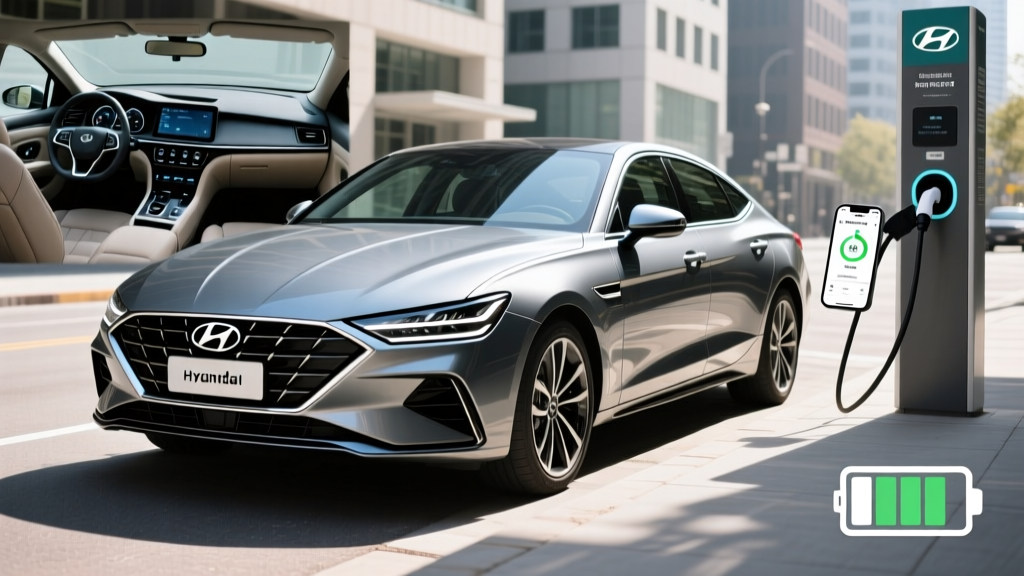
The midsize sedan segment has thinned out over the past decade, but the Hyundai Sonata Hybrid remains a compelling option for buyers who want serious fuel efficiency without plugging in. For the 2026 model year, Hyundai continues to refine a formula that pairs a 2.0-liter four-cylinder with an electric motor and a conventional six-speed automatic — no CVT drone, no range-compromise battery pack to worry about.
This guide covers everything a data-driven buyer needs: exact EPA MPG figures, real-world efficiency expectations, trim pricing, powertrain specs, battery longevity, and how the Sonata Hybrid stacks up against plug-in hybrids and full battery-electric vehicles.
Hyundai Sonata Hybrid at a Glance: Key Specs
| Specification | 2026 Hyundai Sonata Hybrid |
|---|---|
| Powertrain | 2.0L I-4 + electric motor (HEV) |
| Combined Horsepower | 192 hp |
| Engine Output | 150 hp / 139 lb-ft torque |
| Electric Motor Output | 39 kW (52 hp) / 151 lb-ft torque |
| Transmission | 6-speed automatic (no CVT) |
| EPA Fuel Economy (Combined) | Up to 52 MPG (SEL trim) |
| EPA City / Highway | 50 city / 54 highway (SEL) |
| Battery Type | Lithium-ion polymer, ~1.6 kWh |
| Drivetrain | Front-wheel drive |
| 0–60 mph (est.) | ~7.8 seconds |
| Base MSRP | ~$31,250 (SEL trim, incl. destination) |
| Federal Tax Credit | Not eligible (§30D is BEV/PHEV only) |
How Many MPG Does the Hyundai Sonata Hybrid Get?
The 2026 Hyundai Sonata Hybrid achieves its best efficiency in the SEL trim, which the EPA rates at 50 city / 54 highway / 52 combined MPG. The sportier N Line Hybrid, with its larger wheels and firmer suspension tuning, drops to approximately 44 city / 51 highway / 47 combined MPG — still exceptional for a 3,400-pound sedan with 192 horsepower on tap.
| Trim | City MPG | Highway MPG | Combined MPG |
|---|---|---|---|
| SEL (base hybrid) | 50 | 54 | 52 |
| Limited | 48 | 51 | 49 |
| N Line Hybrid | 44 | 51 | 47 |
Source: fueleconomy.gov — EPA estimates. Actual mileage will vary.
Real-World MPG vs. EPA Sticker
Hybrids have a well-documented advantage in city driving, where regenerative braking recaptures energy at every stoplight. Owner reports and third-party testing consistently show the Sonata Hybrid meeting or slightly exceeding its EPA city rating in stop-and-go commuting — 51–55 MPG in urban driving is achievable with a moderate right foot.
Highway driving tells a slightly different story. At sustained 75–80 mph speeds, the electric motor contributes less and the gasoline engine carries more load. Expect 46–50 MPG on the highway in the SEL trim, depending on terrain, temperature, and tire pressure. In cold weather (below 40°F), the engine runs more frequently to maintain cabin heat, reducing combined efficiency by roughly 5–10%.
HEV vs. PHEV: Understanding the Sonata Hybrid's Architecture
It is critical to understand that the Hyundai Sonata Hybrid is a conventional hybrid electric vehicle (HEV), not a plug-in hybrid (PHEV). Hyundai discontinued the Sonata Plug-in Hybrid after the 2019 model year, and as of 2026, there is no PHEV variant in the Sonata lineup.
| Feature | Sonata Hybrid (HEV) | Typical PHEV (e.g., Toyota Prius Prime) |
|---|---|---|
| Plug-in Charging | No — self-charging via engine + regen | Yes — Level 1/Level 2 |
| Battery Capacity | ~1.6 kWh | 13–18 kWh |
| Electric-Only Range | Less than 1 mile at low speed | 25–44 miles |
| Fuel Economy (gas) | 47–52 MPG combined | 48–54 MPG combined (after battery depletes) |
| Federal Tax Credit (§30D) | Not eligible | Up to $7,500 (subject to sourcing/income rules) |
| Upfront Cost Premium | ~$1,500 over gas Sonata | ~$4,000–$6,000 over comparable gas model |
The HEV approach has clear trade-offs. You sacrifice electric-only commuting range and federal tax credit eligibility, but you gain a lower purchase price, zero charging infrastructure requirements, and a simpler ownership experience. For apartment dwellers or those without home charging access, an HEV like the Sonata Hybrid eliminates the biggest barrier to electrified driving.
Powertrain Deep Dive: Engine, Motor, and Transmission
The 2026 Sonata Hybrid uses Hyundai's Smartstream G2.0 hybrid powertrain. The 2.0-liter naturally aspirated four-cylinder produces 150 hp and 139 lb-ft of torque, while a 39 kW (52 hp) electric motor integrated between the engine and transmission adds 151 lb-ft of electric torque. Combined system output is 192 horsepower.
Unlike most competitors (the Toyota Camry Hybrid uses an eCVT, for instance), Hyundai pairs this system with a conventional six-speed automatic transmission. This is a deliberate choice: it eliminates the rubber-band acceleration feel common to CVT-equipped hybrids and delivers more natural, predictable gear shifts. The trade-off is marginally lower efficiency in some driving scenarios, though Hyundai's 52 MPG combined figure shows the gap has largely closed.
The electric motor enables brief low-speed electric-only driving (typically under 1 mile at speeds below 25 mph in EV mode), but the system is designed primarily for electric assist — smoothing out acceleration, filling torque gaps during upshifts, and enabling engine-off coasting. This is fundamentally different from a PHEV, which can sustain highway speeds on electric power alone.
2026 Sonata Hybrid Pricing by Trim
The 2026 Hyundai Sonata Hybrid is offered in three trims. Pricing below includes destination charges and reflects 2026 MSRP figures:
- SEL Hybrid — ~$31,250: 17-inch alloy wheels, 12.3-inch digital cluster, 12.3-inch infotainment, wireless CarPlay/Android Auto, heated front seats, Hyundai SmartSense ADAS suite
- Limited Hybrid — ~$36,900: 18-inch wheels, leather seating, ventilated front seats, heated rear seats, Bose premium audio, highway driving assist, digital key, panoramic sunroof
- N Line Hybrid — ~$35,500: Sport-tuned suspension, N Line styling, 19-inch wheels, paddle shifters, sport seats, unique front/rear fascia
Tax Credit and Incentive Eligibility
The Sonata Hybrid does not qualify for the federal §30D Clean Vehicle Credit. Under current IRS rules, only battery electric vehicles (BEVs) and plug-in hybrid electric vehicles (PHEVs) with sufficient battery capacity are eligible — conventional HEVs are excluded regardless of efficiency. There is also no federal used-EV credit applicable to HEVs.
Some states offer their own hybrid incentives. California's Clean Fuel Reward program, for example, has historically offered rebates for certain hybrids, though availability and amounts change frequently. Check your state's energy or environmental agency website for current programs. Always consult IRS.gov for federal credit rules and a tax professional for personal eligibility.
Battery Longevity, Warranty, and Replacement Cost
Hybrid battery anxiety is one of the most common concerns among first-time hybrid buyers. The Sonata Hybrid's lithium-ion polymer battery pack is relatively small (~1.6 kWh usable) and operates within a narrow state-of-charge window — typically between 40% and 80% — which significantly reduces degradation stress compared to a full EV battery that cycles through deeper charge ranges.
What Does Hybrid Battery Replacement Cost?
If the battery does fail outside warranty coverage, replacement costs for the Sonata Hybrid battery pack typically range from $2,000 to $3,500 including parts and labor at a dealership. Independent hybrid specialists often offer refurbished packs for $1,500–$2,500. For context, a full EV battery replacement runs $8,000–$20,000+ — the Sonata Hybrid's small pack is far less expensive to replace.
In practice, Hyundai's hybrid batteries have demonstrated strong longevity. High-mileage Sonata Hybrid owners (150,000+ miles) routinely report minimal capacity loss, owing to the conservative charge management strategy. The hybrid system's 10-year/100,000-mile warranty on the electric motor and related power electronics provides additional peace of mind.
Who Should Choose the Sonata Hybrid vs. a PHEV or Full EV?
The decision between an HEV, PHEV, and BEV depends on your driving patterns, charging access, and budget. Here's a practical decision framework:
- You don't have reliable access to home or workplace charging
- Your budget is under $35,000 and you want maximum fuel savings per dollar
- You regularly drive 400+ miles between fuel stops and value 680+ mile range
- You want electrified efficiency with zero behavioral changes — no plugging in, no range planning
- You live in an apartment or rent and cannot install a Level 2 charger
- You can charge at home and your daily commute is under 40 miles round-trip
- You want electric-only commuting with gas-engine flexibility for road trips
- You can meet §30D tax credit requirements (income caps, MSRP caps, battery sourcing)
- You have home Level 2 charging and your daily driving is under 250 miles
- You want the lowest per-mile energy cost (~$0.04–$0.06/mile on home electricity vs. ~$0.08–$0.10/mile at 52 MPG)
- You want maximum acceleration, zero tailpipe emissions, and minimal drivetrain maintenance
Cost-Per-Mile Comparison
At a national average gas price of $3.25/gallon and the Sonata Hybrid's 52 MPG combined, your fuel cost is approximately $0.063 per mile. A comparable EV charging at home at $0.14/kWh and consuming 28 kWh/100 miles costs roughly $0.039 per mile — about 38% cheaper. Over 15,000 miles per year, that's a savings of roughly $360 annually for the EV. However, the EV's higher purchase price, potentially higher insurance premiums, and charging infrastructure costs can offset that advantage for many buyers.
Pros and Cons of the 2026 Sonata Hybrid
Pros
- Up to 52 MPG combined — class-leading efficiency
- 686-mile total range on a single tank
- 10-year/100,000-mile hybrid battery warranty
- Conventional 6-speed automatic — no CVT drone
- Strong standard safety tech (Hyundai SmartSense)
- No charging infrastructure needed
- Competitive pricing starting ~$31,250
Cons
- No federal tax credit eligibility
- No plug-in / electric-only commuting mode
- FWD only — no AWD option (unlike Camry Hybrid)
- N Line Hybrid drops to 47 MPG combined
- Modest 192 hp — adequate, not quick
- No PHEV variant available in the Sonata lineup
Frequently Asked Questions
How many MPG does the 2026 Hyundai Sonata Hybrid get?
The SEL trim achieves an EPA-estimated 50 city / 54 highway / 52 combined MPG. The Limited drops to 49 combined, and the N Line Hybrid achieves 47 combined. Real-world city driving often matches or slightly exceeds the EPA city figure thanks to regenerative braking.
Is the Hyundai Sonata Hybrid a plug-in hybrid?
No. The Sonata Hybrid is a conventional hybrid (HEV) that charges its battery through regenerative braking and the gasoline engine. You never plug it in. Hyundai discontinued the Sonata Plug-in Hybrid after 2019 and does not currently offer a PHEV sedan — the Tucson PHEV and Ioniq PHEV (where available) fill that role in Hyundai's lineup.
Does the Hyundai Sonata Hybrid qualify for any tax credit?
The Sonata Hybrid does not qualify for the federal §30D Clean Vehicle Credit, which is limited to BEVs and PHEVs. Some states offer separate hybrid incentives — check your state's energy office for current programs. Consult a tax professional for personal eligibility guidance.
How long will the Sonata Hybrid battery last?
Hyundai warranties the hybrid battery for 10 years / 100,000 miles (10 years / 150,000 miles in CARB states). The small ~1.6 kWh pack operates in a narrow charge window that minimizes degradation. Real-world data from high-mileage Sonata Hybrid owners shows minimal capacity loss at 150,000+ miles. Out-of-warranty replacement costs $2,000–$3,500.
Is the Sonata Hybrid better than a full EV for saving money?
It depends on your situation. The Sonata Hybrid costs significantly less upfront than most EVs and avoids charging infrastructure costs. However, per-mile fuel cost is roughly $0.063 vs. ~$0.039 for a home-charged EV. If you drive 15,000 miles/year, the EV saves ~$360 annually in fuel, but the higher purchase price and insurance premiums may take years to offset. For buyers without home charging, the Sonata Hybrid is often the more practical money-saver.
Does the Sonata Hybrid have all-wheel drive?
No. The 2026 Sonata Hybrid is front-wheel drive only. If AWD is a priority in a hybrid sedan, the Toyota Camry Hybrid offers an available electronic AWD system, though it sacrifices some fuel economy (approximately 44–50 MPG combined depending on trim).