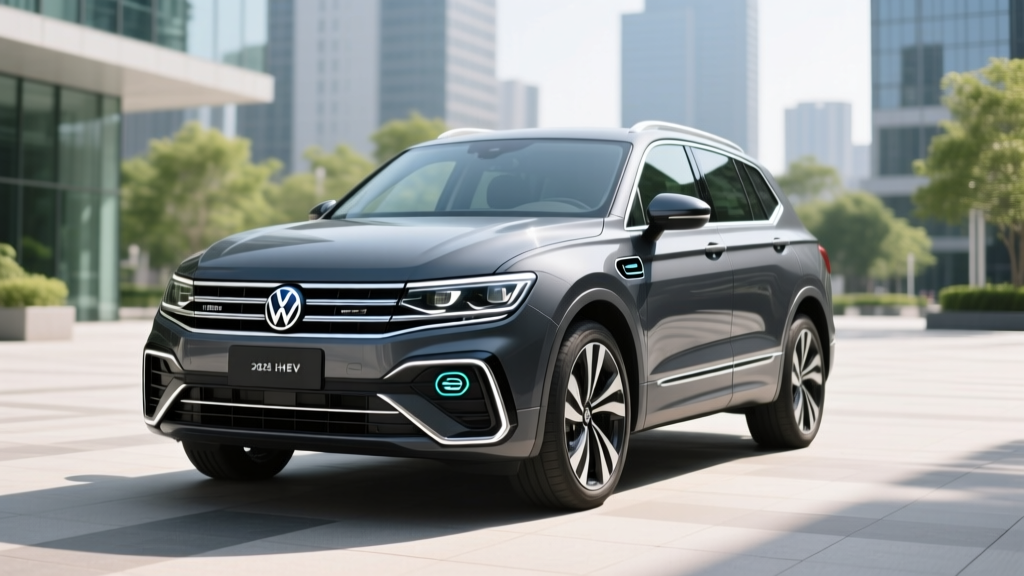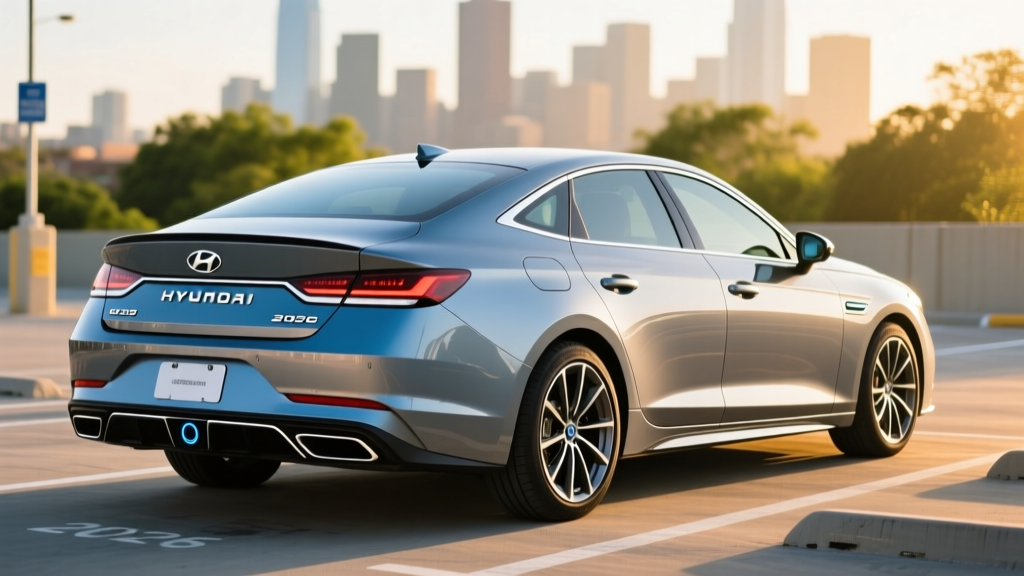
Midsize sedan buyers chasing maximum fuel efficiency without plugging in keep circling back to one question: what is the real-world Hyundai Sonata Hybrid mileage? With the 2026 model year, Hyundai continues to offer the Sonata exclusively as a hybrid in the U.S. market, pairing a 2.0-liter four-cylinder engine with an electric motor and a compact lithium-ion battery pack. The result is a sedan that routinely exceeds 50 MPG in city driving and delivers a combined EPA rating that puts it among the most efficient non-plug-in sedans on the road.
This guide breaks down every number that matters — EPA fuel economy, real-world MPG observations, powertrain output, battery warranty, pricing, and how the Sonata Hybrid stacks up against plug-in hybrids and full battery-electric vehicles for different driving lifestyles.
HEV vs PHEV: What the Sonata Hybrid Actually Is
Before examining the mileage figures, it is critical to understand what the Sonata Hybrid is not. The Sonata Hybrid is a conventional hybrid electric vehicle (HEV). It does not have a plug. You cannot charge it from a wall outlet or public charger. The battery recharges exclusively through regenerative braking and the gasoline engine.
Hyundai discontinued the Sonata Plug-In Hybrid (PHEV) in the U.S. market after the 2019 model year. If you want a plug-in Hyundai sedan today, that option no longer exists in the current lineup — you would need to look at competitors like the Toyota Prius Prime or the Chrysler Pacifica PHEV minivan.
HEV vs PHEV — Quick Distinction
| Feature | Conventional Hybrid (HEV) | Plug-In Hybrid (PHEV) |
|---|---|---|
| Plug-in charging | No — never plugs in | Yes — Level 1/Level 2 |
| Electric-only range | ~1 mile or less (low-speed assist) | 20-50 miles typical |
| Battery size | 1.0-2.0 kWh | 10-20+ kWh |
| Federal tax credit | No | Up to $7,500 (if eligible) |
| Sonata availability | Yes — 2026 Sonata Hybrid | Discontinued after 2019 |
For the rest of this article, every MPG figure, spec, and price refers to the 2026 Hyundai Sonata Hybrid (HEV). If you were searching for a Sonata plug-in, the answer is that one is not currently available new.
EPA Fuel Economy: Sonata Hybrid MPG by Trim
The 2026 Hyundai Sonata Hybrid uses the same proven powertrain architecture across all trims, but wheel size and weight differences create slight EPA rating variations. Here is the official breakdown from fueleconomy.gov:
| Trim | City MPG | Highway MPG | Combined MPG | Fuel Tank | Est. Total Range |
|---|---|---|---|---|---|
| Blue | 51 | 58 | 54 | 13.2 gal | ~712 mi |
| SEL / Limited | 44 | 51 | 47 | 13.2 gal | ~620 mi |
The Blue trim achieves its higher numbers through lighter 16-inch alloy wheels, low-rolling-resistance tires, and minor aerodynamic tweaks. The SEL and Limited trims ride on larger 17- or 18-inch wheels that add unsprung weight and rolling resistance, reducing efficiency by roughly 7 MPG combined.
Powertrain: What Moves the Sonata Hybrid
| 2026 Hyundai Sonata Hybrid — Powertrain Specifications | |
|---|---|
| Engine | 2.0L Smartstream GDI 4-cylinder |
| Engine Output | 150 HP / 139 lb-ft torque |
| Electric Motor | 39 kW (52 HP) permanent-magnet synchronous |
| Combined System Output | 192 HP |
| Transmission | 6-speed automatic with shift-by-wire |
| Hybrid Battery | ~1.76 kWh lithium-ion (HEV, non-plug-in) |
| Drivetrain | Front-wheel drive |
| 0-60 MPH | ~7.5 seconds (est.) |
| Drive Modes | Eco / Normal / Sport |
Unlike many competitors that use a continuously variable transmission (CVT), Hyundai pairs its hybrid system with a traditional 6-speed automatic. This delivers a more natural driving feel — you feel actual gear shifts rather than the rubber-band drone common to CVT hybrids. The trade-off is marginally less seamless electric-motor blending, though Hyundai's calibration has improved significantly over earlier generations.
The 192 combined horsepower figure is competitive within the hybrid midsize segment. The Sonata Hybrid accelerates with adequate urgency for merging and passing, though it is not a performance-oriented sedan. Sport mode sharpens throttle response and holds gears longer, but Eco mode is where the mileage magic happens — the system maximizes electric-motor assist and aggressively engages regenerative braking.
Hybrid Battery Warranty and Replacement Cost
Hybrid battery longevity remains one of the top concerns for buyers considering their first hybrid. The Sonata Hybrid addresses this with one of the strongest battery warranties in the industry.
Hyundai Hybrid Battery Warranty
- Coverage: 10 years / 100,000 miles (whichever comes first)
- What's covered: Hybrid battery pack, hybrid control unit, inverter, and related high-voltage components
- Capacity threshold: Hyundai does not publish a specific degradation percentage trigger, but the warranty covers defects and premature failure
- Transferable: The 10-year/100,000-mile hybrid battery warranty transfers to a second owner (unlike the original-owner-only 10-year/100,000-mile powertrain warranty, which drops to 5/60,000 on transfer)
Note: California-emissions states (CARB states) may have additional hybrid component warranty protections. Check with your dealer for state-specific coverage.
How long do hybrid batteries actually last? Modern lithium-ion hybrid battery packs in HEVs like the Sonata are remarkably durable. Because the battery is small (~1.76 kWh) and the hybrid system keeps it in a narrow state-of-charge window (typically 40-80%), the cells experience far less stress than those in a full EV. Real-world data from Hyundai-Kia hybrid owners, as well as Toyota Prius fleets, shows these packs routinely lasting 150,000-200,000+ miles before any significant degradation.
Replacement cost if out of warranty: A new OEM hybrid battery pack for the Sonata Hybrid typically runs between $2,000 and $3,500 including labor. Third-party refurbished packs are available for $1,200-$2,000. Given the 10-year/100,000-mile warranty and the typical ownership cycle, most original owners will never face this expense.
Pricing and Tax Credit Eligibility
| 2026 Sonata Hybrid Trim | MSRP (est.) | Federal Tax Credit |
|---|---|---|
| Blue | ~$30,500 | Not eligible |
| SEL | ~$33,000 | Not eligible |
| Limited | ~$37,500 | Not eligible |
The 2026 Sonata Hybrid does not qualify for the federal §30D Clean Vehicle Tax Credit. Under current IRS rules, only plug-in electric vehicles (BEVs and PHEVs with at least 7 kWh of battery capacity) are eligible. Conventional hybrids like the Sonata Hybrid — which cannot be plugged in and have batteries well under the 7 kWh threshold — are excluded from this credit.
There is also no federal tax credit for conventional hybrids. Some states and municipalities offer minor incentives for hybrid purchases (reduced registration fees, HOV lane access, or utility rebates), but these vary widely. Check your state's energy office or the Alternative Fuels Data Center for current local incentives.
Real-World Ownership: What 50+ MPG Actually Saves
To put the Sonata Hybrid's efficiency into financial context, consider the annual fuel cost comparison. Using the EPA's methodology of 15,000 miles per year (55% city, 45% highway) and a national average gas price of $3.30 per gallon:
| Vehicle | Combined MPG | Annual Fuel Cost | 5-Year Fuel Cost |
|---|---|---|---|
| Sonata Hybrid Blue | 54 | ~$917 | ~$4,583 |
| Sonata Hybrid SEL/Limited | 47 | ~$1,053 | ~$5,266 |
| 2025 Toyota Camry (gas, 4-cyl) | 32 | ~$1,547 | ~$7,734 |
| 2025 Honda Accord (gas, 1.5T) | 32 | ~$1,547 | ~$7,734 |
The Sonata Hybrid Blue saves approximately $630 per year in fuel compared to a comparable gas-only midsize sedan. Over a 5-year ownership period, that translates to roughly $3,150 in fuel savings — enough to offset the hybrid's modest price premium over a gas equivalent. If gas prices rise, those savings scale proportionally.
Sonata Hybrid vs Plug-In Hybrid vs Full EV: Which Fits You?
The Sonata Hybrid occupies a specific niche. Here is a decision framework to determine whether it is the right electrified choice for your situation:
Choose the Sonata Hybrid (HEV) if:
- You cannot install a home charger (apartment, condo, street parking)
- You want zero behavior change — just fill up with gas as always, but less often
- Your commute is long and highway-heavy (60+ miles daily)
- You want a proven, low-risk ownership experience with no charging-curve or range-anxiety concerns
- Your budget is $30,000-$38,000 and you want maximum MPG in that range
Consider a PHEV (e.g., Toyota Prius Prime) if:
- You can charge at home (Level 1 or Level 2) and want 30-44 miles of electric-only commuting
- Your daily round-trip commute is under 40 miles and you want to drive mostly on electricity
- You want to qualify for the federal tax credit (up to $7,500, subject to income and sourcing rules)
Consider a full EV (e.g., Hyundai Ioniq 6, Tesla Model 3) if:
- You have reliable home Level 2 charging and access to DC fast chargers for road trips
- You want zero tailpipe emissions and the lowest per-mile energy cost (~$0.04-$0.06/mi on home electricity)
- You want the full $7,500 federal tax credit (if eligible) and lower maintenance costs (no oil changes, fewer moving parts)
Pros and Cons at a Glance
✓ Pros
- Class-leading 54 MPG combined (Blue trim)
- 700+ mile total range on a single tank
- No plug-in required — zero lifestyle change
- 10-year/100,000-mile hybrid battery warranty
- 6-speed automatic (no CVT drone)
- Spacious interior with competitive tech features
- Strong safety ratings from IIHS and NHTSA
✗ Cons
- No federal tax credit (HEV exclusion)
- SEL/Limited trims lose ~7 MPG combined vs Blue
- No all-wheel-drive option
- 192 HP is adequate but not quick for the segment
- No plug-in (PHEV) variant available in the U.S.
- Hybrid battery adds trunk-floor height, slightly reducing cargo depth
Frequently Asked Questions
How many MPG does the 2026 Hyundai Sonata Hybrid get?
The Sonata Hybrid Blue achieves an EPA-estimated 51 city / 58 highway / 54 combined MPG. The SEL and Limited trims rate at 44 city / 51 highway / 47 combined. In real-world city driving with frequent stops, many owners exceed the EPA city number thanks to regenerative braking. Highway-only driving at higher speeds tends to return slightly below the EPA highway rating.
Does the Hyundai Sonata Hybrid need to be plugged in?
No. The Sonata Hybrid is a conventional HEV. The battery charges through regenerative braking and the gasoline engine. You never plug it in — you simply refuel at a gas station as you would with any conventional car.
Is there a Sonata Plug-In Hybrid (PHEV)?
Not in the current U.S. lineup. Hyundai discontinued the Sonata PHEV after the 2019 model year. If you need a plug-in Hyundai, the Tucson PHEV and Santa Fe PHEV are available as SUVs, but there is no current plug-in sedan option from Hyundai.
How long will the Sonata Hybrid battery last and what does replacement cost?
The hybrid battery is covered by Hyundai's 10-year/100,000-mile warranty. In practice, modern HEV battery packs routinely last 150,000-200,000+ miles because the system keeps the battery in a narrow, low-stress state-of-charge window. If replacement is eventually needed out of warranty, expect to pay $2,000-$3,500 for an OEM pack with labor.
Does the Sonata Hybrid qualify for any tax credit?
No. Under current IRS §30D rules, only plug-in vehicles (BEVs and qualifying PHEVs with 7+ kWh batteries) are eligible for the federal Clean Vehicle Credit. Conventional hybrids are excluded. Some states may offer minor incentives — check the Alternative Fuels Data Center for your jurisdiction.
How does the Sonata Hybrid compare to the Toyota Camry Hybrid?
The Toyota Camry Hybrid (redesigned for 2025) now comes standard with all-wheel drive and achieves up to 51 MPG combined on its most efficient trim. The Sonata Hybrid Blue edges it out at 54 MPG combined, and the Hyundai offers a longer battery warranty (10/100k vs Toyota's 10/150k on hybrid components). The Camry Hybrid offers AWD, which the Sonata does not. Both are excellent choices — the decision often comes down to styling preference, dealer experience, and whether AWD matters in your climate.
What is the total driving range on a full tank?
With a 13.2-gallon fuel tank and 54 MPG combined, the Sonata Hybrid Blue can theoretically travel over 710 miles between fill-ups. Real-world range of 600-680 miles is typical before the low-fuel warning triggers, depending on driving conditions and style.