Quick Verdict: A Midsize Sedan That Sips Fuel Like a Compact
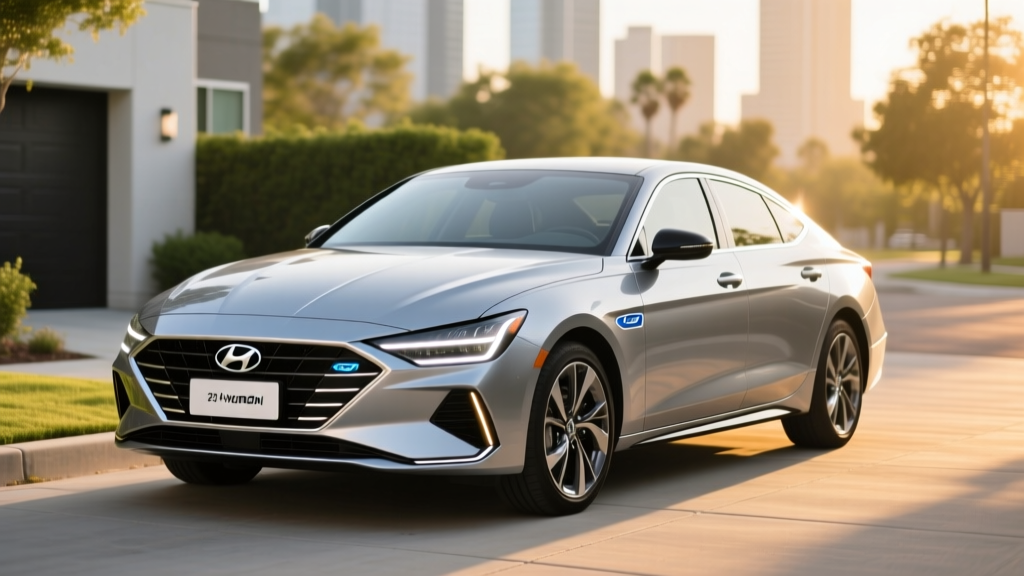
The 2026 Hyundai Sonata Hybrid Limited sits at the top of Hyundai's hybrid sedan lineup, pairing a 2.0-liter four-cylinder with an electric motor for a combined 192 horsepower and an EPA-estimated 44 MPG combined. At a starting MSRP of $38,250 (including destination), the Limited trim adds premium features like a panoramic sunroof, ventilated front seats, a head-up display, and Hyundai's full suite of driver-assistance technology. For buyers who want exceptional fuel economy without plugging in, this is one of the most complete packages in the midsize hybrid segment.
But spec sheets don't tell the whole story. Real-world driving — especially city commuting where hybrids shine — often exceeds the EPA sticker. And with battery longevity being a top concern for hybrid shoppers, Hyundai's industry-leading warranty coverage deserves close attention. Let's break down every number that matters.
Fuel Economy: EPA Numbers vs. Real-World MPG
The Sonata Hybrid uses Hyundai's conventional hybrid (HEV) powertrain — meaning it generates electricity from regenerative braking and the gasoline engine. You never plug it in. Here's how the EPA rates it:
| Trim | City MPG | Highway MPG | Combined MPG |
|---|---|---|---|
| Blue (base hybrid) | 50 | 54 | 52 |
| SEL | 44 | 51 | 47 |
| Limited | 44 | 51 | 47 |
Source: EPA fueleconomy.gov
The Limited trim's slightly lower figures versus the Blue trim come from added weight (premium equipment, larger 18-inch wheels) and different aerodynamic tuning. Still, 44 city / 51 highway is remarkable for a fully loaded midsize sedan.
Powertrain: How 192 HP and a 6-Speed Auto Deliver Efficiency
The Sonata Hybrid pairs a 2.0-liter Smartstream GDI four-cylinder engine (150 hp, 139 lb-ft of torque) with a 39 kW electric motor integrated into the transmission housing. Combined output is 192 horsepower. Unlike most competitors that use a continuously variable transmission (CVT), Hyundai uses a 6-speed automatic with a clutch-based hybrid system. The result? More natural, linear acceleration without the rubber-band feel that some CVTs produce.
Acceleration to 60 mph takes approximately 7.8 seconds — adequate for highway merging and passing, though not sporty. The hybrid battery is a 1.76 kWh lithium-ion pack located under the rear seat. Because this is a conventional HEV (not a plug-in), the battery is small by design: it buffers energy from regenerative braking and assists the engine during acceleration, but it cannot propel the car on electricity alone for meaningful distances.
| Specification | Value |
|---|---|
| Engine | 2.0L Smartstream GDI I-4 |
| Engine Power | 150 hp @ 6,000 rpm |
| Electric Motor | 39 kW (52 hp) |
| Combined System Output | 192 hp |
| Transmission | 6-speed automatic (hybrid-optimized) |
| Hybrid Battery | 1.76 kWh lithium-ion |
| 0-60 mph | ~7.8 seconds |
| Drivetrain | Front-wheel drive |
| Fuel Tank | 13.2 gallons |
| Total Driving Range | ~620 miles (EPA est.) |
With a 13.2-gallon fuel tank and 47 MPG combined, total range exceeds 620 miles on a single fill-up — enough to drive from Los Angeles to San Francisco and back with fuel to spare.
HEV vs. PHEV vs. EV: Which Powertrain Fits You?
The Sonata Hybrid is a conventional hybrid (HEV). Hyundai does not currently offer a plug-in hybrid (PHEV) version of the Sonata in the U.S. market — that role is filled by the Tucson PHEV and Santa Fe PHEV in Hyundai's SUV lineup. Here's how these three powertrain types compare for a typical buyer:
HEV (Conventional Hybrid) — Like the Sonata Hybrid
- No plug-in required. The gasoline engine and regenerative braking charge the small battery.
- Best for: Drivers without reliable access to home or workplace charging who want maximum fuel savings with zero behavior change.
- Trade-off: Still uses gasoline for all driving; no electric-only mode beyond very low-speed creeping.
PHEV (Plug-In Hybrid) — Like the Tucson PHEV
- Plugs in to charge a larger battery (typically 12-18 kWh) for 25-40 miles of electric-only range.
- Best for: Drivers with home charging who commute under 35 miles round-trip but want gas-engine flexibility for road trips.
- Trade-off: Heavier, more expensive, and requires charging infrastructure to realize full efficiency benefits.
BEV (Battery Electric Vehicle) — Like the Ioniq 6
- 100% electric, no gasoline engine. Ranges from 240-360+ miles depending on model.
- Best for: Drivers with reliable home Level 2 charging who want zero tailpipe emissions and the lowest per-mile fuel cost.
- Trade-off: Requires planning for road trips around DC fast charging; higher upfront cost; cold-weather range reduction of 20-30%.
Choose the Sonata Hybrid (HEV) if you lack home charging access, drive 12,000+ miles per year, want a loaded midsize sedan under $40K, and don't want to change your fueling habits.
Choose a PHEV if you can install a Level 2 charger at home, your daily commute is under 35 miles, and you still want gas flexibility for longer trips.
Choose a full EV if you have reliable home charging, want to eliminate gasoline entirely, and your typical road trips are under 250 miles one-way (or you're willing to plan DC fast-charging stops).
Pricing, Trims, and Tax Credit Eligibility
The 2026 Hyundai Sonata Hybrid is available in three trims. Here's the current MSRP breakdown (including destination charges):
| Trim | MSRP | Key Features |
|---|---|---|
| Blue | $30,250 | 17" wheels, 12.3" dual displays, SmartSense ADAS, heated front seats |
| SEL | $34,750 | 18" wheels, wireless charging, smart trunk, leatherette seats |
| Limited | $38,250 | Panoramic sunroof, ventilated front seats, head-up display, premium audio, Highway Driving Assist |
Federal Tax Credit Status
The Hyundai Sonata Hybrid is a conventional hybrid (HEV), not a plug-in vehicle. Under current IRS §30D rules, only plug-in electric vehicles (BEVs and PHEVs with sufficient battery capacity) qualify for the federal clean vehicle credit of up to $7,500. The Sonata Hybrid does not qualify for the federal EV tax credit.
However, some states and local utilities offer incentives for conventional hybrids — though these are increasingly rare as programs shift focus to plug-in vehicles. Check your state's energy office or utility provider for any hybrid-specific rebates. Additionally, the Sonata Hybrid's strong fuel economy may qualify for preferential insurance rates in some states through "green vehicle" discount programs.
Limited Trim Features: What $38,250 Gets You
The Limited is the fully loaded Sonata Hybrid. Beyond the powertrain, here's what distinguishes it from the SEL:
- Panoramic tilt-and-slide sunroof — a segment rarity at this price point
- Ventilated front seats with leather upholstery (not leatherette)
- Head-up display projecting speed and navigation onto the windshield
- 12-speaker Bose premium audio system
- Highway Driving Assist (HDA) — Hyundai's Level 2 adaptive cruise + lane centering system for highway use
- Remote Smart Parking Assist — the car can pull itself in and out of tight parking spaces via key fob
- Digital key with phone-as-key capability
- Surround-view monitor with blind-spot view cameras in the instrument cluster
For context, comparably equipped competitors — the Toyota Camry Hybrid XLE, Honda Accord Hybrid Sport-L — land in the $36,000-$39,000 range. The Sonata Hybrid Limited's feature list is competitive, particularly with the head-up display and ventilated seats that many rivals reserve for higher price points.
Battery Warranty, Reliability, and Replacement Cost
Hybrid battery longevity is consistently the top concern for buyers spending nearly $40,000 on a vehicle they plan to keep for 8-10 years. Here's what you need to know:
10 years / 100,000 miles (whichever comes first) for the hybrid battery and all hybrid-system components, including the electric motor and inverter. This applies to the original owner. For subsequent owners, coverage transfers as 10 years / 100,000 miles from the original date of purchase — a significant advantage over competitors whose hybrid warranties drop to 5 years upon resale.
Bumper-to-bumper warranty: 5 years / 60,000 miles
Powertrain warranty: 10 years / 100,000 miles
Reliability Track Record
Hyundai's hybrid system has proven durable over multiple generations. The Sonata Hybrid has been in the U.S. market since the 2011 model year, and there are no widespread reports of premature hybrid battery failures. The 1.76 kWh battery is modest in size and operates within a conservative state-of-charge window (roughly 40-80% SoC), which significantly reduces degradation stress compared to the deep cycles seen in full EVs.
According to IIHS, the Sonata earns top marks in crashworthiness testing, and Hyundai's SmartSense suite (standard across all hybrid trims) includes forward collision-avoidance assist, blind-spot collision-avoidance, rear cross-traffic collision-avoidance, and safe exit assist.
Battery Replacement Cost (Out of Warranty)
If the hybrid battery fails outside the 10-year/100,000-mile window, replacement costs for the Sonata Hybrid's 1.76 kWh pack typically range from $2,000 to $3,500 including labor — significantly less than a full EV battery replacement. Some independent hybrid specialists offer refurbished battery packs for $1,200-$1,800. Given the battery's small size and conservative usage profile, most automotive analysts expect it to last the life of the vehicle under normal driving conditions.
Pros, Cons, and the Bottom Line
Pros
- 44-51 MPG real-world (exceeds EPA in city driving)
- 620+ mile total range — fewer fill-ups than any gas competitor
- Industry-best 10-yr/100K-mi hybrid battery warranty
- Limited trim loaded with premium features under $40K
- 6-speed automatic avoids CVT drone
- Strong safety ratings and comprehensive ADAS suite
Cons
- No plug-in (PHEV) Sonata variant available in the U.S.
- No federal tax credit eligibility (HEV, not plug-in)
- 192 hp is adequate but not quick — 7.8s to 60 mph
- FWD only — no AWD option for snow-belt buyers
- Limited trim at $38,250 approaches some PHEV territory
- Trunk space slightly reduced by hybrid battery placement
Frequently Asked Questions
How many MPG does the 2026 Hyundai Sonata Hybrid Limited actually get?
The EPA rates the Limited at 44 city / 51 highway / 47 combined MPG. In real-world city-heavy driving, many owners report 48-52 MPG thanks to the hybrid system's regenerative braking advantage in stop-and-go traffic. Highway-only driving at 75+ mph typically yields 43-46 MPG.
Does the Sonata Hybrid need to be plugged in?
No. The Sonata Hybrid is a conventional hybrid (HEV). Its small 1.76 kWh battery charges through regenerative braking and the gasoline engine. You fuel it exactly like a regular gas car — just with far fewer trips to the pump.
Is there a plug-in hybrid (PHEV) version of the Sonata?
Not in the U.S. market. Hyundai discontinued the Sonata Plug-in Hybrid after the 2018 model year. If you want a Hyundai PHEV, the Tucson PHEV (33 miles electric-only range) and Santa Fe PHEV (31 miles) are the current options. For a plug-in sedan, consider the Toyota Prius Prime (39-44 miles EV range) as the closest competitor.
Does the Sonata Hybrid qualify for any federal tax credit?
No. Under current IRS §30D regulations, only plug-in electric vehicles (BEVs and qualifying PHEVs) are eligible for the federal clean vehicle credit. Conventional hybrids like the Sonata Hybrid are excluded. Some state or utility programs may offer minor incentives — check locally.
How long will the hybrid battery last, and what does replacement cost?
Hyundai covers the hybrid battery for 10 years / 100,000 miles. The 1.76 kWh pack operates in a conservative charge window that minimizes degradation. Most hybrid batteries outlast their warranty period. If replacement is needed out of warranty, expect $2,000-$3,500 for a new pack — a fraction of EV battery costs.
How does the Sonata Hybrid compare to the Toyota Camry Hybrid?
The Camry Hybrid LE achieves a higher EPA combined rating (52 MPG) and offers available AWD, which the Sonata Hybrid lacks. However, the Sonata Hybrid Limited undercuts the Camry Hybrid XLE on price while offering features like a head-up display and ventilated seats. Both carry excellent hybrid warranties (Toyota: 10yr/150K-mi on battery; Hyundai: 10yr/100K-mi). The choice often comes down to styling preference and which dealer network is stronger in your area.
Who should buy the Sonata Hybrid Limited over a full EV?
The Sonata Hybrid Limited is ideal for drivers who: (1) lack access to reliable home or workplace charging, (2) regularly drive 300+ miles between fill-ups, (3) live in areas with sparse DC fast-charging infrastructure, or (4) want to reduce fuel costs without any change in daily habits. If you can charge at home and your daily driving is under 50 miles, a BEV like the Hyundai Ioniq 6 or Tesla Model 3 will deliver lower per-mile energy costs and zero tailpipe emissions — but at a higher purchase price and with charging-planning requirements on road trips.