Quick Verdict: The Three-Row Hybrid SUV for Luxury-Minded Families
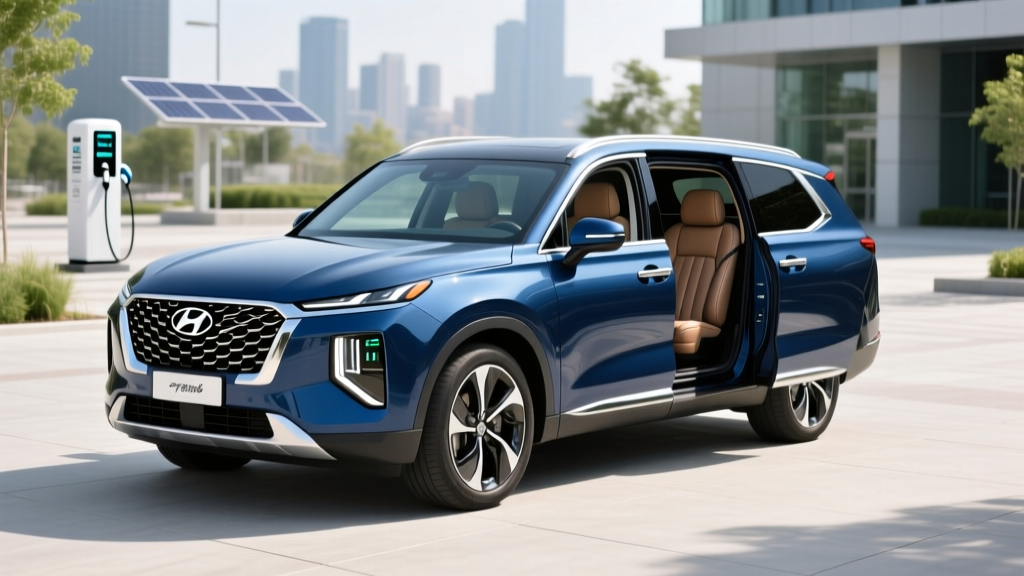
The Hyundai Palisade has long been the value-luxury champion of three-row SUVs. For 2026, Hyundai finally introduces a hybrid powertrain across the lineup, and the top-tier Palisade Calligraphy Hybrid pairs that efficiency with Nappa leather, a dual-screen cockpit, and a refined ride that punches well above its price class. If you need three rows, want meaningful fuel savings over a gas-only V6, and aren't ready to commit to a full EV or deal with plug-in charging logistics, this conventional hybrid (HEV) deserves a serious look.
But before we get into the details, let's clarify exactly what the Palisade Hybrid is — and what it isn't.
HEV vs PHEV: What's the Difference?
| Feature | Hybrid (HEV) | Plug-In Hybrid (PHEV) |
|---|---|---|
| Plugs in to charge? | No — charges via engine & regen | Yes — has a larger battery you plug in |
| Electric-only range | ~1 mile at very low speeds | 20–40 miles typically |
| Battery size | 1.5–2.5 kWh | 13–25 kWh |
| Federal tax credit | Generally not eligible (§30D) | Up to $7,500 if eligible |
| Palisade availability | Yes — 2026 Palisade Hybrid | Not offered as of 2026 |
The 2026 Palisade Hybrid is a conventional HEV. You never plug it in. It charges its small battery through regenerative braking and the gasoline engine.
2026 Hyundai Palisade Calligraphy Hybrid: Full Spec Sheet
| Specification | 2026 Palisade Calligraphy Hybrid |
|---|---|
| Powertrain | 2.5L turbocharged 4-cyl + electric motor (HEV) |
| Combined Horsepower | 329 hp |
| Combined Torque | 340 lb-ft |
| Transmission | 6-speed automatic |
| Drivetrain | HTRAC AWD standard |
| EPA Fuel Economy (City/Highway/Combined) | 29 / 27 / 28 MPG |
| Fuel Tank Capacity | 18.8 gallons |
| Total Driving Range | ~526 miles |
| 0–60 mph | ~7.1 seconds (est.) |
| Towing Capacity | 5,000 lbs (with towing prep) |
| Cargo (behind 3rd / 2nd / 1st row) | 21.1 / 45.8 / 86.4 cu ft |
| Seating | 7 passengers (2nd-row captain's chairs std on Calligraphy) |
| Hybrid Battery Warranty | 10 years / 100,000 miles |
| Starting MSRP (Calligraphy Hybrid) | $56,850 |
Fuel Economy: EPA Numbers vs Real-World MPG
The 2026 Palisade Hybrid is rated by the EPA at 29 city / 27 highway / 28 combined MPG. That's a substantial improvement over the outgoing gas-only Palisade's 3.8L V6, which managed just 19 city / 24 highway / 21 combined.
| Driving Scenario | EPA Estimate | Real-World Expectation |
|---|---|---|
| City / Stop-and-go | 29 MPG | 28–32 MPG (hybrids excel here) |
| Highway (70 mph cruise) | 27 MPG | 25–27 MPG |
| Combined mixed driving | 28 MPG | 26–29 MPG |
| Cold weather (below 30°F) | — | 23–26 MPG (engine runs more for cabin heat) |
| Heavy towing / loaded | — | 18–22 MPG |
Conventional hybrids like the Palisade HEV typically match or exceed their EPA city rating because stop-and-go driving maximizes regenerative braking and electric-motor assist. Highway driving is where the gas engine carries more of the load, so you'll see slightly lower numbers at sustained speeds above 70 mph. In cold weather, the engine must run more frequently to provide cabin heat (there is no electric-only heating loop on an HEV this size), so expect a 10–15% efficiency penalty in winter months.
Hybrid Battery Warranty: What's Covered?
Hyundai covers the Palisade Hybrid's lithium-ion battery pack for 10 years or 100,000 miles, whichever comes first. This is one of the strongest hybrid battery warranties in the segment and matches Toyota's coverage. If the battery fails or degrades below a functional threshold within that window, Hyundai replaces it at no cost.
Out-of-warranty replacement cost: Based on current Hyundai hybrid battery pricing (Sonata Hybrid, Tucson Hybrid), expect a replacement pack to run $2,500–$4,500 including labor at a dealership. Independent hybrid specialists may offer refurbished packs for $1,800–$3,000.
Powertrain Deep Dive: 2.5L Turbo Hybrid System
Hyundai pairs a 2.5-liter turbocharged four-cylinder engine with an electric motor integrated into the transmission housing. The engine alone produces approximately 277 hp, with the electric motor adding supplementary torque for a combined system output of 329 hp and 340 lb-ft of torque. That's a meaningful bump over the previous V6's 291 hp and puts the Palisade Hybrid in the same power league as competitors like the Toyota Grand Highlander Hybrid (362 hp on the Hybrid MAX) while delivering better fuel economy.
The 6-speed automatic transmission is a traditional torque-converter unit — not a CVT. This matters for driving feel: you get smooth, predictable gear changes rather than the rubber-band sensation some hybrid CVTs produce. The HTRAC all-wheel-drive system is standard on the Calligraphy Hybrid and uses a rear-mounted electric motor to power the rear axle when traction demands it, eliminating the need for a mechanical driveshaft.
Acceleration is confident for a three-row SUV. The electric motor fills in the low-end torque gap that turbocharged engines typically have, so around-town response is immediate. The 0–60 mph time of roughly 7.1 seconds won't win drag races, but it's quick enough for safe highway merging and passing with a full load of passengers and cargo.
Pricing, Trims, and Tax Credit Eligibility
The 2026 Hyundai Palisade Hybrid is available in SEL, Limited, and Calligraphy trims. Here's how pricing breaks down:
| Trim | MSRP | Key Features |
|---|---|---|
| SEL Hybrid | $44,350 | Synthetic leather, 12.3" infotainment, HTRAC AWD |
| Limited Hybrid | $50,500 | Genuine leather, HUD, dual 12.3" displays, ventilated 2nd row |
| Calligraphy Hybrid | $56,850 | Nappa leather, quilted door panels, premium audio, 2nd-row captain's chairs, unique grille |
Does the Palisade Hybrid Qualify for a Federal Tax Credit?
No. The 2026 Palisade Hybrid is a conventional hybrid (HEV), not a plug-in hybrid or battery electric vehicle. Under current IRS §30D rules, the federal Clean Vehicle Credit applies only to plug-in electric vehicles (BEVs and PHEVs) that meet battery-sourcing, MSRP cap, and buyer income requirements. Conventional hybrids do not qualify for the §30D credit.
However, some states offer their own incentives for hybrid vehicles. Check your state's energy or environmental agency for potential rebates. Hyundai also frequently offers competitive financing rates (as low as 1.9% APR for well-qualified buyers) and loyalty cash that can offset the lack of a federal credit. Always confirm current incentives with your local dealer.
Calligraphy Interior and Technology
The Calligraphy trim is where Hyundai's luxury ambitions become obvious. The cabin features Nappa leather with quilted stitching, a head-up display, a 12.3-inch digital instrument cluster paired with a 12.3-inch touchscreen, and Hyundai's latest Digital Key 2 (which lets you use your smartphone as a key fob). The second row gets captain's chairs with ventilation — a rarity at this price point — and the third row accommodates adults on shorter trips.
The hybrid powertrain doesn't compromise cargo space. The battery pack is mounted under the rear seats, so cargo volume remains identical to the gas Palisade: 21.1 cubic feet behind the third row, expanding to 86.4 cu ft with both rear rows folded. The HTRAC AWD system also doesn't intrude on interior space since the rear motor eliminates the need for a driveshaft tunnel.
Standard driver-assistance features include Hyundai SmartSense: adaptive cruise control with stop-and-go, lane-keeping assist, blind-spot monitoring with rear cross-traffic avoidance, and highway driving assist. Note that this is an SAE Level 2 system — the driver must remain attentive and keep hands on the wheel at all times. It is not autonomous driving.
Pros
- 28 MPG combined in a 3-row, 7-passenger SUV
- 329 hp provides confident acceleration even loaded
- 10-year / 100,000-mile hybrid battery warranty
- Calligraphy interior rivals luxury brands at $20K less
- No plug-in charging required — just fill up with gas
- 5,000-lb towing capacity with proper equipment
Cons
- No federal tax credit (HEV, not PHEV/BEV)
- Calligraphy trim pushes past $57K before options
- Highway MPG (27) trails city (29) — typical for hybrids
- No PHEV variant offered for electric-only commuting
- Cold-weather MPG drops 10–15% without electric cabin heat
Who Should Choose the Palisade Hybrid vs EV or Gas?
Decision Framework
Choose the Palisade Hybrid if: You need three rows, drive 15,000+ miles per year, want meaningful fuel savings without changing your refueling habits, and don't have reliable home charging access for a plug-in vehicle.
Choose a PHEV (like the Kia Sorento PHEV) if: Your daily commute is under 30 miles, you can charge at home overnight, and you want electric-only driving for errands while keeping gas capability for road trips.
Choose a full EV (like the Kia EV9) if: You can install a Level 2 home charger, your daily driving is under 250 miles, you want to eliminate gas entirely, and you're eligible for the §30D federal tax credit to offset the higher upfront cost.
Stick with the gas Palisade if: You drive under 10,000 miles per year, the $5,000+ hybrid premium won't pay back in fuel savings within your ownership period, and you prioritize lowest purchase price over long-term efficiency.
The math on hybrid payback is straightforward. At 28 MPG combined vs the gas V6's 21 MPG combined, driving 15,000 miles per year at $3.50/gallon gas saves roughly $590 per year in fuel. The hybrid premium over a comparably equipped gas Palisade is approximately $3,500–$4,500, meaning payback occurs in roughly 6–8 years at current fuel prices. If you drive more than average or gas prices rise, payback shortens. If you keep the vehicle for the full 10-year warranty period, the total fuel savings can exceed $5,500.
Reliability and Long-Term Ownership
Hyundai's hybrid systems have proven reliable across the Tucson Hybrid, Sonata Hybrid, and Santa Fe Hybrid lineups since their introduction. The Palisade Hybrid uses a well-established powertrain architecture with a conventional automatic transmission rather than a CVT, which historically improves long-term durability. The IIHS has not yet rated the 2026 Palisade Hybrid specifically, but the previous-generation Palisade earned Top Safety Pick+ honors.
Hybrid batteries in modern vehicles rarely require replacement within the warranty period. Data from Consumer Reports and J.D. Power show that Hyundai/Kia hybrid battery failure rates within the first 100,000 miles are well below 2%. The 10-year/100,000-mile warranty provides an additional safety net that exceeds the industry standard of 8 years/80,000 miles offered by most competitors.
Maintenance costs for the Palisade Hybrid are comparable to the gas version. The hybrid system doesn't add oil changes, transmission fluid changes, or other routine service items. Brake pad life is typically longer on hybrids because regenerative braking reduces wear on the friction brakes — many hybrid owners report 60,000+ miles on original brake pads.
Frequently Asked Questions
How many MPG does the 2026 Hyundai Palisade Calligraphy Hybrid get?
The EPA rates the Palisade Hybrid at 29 city / 27 highway / 28 combined MPG. In real-world driving, expect 28–32 MPG in city traffic (where the hybrid system shines) and 25–27 MPG on the highway. Cold weather and towing will reduce these figures.
Does the Palisade Hybrid need to be plugged in?
No. The 2026 Palisade Hybrid is a conventional hybrid (HEV). Its small battery recharges automatically through regenerative braking and the gasoline engine. You never plug it in — just fill up at any gas station.
Is there a plug-in hybrid (PHEV) version of the Palisade?
As of the 2026 model year, Hyundai does not offer a Palisade PHEV. If you want a three-row Hyundai/Kia plug-in hybrid, the Kia Sorento PHEV (32 miles electric-only range) is the closest option, though it's smaller than the Palisade.
Does the Palisade Hybrid qualify for any tax credit?
It does not qualify for the federal §30D Clean Vehicle Credit, which is limited to plug-in electric vehicles. Some states may offer hybrid-specific incentives — check your state energy office. Hyundai dealer incentives and low-APR financing offers can partially offset the lack of a federal credit.
How long will the hybrid battery last and what does replacement cost?
Hyundai warranties the hybrid battery for 10 years / 100,000 miles. Modern hybrid batteries routinely last 150,000+ miles before needing replacement. Out-of-warranty replacement costs are estimated at $2,500–$4,500 at a dealership, with refurbished options available for less.
Can the Palisade Hybrid tow?
Yes. With the factory towing prep package, the Palisade Hybrid is rated to tow up to 5,000 lbs — the same as the gas-only version. Expect fuel economy to drop to 18–22 MPG when towing a heavy trailer.
How does the Palisade Hybrid compare to the Toyota Grand Highlander Hybrid?
The Grand Highlander Hybrid offers slightly better fuel economy (up to 36 MPG combined on FWD models) and more third-row space, but the Palisade Calligraphy Hybrid provides a more premium interior, stronger acceleration (329 hp vs 245 hp for the standard Grand Highlander Hybrid), and a lower starting price for the top trim. The Grand Highlander Hybrid MAX (362 hp) is more powerful but drops to 27 MPG combined.