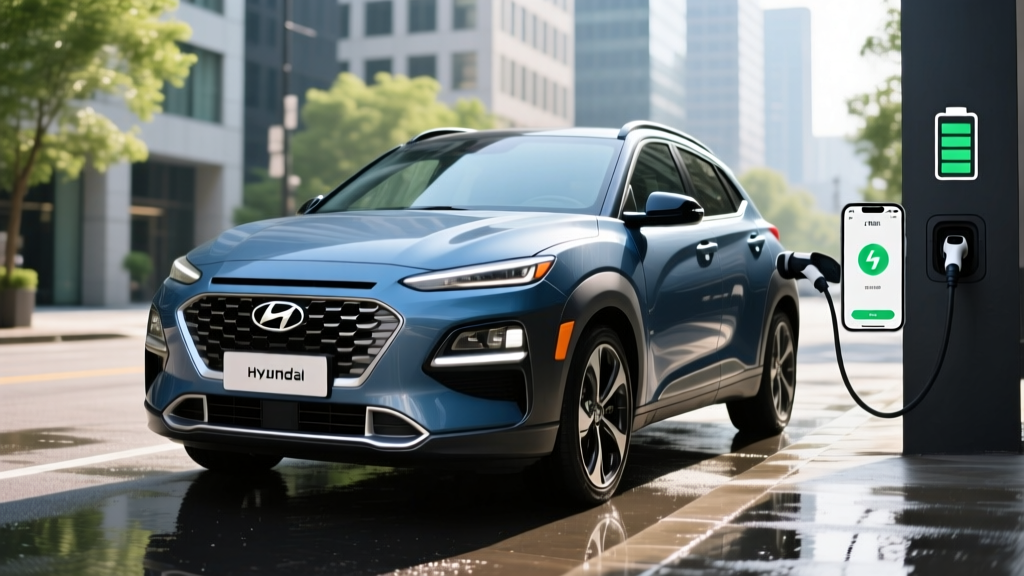
The 2026 Hyundai Kona Hybrid enters its second generation as a practical compact SUV that prioritizes fuel economy without requiring a plug. For buyers navigating the gap between conventional gas vehicles and full electric cars, this hybrid offers a compelling middle ground: exceptional city efficiency, zero lifestyle changes, and a sub-$31,000 starting price. We've analyzed the EPA data, real-world driving patterns, and ownership economics to determine whether the Kona Hybrid earns a spot on your shortlist.
2026 Kona Hybrid: Quick Verdict
Hyundai's Kona Hybrid is a conventional hybrid electric vehicle (HEV), meaning it charges its battery exclusively through regenerative braking and the gasoline engine — no plug required. This distinguishes it from a plug-in hybrid (PHEV), which offers 20-40 miles of electric-only range but requires home charging infrastructure to maximize benefits. The Kona Hybrid targets drivers who want EV-like city efficiency without charging logistics.
| Spec | 2026 Kona Hybrid |
|---|---|
| EPA Combined MPG | 50 MPG |
| EPA City / Highway | 51 city / 48 highway |
| Powertrain | 1.6L GDI turbo + 47 kW electric motor |
| Combined Horsepower | 196 HP |
| Transmission | 6-speed dual-clutch automatic (DCT) |
| Drivetrain | FWD (AWD available) |
| 0-60 mph | ~7.5 seconds (est.) |
| Battery Type | Lithium-ion polymer, ~1.5 kWh |
| Base MSRP (SE) | $30,475 |
| Hybrid Battery Warranty | 10 years / 100,000 miles |
Real-World MPG: How Efficient Is the Kona Hybrid?
The EPA rates the 2026 Kona Hybrid at 51 MPG city, 48 MPG highway, and 50 MPG combined for front-wheel-drive trims. AWD models see a slight reduction to approximately 47 MPG combined due to drivetrain losses.
| Driving Scenario | EPA Estimate | Real-World Expectation |
|---|---|---|
| City / Stop-and-Go | 51 MPG | 52-55 MPG (hybrids excel here) |
| Highway (70+ mph) | 48 MPG | 44-47 MPG (aero drag, less regen) |
| Combined Mixed | 50 MPG | 48-51 MPG |
| Cold Weather (below 32°F) | N/A | 42-46 MPG (engine runs more for heat) |
Hybrids typically exceed EPA city estimates because regenerative braking recovers energy in stop-and-go traffic. Highway efficiency drops as aerodynamic drag dominates and the electric motor assists less. In cold weather, expect a 10-15% reduction as the gasoline engine runs more frequently to provide cabin heat and maintain battery temperature.
For context, the EPA's fueleconomy.gov data shows the Kona Hybrid outperforms most compact SUV competitors, including the Toyota Corolla Cross Hybrid (42 MPG combined) and Honda CR-V Hybrid (40 MPG combined).
Hybrid vs PHEV vs EV: Which Kona Fits Your Life?
Hyundai offers the Kona in three powertrains for 2026: gas-only, hybrid (HEV), and full electric (EV). There is currently no plug-in hybrid (PHEV) Kona variant in the U.S. market. Here's how to decide:
| Factor | Kona Hybrid (HEV) | Kona Electric (EV) | Gas-Only Kona |
|---|---|---|---|
| Needs a Plug? | No | Yes (Level 2 recommended) | No (gas station) |
| City Efficiency | Excellent (51 MPG) | Best (129 MPGe city) | Good (29 MPG) |
| Range | ~470 miles (12.4-gal tank) | 261 miles (EPA) | ~400 miles |
| Refuel/Recharge Time | 5 minutes (gas) | 30 min DC fast (10-80%) | 5 minutes (gas) |
| Starting Price | $30,475 | $34,075 (after credits ~$26,575) | $26,475 |
| Tax Credit Eligible? | No | Yes, up to $7,500 (§30D) | No |
| Best For | No home charging, city commuters | Home charging access, daily <200 mi | Lowest upfront cost |
Choose the Kona Hybrid if: You lack reliable home charging access, frequently drive beyond 260 miles without stopping, live in an apartment without charging options, or want maximum efficiency with zero infrastructure changes.
Choose the Kona Electric if: You can install a Level 2 home charger, your daily driving stays under 200 miles, you qualify for the federal tax credit (bringing effective price below the hybrid), and you prioritize lowest per-mile energy cost.
Choose gas-only Kona if: Upfront cost is your primary constraint and you drive fewer than 10,000 miles annually, making fuel savings less impactful.
Powertrain Details: 1.6L Turbo + Electric Motor
The 2026 Kona Hybrid pairs a 1.6-liter turbocharged GDI four-cylinder engine with a 47 kW (63 HP) permanent-magnet synchronous electric motor. Combined system output reaches 196 horsepower and 195 lb-ft of torque, routed through a 6-speed dual-clutch transmission (DCT).
Unlike the continuously variable transmissions (CVTs) found in Toyota and Honda hybrids, Hyundai's DCT delivers more direct power delivery and a more natural driving feel, though some drivers notice occasional low-speed shift hesitation in heavy traffic. The electric motor fills torque gaps during shifts, smoothing the experience.
The hybrid battery is a compact lithium-ion polymer pack with approximately 1.5 kWh of usable capacity — far smaller than a PHEV or EV battery. This pack stores energy from regenerative braking and the engine, enabling electric-only operation at low speeds (typically under 25 mph for short distances) and providing torque assist during acceleration.
Pricing, Trims & Tax Credit Reality
The 2026 Hyundai Kona Hybrid starts at $30,475 for the SE trim, including destination charge. Key trim levels:
- SE: $30,475 — 18" alloy wheels, 12.3" dual displays, wireless CarPlay/Android Auto, SmartSense safety suite
- SEL: $32,275 — Heated front seats, leatherette, power driver seat, roof rails
- N Line: $34,675 — Sport-tuned suspension, unique styling, synthetic leather/suede seats
- Limited: $36,475 — Ventilated front seats, heated steering wheel, head-up display, Highway Driving Assist 2
AWD adds approximately $1,500 to any trim.
Federal Tax Credit Status: The Kona Hybrid does NOT qualify for the federal §30D Clean Vehicle Credit. That credit applies only to plug-in electric vehicles (PHEVs and EVs) with battery capacity ≥7 kWh and meeting MSRP, income, and battery-sourcing requirements. The Kona Hybrid's ~1.5 kWh battery falls far below the threshold.
State Incentives: Some states offer hybrid-specific rebates or HOV lane access. Check your state's energy office or Alternative Fuels Data Center for current programs.
Battery Warranty, Reliability & Replacement Cost
Hyundai provides one of the industry's strongest hybrid battery warranties: 10 years or 100,000 miles, whichever comes first. This covers battery capacity degradation below a specified threshold (typically 70% of original capacity) and defects. For comparison, Toyota offers 10 years/150,000 miles on hybrid batteries, while Honda provides 8 years/100,000 miles.
Real-World Reliability: Hyundai's hybrid systems have proven durable in models like the Ioniq Hybrid and Tucson Hybrid, with many examples surpassing 150,000 miles without battery replacement. The Kona Hybrid's smaller battery and proven 1.6L turbo engine (shared with other Hyundai/Kia models) suggest similar longevity.
Battery Replacement Cost: If replacement is needed outside warranty, expect $3,000-$5,000 for the hybrid battery pack, including labor. This is significantly less than EV battery replacements ($10,000-$20,000) due to the smaller pack size. However, most hybrid batteries last the vehicle's lifetime when properly maintained.
The 12-volt auxiliary battery (separate from the hybrid system) typically requires replacement every 4-6 years at $200-$400, similar to conventional vehicles.
Who Should Buy the 2026 Kona Hybrid?
Pros
- Excellent city MPG (51 EPA, often 52-55 real-world)
- No charging infrastructure required
- Strong warranty coverage (10yr/100k mi battery)
- Modern tech: dual 12.3" displays, wireless smartphone integration
- Competitive pricing vs. hybrid rivals
- Quick acceleration for the segment (196 HP, ~7.5 sec 0-60)
Cons
- No federal tax credit eligibility
- AWD reduces MPG to ~47 combined
- Smaller cargo space than CR-V Hybrid or RAV4 Hybrid
- DCT can feel hesitant in stop-and-go traffic
- Highway MPG trails city (aerodynamic limitations)
Frequently Asked Questions
How many MPG does the 2026 Kona Hybrid get?
The EPA rates the FWD Kona Hybrid at 51 city / 48 highway / 50 combined MPG. AWD models drop to approximately 47 MPG combined. Real-world city driving often yields 52-55 MPG due to regenerative braking, while highway and cold-weather driving reduce efficiency.
Does the Kona Hybrid need to be plugged in?
No. The Kona Hybrid is a conventional hybrid (HEV), not a plug-in hybrid (PHEV). It charges its battery through regenerative braking and the gasoline engine. You refuel only at gas stations, just like a conventional car.
How far can the Kona Hybrid drive on electric-only power?
The Kona Hybrid can operate on electric-only power at very low speeds (typically under 25 mph) for short distances — usually less than a mile. It is not designed for extended electric-only driving like a PHEV. The electric motor primarily assists the gas engine during acceleration and enables engine-off coasting.
Is the Kona Hybrid reliable?
Hyundai's hybrid powertrains have demonstrated strong reliability in models like the Ioniq and Tucson Hybrid. The 10-year/100,000-mile hybrid battery warranty provides long-term peace of mind. Most hybrid batteries last the vehicle's lifetime without replacement.
What does hybrid battery replacement cost?
Outside warranty, expect $3,000-$5,000 for hybrid battery replacement including labor. However, most hybrid batteries last 150,000+ miles when properly maintained, and Hyundai's 10-year coverage protects against premature failure.
Does the Kona Hybrid qualify for any tax credit?
The Kona Hybrid does not qualify for the federal §30D Clean Vehicle Credit, which requires plug-in capability and ≥7 kWh battery capacity. Some states offer hybrid-specific incentives — check your state's energy office or the Alternative Fuels Data Center for current programs.
Kona Hybrid vs. Toyota RAV4 Hybrid: which is better?
The RAV4 Hybrid offers more cargo space (37.5 vs. 25.8 cu ft), standard AWD, and slightly higher highway MPG (41 vs. 38), but costs ~$2,000 more and has lower city MPG (41 vs. 51). Choose the Kona Hybrid for city efficiency and value; choose the RAV4 for cargo capacity and all-weather traction.
Final Assessment: A Smart Choice for City Commuters
The 2026 Hyundai Kona Hybrid delivers exactly what its target buyer needs: exceptional city fuel economy, no charging requirements, modern technology, and strong warranty protection at a competitive price. It won't match the per-mile cost savings of a full EV with home charging, and it lacks the federal tax credit that makes the Kona Electric compelling for qualified buyers. But for apartment dwellers, high-mileage commuters, and drivers in areas with limited charging infrastructure, the Kona Hybrid offers a practical, efficient path to lower fuel costs without lifestyle disruption.
At 50 MPG combined and $30,475 to start, it's one of the most efficient and affordable hybrid SUVs on the market — and that's before factoring in the fuel savings that compound over years of ownership.