Quick Verdict: The Ioniq Plug-in Hybrid at a Glance
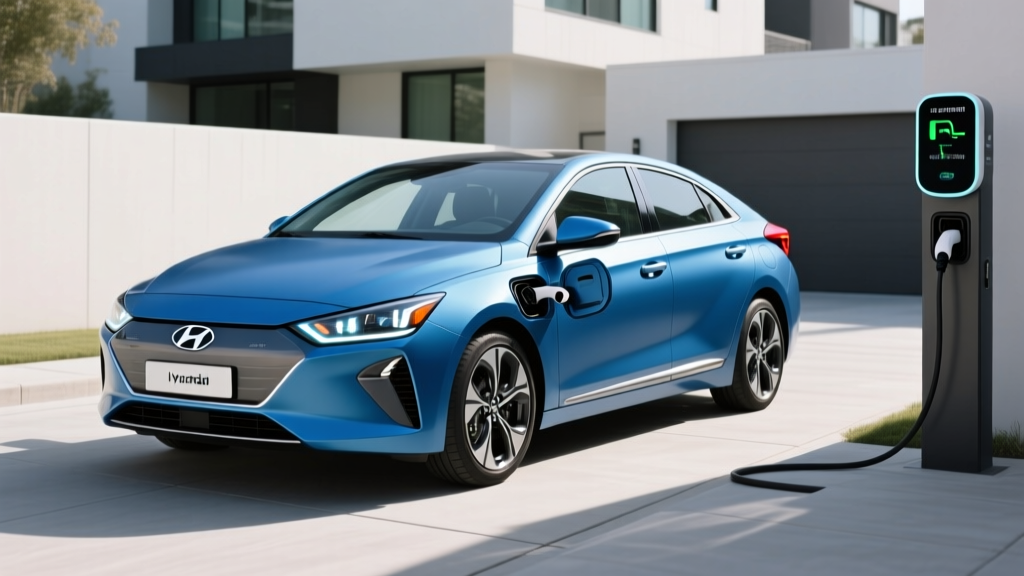
The Hyundai Ioniq plug-in hybrid occupies a precise niche: drivers who want daily electric-only commuting without surrendering the flexibility of a gasoline engine for longer trips. For 2026, the Ioniq PHEV pairs a 1.6-liter four-cylinder with a 61-hp electric motor and a 13.9 kWh lithium-polymer battery, delivering an EPA-estimated 29 miles of electric-only range and 52 MPGe in charge-depleting mode. Once the battery is exhausted, it operates as a conventional hybrid rated at 52 MPG combined.
This is not a vehicle that will blow you away with performance — 0-60 mph takes roughly 9.7 seconds — but it rewards with exceptional efficiency, low running costs, and a practical hatchback body style. The real question is whether the Ioniq PHEV's blend of electric and gas operation fits your specific driving pattern better than a full battery-electric vehicle (BEV) or a conventional hybrid (HEV).
| Spec | Value |
|---|---|
| Powertrain | 1.6L I-4 GDI + 61-hp electric motor |
| Combined Horsepower | 139 hp |
| Transmission | 6-speed dual-clutch automatic (DCT) |
| Battery Capacity | 13.9 kWh (lithium-polymer) |
| EPA Electric-Only Range | 29 miles |
| EPA MPGe (charge-depleting) | 52 MPGe |
| EPA MPG (hybrid mode, combined) | 52 MPG |
| Total Combined Range | ~630 miles |
| 0–60 mph | ~9.7 seconds |
| DC Fast Charging | Not supported |
| Level 2 Charge Time (0–100%) | ~2 hours 15 minutes at 3.3 kW |
| Starting MSRP | ~$34,500 |
| Battery/Powertrain Warranty | 10 yr / 100,000 mi |
HEV vs. PHEV: What the Ioniq Plug-in Hybrid Actually Is
Hyundai's Ioniq nameplate has been offered across three distinct powertrains, and it's essential to understand the differences before shopping:
Conventional Hybrid (HEV)
A standard hybrid like the Ioniq HEV uses a small battery (typically 1–2 kWh) that recharges through regenerative braking and the engine. You never plug it in. It delivers strong MPG but no meaningful electric-only range. Think of it as a more efficient gas car.
Plug-in Hybrid (PHEV) — The Ioniq PHEV
The Ioniq plug-in hybrid carries a larger 13.9 kWh battery and a more powerful electric motor. You can plug it in (via a standard J1772 connector on Level 1 or Level 2) to fully recharge the battery, enabling up to 29 miles of pure electric driving. Once that electric range is depleted, it seamlessly transitions to hybrid mode. If you never plug it in, it still functions as an efficient hybrid — but you're leaving money and efficiency on the table.
Battery Electric Vehicle (BEV)
A full EV like the Ioniq 5 has no gasoline engine at all. It relies entirely on a large battery (58–77.4 kWh) for 220–310+ miles of range. Zero tailpipe emissions, but you must have reliable charging access.
The Ioniq PHEV is specifically designed for drivers with a predictable daily commute under 30 miles who can charge at home overnight. If that's you, most of your weekday driving will be electric — quiet, smooth, and cheap — while the gas engine remains available for weekend road trips or unexpected detours.
Fuel Economy: EPA Numbers and Real-World MPG
The EPA rates the Ioniq plug-in hybrid at the following:
| Mode | City | Highway | Combined |
|---|---|---|---|
| Charge-Depleting (Electric + Gas) | 52 MPGe | ||
| Hybrid Mode (Gas Only) | 54 MPG | 50 MPG | 52 MPG |
Real-World MPG vs. EPA Sticker
EPA Combined (Hybrid Mode): 52 MPG
Real-World Expectation: In city and suburban driving, many owners report 54–58 MPG thanks to frequent regenerative braking. On sustained highway trips at 75+ mph, expect 44–48 MPG as aerodynamic drag increases and regen opportunities decrease. In cold weather (below 35°F), hybrid-mode fuel economy typically drops 5–10% due to engine warm-up cycles and reduced battery efficiency.
Electric-Only Range: EPA rates 29 miles, but expect 22–26 miles in mixed driving, and as low as 18–20 miles in winter conditions when cabin heating draws from the battery.
The Ioniq PHEV's dual nature means your actual fuel consumption depends heavily on your charging habits. A driver who charges nightly and commutes 20 miles round-trip may go weeks between fill-ups. A driver who never plugs in will see a steady 52 MPG — still excellent, but no different from the conventional Ioniq HEV at a higher purchase price.
Battery, Charging, and Electric-Only Range
The Ioniq PHEV's 13.9 kWh lithium-polymer battery pack is mounted beneath the rear seats and cargo area, preserving hatchback practicality. Here's how charging works:
| Level | Power | Connector | 0–100% Time | Use Case |
|---|---|---|---|---|
| Level 1 (120V household) | ~1.4 kW | J1772 (standard cord included) | ~9–10 hours | Overnight top-up |
| Level 2 (240V home/public) | 3.3 kW | J1772 | ~2 hr 15 min | Full daily recharge |
| DC Fast Charging | N/A | N/A | N/A | Not supported |
A critical point for PHEV shoppers: the Ioniq plug-in hybrid does not support DC fast charging. This is standard across most PHEVs — the battery is too small to justify the cost and weight of DC charging hardware. The onboard charger maxes out at 3.3 kW, meaning even on a 7.2 kW or 11.5 kW Level 2 station, the Ioniq PHEV will only draw 3.3 kW. A full recharge from empty takes approximately 2 hours and 15 minutes on Level 2.
For most owners, Level 1 charging from a standard 120V outlet is sufficient. Plugging in when you get home from work yields a full battery by morning — roughly 10 hours covers the 13.9 kWh pack. If your schedule demands faster turnaround (for example, midday top-ups between shifts), a Level 2 home station cuts recharge time to just over 2 hours.
Powertrain and Driving Dynamics
The Ioniq PHEV combines a 104-hp 1.6-liter direct-injection four-cylinder engine with a 61-hp permanent-magnet synchronous electric motor integrated into the 6-speed dual-clutch transmission. Total system output is 139 horsepower and 195 lb-ft of torque.
Unlike some hybrids that use a continuously variable transmission (CVT), Hyundai's DCT delivers crisper shifts and a more natural driving feel. In electric mode, the car is whisper-quiet with immediate torque from the motor — perfect for neighborhood and city driving. The transition from electric to hybrid mode is nearly imperceptible in most conditions.
Performance is adequate rather than exciting. The 0-60 mph time of approximately 9.7 seconds places it firmly in the "comfortable commuter" category. Highway passing power is sufficient, and the regenerative braking system (with adjustable levels via steering-wheel paddles) enables relaxed one-pedal-style driving in lighter traffic.
The Ioniq PHEV also offers a driver-selectable EV mode button, allowing you to save battery charge for later — useful if you want to run electric through a city center after a highway segment, or if you're approaching a low-emission zone.
Pricing, Trims, and Tax Credit Eligibility
The 2026 Hyundai Ioniq plug-in hybrid is available in two primary trims:
- SE: ~$34,500 MSRP — includes 8-inch touchscreen, wireless Apple CarPlay/Android Auto, Hyundai SmartSense safety suite, heated front seats, 16-inch alloy wheels
- Limited: ~$39,000 MSRP — adds leather-trimmed seats, 10.25-inch navigation display, Bose premium audio, LED headlights, highway driving assist, ventilated front seats
Federal §30D Tax Credit Eligibility for PHEVs
The Ioniq plug-in hybrid may qualify for a partial federal tax credit under IRS §30D, but eligibility is constrained by multiple requirements that change periodically. Here's the current framework:
- Minimum battery capacity: 7 kWh — the Ioniq PHEV's 13.9 kWh qualifies ✓
- MSRP cap: Vans/SUVs/trucks ≤$80,000; sedans/hatchbacks ≤$55,000 — the Ioniq PHEV qualifies ✓
- Buyer income cap: AGI ≤$150,000 (single) / ≤$300,000 (joint) — varies by filer
- Battery component sourcing: Must meet North American assembly requirements for battery components and critical minerals — this is the most restrictive factor and varies by model year and production batch
- Credit amount: Up to $7,500 maximum, split into $3,750 for battery components + $3,750 for critical minerals; partial credit possible if only one requirement is met
- Point-of-sale transfer: Eligible buyers can transfer the credit to the dealer for an upfront price reduction
Important: Battery sourcing requirements have tightened significantly. Always verify current eligibility on the IRS clean vehicle credits page or consult a tax professional before relying on credit eligibility in your purchase decision.
Some states also offer additional incentives for PHEVs — California's Clean Fuel Reward, Colorado's innovative motor vehicle credit, and various utility company rebates are examples. Check your state energy office and local utility for current programs.
Reliability, Battery Warranty, and Long-Term Costs
Hyundai Hybrid/PHEV Battery Warranty
Coverage: 10 years / 100,000 miles (whichever comes first)
What's covered: Battery capacity loss below a defined threshold (typically 70% state of health), defects in hybrid/EV battery pack, powertrain components including electric motor, inverter, and DCT
Transferable: Yes, to subsequent owners (reduces to 5 yr / 60,000 mi for second owners in most states)
Hyundai's 10-year/100,000-mile hybrid battery warranty is among the strongest in the industry and directly addresses the top concern for hybrid buyers: "What if the battery fails?"
In practice, lithium-polymer PHEV batteries degrade slowly. Based on long-term data from Hyundai-Kia PHEV platforms, most owners see 5–10% capacity loss over the first 5 years — meaning the Ioniq PHEV's 29-mile electric range might drop to 26–27 miles after half a decade of normal use. This is gradual and rarely impacts daily usability for typical commutes.
If a replacement is needed outside warranty coverage, expect a PHEV battery pack replacement to cost between $4,000 and $7,000 including labor at a Hyundai dealership. However, given the 10-year warranty and typical PHEV usage patterns (shallow daily cycles rather than deep discharges), premature battery failure is uncommon.
Overall reliability for the Ioniq PHEV platform has been strong. Hyundai's hybrid systems have proven durable, and the DCT — while occasionally criticized for low-speed hesitation in earlier model years — has been refined through software updates. The Ioniq PHEV earned strong marks in IIHS safety testing and carries a 5-star NHTSA overall rating.
Who Should Buy the Ioniq Plug-in Hybrid?
Choose the Ioniq PHEV If:
- Your daily commute is 15–30 miles round-trip and you can charge at home
- You want electric driving for daily use but need gas-engine flexibility for road trips
- You live in an apartment or area where public charging infrastructure is unreliable
- You want to reduce fuel costs significantly without committing to a full EV
- You value the hatchback cargo versatility (up to 53 cu ft with rear seats folded)
Choose a Full EV Instead If:
- You have reliable home Level 2 charging and rarely drive more than 200 miles in a day
- You want to eliminate gasoline entirely and minimize maintenance (no oil changes, no engine)
- You qualify for the full $7,500 federal credit on a BEV, making the purchase price competitive
- Your region has robust DC fast charging infrastructure for road trips
Choose a Conventional Hybrid (HEV) Instead If:
- You cannot charge at home or at work (no outlet access)
- Your budget is tighter — the Ioniq HEV starts several thousand dollars lower
- You drive more than 50 miles daily and want simpler, lower-cost efficiency
Pros
- 29-mile electric range covers most commutes gas-free
- 52 MPG combined in hybrid mode — top-tier efficiency
- 10-year/100,000-mile battery and powertrain warranty
- Hatchback practicality with 23.8 cu ft cargo behind rear seats
- Level 1 charging sufficient for daily use — no expensive home install required
- Smooth EV-to-hybrid transition with minimal drivetrain noise
Cons
- No DC fast charging capability
- 3.3 kW max AC charge rate is slow compared to some PHEV rivals
- Modest 139 hp — not a performance-oriented vehicle
- Electric range drops significantly in cold weather (18–22 mi real-world winter)
- Tax credit eligibility uncertain due to battery sourcing rules
- Higher base price than the conventional Ioniq HEV
Frequently Asked Questions
How many MPG does the Hyundai Ioniq plug-in hybrid get?
The Ioniq PHEV achieves an EPA-estimated 52 MPG combined (54 city / 50 highway) when operating in hybrid mode after the battery is depleted. In charge-depleting mode (using battery + engine), it rates 52 MPGe. Real-world city driving often yields 54–58 MPG, while sustained highway driving at 75+ mph typically returns 44–48 MPG.
How far can the Ioniq plug-in hybrid go on electric only?
The EPA estimates 29 miles of electric-only range. In real-world conditions, expect 22–26 miles in mild weather with mixed driving, and 18–22 miles in cold weather (below 35°F) when cabin heating and reduced battery efficiency draw from the pack.
Does the Ioniq PHEV qualify for a federal tax credit?
It may qualify for a partial or full §30D federal tax credit (up to $7,500), depending on battery component and critical mineral sourcing requirements, buyer income limits, and the MSRP cap. Eligibility changes frequently — verify on the fueleconomy.gov tax incentive page and consult a tax professional.
Is the Ioniq plug-in hybrid reliable, and what does battery replacement cost?
The Ioniq PHEV platform has demonstrated strong reliability. The hybrid battery is covered by Hyundai's 10-year/100,000-mile warranty. Out-of-warranty battery replacement typically costs $4,000–$7,000, but premature failure is rare given PHEV shallow-cycling usage patterns.
Can I charge the Ioniq PHEV at a DC fast charger?
No. The Ioniq plug-in hybrid does not support DC fast charging. It charges via J1772 connector on Level 1 (120V, ~10 hours) or Level 2 (240V, ~2.25 hours at its 3.3 kW maximum). This is standard for most PHEVs due to their smaller battery packs.
Hybrid vs. PHEV vs. EV — which is right for me?
Choose a conventional hybrid (HEV) if you cannot plug in at all. Choose the Ioniq PHEV if you can charge at home and want electric commuting with gas-engine backup. Choose a full EV if you have reliable charging, want zero tailpipe emissions, and rarely exceed 200+ miles in a single day. The PHEV is the bridge option for drivers not ready to commit fully to electric.
Do I have to plug in the Ioniq PHEV?
No — if you never plug it in, the Ioniq PHEV operates as a conventional hybrid at 52 MPG combined. However, you'll pay a premium over the Ioniq HEV without capturing the fuel-cost savings of electric driving. The PHEV only makes financial sense if you plan to charge regularly.