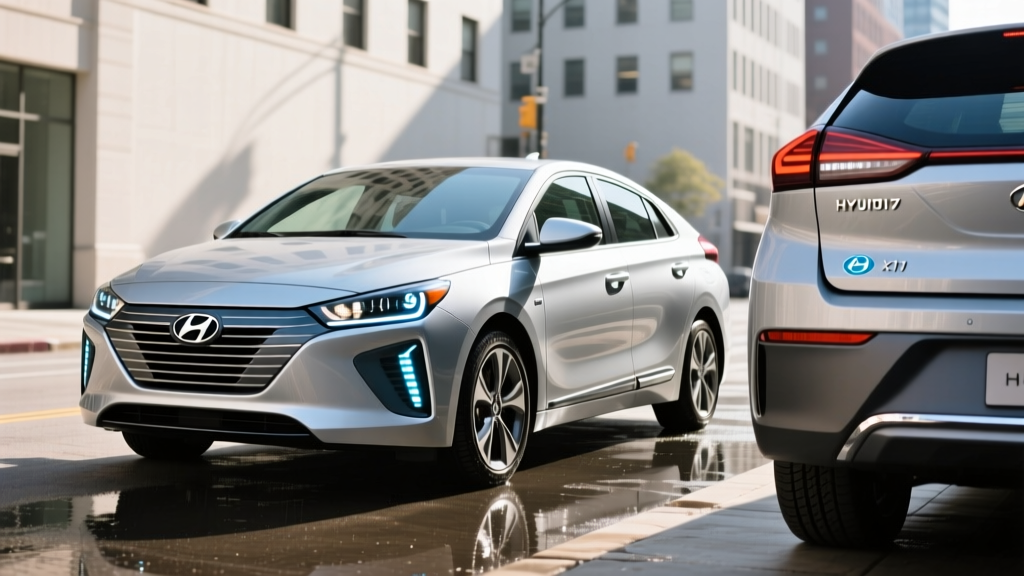
The 2017 Hyundai Ioniq Hybrid: A Used-Market Efficiency Benchmark
When Hyundai launched the Ioniq lineup for the 2017 model year, it did something no mainstream automaker had attempted before: offering the same vehicle as a conventional hybrid (HEV), a plug-in hybrid (PHEV), and a full battery-electric vehicle (BEV). The Hyundai hybrid 2017 Ioniq was the volume seller of the three, targeting buyers who wanted Prius-rivaling efficiency without the polarizing hatchback styling of its Toyota competitor.
Nearly a decade later, the 2017 Ioniq Hybrid remains one of the most fuel-efficient used cars available in the U.S. market. With EPA ratings that still compete with brand-new 2026 hybrids and a proven 1.6-liter Atkinson-cycle powertrain, it represents a compelling budget-friendly electrified option. Here is everything a prospective used buyer or current owner needs to know about real-world MPG, battery longevity, ownership costs, and how it stacks up against PHEV and full EV alternatives.
HEV vs. PHEV vs. EV: Understanding the 2017 Ioniq Lineup
Before examining the hybrid specifically, it is critical to distinguish the three 2017 Ioniq variants. Confusing them is one of the most common mistakes used-car shoppers make.
| Variant | Powertrain Type | Plugs In? | Electric-Only Range | EPA Combined |
|---|---|---|---|---|
| Ioniq Hybrid (HEV) | Conventional hybrid | No | ~1 mile (low speed) | 58 MPG (Blue trim) / 55 MPG (SEL/Limited) |
| Ioniq Plug-In Hybrid (PHEV) | Plug-in hybrid | Yes (Level 1/2 only) | 29 miles | 52 MPG (gas) / 119 MPGe (combined) |
| Ioniq Electric (BEV) | Full battery electric | Yes (Level 1/2 + DCFC) | 124 miles (total) | 136 MPGe |
The conventional Ioniq Hybrid does not plug in. It recovers energy through regenerative braking and the gasoline engine, storing it in a small 1.56 kWh lithium-ion polymer battery. The PHEV variant, by contrast, carries an 8.9 kWh battery and can be charged from a wall outlet or Level 2 station for 29 miles of electric-only driving before the gas engine takes over.
Fuel Economy: EPA Ratings and Real-World MPG
The 2017 Ioniq Hybrid was offered in three trims — Blue, SEL, and Limited — and fuel economy varies slightly by trim due to weight and wheel-size differences.
| Trim | City MPG | Highway MPG | Combined MPG | Annual Fuel Cost* |
|---|---|---|---|---|
| Blue | 57 | 59 | 58 | ~$900 |
| SEL | 55 | 54 | 55 | ~$950 |
| Limited | 55 | 54 | 55 | ~$950 |
*Source: fueleconomy.gov — annual fuel cost based on 15,000 miles/year and 2026 national average gas prices (~$3.15/gal).
Real-World MPG: What Owners Actually See
Hybrids tend to outperform their EPA city ratings in stop-and-go traffic, where regenerative braking recovers the most kinetic energy. The 2017 Ioniq Hybrid is no exception. Owner-reported data on fuel-tracking platforms consistently shows:
- City driving: 55–62 MPG (often exceeds EPA, especially in moderate climates)
- Highway driving (65–75 mph): 48–54 MPG (aerodynamic drag reduces hybrid advantage at speed)
- Cold weather (below 32°F): 42–48 MPG combined (engine runs more often for cabin heat; battery efficiency drops)
- Combined real-world average: 50–57 MPG across diverse driving conditions
The Ioniq Hybrid's 11.9-gallon fuel tank gives it a real-world total range of approximately 550–650 miles per tank, depending on conditions. That range rivals or exceeds most PHEVs and EVs on long road trips, where the hybrid's gasoline fallback eliminates any charging-infrastructure dependency.
Powertrain Specifications and Driving Dynamics
| Specification | Detail |
|---|---|
| Engine | 1.6L Atkinson-cycle 4-cylinder (104 hp / 109 lb-ft) |
| Electric Motor | 32 kW permanent-magnet synchronous (43 hp / 125 lb-ft) |
| Combined System Output | 139 hp |
| Transmission | 6-speed dual-clutch automatic (DCT) |
| Hybrid Battery | 1.56 kWh lithium-ion polymer |
| 0–60 mph | ~9.5 seconds |
| Curb Weight | 3,109–3,232 lbs (trim-dependent) |
| Drivetrain | Front-wheel drive |
Unlike the Toyota Prius, which uses a continuously variable transmission (CVT) that can produce a droning "rubber-band" feel under hard acceleration, the Ioniq Hybrid employs a 6-speed dual-clutch transmission. This gives it more natural shift behavior and a more engaging driving character, though it sacrifices a fraction of efficiency. The trade-off is intentional: Hyundai targeted buyers who found the Prius too numb to drive.
Acceleration is adequate for merging and passing but not brisk — the 9.5-second 0–60 time is in line with most compact hybrids from this era. The electric motor provides instant torque off the line, making city driving feel peppier than the horsepower number suggests.
Battery Longevity, Warranty, and Replacement Cost
Hyundai Hybrid Battery Warranty
- Original coverage: 10 years / 100,000 miles (whichever comes first)
- Capacity threshold: Warranty covers defects and significant capacity loss
- Transferability: For the 2017 model year, Hyundai's 10/100k hybrid battery warranty is transferable to the second owner under the original terms (verify with dealer using VIN)
- Emissions-related components: 8 years / 80,000 miles under federal emissions warranty
The 1.56 kWh battery pack in the Ioniq Hybrid is small by modern standards, but that actually works in its favor for longevity. Small batteries undergo shallower charge-discharge cycles, which reduces cumulative stress on the cells. The lithium-ion polymer chemistry Hyundai used in this generation has proven durable — owner forums and reliability surveys show very few reports of premature hybrid-battery failure in 2017–2019 Ioniq models, even at 120,000+ miles.
What If the Battery Does Need Replacement?
As of 2026, a replacement hybrid battery pack for the 2017 Ioniq Hybrid costs approximately $2,500–$4,000 for the part (refurbished or new from Hyundai), plus $500–$900 in labor at a dealership or qualified hybrid shop. Independent hybrid-battery rebuilders can sometimes replace individual modules for $1,200–$2,000, though this is less common for the Ioniq than for the higher-volume Prius.
For context, the hybrid battery in the Ioniq is substantially less expensive to replace than a full EV traction battery (which can run $8,000–$20,000+), because it is far smaller and simpler. Most 2017 Ioniq Hybrids still on the road have not required a battery swap.
The 12-volt auxiliary battery (which powers electronics and starts the hybrid system) is a separate maintenance item. It typically lasts 3–5 years and costs $150–$250 to replace — a standard automotive expense unrelated to the hybrid system.
Used Market Pricing and Tax Credit Eligibility
The 2017 Ioniq Hybrid originally started at an MSRP of approximately $22,200 (Blue trim) to $28,500 (Limited trim), before destination charges. In the 2026 used market, expect to pay:
- 80,000–110,000 miles: $10,000–$13,500
- 50,000–80,000 miles: $13,000–$16,500
- Under 50,000 miles: $15,500–$19,000
Does the 2017 Ioniq Hybrid Qualify for Any Tax Credit?
No. The 2017 Ioniq Hybrid is a conventional hybrid (HEV) and does not qualify for the federal §30D clean vehicle tax credit. That credit applies only to plug-in vehicles (PHEVs and BEVs) that meet battery-sourcing, MSRP, and buyer-income requirements.
The 2017 Ioniq Plug-In Hybrid originally qualified for a federal credit (up to $4,543 based on its battery capacity), but that credit is available only to the original purchaser at the time of new-vehicle purchase — it does not apply to used purchases of a 2017 model in 2026. The used clean vehicle credit (§25E) covers used PHEVs and BEVs priced under $25,000, but the buyer must meet income caps ($75,000 single / $150,000 joint) and the vehicle must be at least two model years old and purchased from a dealer. A used 2017 Ioniq PHEP may qualify — consult a tax professional to confirm eligibility for your specific situation.
Some states and municipalities offer rebates or reduced registration fees for hybrid vehicles. Check your state energy office or Alternative Fuels Data Center for local incentive availability.
Ioniq Hybrid vs. PHEV vs. Full EV: Which Fits Your Needs?
Choosing between the 2017 Ioniq Hybrid, its PHEV sibling, or a full EV depends on your driving patterns, charging access, and budget.
Choose the Ioniq Hybrid (HEV) If:
- You cannot install a home charger (apartment, street parking, no garage)
- You take frequent road trips over 200 miles and don't want to plan charging stops
- Your budget is under $15,000 and you want maximum fuel savings per dollar
- You want minimal ownership complexity — no charging cables, no range planning
- You drive 15,000+ miles/year and want 50+ MPG consistently
Choose the Ioniq PHEV or a Full EV If:
- You have reliable Level 2 home charging (garage or driveway with 240V outlet)
- Your daily commute is under 30 miles round-trip (PHEV can cover it on electricity alone)
- You want to minimize gasoline purchases — the PHEV can go months between fill-ups for city drivers
- You qualify for the used clean vehicle tax credit (up to $4,000 for eligible used PHEVs/BEVs)
- You want zero tailpipe emissions for daily driving (EV or PHEV in EV mode)
For buyers with home charging and a sub-30-mile commute, the Ioniq PHEV's 29 miles of electric-only range can eliminate gasoline use on most weekdays, with the gas engine available for longer weekend trips. The full Ioniq Electric (124-mile EPA range) works for predictable daily driving but requires DC fast-charging access for road trips — its 28 kWh battery and CCS connector support up to ~50 kW DC charging, which is slow by 2026 standards.
Reliability and Common Issues to Watch
The 2017 Ioniq Hybrid has earned strong reliability marks. Key data points:
- NHTSA: 5-star overall safety rating — view details at nhtsa.gov
- IIHS: Top Safety Pick (2017 criteria) with Good ratings in all crashworthiness tests
- Common owner-reported issues: Minimal; occasional reports of DCT hesitation from a stop (firmware updates addressed this in later model years), infotainment screen delamination on early builds, and standard wear items
- Recalls: Check the VIN at nhtsa.gov/recalls — some 2017 Ioniq models had recalls related to the rear occupant alert system and trunk latch
The 6-speed dual-clutch transmission is generally reliable but can feel slightly jerky at very low speeds compared to a traditional automatic or CVT. This is characteristic of DCTs and not typically a sign of impending failure. Hyundai issued software updates for shift logic in some model years — confirm with a dealer that the latest TCU (transmission control unit) calibration is installed.
Ownership Economics: Cost Per Mile vs. a Gas Car
At 55 MPG combined (conservative real-world estimate) and $3.15/gallon gas, the 2017 Ioniq Hybrid costs approximately $0.057 per mile in fuel. Compare that to a typical 2017 compact sedan averaging 30 MPG combined, which costs $0.105 per mile in fuel. Over 15,000 annual miles, the Ioniq Hybrid saves roughly $720 per year in fuel costs versus an average gas car — or about $3,600 over five years of ownership.
Maintenance costs are also lower than a conventional gas car: regenerative braking reduces brake-pad wear (many owners report original brake pads lasting 80,000+ miles), and the hybrid system has no additional scheduled maintenance beyond standard oil changes (every 7,500–10,000 miles with synthetic oil) and cabin air filter replacement.
Frequently Asked Questions
How many MPG does the 2017 Hyundai Ioniq Hybrid get?
The EPA rates the Blue trim at 57 city / 59 highway / 58 combined MPG, and the SEL and Limited trims at 55 city / 54 highway / 55 combined. Real-world owners typically report 50–57 MPG combined, with city driving sometimes exceeding EPA estimates and highway driving at 75+ mph falling to 48–52 MPG.
Does the 2017 Ioniq Hybrid need to be plugged in?
No. The conventional Ioniq Hybrid (HEV) never plugs in. It charges its 1.56 kWh battery exclusively through regenerative braking and the gasoline engine. Only the Ioniq Plug-In Hybrid (PHEV) and Ioniq Electric (BEV) variants require or accept plug-in charging.
How long will the hybrid battery last?
Hyundai covers the hybrid battery for 10 years / 100,000 miles. In practice, the 1.56 kWh pack in the Ioniq Hybrid has proven highly durable due to its small size and shallow cycling. Most 2017 models still on the road in 2026 have not required a hybrid-battery replacement. If replacement is needed, expect to pay $2,500–$4,900 (parts and labor).
Is the 2017 Ioniq Hybrid a good used car buy in 2026?
Yes, for the right buyer. It offers class-leading fuel economy, strong safety ratings, low running costs, and a proven powertrain. The main trade-offs are modest acceleration (9.5s 0–60), a firm ride on the Limited trim's larger wheels, and an infotainment system that feels dated by 2026 standards. For budget-conscious commuters prioritizing fuel savings, it remains one of the best used hybrid values available.
Can the 2017 Ioniq Hybrid run on electric power alone?
Only at very low speeds (under ~15 mph) for roughly one mile, such as creeping through a parking lot. The 1.56 kWh battery is too small to sustain EV-only driving at highway speeds or for meaningful distances. If electric-only commuting is a priority, the Ioniq PHEV (29 miles EV range) or a full EV is the better choice.
What is the total driving range on a full tank?
With its 11.9-gallon fuel tank and real-world combined efficiency of 50–57 MPG, the 2017 Ioniq Hybrid delivers approximately 595–680 miles of total range per fill-up. Under ideal conditions (flat terrain, moderate temperatures, city-heavy driving), some owners have reported exceeding 700 miles on a single tank.