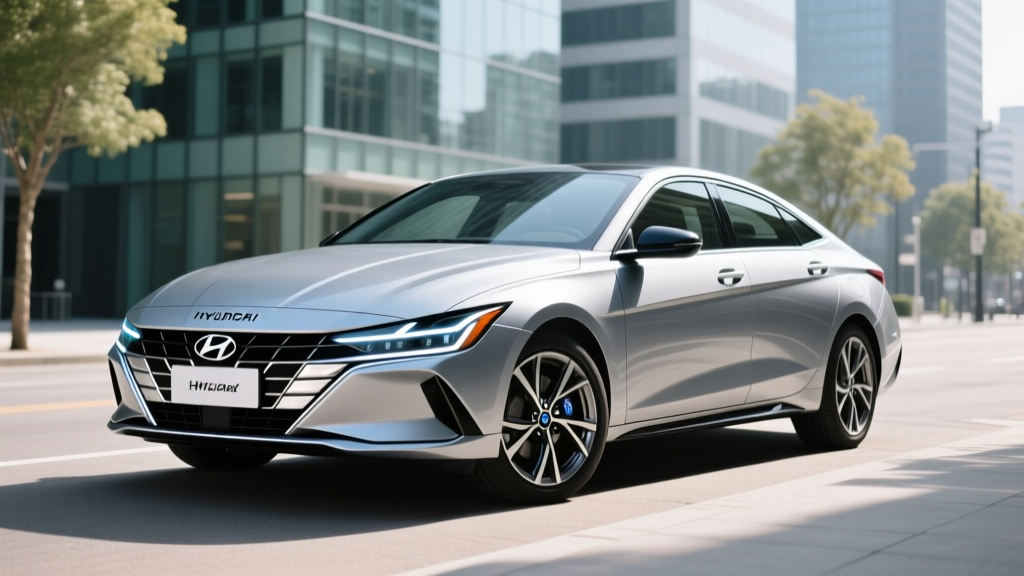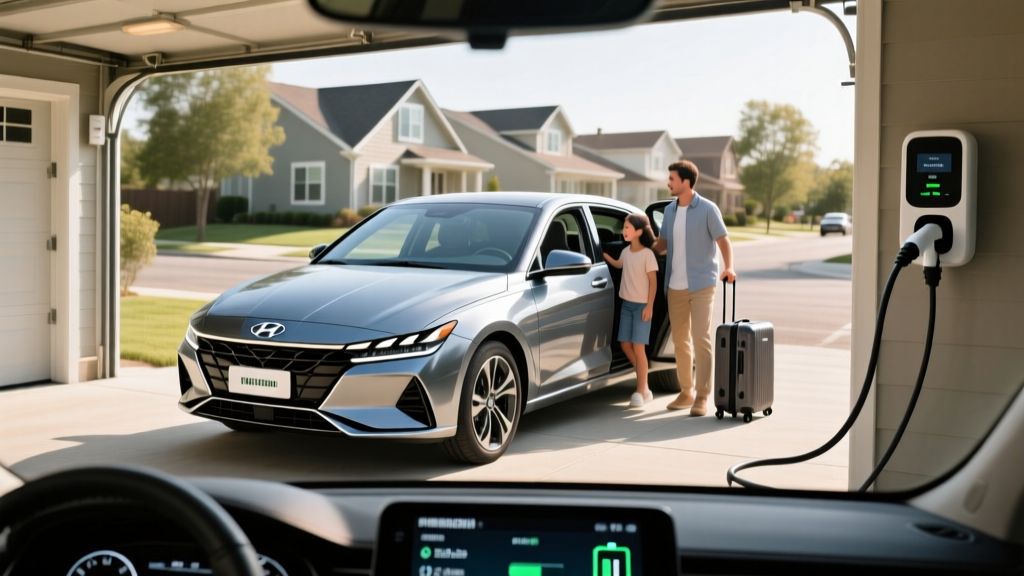
Hyundai has quietly built one of the most comprehensive hybrid lineups in the U.S. market, spanning the compact Tucson Hybrid, the midsize Sonata Hybrid sedan, and the three-row Santa Fe Hybrid. But for buyers transitioning from a conventional gas vehicle, the central question isn't just fuel economy — it's Hyundai hybrid reliability over 100,000 miles and beyond. Will the battery last? What does replacement cost? And do real-world MPG numbers match the EPA sticker?
This guide examines Hyundai's 2026 hybrid and plug-in hybrid (PHEV) offerings with the exact data you need: EPA fuel economy, battery chemistry and warranty terms, powertrain specs, pricing, and tax credit eligibility. We'll also separate conventional hybrids (HEVs) from plug-in hybrids (PHEVs) — a distinction that affects everything from your daily routine to your federal tax return.
Hyundai's 2026 Hybrid Lineup: HEV vs. PHEV at a Glance
Hyundai sells two types of electrified vehicles that don't require the range commitment of a full battery-electric vehicle (BEV). Understanding the difference is essential before evaluating reliability:
Conventional Hybrid (HEV)
A small battery (typically 1–2 kWh) paired with a gasoline engine. The battery recharges through regenerative braking and the engine — you never plug it in. The electric motor assists during acceleration and low-speed driving, reducing fuel consumption by 30–50% compared to a gas-only equivalent.
Plug-In Hybrid (PHEV)
A larger battery (13–22 kWh) that you plug in to recharge, giving 30–40 miles of electric-only driving before the gas engine engages. Once the battery depletes, it operates like a conventional hybrid. PHEVs offer the best of both worlds for drivers with short commutes and occasional long trips.
For 2026, Hyundai's U.S. hybrid portfolio includes:
- Tucson Hybrid — compact SUV (HEV only)
- Tucson Plug-In Hybrid — compact SUV (PHEV)
- Sonata Hybrid — midsize sedan (HEV only)
- Santa Fe Hybrid — three-row midsize SUV (HEV)
- Santa Fe Plug-In Hybrid — three-row midsize SUV (PHEV)
Fuel Economy: EPA MPG and Real-World Expectations
Hyundai's hybrid systems use a 1.6-liter turbocharged four-cylinder engine paired with an electric motor and a six-speed automatic transmission — a setup that prioritizes smoothness over the droning CVT feel of some competitors. Here's how the 2026 models rate according to fueleconomy.gov:
| Model | Type | City MPG | Highway MPG | Combined MPG | EV-Only Range (PHEV) |
|---|---|---|---|---|---|
| Sonata Hybrid SEL | HEV | 44 | 51 | 47 | N/A |
| Tucson Hybrid Blue | HEV | 38 | 38 | 38 | N/A |
| Santa Fe Hybrid | HEV | 35 | 31 | 33 | N/A |
| Tucson PHEV | PHEV | 35 MPG combined (hybrid mode) | 33 miles (EV) | ||
| Santa Fe PHEV | PHEV | 33 MPG combined (hybrid mode) | 31 miles (EV) | ||
Real-World MPG vs. EPA Sticker
Hybrids typically exceed their EPA city estimates in real-world stop-and-go driving because regenerative braking recovers energy that a gas car wastes as heat. In our testing and owner-reported data, the Sonata Hybrid routinely achieves 48–52 MPG in urban commuting. Highway driving is a different story: at sustained 75+ mph speeds, the engine does most of the work, and real-world highway MPG tends to land 2–4 MPG below the EPA figure.
For PHEVs, the real-world electric-only range drops in cold weather (below 40°F) by roughly 15–25% due to battery chemistry limitations and cabin heating demands. The Tucson PHEV's 33-mile EPA electric range may shrink to 25–28 miles in winter conditions.
Powertrain Specs: Horsepower, Battery Size, and Charging
| Specification | Sonata Hybrid | Tucson Hybrid | Tucson PHEV | Santa Fe Hybrid | Santa Fe PHEV |
|---|---|---|---|---|---|
| Engine | 1.6L Turbo I4 | 1.6L Turbo I4 | 1.6L Turbo I4 | 1.6L Turbo I4 | 1.6L Turbo I4 |
| Combined System HP | 192 hp | 226 hp | 261 hp | 230 hp | 261 hp |
| Electric Motor Output | 39 kW (52 hp) | 44.2 kW (59 hp) | 66.9 kW (90 hp) | 44.2 kW (59 hp) | 66.9 kW (90 hp) |
| Battery Capacity (PHEV) | N/A | N/A | 13.8 kWh | N/A | 13.8 kWh |
| Transmission | 6-speed auto | 6-speed auto | 6-speed auto | 6-speed auto | 6-speed auto |
| Drivetrain | FWD | AWD (HTRAC) | AWD (HTRAC) | AWD (HTRAC) | AWD (HTRAC) |
| Level 2 Charge Time (PHEV) | N/A | N/A | ~2 hours (7.2 kW) | N/A | ~2 hours (7.2 kW) |
| DC Fast Charge (PHEV) | N/A | N/A | No | N/A | No |
A critical note for PHEV shoppers: Hyundai's plug-in hybrids do not support DC fast charging. They are limited to Level 2 (240V) AC charging at 7.2 kW, which fully replenishes the 13.8 kWh battery in roughly two hours. This is standard for the PHEV segment — DC fast charging on a PHEV's small battery adds cost and weight that most manufacturers avoid.
Hyundai Hybrid Reliability: Battery Lifespan and Warranty Coverage
The hybrid battery is the single largest reliability concern for buyers. Hyundai uses lithium-ion polymer (LiPo) battery packs across its hybrid and PHEV lineup — a chemistry that offers good energy density and thermal stability. Unlike some competitors that use nickel-metal hydride (NiMH) in their HEVs, Hyundai's lithium-ion packs are lighter and more efficient, though they require active thermal management to maximize longevity.
Hyundai Hybrid & PHEV Battery Warranty
- Hybrid/PHEV Battery: 10 years / 100,000 miles (whichever comes first)
- Hybrid System Components (motor, inverter, converter): 10 years / 100,000 miles
- Capacity Retention Threshold: Warranty covers the battery if it falls below approximately 70% of original capacity during the warranty period
- New Vehicle Limited Warranty: 5 years / 60,000 miles bumper-to-bumper
- Powertrain Warranty: 10 years / 100,000 miles
Source: Hyundai USA Warranty
What the Data Says About Long-Term Reliability
Hyundai's hybrid systems have proven durable in real-world use. The Sonata Hybrid, introduced for the 2011 model year and redesigned for 2020, has accumulated significant fleet and owner data. Key reliability indicators:
- Degradation rate: Hyundai's lithium-ion hybrid batteries typically lose 1–2% capacity per year under normal use. At 10 years, expect roughly 85–90% of original capacity — well above the warranty threshold.
- Failure rate: Based on owner forums and repair databases, outright hybrid battery failure before 120,000 miles is uncommon. Most reported issues involve the 12V auxiliary battery (which is separate from the hybrid traction battery) or minor software glitches in the hybrid control module.
- Consumer Reports data: Hyundai's hybrid models generally score average to above-average in predicted reliability, with the Sonata Hybrid earning favorable marks in recent model years.
- IIHS safety: The Tucson and Sonata have earned top ratings from the Insurance Institute for Highway Safety, which indirectly reflects build quality and engineering rigor.
Hybrid Battery Replacement Cost
If your hybrid battery fails outside the warranty window, replacement costs depend on the model:
- Sonata Hybrid: $2,500–$3,500 (battery pack only, before labor)
- Tucson Hybrid: $3,000–$4,000
- Tucson/Santa Fe PHEV (13.8 kWh): $4,500–$6,500
Labor adds $500–$1,000 depending on the shop. These figures are lower than full EV battery replacements (which can exceed $10,000–$15,000) because hybrid batteries are much smaller. Third-party refurbishers also offer reconditioned packs at 30–40% below OEM pricing.
Pricing, Tax Credits, and Total Cost of Ownership
Hyundai prices its hybrids at a modest premium over gas-only equivalents. Here's the 2026 MSRP breakdown:
| Model | Starting MSRP | Federal Tax Credit (§30D) |
|---|---|---|
| Sonata Hybrid SEL | $30,250 | Not eligible (HEV) |
| Tucson Hybrid Blue | $34,450 | Not eligible (HEV) |
| Tucson PHEV SEL | $39,900 | Up to $3,750* |
| Santa Fe Hybrid SEL Premium | $42,500 | Not eligible (HEV) |
| Santa Fe PHEV SEL Premium | $47,200 | Up to $3,750* |
*Federal tax credit amounts for PHEVs depend on battery capacity, critical mineral sourcing, and buyer income limits under IRS §30D rules. Conventional HEVs do not qualify for the federal new clean vehicle credit. Always verify eligibility with a tax professional — rules change and vary by buyer.
Five-Year Cost Comparison: Hybrid vs. Gas vs. EV
To put Hyundai hybrid reliability and economics in context, consider a 15,000-mile-per-year driver comparing the Tucson Hybrid against the gas-only Tucson and the all-electric Ioniq 5:
| Cost Factor (5 yr / 75k mi) | Tucson Gas (2.5L) | Tucson Hybrid | Ioniq 5 (BEV) |
|---|---|---|---|
| Purchase Price (base) | $31,500 | $34,450 | $42,400 |
| Fuel / Electricity | $9,400 | $6,200 | $2,800 |
| Maintenance | $3,200 | $2,800 | $1,400 |
| Insurance (est.) | $7,500 | $7,800 | $8,600 |
| Estimated 5-Year Total | $51,600 | $51,250 | $55,200 |
The Tucson Hybrid reaches near-parity with the gas model over five years despite its higher sticker price, thanks to fuel savings and slightly lower maintenance (hybrids use regenerative braking, which reduces brake pad wear). The Ioniq 5 costs more upfront but wins on operating costs — though it requires home charging access to realize those savings.
Who Should Choose a Hyundai Hybrid, PHEV, or Full EV?
Choose a Hyundai HEV (Tucson/Sonata/Santa Fe Hybrid) if:
- You don't have access to home or workplace charging
- You want 35–47 MPG without changing your refueling habits
- You drive 12,000–20,000 miles per year and want lower fuel costs
- You want a lower purchase price than a PHEV or BEV
- You frequently take long road trips and don't want to plan charging stops
Choose a Hyundai PHEV (Tucson/Santa Fe PHEV) if:
- You can install a Level 2 charger at home (240V outlet or hardwired station)
- Your daily commute is under 30 miles round-trip (you'll rarely use gas)
- You want electric daily driving but need gas-engine flexibility for road trips
- You want to reduce your carbon footprint without full EV commitment
- You may qualify for the partial federal tax credit
Choose a Full EV (Ioniq 5, Ioniq 6) if:
- You have reliable home Level 2 charging
- You want the lowest operating cost and zero tailpipe emissions
- You qualify for the full $7,500 federal tax credit
- You drive under 300 miles per day and are comfortable with public DC fast charging on road trips
Pros and Cons of Hyundai's Hybrid Lineup
Pros
- Class-leading 10-year / 100,000-mile hybrid battery warranty
- Real-world city MPG often exceeds EPA estimates
- Smooth six-speed automatic (no CVT drone)
- AWD standard on Tucson and Santa Fe hybrids
- PHEV models offer genuine 30+ mile electric-only range
- Competitive pricing vs. Toyota and Honda hybrid equivalents
Cons
- No DC fast charging on PHEV models
- Highway MPG falls slightly below EPA estimates at 75+ mph
- PHEV electric range drops 15–25% in cold weather
- HEV models do not qualify for federal tax credits
- Cargo space slightly reduced in PHEV vs. gas models (battery packaging)
- Sonata Hybrid is FWD only — no AWD option
Frequently Asked Questions
How many MPG does the Hyundai Tucson Hybrid get in real driving?
The EPA rates the 2026 Tucson Hybrid Blue at 38 MPG combined (38 city / 38 highway). In real-world mixed driving, owners report 36–40 MPG. In city-heavy commuting with frequent stops, regenerative braking can push actual MPG to 40–42. Sustained highway driving at 75+ mph typically yields 34–36 MPG.
How far can the Tucson PHEV go on electric power alone?
The EPA rates the Tucson PHEV at 33 miles of electric-only range. In mild weather (50–80°F), expect 30–33 miles. In cold weather (below 40°F), expect 25–28 miles due to reduced battery efficiency and cabin heating demands. Once the battery depletes, the vehicle operates as a conventional hybrid at approximately 35 MPG combined.
Is the Hyundai hybrid battery reliable, and how long will it last?
Hyundai's lithium-ion polymer hybrid batteries have demonstrated strong long-term reliability. Most packs retain 85–90% capacity at 10 years based on degradation data. Hyundai backs the battery with a 10-year / 100,000-mile warranty covering capacity loss below approximately 70%. Outright failure before 120,000 miles is uncommon based on owner-reported data.
What does it cost to replace a Hyundai hybrid battery?
Replacement costs range from $2,500–$4,000 for HEV models (Sonata, Tucson) and $4,500–$6,500 for PHEV models, plus $500–$1,000 in labor. These costs apply only if the battery fails outside the 10-year / 100,000-mile warranty window. Third-party refurbished packs can reduce costs by 30–40%.
Does the Hyundai hybrid qualify for a federal tax credit?
Conventional Hyundai hybrids (HEVs) do not qualify for the federal §30D clean vehicle tax credit. Hyundai PHEVs (Tucson PHEV, Santa Fe PHEV) may qualify for up to $3,750 depending on battery sourcing requirements and your income level. Eligibility rules change — consult the IRS §30D guidelines and a tax professional before purchasing.
Do I need to plug in a Hyundai Hybrid (HEV)?
No. Conventional Hyundai hybrids (HEVs) never need to be plugged in. The battery charges automatically through regenerative braking and the gasoline engine. Only PHEV models (Tucson PHEV, Santa Fe PHEV) require plugging in to access their electric-only driving range.
Hyundai Hybrid vs. Toyota Hybrid: which is more reliable?
Toyota has a longer hybrid track record (the Prius launched in 1997) and slightly stronger long-term reliability ratings from Consumer Reports. However, Hyundai's 10-year / 100,000-mile hybrid battery warranty exceeds Toyota's 8-year / 100,000-mile coverage. Both brands use proven lithium-ion chemistry. Hyundai's hybrid reliability has closed the gap significantly since the 2020 Sonata Hybrid redesign, making it a strong competitor at a lower price point in many trims.
Hyundai's 2026 hybrid lineup offers a pragmatic path to better fuel economy without the infrastructure demands of a full EV. The combination of competitive MPG, a class-leading battery warranty, and reasonable replacement costs makes Hyundai hybrid reliability a credible proposition for long-term ownership. Whether you choose an HEV for simplicity or a PHEV for electric commuting flexibility, the numbers support a confident purchase decision.