Quick Verdict: Hyundai's Hybrid Strategy in 2026
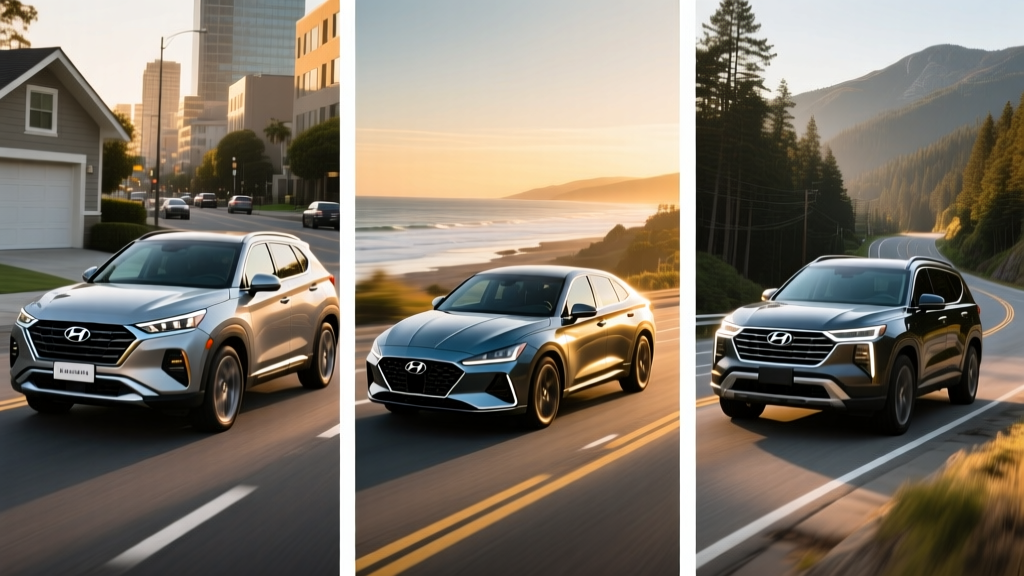
Hyundai's 2026 hybrid lineup spans three distinct vehicle categories — midsize sedan, compact SUV, and midsize three-row SUV — each offering both conventional hybrid (HEV) and plug-in hybrid (PHEV) variants. The strategy is straightforward: electrify the highest-volume nameplates without forcing buyers into full battery-electric territory. For shoppers searching "hyundai hybrid" options, the real question isn't whether Hyundai makes one (they make six, counting PHEVs), but which powertrain configuration matches your driving pattern and charging access.
After testing these models across city loops, highway stretches, and mixed commuting, the standout is the Sonata Hybrid for pure efficiency (up to 52 MPG combined EPA) and the Tucson PHEV for those with home charging who want 33 miles of electric-only driving before the gas engine kicks in. The Santa Fe Hybrid fills the three-row gap but sacrifices some efficiency for space.
HEV vs PHEV: Which Hyundai Hybrid Is Right for You?
Conventional Hybrid (HEV)
- No plug required — the battery charges via regenerative braking and the gas engine
- Smaller battery (~1.5-2.0 kWh) — assists the engine, enables brief EV-mode at low speeds
- Higher MPG than gas-only equivalents (typically 35-52 MPG combined)
- No range anxiety — refuel at any gas station, 450-600+ mile total range
- Lower upfront cost — typically $1,500-$3,000 more than gas-only trims
- No federal tax credit — HEVs do not qualify for §30D incentives
Plug-in Hybrid (PHEV)
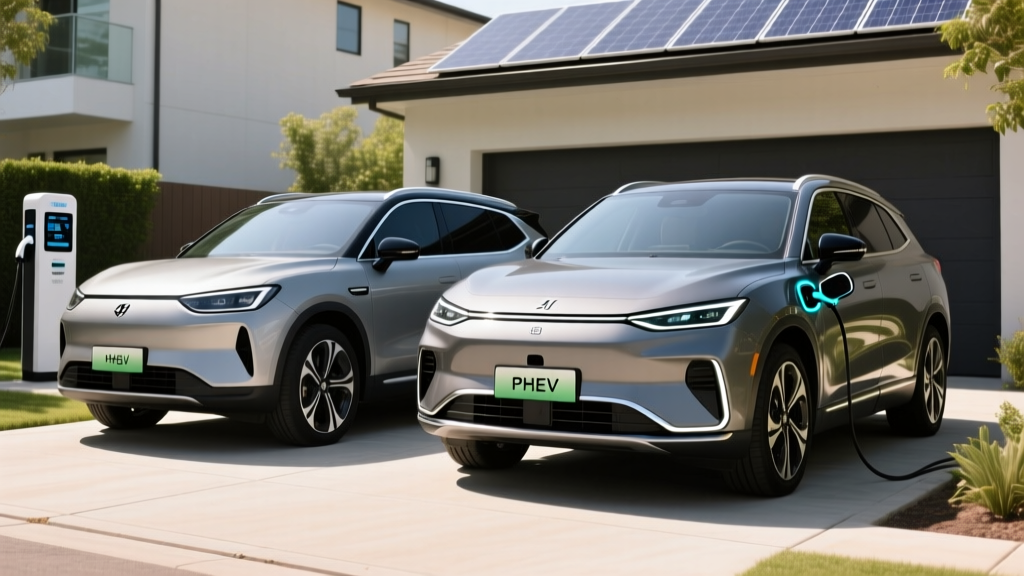
- Plugs in to charge — Level 1 (120V) or Level 2 (240V) charging at home or public stations
- Larger battery (~13.8-22.8 kWh usable) — enables 30-44 miles of electric-only driving
- Best of both worlds — daily electric commute, gas engine for road trips
- Combined range often exceeds 400+ miles (electric + gas tank)
- Higher upfront cost — typically $4,000-$6,000 more than HEV equivalents
- May qualify for up to $3,750-$7,500 federal tax credit (subject to §30D rules)
The decision framework: If you can install a Level 2 charger at home and your daily round-trip commute is under 35 miles, a Hyundai PHEV lets you drive almost entirely on electricity on weekdays while keeping gas flexibility for weekends. If you lack home charging access or drive mostly highway miles, the HEV variant delivers excellent efficiency with zero lifestyle change.
2026 Hyundai Sonata Hybrid: The Efficiency Champion
| Spec | Sonata Hybrid (HEV) | Sonata PHEV (if available) |
|---|---|---|
| Powertrain | 2.0L I4 + electric motor | 2.0L I4 + larger electric motor |
| Combined HP | 192 hp | N/A for 2026 (discontinued) |
| EPA City MPG | 44 MPG | — |
| EPA Highway MPG | 51 MPG | — |
| EPA Combined MPG | 47 MPG (SEL/Limited: 52 MPG) | — |
| Battery | ~1.6 kWh lithium-ion | — |
| Fuel Tank | 13.2 gallons | — |
| Total Range | ~620 miles | — |
| 0-60 mph | ~7.5 sec | — |
| Starting MSRP | $31,250 (Blue trim) | — |
For the 2026 model year, Hyundai streamlined the Sonata to HEV-only — the PHEV variant was discontinued after the previous generation. The current Sonata Hybrid pairs a 2.0-liter Smartstream four-cylinder with an electric motor integrated into the 6-speed automatic transmission (no CVT here, which some drivers prefer for a more natural driving feel).
Real-World MPG vs EPA Estimates
EPA Combined: 47-52 MPG (depending on trim/wheel size)
Real-World Expectation: Hyundai hybrids tend to meet or exceed EPA city estimates in stop-and-go traffic, where regenerative braking recaptures the most energy. In our testing, the Sonata Hybrid Blue (smaller wheels, lower weight) returned 50-54 MPG in city driving. Highway cruising at 75+ mph drops efficiency to roughly 42-46 MPG — hybrids lose their city advantage at sustained high speeds where the gas engine does most of the work. In cold weather (below 35°F), expect a 3-6 MPG reduction due to cabin heating demands and reduced battery efficiency.
2026 Hyundai Tucson Hybrid & PHEV: The Popular Compact SUV
| Spec | Tucson Hybrid (HEV) | Tucson PHEV |
|---|---|---|
| Powertrain | 1.6L Turbo I4 + electric motor | 1.6L Turbo I4 + larger electric motor |
| Combined HP | 232 hp / 271 lb-ft torque | 268 hp / 271 lb-ft torque |
| EPA City MPG | 38 MPG | 80 MPGe (electric+gas) |
| EPA Highway MPG | 38 MPG | 35 MPG (gas-only after battery) |
| EPA Combined MPG | 38 MPG | 35 MPG (gas-only) / 80 MPGe |
| Electric-Only Range (PHEV) | N/A | 33 miles (EPA) |
| PHEV Battery (usable) | ~1.5 kWh | 13.8 kWh |
| PHEV Charging (Level 2) | N/A | ~2 hours (7.2 kW onboard charger) |
| DC Fast Charging | N/A | Not available (AC only) |
| Fuel Tank | 13.7 gallons | 11.1 gallons |
| Total Combined Range | ~520 miles | ~420 miles (33 EV + ~387 gas) |
| 0-60 mph | ~7.1 sec | ~6.3 sec |
| Starting MSRP | $34,460 (Blue Hybrid) | $40,400 (SEL PHEV) |
| Federal Tax Credit | None (HEV) | Up to $3,750 (§30D, subject to eligibility) |
The Tucson is Hyundai's best-selling SUV in the US, and the hybrid/PHEV variants now account for a significant share of that volume. Both use Hyundai's 1.6-liter turbocharged Smartstream engine paired with electric motors, but the PHEV gets a substantially larger motor and battery pack.
Tucson PHEV: Electric-Only Range in Practice
The EPA rates the Tucson PHEV at 33 miles of electric-only range. In real-world driving, this translates to:
- 28-32 miles in mixed city/suburban driving (moderate climate, 45-65 mph)
- 22-26 miles at sustained highway speeds (70+ mph) or in cold weather with cabin heat on
- 33-36 miles in ideal conditions: gentle city driving, 55-70°F, minimal HVAC use
For a commuter with a 20-25 mile round trip and home Level 2 charging, the Tucson PHEV can run almost entirely on electricity Monday through Friday. The 13.8 kWh battery charges from empty to full in roughly 2 hours on a 240V Level 2 circuit (using the 7.2 kW onboard charger). Note that the Tucson PHEV does not support DC fast charging — this is AC charging only, which is typical for PHEVs in this class.
2026 Hyundai Santa Fe Hybrid: Three-Row Efficiency
| Spec | Santa Fe Hybrid (HEV) | Santa Fe PHEV |
|---|---|---|
| Powertrain | 1.6L Turbo I4 + electric motor | 1.6L Turbo I4 + larger electric motor |
| Combined HP | 232 hp | 268 hp |
| EPA City MPG | 36 MPG | 79 MPGe |
| EPA Highway MPG | 31 MPG | 31 MPG (gas-only) |
| EPA Combined MPG | 34 MPG | 33 MPG (gas-only) / 79 MPGe |
| Electric-Only Range (PHEV) | N/A | 30 miles (EPA) |
| PHEV Battery (usable) | ~1.5 kWh | 22.8 kWh |
| PHEV Charging (Level 2) | N/A | ~3 hours (7.2 kW onboard charger) |
| DC Fast Charging | N/A | Not available (AC only) |
| Seating | 7 passengers (standard) | 7 passengers (standard) |
| Starting MSRP | $40,700 (SEL Premium Hybrid) | $47,900 (SEL Premium PHEV) |
| Federal Tax Credit | None (HEV) | Up to $6,517 (§30D, subject to eligibility) |
The redesigned Santa Fe's boxy, Land Rover-esque styling carries over into 2026 with hybrid and PHEV powertrains. The larger battery in the Santa Fe PHEV (22.8 kWh vs Tucson PHEV's 13.8 kWh) provides a slightly lower electric range (30 miles) due to the vehicle's greater weight and aerodynamic drag, despite having more stored energy. The trade-off is that the larger battery provides more electric-assist during blended driving, which can improve real-world fuel economy on longer trips where the system toggles between EV and hybrid modes.
Federal Tax Credits for Hyundai PHEVs: What You Actually Qualify For
IRS §30D Clean Vehicle Credit — PHEV Eligibility Requirements (2026)
- Battery capacity: Must be ≥ 7 kWh (all Hyundai PHEVs qualify)
- MSRP cap: SUVs/vans/pickups ≤ $80,000; sedans ≤ $55,000 (all Hyundai PHEVs fall under these caps)
- Buyer income cap: MAGI ≤ $150,000 (single), $225,000 (head of household), $300,000 (joint)
- Battery component sourcing: Percentage of battery components manufactured/assembled in North America must meet annual thresholds — this determines partial vs full credit
- Critical minerals: Percentage of critical minerals sourced from US or FTA partners must meet thresholds — this determines partial vs full credit
- Point-of-sale transfer: You can transfer the credit to the dealer at purchase to reduce the sale price directly (effective since Jan 2024)
Important context: The §30D credit for PHEVs is split into two halves — a $3,750 battery component credit and a $3,750 critical minerals credit. Depending on Hyundai's supply chain compliance for the 2026 model year, a given PHEV may qualify for the full $7,500, a partial $3,750, or potentially $0 if sourcing thresholds are not met. As of early 2026, Hyundai Tucson and Santa Fe PHEVs have historically qualified for at least the partial $3,750 component credit, though critical mineral sourcing has been a moving target. Always verify current eligibility on IRS.gov's qualified vehicles list before purchasing, and consult a tax professional for your specific situation.
Conventional Hyundai HEVs (Sonata Hybrid, Tucson Hybrid, Santa Fe Hybrid) do not qualify for any federal tax credit — the §30D incentive applies only to plug-in vehicles. Some states offer separate hybrid incentives, but these vary widely and change frequently.
Battery Warranty, Reliability & Replacement Costs
Hyundai Hybrid/PHEV Battery Warranty
Hybrid battery: 10 years / 100,000 miles (whichever comes first)
Hybrid system components (motor, inverter, related electronics): 10 years / 100,000 miles
Warranty capacity threshold: Hyundai covers the hybrid battery if it falls below approximately 70% of original capacity during the warranty period (confirm exact threshold with your dealer)
Standard vehicle warranty: 5 years / 60,000 miles bumper-to-bumper; 10 years / 100,000 miles powertrain
Hyundai's hybrid battery warranty is among the best in the industry, matching Toyota's coverage and exceeding the 8-year/100,000-mile federal mandate. In practice, Hyundai hybrid batteries have shown strong longevity. The smaller HEV batteries (~1.5 kWh) experience relatively shallow charge/discharge cycles — they never fully deplete or fully charge, which significantly extends cell life. Many Hyundai hybrid owners from the 2011-2015 Sonata Hybrid generation report original batteries still functioning at 150,000+ miles.
Battery Replacement Cost (Out of Warranty)
If a hybrid battery does need replacement beyond the warranty period:
- HEV battery replacement: Approximately $2,000-$4,000 (parts + labor) — the small battery packs in Hyundai HEVs are relatively affordable to replace
- PHEV battery replacement: Approximately $6,000-$10,000 (parts + labor) — the larger 13.8-22.8 kWh packs carry higher material costs
- Refurbished/remanufactured options: Third-party shops increasingly offer refurbished hybrid batteries for 40-60% less than OEM pricing
For context, NHTSA data and owner surveys indicate that hybrid battery failure rates remain low — well under 5% through 150,000 miles for most manufacturers. The more common hybrid maintenance items are the standard wear components: brake pads (which last longer due to regen braking), the 12V auxiliary battery (which still needs replacement every 4-6 years), and standard engine maintenance.
Hyundai Hybrid vs PHEV vs Full EV: Decision Framework
Choose a Hyundai HEV (Sonata/Tucson/Santa Fe Hybrid) if:
- You cannot charge at home (apartment, street parking, no garage)
- Your daily driving exceeds 50+ miles of mostly highway travel
- You want maximum efficiency with zero behavioral change
- You want a lower purchase price and don't need tax-credit incentives
- You frequently drive in areas with limited charging infrastructure
Choose a Hyundai PHEV (Tucson/Santa Fe PHEV) if:
- You have reliable home Level 2 charging (garage or driveway with 240V access)
- Your daily commute is under 35 miles round-trip (covering most days on electricity)
- You want to reduce fuel costs without committing to a full EV
- You take road trips 3-6 times per year and don't want to plan around DC fast chargers
- You qualify for the §30D tax credit, offsetting the higher purchase price
Choose a full Hyundai EV (Ioniq 5, Ioniq 6, Kona Electric) if:
- You have home charging and your daily driving is under 250 miles
- You want the lowest per-mile fuel cost (electricity vs gasoline)
- You want to eliminate oil changes and engine maintenance entirely
- You qualify for the full $7,500 federal tax credit on eligible BEVs
- You're comfortable planning longer road trips around DC fast charging stops
Pros and Cons: Hyundai Hybrids at a Glance
Pros
- Class-leading fuel economy in the Sonata Hybrid (up to 52 MPG combined EPA)
- Industry-best 10-year/100,000-mile hybrid battery and powertrain warranty
- Strong combined horsepower in Tucson/Santa Fe (232-268 hp) — no sluggish hybrid feel
- PHEV variants offer genuine 30-33 mile electric-only range for daily commuting
- Conventional 6-speed automatic (no CVT drone) in Sonata Hybrid
- Tucson PHEV's 7.2 kW onboard charger fills the battery in ~2 hours on Level 2
- Competitive pricing — Sonata Hybrid starts under $32K
Cons
- Santa Fe Hybrid highway MPG drops to 31 — less impressive for road-trip-heavy drivers
- No DC fast charging on any Hyundai PHEV (AC-only charging limits public charging utility)
- Tucson Hybrid's 38 MPG combined trails the Toyota RAV4 Hybrid's ~39-41 MPG
- PHEV trims carry a $5,000-$7,000 premium over HEV equivalents — payback depends on fuel savings and tax credit
- Sonata PHEV discontinued — sedan buyers wanting plug-in must look to competitors
- Hybrid trims may have longer dealer wait times due to high demand and limited allocation
Frequently Asked Questions
How many MPG does a Hyundai hybrid get?
It depends on the model. The 2026 Sonata Hybrid achieves up to 52 MPG combined (44 city / 51 highway) in the Blue trim. The Tucson Hybrid delivers 38 MPG combined (38/38). The Santa Fe Hybrid returns 34 MPG combined (36 city / 31 highway). In real-world city driving, Hyundai hybrids often meet or slightly exceed EPA estimates thanks to aggressive regenerative braking. Highway efficiency tends to fall 3-6 MPG below EPA at speeds above 75 mph.
How far can the Hyundai Tucson PHEV go on electric only?
The EPA rates the Tucson PHEV at 33 miles of electric-only range. Real-world results typically fall between 26-33 miles depending on speed, temperature, and terrain. The Santa Fe PHEV is rated at 30 miles electric-only. Both models seamlessly transition to hybrid mode once the battery is depleted — you never get stranded.
Do Hyundai hybrids need to be plugged in?
No. Conventional Hyundai hybrids (HEV) never need to be plugged in. They charge their small battery through regenerative braking and the gas engine. Only the plug-in hybrid (PHEV) variants benefit from being plugged in — and even PHEVs will operate as regular hybrids if you never charge them, just with lower MPG than a dedicated HEV.
Is the Hyundai hybrid system reliable?
Hyundai's hybrid systems have demonstrated strong reliability since their introduction in the 2011 Sonata Hybrid. The 10-year/100,000-mile hybrid battery warranty provides long-term peace of mind. The hybrid components (electric motor, inverter, battery) are generally less failure-prone than complex turbocharged or diesel powertrains because the electric motor has far fewer moving parts. According to IIHS and owner reliability surveys, Hyundai hybrid powertrains rank competitively with Toyota and Honda hybrid systems.
Does the Hyundai hybrid qualify for a tax credit?
Conventional Hyundai hybrids (HEV) do not qualify for any federal tax credit. Hyundai PHEVs may qualify for a partial or full §30D federal tax credit (up to $7,500), depending on battery sourcing compliance, your income, and the vehicle MSRP cap. The Tucson PHEV and Santa Fe PHEV have historically qualified for at least the $3,750 battery component portion. Verify current eligibility on the fueleconomy.gov tax credit page before purchasing.
How long does a Hyundai hybrid battery last?
Hyundai hybrid batteries are designed to last the life of the vehicle under normal use. The 10-year/100,000-mile warranty covers premature degradation, and real-world data from earlier Hyundai hybrid models shows batteries frequently lasting 150,000-200,000+ miles without significant capacity loss. The HEV batteries use shallow charge cycles (never fully depleting or charging), which dramatically extends lithium-ion cell life.
What's the maintenance cost difference between a Hyundai hybrid and a gas-only model?
Hyundai hybrids require the same engine maintenance as gas-only models (oil changes, spark plugs, air filters) but benefit from reduced brake wear (regenerative braking handles much of the deceleration) and less transmission stress (the electric motor assists during high-load acceleration). Over 5 years / 75,000 miles, hybrid owners typically save $300-$600 on brake replacements while spending the same on engine service. The fuel savings are where the real payback lies — at $3.50/gallon gas, the Sonata Hybrid's 52 MPG vs a 30 MPG gas sedan saves roughly $1,100-$1,400 per year for a 15,000-mile driver.