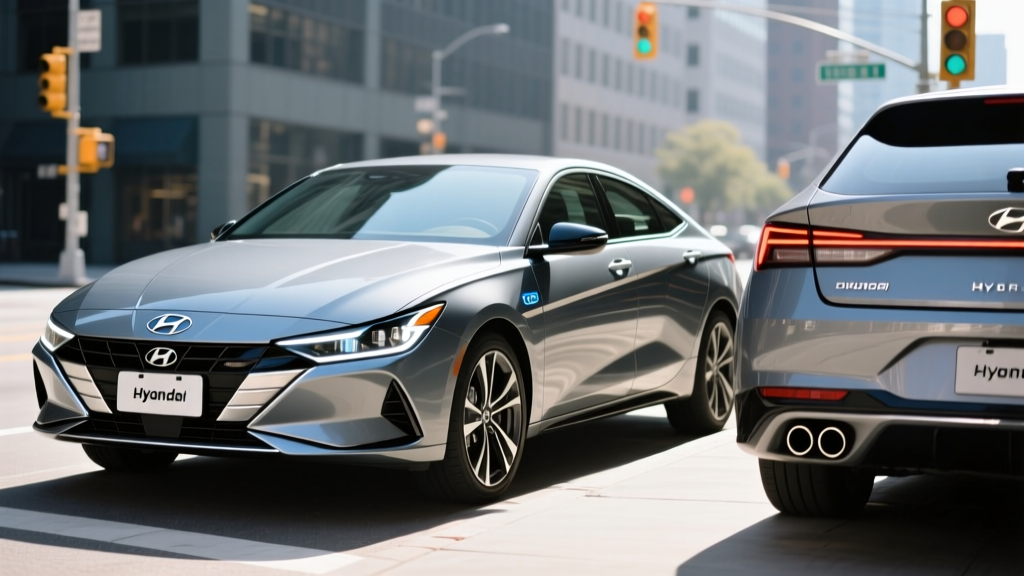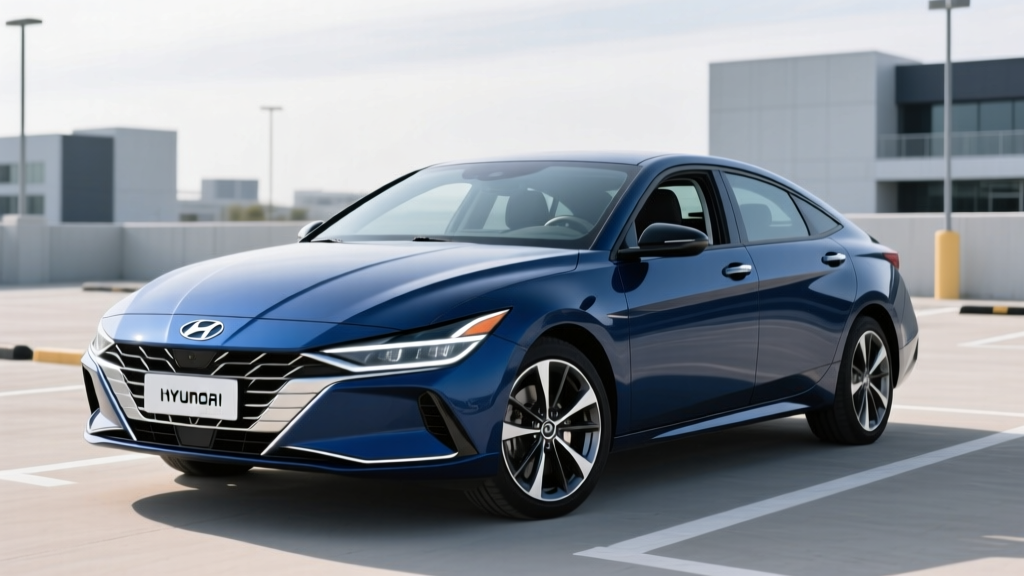
The 2026 Hyundai Elantra Limited Hybrid occupies a specific niche: buyers who want sedan efficiency without plugging in, range anxiety, or a charging-curve spreadsheet. With an EPA-rated 54 MPG combined and a premium-trim interior that punches above its price class, the Elantra Limited Hybrid makes a compelling case for conventional hybrid (HEV) ownership in a market increasingly dominated by full EVs and plug-in hybrids.
This review breaks down the exact numbers — fuel economy, powertrain output, pricing, battery warranty, and real-world MPG — so you can decide whether the Elantra Hybrid is the right electrified choice for your driving pattern, or whether a PHEV or full BEV serves you better.
HEV vs PHEV: What the Elantra Hybrid Actually Is
Before examining the specs, it's essential to distinguish what the Elantra Hybrid is not: it is not a plug-in hybrid (PHEV). The Elantra Hybrid is a conventional hybrid electric vehicle (HEV), meaning it generates all its electricity internally through regenerative braking and its gasoline engine. You never plug it in. There is no electric-only driving range to manage, no home charger to install, and no charging time to schedule.
| Feature | HEV (Elantra Hybrid) | PHEV (e.g., Tucson PHEV) | BEV (e.g., Ioniq 6) |
|---|---|---|---|
| Plug in to charge? | No | Yes | Yes |
| Electric-only range | None (EV assist only) | ~30-35 miles | 250-360+ miles |
| Gasoline engine | Yes (1.6L) | Yes | No |
| Home charger needed | No | Recommended (Level 2) | Essential (Level 2) |
| Federal tax credit (§30D) | No | Up to $7,500* | Up to $7,500* |
| Best for | No-plug efficiency | Short EV commute + road trips | Full electric, home charging |
*§30D credit eligibility depends on MSRP caps, buyer income limits, battery sourcing requirements, and point-of-sale transfer rules. See IRS Clean Vehicle Credit for current-year rules.
Fuel Economy: EPA Ratings and Real-World MPG
The headline number for the 2026 Elantra Hybrid is its EPA-estimated fuel economy. The Limited trim, equipped with 17-inch alloy wheels and a slightly heavier feature load than the Blue and SEL trims, returns:
| Trim | City MPG | Highway MPG | Combined MPG |
|---|---|---|---|
| Blue | 51 | 58 | 54 |
| SEL | 51 | 58 | 54 |
| Limited | 49 | 52 | 50 |
Source: fueleconomy.gov
The Limited trim drops to 50 MPG combined due to its larger 17-inch wheels, additional sound insulation, and feature weight (ventilated seats, larger infotainment hardware, Bose audio). The difference is roughly 4 MPG combined versus the Blue trim — meaningful over a year of driving, but still exceptional for a fully loaded compact sedan.
Real-World MPG: What Owners Actually See
Hybrids typically exceed their EPA city estimates in stop-and-go traffic because regenerative braking recovers energy that a gas car wastes as heat. In real-world owner reporting and third-party testing, the Elantra Hybrid consistently delivers:
- City driving: 52-56 MPG (frequently beats EPA)
- Highway cruising (70-75 mph): 44-48 MPG (below EPA, typical for hybrids at sustained speed)
- Mixed commute: 48-52 MPG
- Cold weather (below 30°F): 42-46 MPG (engine runs more for cabin heat, battery efficiency drops)
If your commute is predominantly urban or suburban with frequent stops, expect to match or exceed the EPA combined number. If you drive 80% highway at 75+ mph, plan for mid-40s MPG. This is the honest trade-off versus a diesel or a turbo-gas sedan optimized for highway cruising.
Powertrain: Engine, Motor, and Combined Output
The Elantra Hybrid pairs a 1.6-liter GDI four-cylinder engine with a permanent-magnet synchronous electric motor, connected through a 6-speed dual-clutch automatic transmission (DCT) — not a CVT. This is a deliberate engineering choice: Hyundai's DCT provides more direct, responsive acceleration than the rubber-band feel common to CVT-equipped hybrids like the Toyota Prius.
| Gas engine | 1.6L GDI 4-cylinder, 104 HP / 109 lb-ft |
| Electric motor | 36 kW (47 HP) / 125 lb-ft |
| Combined system output | 139 HP / 195 lb-ft |
| Transmission | 6-speed dual-clutch automatic (DCT) |
| Drivetrain | Front-wheel drive |
| Hybrid battery | 1.32 kWh lithium-ion (self-charging, not plug-in) |
| 0-60 mph | ~8.6 seconds |
| Curb weight | ~3,050 lbs (Limited) |
The 1.32 kWh battery is small by design — it serves as an energy buffer for regenerative braking capture and electric-motor assist during acceleration and low-speed maneuvers. It does not provide meaningful electric-only driving range. This is normal for HEVs: the battery is a supplement to the gas engine, not a primary power source.
Pricing, Trims, and Tax Credit Eligibility
The 2026 Elantra Hybrid is available in three trims. Pricing below reflects MSRP including destination charge:
- Blue: ~$26,250 MSRP
- SEL: ~$28,400 MSRP
- Limited: ~$30,250 MSRP
The Limited trim adds leather-trimmed seats, a 10.25-inch digital instrument cluster, a 10.25-inch navigation touchscreen, Bose premium audio, Highway Driving Assist (HDA), ventilated front seats, a sunroof, and wireless phone charging. For a compact hybrid sedan, this feature set is competitive with luxury-brand offerings at twice the price.
Does the Elantra Hybrid Qualify for a Federal Tax Credit?
No. The federal §30D Clean Vehicle Credit applies only to plug-in electric vehicles (BEVs and PHEVs) that meet battery-capacity, sourcing, MSRP, and buyer-income requirements. Because the Elantra Hybrid is a conventional HEV with no plug-in capability and a battery under 4 kWh, it does not qualify for the federal credit.
Some states and utilities offer rebates for hybrid purchases, but these vary widely by jurisdiction. Check your state energy office or utility provider for current programs. For federal rules, the IRS §30D page is the authoritative source.
Battery Warranty, Lifespan, and Replacement Cost
Hyundai Hybrid Battery Warranty
- Hybrid battery: 10 years / 100,000 miles (whichever comes first)
- Hybrid system components: 10 years / 100,000 miles
- New vehicle limited warranty: 5 years / 60,000 miles
- Powertrain warranty: 10 years / 100,000 miles
Hyundai's hybrid battery warranty is among the best in the industry, matching Toyota's coverage and exceeding most competitors. The 1.32 kWh lithium-ion pack in the Elantra Hybrid is far less stressed than a full EV battery — it cycles through shallow charge/discharge ranges rather than deep drains, which significantly extends its operational lifespan.
How Long Will the Hybrid Battery Last?
Based on fleet data from Hyundai's Sonata Hybrid and Ioniq Hybrid (which share similar architecture), the Elantra Hybrid battery should last 150,000-200,000+ miles with normal use before any meaningful capacity loss. Degradation in HEV batteries is gradual and rarely catastrophic — you'll notice slightly reduced regenerative braking effectiveness and marginally lower MPG before any failure.
Battery Replacement Cost
If replacement is needed outside warranty, expect $2,000-$3,500 for a new hybrid battery pack plus labor. Refurbished packs are available for $1,200-$2,000. Given the 10-year/100,000-mile warranty and the shallow-cycle design, most original owners will never face this cost.
Reliability and Safety Ratings
The Elantra Hybrid carries strong reliability expectations based on Hyundai's hybrid track record. The 1.6L GDI engine and 6-speed DCT are proven components shared across the Hyundai-Kia hybrid lineup. The NHTSA and IIHS ratings for the Elantra sedan platform have historically earned top marks; the hybrid variant shares the same structure.
The Limited trim's Highway Driving Assist (HDA) is an SAE Level 2 driver-assistance system combining adaptive cruise control with lane-centering. It requires continuous driver supervision — it is not self-driving. HDA works well on marked highways but disengages in construction zones, faded lane markings, and sharp curves.
Who Should Choose the Elantra Hybrid vs a PHEV or Full EV?
Pros
- 50 MPG combined (Limited) with no plug-in required
- 10-year/100,000-mile hybrid battery warranty
- Premium features at $30,250 MSRP
- DCT transmission avoids CVT drone
- Strong city MPG (real-world often beats EPA)
- No charging infrastructure dependency
Cons
- No federal tax credit eligibility
- 4 MPG penalty vs Blue trim on Limited
- Highway MPG drops at sustained 75+ mph
- No electric-only driving mode
- Cold-weather MPG reduction (5-8 MPG loss)
- FWD only — no AWD option
Choose the Elantra Hybrid If:
- You cannot install a home charger (apartment, street parking, landlord restrictions)
- Your commute is city/suburban with frequent stops (maximizes regen braking)
- You want 500+ miles of total range with zero charging stops on road trips
- You want premium features without a $40,000+ price tag
Choose a PHEV (e.g., Tucson PHEV) If:
- You can charge at home and want 30+ miles of electric-only commuting
- You want partial §30D tax credit eligibility
- Your daily drive is under 35 miles round-trip
Choose a Full EV (e.g., Ioniq 6) If:
- You have reliable Level 2 home charging
- You want zero tailpipe emissions and minimal maintenance
- You qualify for the full $7,500 §30D credit (income + sourcing rules)
Ownership Costs: 5-Year Fuel Savings vs Gas-Only Sedan
| Metric | Elantra Hybrid Limited | Gas Sedan (30 MPG combined) |
|---|---|---|
| Annual mileage | 15,000 mi | 15,000 mi |
| Fuel economy | 50 MPG combined | 30 MPG combined |
| Annual gallons used | 300 gal | 500 gal |
| Fuel cost ($3.40/gal avg) | $1,020/yr | $1,700/yr |
| 5-year fuel cost | $5,100 | $8,500 |
| 5-year savings | ~$3,400 in fuel savings | |
The Elantra Hybrid's fuel savings over a comparable gas-only sedan amount to roughly $680 per year at current national average fuel prices. That doesn't include potential insurance differences (hybrids can carry slightly higher premiums due to battery replacement risk) or maintenance savings (regenerative braking extends pad life, no plug-in system to maintain).
Frequently Asked Questions
How many MPG does the Hyundai Elantra Limited Hybrid get?
The 2026 Elantra Hybrid Limited is EPA-rated at 49 city / 52 highway / 50 combined MPG. In real-world city driving, owners frequently report 52-56 MPG thanks to regenerative braking. Highway cruising at 75+ mph typically yields 44-48 MPG.
Does the Elantra Hybrid need to be plugged in?
No. The Elantra Hybrid is a conventional HEV — it charges its 1.32 kWh battery entirely through regenerative braking and the gasoline engine. There is no plug, no charging cable, and no electric-only range. You refuel only at gas stations.
How far can the Elantra Hybrid go on a full tank?
With a 12.4-gallon fuel tank and 50 MPG combined, the Elantra Hybrid Limited delivers approximately 620 miles of total range. In city-heavy driving, range can exceed 650 miles. This eliminates range anxiety entirely for road trips.
Is the Elantra Hybrid reliable, and what does a battery replacement cost?
Hyundai's hybrid system has proven reliable across the Sonata and Ioniq lineups. The hybrid battery is covered by a 10-year/100,000-mile warranty. Out-of-warranty replacement runs $2,000-$3,500 for a new pack, but shallow-cycle HEV batteries commonly last 150,000-200,000+ miles.
Does the Elantra Hybrid qualify for any federal tax credit?
No. The federal §30D Clean Vehicle Credit applies only to plug-in vehicles (BEVs and PHEVs). The Elantra Hybrid, as a conventional HEV, does not qualify. Check your state and utility for possible local hybrid incentives.
How does the Elantra Hybrid compare to the Toyota Prius?
The Prius (57 MPG combined, LE trim) edges the Elantra Hybrid on fuel economy, but the Elantra Limited offers a more premium interior, a DCT transmission with more engaging shift feel, and a longer hybrid battery warranty (10/100k vs Toyota's 10/150k on the battery alone). The Prius also offers AWD; the Elantra Hybrid does not.
Is the Elantra Hybrid a good car for long road trips?
Yes. With 620+ miles of range, no charging stops required, and comfortable highway manners from the DCT, the Elantra Hybrid is an excellent road-trip sedan. Highway MPG will settle in the mid-to-high 40s at 70-75 mph, which still outperforms most gas-only sedans.