Quick Verdict: The Elantra Hybrid Earns Its Efficiency Reputation
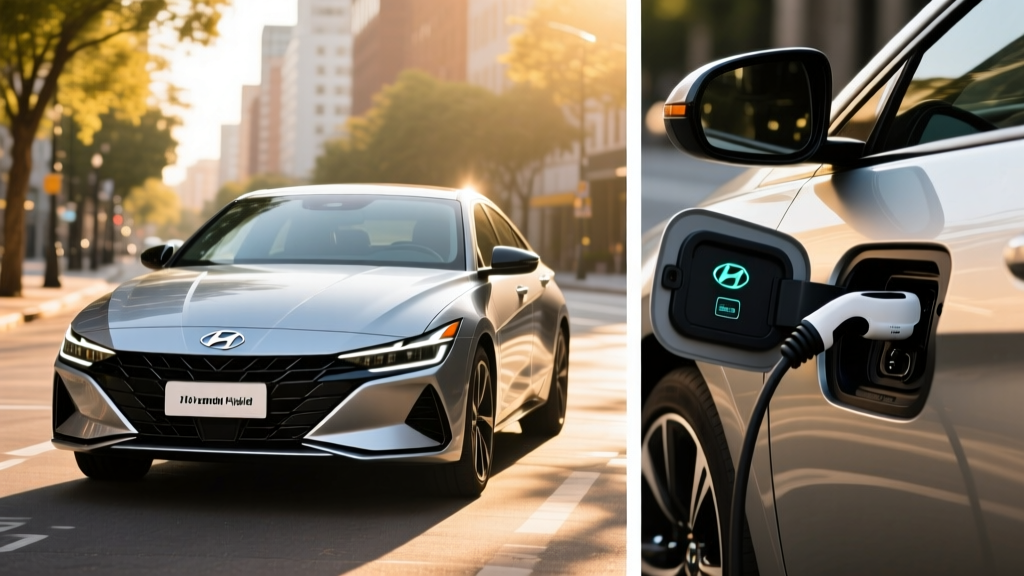
The Hyundai Elantra Hybrid remains one of the most fuel-efficient sedans on the road in 2026, delivering an EPA-estimated 54 MPG combined in its Blue trim. It's a conventional hybrid (HEV) — meaning it charges its own battery through regenerative braking and the gasoline engine, never requiring a plug. For buyers who want electric-only driving without range anxiety, Hyundai also offers the Elantra Plug-in Hybrid (PHEV) variant with roughly 28 miles of electric-only range.
This guide covers both versions: the standard HEV that most buyers should consider, and the PHEV for those with home charging access and short commutes. We'll break down real-world MPG expectations, battery longevity, warranty coverage, and whether either version qualifies for federal tax incentives.
HEV vs PHEV: Which Elantra Hybrid Is Which?
Before diving into specs, it's critical to understand the difference between these two powertrains, because they serve fundamentally different use cases.
Elantra Hybrid (HEV)
- No plug required. The battery charges via regenerative braking and the gasoline engine.
- Best for: Drivers without home charging access, high-mileage commuters, ride-share drivers.
- Fuel economy: Up to 54 MPG combined (EPA, Blue trim).
- Trade-off: No electric-only driving mode; the gasoline engine is always available.
Elantra Plug-in Hybrid (PHEV)
- Plugs in to charge. A larger battery provides ~28 miles of electric-only range before the gas engine engages.
- Best for: Drivers with Level 1 or Level 2 home charging and commutes under 30 miles.
- Electric-only range: ~28 miles (EPA est.); total range ~400+ miles.
- Trade-off: Higher MSRP; smaller trunk due to larger battery pack.
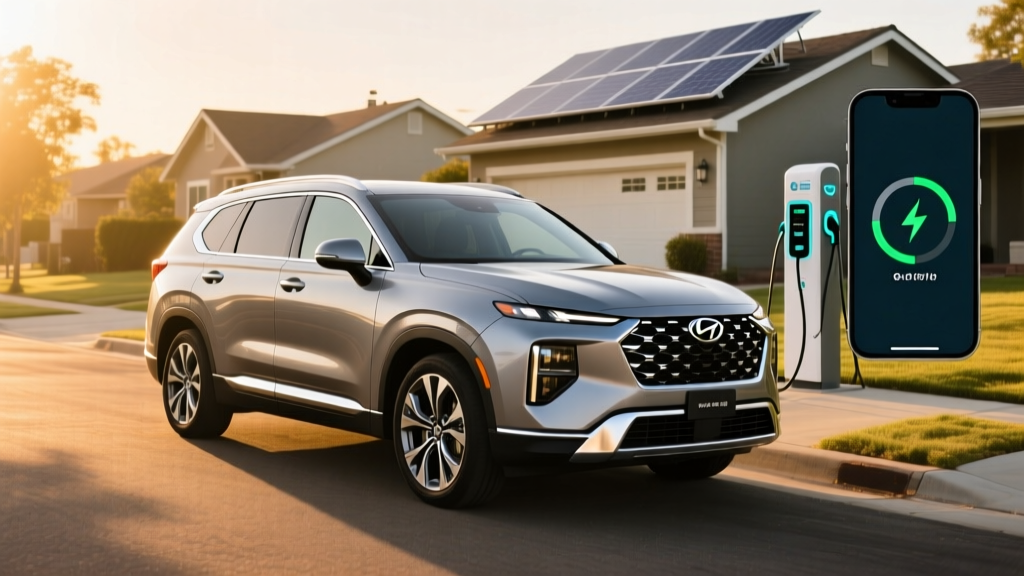
If you can charge at home and your daily driving stays under 30 miles, the PHEV can function as a daily EV with a gas-powered safety net for road trips. If you lack charging access or drive more than 40 miles daily, the HEV is simpler, cheaper, and nearly as efficient on paper over a full tank.
Fuel Economy: EPA Numbers and Real-World MPG
Hyundai offers the Elantra Hybrid HEV in multiple trims, and efficiency varies by wheel size and equipment weight. Here's the EPA breakdown per fueleconomy.gov:
| Trim | City MPG | Highway MPG | Combined MPG |
|---|---|---|---|
| Blue | 56 | 52 | 54 |
| SEL / Limited | 53 | 50 | 51 |
Real-world expectations: Hybrids like the Elantra tend to meet or slightly exceed their EPA city estimates in stop-and-go traffic, where regenerative braking recovers the most energy. Highway driving at sustained 70-80 MPH typically yields 2-4 MPG below the EPA highway figure, because aerodynamic drag dominates and the electric motor assists less. Expect roughly 50-52 MPG combined in mixed real-world driving for the Blue trim, and closer to 47-49 MPG for the Limited with its larger 17-inch wheels and additional weight.
In cold weather (below 35°F), expect a 5-8% fuel economy drop due to the engine running longer to generate cabin heat and reduced battery efficiency. This is less severe than the 20-30% range loss a full BEV experiences, but it's measurable over a full tank.
Elantra PHEV: Electric-Only Range and Total Range
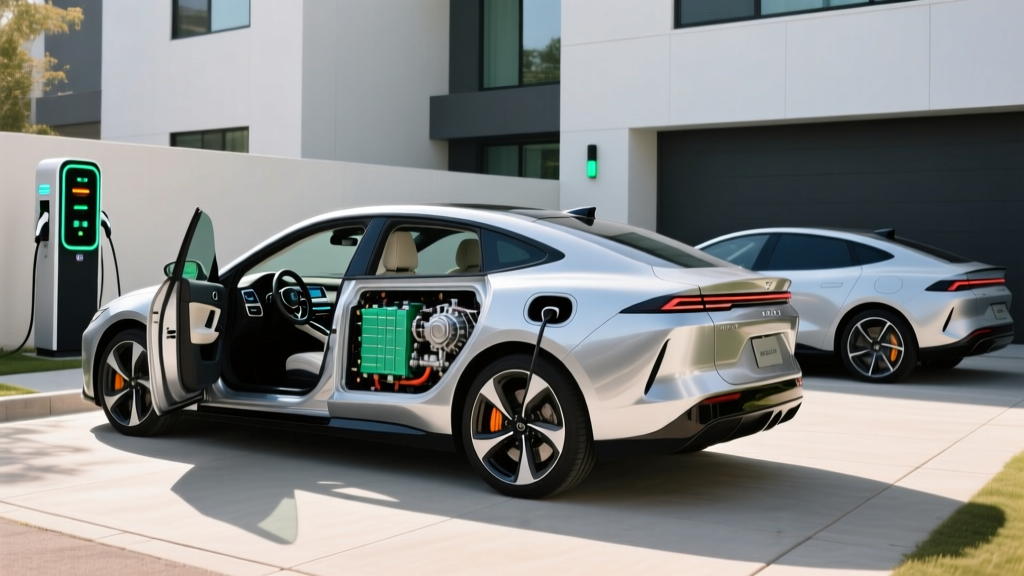
The Elantra Plug-in Hybrid pairs a 1.6L GDI four-cylinder engine with a more powerful electric motor and a larger lithium-ion polymer battery pack.
| Specification | Value |
|---|---|
| Battery capacity | 10.5 kWh (usable ~8.9 kWh) |
| Electric-only range (EPA) | ~28 miles |
| Total combined range | ~410 miles |
| Combined MPGe (electric mode) | 117 MPGe |
| Combined MPG (hybrid mode) | 49 MPG |
| Level 1 charging (120V, 12A) | ~9 hours (0-100%) |
| Level 2 charging (240V, 32A) | ~2.5 hours (0-100%) |
| DC fast charging | Not available |
Real-world electric range: In mild weather (55-75°F) with moderate acceleration, owners commonly report 26-30 miles on a full charge. In cold weather or at highway speeds above 65 MPH, expect 18-22 miles before the gasoline engine engages. This is typical for the PHEV segment — the EPA test cycle favors low-speed, moderate-temperature driving.
The PHEV uses a standard J1772 connector for Level 2 AC charging. There is no DC fast-charge port, which is standard for PHEVs in this class — the battery is small enough that Level 2 fills it quickly.
Powertrain Specs: What's Under the Hood
| Specification | HEV | PHEV |
|---|---|---|
| Engine | 1.6L GDI 4-cyl | 1.6L GDI 4-cyl |
| Engine HP | 104 hp | 104 hp |
| Electric motor HP | 43 hp (32 kW) | 67 hp (50 kW) |
| Combined system HP | 139 hp | 161 hp |
| Transmission | 6-speed DCT | 6-speed DCT |
| 0-60 MPH (est.) | ~8.6 sec | ~7.6 sec |
| Drivetrain | FWD | FWD |
The HEV's 139 combined horsepower is adequate for commuting and highway merging but won't feel quick. The PHEV's larger motor adds meaningful punch, dropping the 0-60 time by roughly a second and making highway passing more confident. Both use Hyundai's 6-speed dual-clutch automatic, which is smoother than the CVTs found in the Toyota Corolla Hybrid and Honda Civic Hybrid but can exhibit slight hesitation from a stop.
Pricing, Trims, and Tax-Credit Eligibility
As of the 2026 model year, Hyundai Elantra Hybrid pricing starts in the low $29,000s for the HEV and mid-$33,000s for the PHEV (MSRP, before destination):
| Model / Trim | MSRP (approx.) |
|---|---|
| Elantra Hybrid Blue | $29,150 |
| Elantra Hybrid SEL | $30,550 |
| Elantra Hybrid Limited | $33,300 |
| Elantra PHEV SE | $33,850 |
| Elantra PHEV Limited | $36,550 |
Federal tax credit (§30D): The Elantra HEV does not qualify for the federal plug-in vehicle tax credit — it's a conventional hybrid with no plug. The Elantra PHEV may qualify for up to $7,500 under IRS §30D, but eligibility depends on several factors that change periodically:
- Income caps: Modified AGI must not exceed $150,000 (single), $225,000 (head of household), or $300,000 (joint).
- MSRP cap: The vehicle MSRP must not exceed $55,000 for sedans (both PHEV trims clear this).
- Battery sourcing: Critical minerals and battery component requirements phase in progressively — check current-year rules at irs.gov before purchasing.
- Point-of-sale transfer: Eligible buyers can transfer the credit to the dealer at purchase, reducing the out-of-pocket cost immediately rather than waiting for tax filing.
Always verify eligibility with a tax professional and the IRS's official guidance before assuming credit qualification. State-level incentives may also apply — check your state energy office or AFDC incentive database.
Battery Warranty, Reliability, and Replacement Cost
Hyundai Hybrid/PHEV Battery Warranty
- HEV hybrid battery: 10 years / 100,000 miles (whichever comes first)
- PHEV battery: 10 years / 100,000 miles
- Hybrid system components: 10 years / 100,000 miles (inverter, motor, controller)
- Capacity retention threshold: Warranty covers defects and abnormal degradation; Hyundai typically defines "abnormal" as dropping below ~70% capacity for PHEVs
Hyundai's hybrid battery warranty is among the strongest in the segment, matching Toyota's coverage. The lithium-ion polymer packs in both the HEV and PHEV are designed to last the life of the vehicle under normal use. Hybrid batteries experience far less stress than full EV batteries because they operate in a narrow state-of-charge window (typically 40-80% SoC), which dramatically slows degradation.
Replacement cost: If the hybrid battery fails outside warranty, replacement for the HEV battery runs approximately $2,500-$3,500 including labor. The PHEV battery is larger and more expensive — expect $4,000-$6,000. However, widespread failure reports for Hyundai's hybrid batteries are rare, and most units last well beyond 150,000 miles with gradual, manageable capacity loss rather than sudden failure.
The Elantra Hybrid earns strong reliability marks from owner surveys and carries Hyundai's 5-year/60,000-mile new-vehicle warranty plus the 10-year/100,000-mile powertrain coverage. IIHS has rated recent model years as a Top Safety Pick when equipped with LED projector headlights.
Elantra Hybrid vs. Full EV vs. Gasoline Car: Which Should You Choose?
Choose the Elantra HEV if:
- You lack access to home or workplace charging
- Your daily commute exceeds 40 miles and you don't want to think about plugging in
- You want maximum fuel economy with zero behavior change from a gas car
- Budget is a priority — the HEV starts ~$4,700 less than the PHEV
Choose the Elantra PHEV if:
- You have Level 1 or Level 2 charging at home or work
- Your daily round-trip commute is under 28 miles (covering most errands on electricity alone)
- You want EV-like running costs for daily driving but need gas flexibility for road trips
- You may qualify for the §30D tax credit, narrowing the price gap with the HEV
Choose a full BEV (e.g., Hyundai Ioniq 6, Tesla Model 3) if:
- You have reliable home Level 2 charging
- Your daily driving stays under 250 miles and you're comfortable with DC fast-charging on road trips
- You want to eliminate gasoline entirely and minimize moving parts
- You qualify for the full $7,500 federal credit, making a BEV price-competitive
The Elantra Hybrid's strongest competitive position is against other high-MPG sedans. The Toyota Corolla Hybrid delivers similar EPA numbers (50-53 MPG combined depending on trim and AWD), while the Honda Civic Hybrid offers slightly more power at around 49 MPG combined. The Elantra Hybrid Blue's 54 MPG combined gives it a narrow edge in EPA testing, though real-world differences between these three are small enough that features, comfort, and pricing should drive the final decision.
Pros and Cons
Pros
- Class-leading 54 MPG combined (Blue trim EPA)
- No plug-in required — zero behavior change from gas ownership
- 10-year / 100,000-mile hybrid battery warranty
- Spacious rear seat and trunk for the compact sedan segment
- Smooth 6-speed DCT (no CVT drone under acceleration)
- Comprehensive Hyundai SmartSense ADAS suite standard
Cons
- 139 hp (HEV) feels underpowered for highway passing
- Road noise is noticeable at highway speeds vs. some rivals
- Infotainment learning curve; wireless CarPlay/Android Auto only on lower trims
- Limited trim availability for the PHEV variant
- No AWD option (Toyota Corolla Hybrid offers AWD)
- PHEV cargo space reduced by battery placement
Frequently Asked Questions
How many MPG does the Hyundai Elantra Hybrid get in real-world driving?
The EPA rates the Blue trim at 54 MPG combined (56 city / 52 highway). In real-world mixed driving, expect 50-52 MPG combined. City driving often meets or exceeds the EPA city figure thanks to aggressive regenerative braking, while sustained highway driving at 75+ MPH may yield 48-50 MPG. Cold weather reduces efficiency by roughly 5-8%.
How far can the Elantra PHEV go on electric power only?
The EPA estimates ~28 miles of electric-only range. In mild conditions with gentle driving, 26-30 miles is achievable. In cold weather or at highway speeds, expect 18-22 miles before the gasoline engine engages. Once the battery depletes, the car operates as a conventional hybrid at approximately 49 MPG combined.
Does the Hyundai Elantra Hybrid qualify for a federal tax credit?
The standard Elantra HEV does not qualify — the §30D credit applies only to plug-in vehicles. The Elantra PHEV may qualify for up to $7,500 depending on your income, the vehicle's battery sourcing compliance, and current-year IRS rules. Check irs.gov and consult a tax professional before purchasing.
Is the Elantra Hybrid reliable, and what does battery replacement cost?
Hyundai's hybrid powertrain has a strong reliability record, backed by a 10-year/100,000-mile hybrid battery and system warranty. Out-of-warranty HEV battery replacement costs approximately $2,500-$3,500; PHEV battery replacement runs $4,000-$6,000. Most hybrid batteries last well beyond 150,000 miles without requiring replacement.
Do I need to plug in the Elantra Hybrid?
No. The standard Elantra Hybrid (HEV) charges its battery entirely through regenerative braking and the gasoline engine. You fuel it like any conventional car. Only the Elantra Plug-in Hybrid (PHEV) variant benefits from plugging in to access its electric-only driving range.
How does the Elantra Hybrid compare to the Toyota Corolla Hybrid?
The Elantra Hybrid Blue edges the Corolla Hybrid LE (FWD) by 1-2 MPG on the EPA combined cycle. The Corolla offers available AWD (at a fuel economy penalty) and a slightly more refined ride. The Elantra counters with more rear legroom, a longer warranty, and a DCT that avoids the CVT drone some drivers dislike. Both are strong choices — test-drive both and compare pricing in your market.