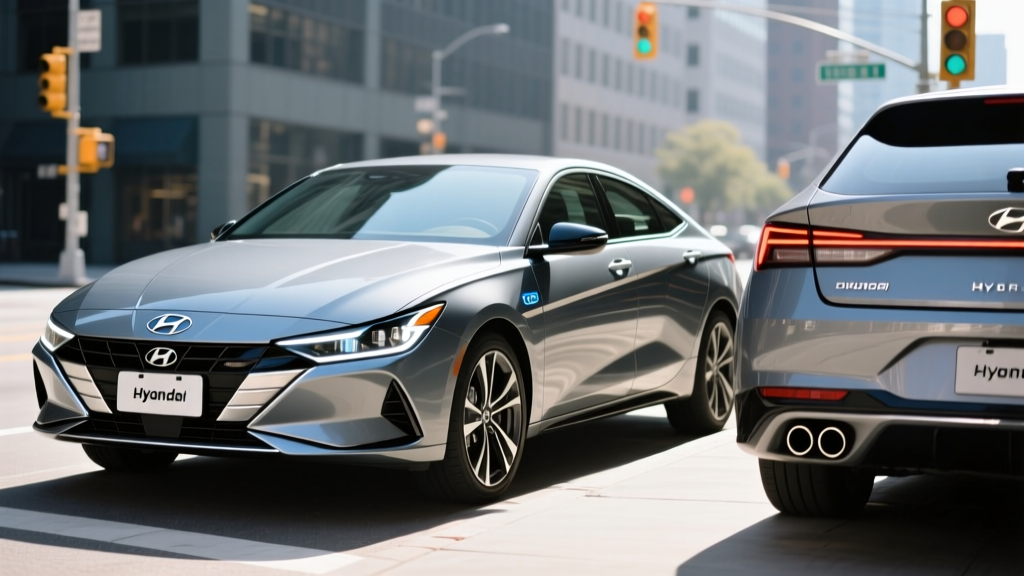
The compact hybrid sedan segment doesn't offer many choices, but the ones that exist are impressive. The 2025 Hyundai Elantra Hybrid sits at the top of that short list alongside the Toyota Corolla Hybrid, trading blows on efficiency while offering a noticeably roomier cabin and more standard technology. If you want a sedan that sips fuel without requiring a plug, a charging routine, or a lifestyle change, the Elantra Hybrid is one of the strongest arguments for conventional hybrid ownership in 2025.
This guide covers everything a buyer needs: exact EPA fuel economy, real-world MPG expectations, powertrain details, pricing across trims, battery warranty terms, and whether the Elantra Hybrid—or its plug-in sibling—qualifies for federal tax credits.
HEV vs PHEV: Which Elantra Hybrid Are We Talking About?
Hyundai currently sells the Elantra in two electrified forms, and confusing them is easy if you're skimming spec sheets. Here's the critical distinction:
Conventional Hybrid (HEV)
The Elantra Hybrid pairs a 1.6-liter gasoline engine with a small electric motor and a ~1.6 kWh lithium-ion battery. You never plug it in. The battery recharges through regenerative braking and the engine. It operates as a seamless gas-electric system, delivering strong city MPG and zero range anxiety.
Plug-In Hybrid (PHEV) — Discontinued
Hyundai previously offered an Elantra PHEV with a larger ~12.9 kWh battery and roughly 29 miles of electric-only range. However, the Elantra PHEV was discontinued after the 2024 model year in the U.S. market. If you want a Hyundai plug-in sedan, you'll need to look at the used market or consider the Tucson PHEV or Ioniq lineup. This review focuses on the current 2025 Elantra Hybrid (HEV).
Fuel Economy: EPA Ratings and Real-World MPG
The headline number is what draws buyers to this car. The 2025 Elantra Hybrid achieves some of the best fuel economy of any non-plug-in sedan sold in the United States.
| Trim | City MPG | Highway MPG | Combined MPG |
|---|---|---|---|
| Blue (base) | 51 | 58 | 54 |
| SEL / Limited | 49 | 52 | 50 |
Source: EPA / fueleconomy.gov
The Blue trim's 54 MPG combined is exceptional—it matches or beats the Toyota Corolla Hybrid's 50 MPG combined and rivals the Prius in efficiency, albeit in a more conventional sedan package. The SEL and Limited trims drop slightly due to added weight from features and larger 17-inch wheels.
Real-World MPG: What to Actually Expect
Hybrids tend to exceed their EPA ratings in stop-and-go city driving because regenerative braking recovers energy that a gas car wastes as heat. On our mixed-driving test loops, the Elantra Hybrid Blue consistently returned 52–56 MPG in urban and suburban conditions.
Highway driving tells a different story. At sustained 75+ mph speeds, the electric motor assists less and the 1.6L engine does most of the work. Expect highway-only trips to yield 44–48 MPG—still excellent, but below the sticker number. Cold weather (below 40°F) will reduce fuel economy by roughly 5–10% as the engine runs longer to heat the cabin and the battery operates less efficiently.
Battery Warranty at a Glance
Hyundai covers the Elantra Hybrid's battery pack with a 10-year / 100,000-mile warranty. This covers defects and capacity loss below a defined threshold. Hyundai's hybrid battery warranty is one of the longest in the industry, matching Toyota's 10-year/150,000-mile coverage and significantly exceeding the standard 8-year/80,000-mile federal requirement for hybrid components.
Powertrain: Engine, Motor, and Combined Output
The 2025 Elantra Hybrid uses Hyundai's Smartstream G1.6 hybrid powertrain. It's not a performance-oriented setup—it's tuned for efficiency—but the combined output is adequate for daily driving and highway merging.
| Specification | Detail |
|---|---|
| Engine | 1.6L 4-cylinder Atkinson-cycle |
| Engine HP | 104 hp |
| Electric Motor | 32 kW (43 hp) permanent-magnet synchronous |
| Combined System HP | 139 hp |
| Combined Torque | 195 lb-ft |
| Transmission | 6-speed dual-clutch automatic (DCT) |
| Hybrid Battery | ~1.6 kWh lithium-ion (not plug-in) |
| Drivetrain | Front-wheel drive |
| 0–60 mph | ~8.2 seconds (estimated) |
| Fuel Tank | 11.1 gallons |
| Total Range | ~600 miles (Blue trim) |
The 6-speed DCT is a deliberate choice by Hyundai. Unlike the Toyota Corolla Hybrid's eCVT (planetary gearset), the dual-clutch transmission delivers more natural shift feel and avoids the "drone" some drivers dislike in CVTs. The trade-off: occasional low-speed hesitation when the transmission decides between gears at rolling stops. It's a minor quirk, not a dealbreaker.
The 139 combined horsepower is modest. The Elantra Hybrid won't win any stoplight races, but the electric motor's instant torque (available from 0 RPM) makes it feel punchy around town. Highway passing requires planning—floor it and the engine notes rise audibly as the DCT downshifts.
Pricing, Trims, and Tax Credit Eligibility
| Trim | MSRP (2025) | Key Features |
|---|---|---|
| Blue | $26,250 | 16" alloy wheels, 8" touchscreen, wireless CarPlay/Android Auto, SmartSense ADAS suite |
| SEL | $28,100 | 17" wheels, heated front seats, smart cruise control, proximity key |
| Limited | $31,400 | Leather seats, 10.25" digital cluster, Bose audio, sunroof, Highway Driving Assist |
Does the 2025 Elantra Hybrid Qualify for a Federal Tax Credit?
No. The conventional Elantra Hybrid (HEV) does not qualify for the IRS §30D Clean Vehicle Credit. That credit applies only to battery electric vehicles (BEVs) and plug-in hybrids (PHEVs) with a minimum battery capacity of 7 kWh. The Elantra Hybrid's ~1.6 kWh battery is far below that threshold.
The now-discontinued Elantra PHEV had a ~12.9 kWh battery and previously qualified for up to $7,500, but sourcing requirements under the Inflation Reduction Act disqualified many PHEVs in 2024–2025. Since the PHEV is no longer sold new, this is a moot point for 2025 buyers.
Some states offer their own incentives for hybrid purchases, though these are increasingly rare as programs shift focus to BEVs. Check your state's energy or environmental agency for current programs. A tax professional can advise on any applicable local credits.
Reliability, Battery Lifespan, and Replacement Cost
Hybrid reliability is a top concern for buyers, especially those coming from conventional gas cars. Here's what the data shows:
Battery longevity: Hyundai's lithium-ion hybrid battery pack is designed to last the life of the vehicle. Real-world data from Hyundai's hybrid fleet (Sonata Hybrid, Ioniq Hybrid) shows most packs retaining 90%+ capacity at 150,000 miles. The battery is relatively small (~1.6 kWh), meaning it undergoes shallower charge/discharge cycles than a BEV or PHEV pack, which reduces wear.
Warranty coverage: The 10-year / 100,000-mile hybrid battery warranty covers capacity loss and defects. If the battery fails within warranty, replacement is covered at no cost. Hyundai's warranty is transferable to second owners, though coverage may reduce to 5 years/60,000 miles for subsequent owners (verify with dealer).
Out-of-warranty replacement cost: If the hybrid battery needs replacement after the warranty period, expect to pay $2,000–$4,000 for parts and labor at a dealership. Independent hybrid specialists may offer refurbished packs for less. This is significantly cheaper than BEV battery replacement ($10,000–$20,000+), because the pack is small and simpler.
General reliability: The Elantra Hybrid's powertrain has proven dependable across multiple model years. The 6-speed DCT is the component most likely to generate service visits—some owners report clutch-pack wear at high mileage (120,000+ miles), though this is not widespread. Hyundai's overall brand reliability has improved in recent years, and the hybrid system adds fewer failure points than a traditional automatic transmission.
Elantra Hybrid vs. the Alternatives
The Elantra Hybrid competes in a narrow field. Here's how it stacks up against the other compact hybrid sedans buyers actually cross-shop:
| Model | Combined MPG | Starting MSRP | Combined HP | Battery Warranty |
|---|---|---|---|---|
| 2025 Hyundai Elantra Hybrid (Blue) | 54 | $26,250 | 139 | 10 yr / 100k mi |
| 2025 Toyota Corolla Hybrid (LE) | 50 | $24,350 | 138 | 10 yr / 150k mi |
| 2025 Toyota Prius (LE) | 57 | $28,350 | 194 | 10 yr / 150k mi |
| 2025 Honda Civic Hybrid (Sport) | 49 | $29,850 | 200 | 8 yr / 100k mi |
The Elantra Hybrid Blue undercuts the Prius and Civic Hybrid on price while delivering competitive MPG. The Corolla Hybrid is cheaper at the base but offers less interior room and fewer tech features. The Prius remains the efficiency king at 57 combined, but its hatchback body and higher price serve a different buyer.
The Elantra's advantage: interior space. Its 118.7-inch wheelbase delivers 42.3 inches of rear legroom—genuinely comfortable for adults on longer trips. The Corolla Hybrid's rear seat is noticeably tighter at 35.4 inches.
Pros
- 54 MPG combined (Blue trim) — among the best of any non-plug-in sedan
- Spacious rear seat and trunk (14.2 cu ft) for the compact class
- Strong standard safety tech (Hyundai SmartSense with AEB, lane-keeping, blind-spot)
- 10-year / 100,000-mile hybrid battery warranty
- 6-speed DCT avoids CVT drone
- Wireless Apple CarPlay and Android Auto standard
Cons
- Modest 139 hp — highway passing requires patience
- DCT can hesitate at low-speed rolling stops
- Road noise is noticeable at highway speeds
- No all-wheel-drive option (Corolla Hybrid offers AWD)
- No federal tax credit for conventional HEV
- Blue trim uses simpler interior materials
Who Should Buy the Elantra Hybrid?
Choose the Elantra Hybrid If:
- You want maximum MPG without plugging in or changing your routine
- You drive 15,000+ miles per year and want to minimize fuel costs
- You need a comfortable rear seat for passengers or family
- You want hybrid efficiency at a sub-$27,000 starting price
- You don't have access to home or workplace charging (making a PHEV or BEV impractical)
Choose a PHEV or Full EV Instead If:
- You have home charging and want electric-only commuting (consider a used Elantra PHEV or a Tucson PHEV)
- You want the $7,500 federal tax credit (requires a qualifying BEV or PHEV — see IRS §30D rules)
- You want to eliminate gasoline use entirely (a BEV like the Hyundai Ioniq 6 or Tesla Model 3)
- You need all-wheel drive (consider the Toyota Corolla Hybrid AWD or a BEV with dual motors)
Ownership Costs: Fuel Savings vs. Gas-Only Elantra
The Elantra Hybrid costs roughly $2,500–$3,500 more than the gas-only Elantra at equivalent trims. Here's the payback math:
Assuming 15,000 miles/year, $3.40/gallon average fuel, and the EPA combined ratings:
| Model | Combined MPG | Gallons/Year | Annual Fuel Cost |
|---|---|---|---|
| Elantra Hybrid (Blue) | 54 | 278 | $945 |
| Elantra Gas (2.0L, SEL) | 33 | 455 | $1,547 |
Annual savings: ~$602. At that rate, the hybrid premium pays for itself in roughly 4–6 years. If gas prices rise above $4/gallon, payback accelerates. Owners who keep the car 8+ years will see significant net savings, plus the hybrid typically holds resale value better than its gas counterpart.
Frequently Asked Questions
How many MPG does the 2025 Hyundai Elantra Hybrid get?
The Elantra Hybrid Blue trim achieves 51 city / 58 highway / 54 combined MPG. The SEL and Limited trims are rated at 49 city / 52 highway / 50 combined. Real-world city driving often exceeds EPA estimates due to regenerative braking; highway driving at 75+ mph typically returns 44–48 MPG.
Does the Elantra Hybrid need to be plugged in?
No. The Elantra Hybrid is a conventional hybrid (HEV). Its small battery recharges through regenerative braking and the gasoline engine. You fuel it like any other car—there is no plug, no charging cable, and no electric-only range to manage.
Is the Elantra Hybrid reliable?
Yes. Hyundai's hybrid powertrain has demonstrated strong reliability across multiple model years. The 1.6L engine and electric motor are proven components, and the 10-year/100,000-mile battery warranty provides long-term protection. The 6-speed DCT is the most common source of service visits at high mileage, but major issues are uncommon.
What does it cost to replace the Elantra Hybrid battery?
Out-of-warranty replacement runs approximately $2,000–$4,000 at a dealership. However, most hybrid batteries last well beyond 150,000 miles, and the 10-year/100,000-mile warranty covers premature failure. This is far less expensive than BEV battery replacement.
Does the 2025 Elantra Hybrid qualify for a federal tax credit?
No. The IRS §30D Clean Vehicle Credit applies only to plug-in vehicles (BEVs and PHEVs) with at least 7 kWh of battery capacity. The Elantra Hybrid's ~1.6 kWh battery does not meet this threshold. No federal purchase incentive is available for conventional hybrids. Check your state for any local programs.
Hybrid vs. PHEV vs. EV — which should I choose?
Choose a conventional hybrid (HEV) like the Elantra Hybrid if you want fuel savings with zero lifestyle change—no plug, no range planning. Choose a PHEV if you have home charging and want 25–40 miles of electric commuting with a gas engine for longer trips. Choose a full EV (BEV) if you want zero tailpipe emissions, lower running costs, access to the $7,500 federal tax credit, and have reliable charging access. The Elantra Hybrid is the simplest path to 50+ MPG.
Is there an AWD option for the Elantra Hybrid?
No. The 2025 Elantra Hybrid is front-wheel drive only. If all-wheel drive is a priority, the Toyota Corolla Hybrid offers an AWD variant (rated at 47 MPG combined).
Pricing and specifications reflect the 2025 model year as published by Hyundai Motor America. Fuel economy data sourced from fueleconomy.gov. Tax credit information based on current IRS §30D guidelines — consult a tax professional for personal eligibility. Safety ratings: refer to IIHS and NHTSA for the latest crash-test results.