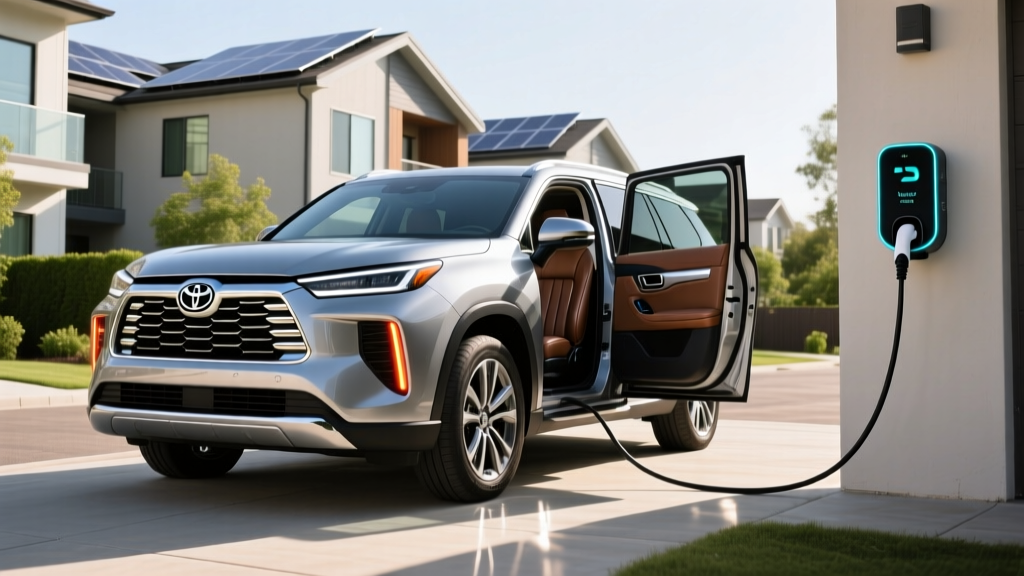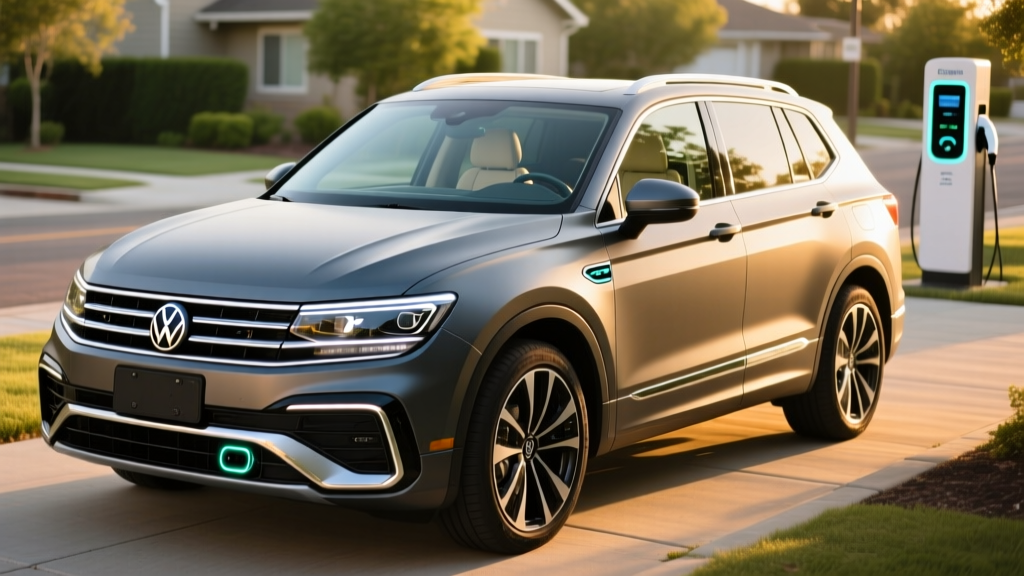
For buyers who want a compact SUV with electric-vehicle efficiency but aren't ready to commit to a full battery-electric vehicle, the hybrid VW Tiguan — specifically the plug-in hybrid Tiguan eHybrid — is one of the more practical entries in the segment. Volkswagen's latest-generation Tiguan (Mk3) offers a plug-in hybrid powertrain that pairs a turbocharged gasoline engine with a meaningful electric motor and a battery large enough to cover most daily commutes on electricity alone.
But how does it stack up in real-world driving, and does it make financial sense compared to a full EV or a conventional gas Tiguan? Here's the data-driven breakdown.
HEV vs PHEV: What the Hybrid VW Tiguan Actually Is
First, a critical distinction. Volkswagen does not currently sell a conventional hybrid (HEV) Tiguan in the United States. The electrified Tiguan is a plug-in hybrid electric vehicle (PHEV), badged as the Tiguan eHybrid. This matters enormously for what you can expect from it.
HEV vs PHEV: The Key Differences
| Feature | Conventional Hybrid (HEV) | Plug-In Hybrid (PHEV) |
|---|---|---|
| Plugs in? | No — charges via regenerative braking and engine | Yes — has a charge port for Level 1/Level 2 |
| Electric-only range | 0–2 miles at low speed | 25–40 miles at full speed |
| Battery size | 1–2 kWh | 13–20+ kWh |
| Federal tax credit | None | Up to $7,500 (if eligible under §30D) |
| Gas engine | Primary power source | Backup once battery is depleted |
The Tiguan eHybrid is the right column. You can plug it in, and you should to unlock its full efficiency.
If you never plug in a PHEV, it operates as a heavier, less efficient conventional hybrid. The entire value proposition of the Tiguan eHybrid depends on regular charging — ideally at home overnight on a standard 120V outlet or a Level 2 home charger.
Powertrain Specs: Horsepower, Engine, and Motor
The 2026 Tiguan eHybrid uses Volkswagen's latest-generation plug-in hybrid architecture, shared with the Passat GTE and other MQB Evo platform vehicles sold in Europe and North America.
| Specification | Value |
|---|---|
| Gas engine | 1.5L turbocharged inline-4 (EA211 evo2) |
| Engine output | 148 hp / 184 lb-ft |
| Electric motor | 114 hp / 258 lb-ft (integrated into DSG transmission) |
| Combined system output | 245 hp / 295 lb-ft |
| Transmission | 6-speed DSG automatic |
| Drivetrain | Front-wheel drive (FWD) |
| 0–60 mph | ~7.2 seconds |
| Battery (gross / usable) | 19.7 kWh / ~17.5 kWh (NMC lithium-ion) |
| Onboard charger | 3.6 kW (Level 2 AC) |
| DC fast charging | Not available |
The 245 combined horsepower is genuinely brisk for a compact SUV. The electric motor's instant torque (258 lb-ft available from zero RPM) gives the Tiguan eHybrid a responsive feel around town that the gas-only Tiguan can't match. However, note that this PHEV is front-wheel drive only — if you need all-wheel drive, you'll need to look at the gas Tiguan 4Motion or a competitor like the Toyota RAV4 Prime.
Fuel Economy: EPA MPG and Real-World Expectations
The Tiguan eHybrid has two efficiency ratings: one for electric-only driving (measured in MPGe) and one for gas-only hybrid operation once the battery is depleted.
| Mode | City | Highway | Combined |
|---|---|---|---|
| Electric-only (MPGe) | — | — | ~95 MPGe |
| Charge-sustaining (gas hybrid, MPG) | ~36 | ~34 | ~35 MPG |
Source: fueleconomy.gov — verify exact figures for your trim and model year.
Real-World MPG vs EPA: What to Actually Expect
Electric mode: Expect the full EPA-rated electric range (~33 miles) in mild weather (50–75°F) with mixed city/suburban driving. In winter (below 30°F), plan for a 20–30% reduction — roughly 23–26 miles — due to battery chemistry and cabin heating demands.
Gas hybrid mode: PHEVs often exceed EPA city estimates in real-world stop-and-go driving, where regenerative braking recaptures the most energy. Expect 37–39 MPG city in moderate temperatures. Highway driving at 75+ mph may yield 30–32 MPG due to aerodynamic drag and the added weight of the battery pack.
Combined real-world: If you charge nightly and drive fewer than 35 miles per day, you may use almost zero gasoline for weeks. On a road trip with no charging, expect ~33–35 MPG combined — comparable to a Toyota RAV4 Hybrid.
Electric-Only Range and Charging Details
The headline feature of any PHEV is how far it can go without burning a drop of gasoline. For the 2026 Tiguan eHybrid, the EPA-rated electric-only range is approximately 33 miles. That's enough to cover the average American's one-way commute and daily errands entirely on electricity, according to FHWA data showing the average daily driving distance is roughly 29 miles.
When the battery is depleted, the gas engine seamlessly takes over, and the Tiguan operates as a conventional hybrid with the ~35 MPG combined rating noted above. Total combined range (electric + gas tank) is approximately 450–480 miles, eliminating any range anxiety on long road trips.
| Charging Method | Power | 0–100% Time |
|---|---|---|
| Level 1 (120V household outlet) | ~1.4 kW | ~12–14 hours |
| Level 2 (240V home charger) | 3.6 kW (onboard limit) | ~5–5.5 hours |
| DC fast charging | N/A | Not supported |
A key limitation: the Tiguan eHybrid's onboard charger maxes out at 3.6 kW. Even if you plug into a 7.2 kW or 11.5 kW Level 2 charger, the vehicle will only accept 3.6 kW. This means a full charge takes about 5 hours regardless of the station's capacity. For overnight home charging, this is perfectly adequate — you'll wake up to a full battery every morning. But it means topping up at a public Level 2 station during a lunch break won't fully replenish the pack.
The lack of DC fast charging is standard for most PHEVs in this class. The battery is simply too small to justify the added cost and weight of DCFC hardware.
Pricing, Trims, and Tax Credit Eligibility
The 2026 Tiguan eHybrid is positioned as a premium offering within the Tiguan lineup. Pricing starts in the mid-$38,000s before destination charges, with a well-equipped SEL trim pushing past $43,000.
| Trim | MSRP |
|---|---|
| SE eHybrid | ~$38,990 |
| SEL eHybrid | ~$43,490 |
| Destination charge | ~$1,350 |
Does the Hybrid VW Tiguan Qualify for a Federal Tax Credit?
This is where things get nuanced. Under IRS §30D rules, PHEVs are eligible for the federal clean vehicle credit — but only if they meet a strict set of requirements that change frequently. Here's the checklist for 2026:
- Battery capacity: Must be at least 7 kWh — the Tiguan eHybrid's 19.7 kWh pack clears this easily.
- MSRP cap: SUVs must be at or below $80,000 — the Tiguan eHybrid qualifies.
- Buyer income cap: Modified AGI must not exceed $150,000 (single), $225,000 (head of household), or $300,000 (joint).
- Final assembly: Must occur in North America. This is the potential disqualifier for VW — verify the specific VIN on fueleconomy.gov before purchasing.
- Battery sourcing: Critical minerals and battery components must meet phased-in percentage thresholds from US or FTA-partner countries. This requirement tightens annually.
- Point-of-sale transfer: As of 2024, eligible buyers can transfer the credit to the dealer for an immediate price reduction at purchase.
⚠ Tax credit caveat: Volkswagen has historically assembled the Tiguan outside North America (primarily in Germany and Mexico, depending on generation). If the 2026 Tiguan eHybrid is not assembled in a qualifying North American plant, it will not be eligible for the §30D federal credit regardless of other criteria. Always confirm via the VIN lookup tool on fueleconomy.gov or consult a tax professional. Some states offer separate PHEV rebates — check your local utility and state energy office.
Battery Warranty, Reliability, and Replacement Cost
Hybrid battery longevity is consistently a top concern for PHEV buyers. Here's what you need to know about the Tiguan eHybrid specifically.
Battery Warranty Coverage
VW Hybrid Battery Warranty: 8 years / 100,000 miles (whichever comes first), with a capacity retention guarantee of at least 70% of original capacity. This is the industry-standard minimum set by California's CARB regulations, which most manufacturers adopt nationally.
Powertrain Warranty: The gasoline engine and transmission are covered under VW's standard 4-year/50,000-mile limited warranty.
Real-World Degradation Expectations
Modern NMC lithium-ion PHEV batteries are remarkably durable when properly managed. Volkswagen uses active liquid thermal management on the Tiguan eHybrid's pack, which keeps cells within optimal temperature range and significantly slows degradation. Based on data from similar VW Group PHEV systems (Golf GTE, Passat GTE) now in their second decade of service:
- Year 1–3: Expect 2–5% capacity loss — negligible in daily use.
- Year 5–7: Expect 8–12% total loss. You may notice electric range dropping from 33 to ~29 miles.
- Year 8–10: Expect 12–18% total loss. Range may settle around 27–29 miles — still well above the 70% warranty threshold.
Battery Replacement Cost
If the battery fails outside warranty (unlikely based on current data, but worth budgeting for), a full PHEV battery replacement for a VW Group vehicle currently runs $6,000–$9,000 including parts and labor. However, individual module replacement — if only certain cells have degraded — can cost $1,500–$3,000. Most hybrid batteries outlast the vehicle itself; according to data from Consumer Reports, very few owners ever need a full pack replacement.
Who Should Buy the Hybrid VW Tiguan?
The Tiguan eHybrid occupies a specific niche. It's not the right choice for everyone, but for the right buyer, it's an excellent fit.
✓ Choose the Tiguan eHybrid If:
- Your daily driving is under 35 miles and you can charge at home
- You want EV-like daily driving with gas flexibility for road trips
- You need a compact SUV with premium interior quality
- You're not ready to deal with public charging infrastructure
- You want responsive electric torque around town
✗ Skip It If:
- You can't charge at home (you'll lose the PHEV advantage)
- You need all-wheel drive (Tiguan eHybrid is FWD only)
- You drive more than 50 miles daily — a full EV saves more fuel
- You want DC fast charging for road-trip top-ups
- Towing is a priority (PHEV adds weight, reduces capacity)
Hybrid vs PHEV vs Full EV: Which Fits You?
| Factor | Gas Tiguan | Tiguan eHybrid (PHEV) | Full EV (e.g., VW ID.4) |
|---|---|---|---|
| Upfront cost | $29k–$38k | $39k–$45k | $40k–$50k |
| Daily fuel cost (30 mi/day) | ~$3.50 | ~$0.90 (electric) | ~$0.85 |
| Home charging needed? | No | Recommended | Essential |
| Road trip ease | Excellent | Excellent (gas backup) | Requires planning |
| Maintenance cost | Standard | Standard + battery | Lowest (no oil, fewer parts) |
| Federal tax credit | None | Up to $7,500* | Up to $7,500* |
* Subject to §30D eligibility — assembly location, income caps, battery sourcing. Verify at irs.gov.
Competitors Worth Cross-Shopping
The hybrid VW Tiguan doesn't exist in a vacuum. Before committing, compare it against these PHEV and hybrid SUVs:
- Toyota RAV4 Prime (PHEV): 42 miles electric range, 302 hp, AWD standard, ~$44,000. The segment benchmark — but often marked up at dealers due to high demand.
- Hyundai Tucson PHEV: 33 miles electric range, 261 hp, AWD standard, ~$38,000. Strong value with competitive range.
- Ford Escape PHEV: 37 miles electric range, FWD, ~$39,000. Good electric range but no AWD option.
- Toyota RAV4 Hybrid (HEV): 40 MPG combined, no plug needed, AWD available, ~$33,000. Simpler ownership, no charging required, but no electric-only mode.
The Tiguan eHybrid's advantage is interior quality and driving refinement — VW's cabin materials and ride comfort tend to exceed Toyota and Hyundai in this segment. Its disadvantage is the FWD-only drivetrain and the North American assembly question that may block the federal tax credit.
Frequently Asked Questions
How many MPG does the hybrid VW Tiguan get?
The 2026 Tiguan eHybrid achieves approximately 35 MPG combined (36 city / 34 highway) when operating as a gas hybrid after the battery is depleted. In electric-only mode, it's rated at roughly 95 MPGe. Real-world city driving in hybrid mode often yields 37–39 MPG thanks to regenerative braking.
How far can the Tiguan eHybrid go on electric only?
The EPA-rated electric-only range is approximately 33 miles. In cold weather (below freezing), expect 23–26 miles. In mild conditions with gentle driving, some owners report 35–37 miles before the gas engine engages.
Does the hybrid VW Tiguan qualify for a tax credit?
It may qualify for up to $7,500 under the §30D federal clean vehicle credit, but eligibility depends on North American final assembly, your income level, and battery component sourcing. As of 2026, many VW vehicles are assembled outside the US — verify your specific VIN on fueleconomy.gov before purchasing. Some states and utilities offer additional rebates regardless of assembly location.
Is the Tiguan eHybrid reliable?
VW's PHEV powertrain has proven reliable in European-market models (Golf GTE, Passat GTE) that share the same basic architecture. The hybrid battery is warrantied for 8 years / 100,000 miles at 70% capacity retention. Long-term reliability data for the Mk3 Tiguan specifically is still accumulating, but the underlying components are well-established.
What does it cost to replace the hybrid battery?
A full battery pack replacement runs $6,000–$9,000 out of warranty. However, individual module replacement (if only part of the pack degrades) can cost $1,500–$3,000. Based on historical data from VW Group PHEVs, full pack replacements are rare — most batteries outlast the vehicle's useful life.
Can I charge the Tiguan eHybrid at home on a regular outlet?
Yes. A standard 120V household outlet (Level 1) will fully charge the battery in about 12–14 hours. Since most PHEV owners charge overnight, this works well for daily use. A 240V Level 2 charger reduces this to about 5 hours, but the 3.6 kW onboard charger is the bottleneck — you won't charge faster even on a higher-capacity station.