Quick Verdict: The Hybrid Tundra Makes Full-Size Truck Efficiency Actually Possible
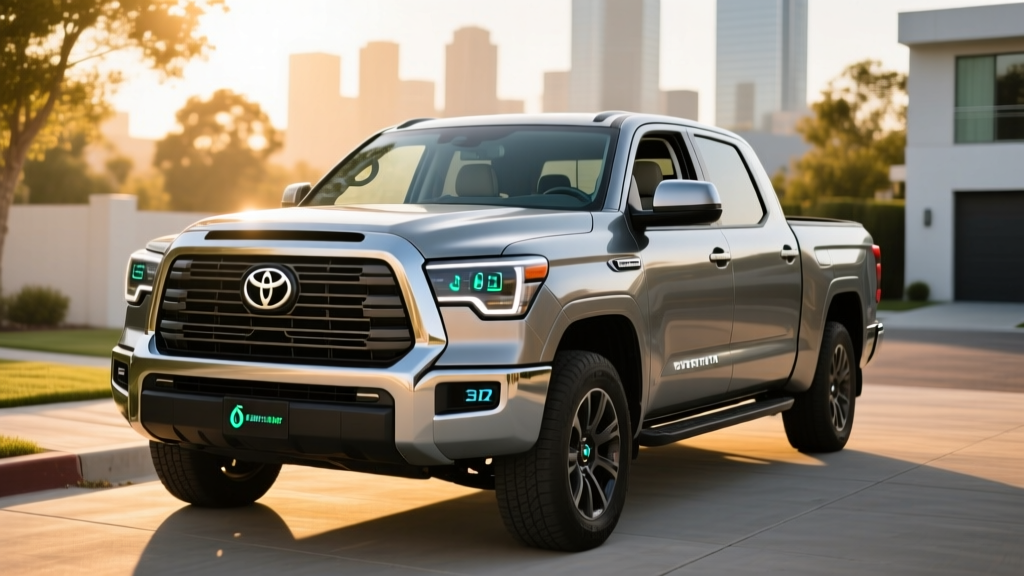
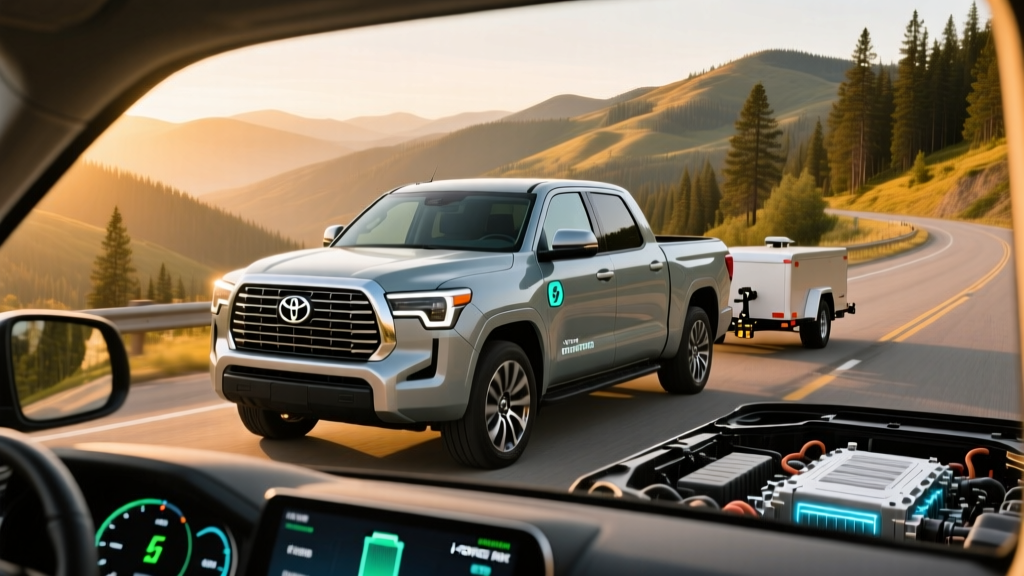
If you need a body-on-frame truck that can tow 10,000+ pounds but you're tired of watching $100 disappear at every fill-up, the 2026 hybrid Toyota Tundra with the i-FORCE MAX powertrain is the most pragmatic answer in the full-size segment. It's a conventional hybrid (HEV) — not a plug-in — meaning you never plug it in. The hybrid system recovers energy during braking and deceleration to supplement the twin-turbo V6, delivering measurable fuel savings over the gas-only Tundra without sacrificing payload or towing capability.
The critical thing to understand upfront: Toyota does not offer the Tundra as a plug-in hybrid (PHEV). There is no electric-only driving mode, no charging port, and no all-electric range. The i-FORCE MAX is a self-charging parallel hybrid designed to improve MPG and boost torque, not to replace gasoline. If you need electric-only commuting, you'll need to look at a PHEV like the Ford F-150 PowerBoost (also HEV, actually) or wait for a fully electric truck. But for buyers who want a traditional truck with better fuel economy and zero lifestyle change, the hybrid Tundra delivers.
HEV vs PHEV: What the Hybrid Tundra Actually Is
Conventional Hybrid (HEV) — This Is the Tundra
The i-FORCE MAX pairs a 3.4L twin-turbo V6 with an electric motor integrated into the bell housing between the engine and the 10-speed automatic transmission. A small ~1.87 kWh nickel-metal hydride (NiMH) battery pack stores recovered energy. You never plug it in. The electric motor assists during acceleration, enables mild torque fill at low RPM, and allows the engine to shut off briefly at stops. The engine remains the primary power source at all times.
Plug-In Hybrid (PHEV) — Not Available on the Tundra
A PHEV has a much larger battery (typically 15–25 kWh), a charging port, and 25–50 miles of electric-only range before the gas engine kicks in. The Toyota RAV4 Prime and Prius Prime are PHEVs. As of the 2026 model year, Toyota has not offered the Tundra in any PHEV configuration, and no full-size pickup PHEV exists in the U.S. market. Ford's F-150 PowerBoost is also a conventional HEV, not a PHEV.
EPA Fuel Economy: Hybrid Tundra MPG by Configuration
Here's where the i-FORCE MAX justifies its premium over the standard i-FORCE gas engine. The gains are most pronounced in city driving, where the hybrid system recovers the most energy from stop-and-go conditions. On the highway, the advantage narrows because the turbo V6 is doing most of the work at steady speeds.
| Configuration | City MPG | Highway MPG | Combined MPG |
|---|---|---|---|
| i-FORCE MAX 4x2 (SR5, Limited) | 20 | 24 | 22 |
| i-FORCE MAX 4x4 (SR5, Limited, Platinum) | 19 | 22 | 20–21 |
| i-FORCE MAX 4x4 (TRD Pro, Capstone) | 18–19 | 21–22 | 20 |
| Gas-only i-FORCE 4x4 (baseline comparison) | 17 | 20 | 18 |
Source: EPA / fueleconomy.gov — 2026 model year estimates. Actual results vary with driving style, payload, terrain, and climate.
Real-World MPG vs. EPA Sticker
Toyota's hybrid system tends to deliver city MPG that meets or slightly exceeds the EPA estimate — this is a well-documented pattern across the Toyota hybrid lineup, because regenerative braking captures energy the EPA city cycle is designed to simulate. In mixed suburban driving with moderate loads, owners commonly report 20–22 MPG combined in 4x4 configurations, which aligns with the sticker.
Where you'll lose MPG: Sustained highway towing drops fuel economy sharply — expect 12–15 MPG combined when pulling a 7,000+ lb trailer at 70 mph. Aggressive off-road use, heavy bed loads, and cold-weather short trips also reduce efficiency. The hybrid system's advantage nearly disappears when the engine is under continuous heavy load, because there's no braking energy to recover.
i-FORCE MAX Powertrain: Horsepower, Torque, and Towing
The hybrid Tundra isn't just about fuel savings — the electric motor adds meaningful performance. The i-FORCE MAX is the most powerful engine in the Tundra lineup, and it achieves peak torque at very low RPM thanks to the electric motor's instant response.
| Specification | i-FORCE MAX (Hybrid) | i-FORCE (Gas-Only) |
|---|---|---|
| Engine | 3.4L Twin-Turbo V6 + electric motor | 3.4L Twin-Turbo V6 |
| Combined Horsepower | 437 hp | 389 hp |
| Combined Torque | 583 lb-ft @ 2,400 RPM | 479 lb-ft @ 2,000 RPM |
| Transmission | 10-speed automatic | 10-speed automatic |
| Hybrid Battery | ~1.87 kWh NiMH (sealed) | N/A |
| Max Towing Capacity | Up to 12,000 lbs | Up to 12,000 lbs |
| 0–60 mph (est.) | ~5.7 seconds | ~6.2 seconds |
The 104 lb-ft torque advantage isn't just a spec-sheet number. When merging onto a highway with a loaded bed or pulling a boat up a grade, the electric motor's torque fill eliminates the turbo lag that the gas-only i-FORCE exhibits below 2,000 RPM. It's the kind of difference you feel immediately, not just measure at a track.
Pricing, Trims, and Tax Credit Eligibility
The i-FORCE MAX hybrid powertrain is available across most of the Tundra lineup for 2026, starting at the SR5 trim. It's standard on the TRD Pro, Capstone, and Platinum trims. Here's the approximate MSRP structure:
- SR5 i-FORCE MAX 4x2: ~$56,000
- SR5 i-FORCE MAX 4x4: ~$59,000
- Limited i-FORCE MAX 4x4: ~$64,500
- Platinum i-FORCE MAX 4x4: ~$70,000
- TRD Pro i-FORCE MAX 4x4: ~$74,000
- Capstone i-FORCE MAX 4x4: ~$79,000
Prices are approximate MSRP including destination charge. Dealer markups and options can push transaction prices higher. Verify current pricing at Toyota's official Tundra page.
Federal Tax Credit Status
The hybrid Toyota Tundra does NOT qualify for the federal §30D Clean Vehicle Credit. The IRS §30D credit applies only to plug-in electric vehicles (BEVs and PHEVs) with a minimum battery capacity of 7 kWh and a charging port. Because the i-FORCE MAX is a conventional hybrid with no plug and a ~1.87 kWh battery, it is ineligible for the $7,500 federal EV credit.
Some states offer separate incentives for hybrid vehicles, but these vary by jurisdiction and change frequently. Check your state's energy office or department of revenue for current programs. The Tundra's hybrid premium (roughly $3,000–$4,000 over the gas i-FORCE on comparable trims) must be recouped through fuel savings alone.
Fuel Savings Payback Calculation
At $3.50/gallon and 15,000 miles/year, the i-FORCE MAX 4x4 (20 MPG combined) vs. the gas i-FORCE 4x4 (18 MPG combined) saves approximately:
- Gas i-FORCE: 833 gallons/year = $2,916/year
- i-FORCE MAX hybrid: 750 gallons/year = $2,625/year
- Annual savings: ~$291/year
- Payback period on ~$3,500 hybrid premium: ~12 years
If gas prices rise to $4.50/gallon, the payback drops to roughly 9 years. If you drive 20,000+ miles annually or do heavy city driving where the hybrid advantage is largest, payback accelerates. But purely on fuel economics, the hybrid premium is difficult to justify for low-mileage drivers. The real value proposition is the performance upgrade — 437 hp and 583 lb-ft — which the gas engine simply cannot match.
Hybrid Battery Warranty, Reliability, and Replacement Cost
Hybrid Battery Coverage
Warranty: Toyota covers the hybrid battery and all hybrid-system components (inverter, electric motor, control modules) for 10 years / 150,000 miles, whichever comes first. This applies to all 50 states and is transferable to subsequent owners. This is one of the longest hybrid battery warranties in the industry.
Expected lifespan: Toyota's NiMH hybrid batteries — the same chemistry used in the Prius since 2000 — have a demonstrated track record of lasting 200,000+ miles with minimal degradation. The Tundra's hybrid battery is relatively small (~1.87 kWh) and operates within a narrow state-of-charge window (roughly 40–80%), which minimizes stress on the cells. Unlike a full EV battery that cycles deeply every day, the Tundra's hybrid battery experiences shallow, frequent cycles — the least stressful usage pattern for NiMH chemistry.
Replacement cost if out of warranty: Based on current Toyota hybrid battery replacement pricing, a new Tundra hybrid battery pack would cost approximately $3,000–$5,000 installed. This is significantly less than an EV traction battery replacement ($10,000–$20,000+) because the pack is small and the chemistry is mature. Third-party refurbished NiMH packs are also available for $1,500–$2,500.
Overall Reliability
Toyota's hybrid systems are among the most proven in the automotive industry, with over 25 years of continuous production and refinement. The i-FORCE MAX uses Toyota's fourth-generation hybrid architecture. The main reliability concern with the Tundra is not the hybrid system but the twin-turbo V6 itself — early 2022–2023 model-year Tundras had some reported issues with turbo wastegate rattles and oil consumption. Toyota issued technical service bulletins for these, and 2025–2026 models have largely addressed them. The hybrid components (motor, inverter, battery) add very few failure points because they have no brushes, no friction clutches, and no moving parts beyond the motor rotor.
Hybrid Tundra vs. Full EV Truck vs. Gas Truck: Which Fits You?
Choose the Hybrid Tundra If:
- You tow or haul regularly and need 10,000+ lb capacity
- You want better MPG without changing fueling habits (no plug needed)
- You drive in areas with limited charging infrastructure
- You value the 437 hp / 583 lb-ft performance upgrade
- You plan to keep the truck 10+ years (hybrid reliability + warranty)
- You do significant city/suburban driving where regen braking helps most
Look at a Full EV Truck Instead If:
- You have reliable home Level 2 charging and want $0 gas costs
- You want to qualify for the $7,500 federal tax credit (§30D)
- Your daily driving is under 300 miles and you rarely tow heavy
- You want the lowest per-mile energy cost (electricity vs. gasoline)
- You want instant torque with zero turbo lag (Rivian R1T, F-150 Lightning)
- You have a shorter ownership horizon and want lower operating costs now
The Decision Framework
Gas-only Tundra (i-FORCE): Best for budget-conscious buyers who drive under 12,000 miles/year and don't need the extra horsepower. Lowest upfront cost, but highest fuel cost over time.
Hybrid Tundra (i-FORCE MAX): Best for high-mileage truck owners, frequent towers, and those who want V8-level power from a V6. The hybrid premium pays for itself in performance even if fuel savings alone take a decade to recoup.
Full EV truck (F-150 Lightning, Rivian R1T, Silverado EV): Best for homeowners with garage charging who want the lowest operating cost, the federal tax credit, and don't regularly tow over 8,000 lbs. Range drops significantly under heavy towing — plan for 150–200 miles of real range when pulling a trailer.
Frequently Asked Questions
How many MPG does the hybrid Toyota Tundra get?
The 2026 i-FORCE MAX Tundra gets an EPA-estimated 19 city / 22 highway / 20 combined in 4x4 configuration, and 20 city / 24 highway / 22 combined in 4x2. Real-world results typically match or slightly exceed EPA city estimates thanks to regenerative braking, but highway towing can drop MPG to 12–15.
Does the hybrid Tundra need to be plugged in?
No. The i-FORCE MAX is a conventional hybrid (HEV), not a plug-in hybrid (PHEV). The battery charges through regenerative braking and engine power. There is no charging port and no electric-only driving mode.
How far can the hybrid Tundra go on electric only?
It cannot. The Tundra hybrid has no electric-only range. The electric motor assists the gas engine but cannot propel the truck independently for any meaningful distance. If you need electric-only commuting, you need a PHEV or a full EV — neither of which Toyota currently offers in a full-size truck.
Does the hybrid Toyota Tundra qualify for any tax credit?
It does not qualify for the federal §30D Clean Vehicle Credit, which requires a plug-in vehicle with at least 7 kWh of battery capacity. The Tundra hybrid's ~1.87 kWh NiMH battery and lack of a charging port make it ineligible. Some states may offer separate hybrid incentives — check your state's energy office for current programs.
How long will the hybrid battery last and what does replacement cost?
Toyota covers the hybrid battery for 10 years / 150,000 miles. Based on Toyota's decades-long track record with NiMH hybrid batteries (Prius, Camry Hybrid, Highlander Hybrid), the pack is expected to last 200,000+ miles under normal use. If replacement is needed out of warranty, expect $3,000–$5,000 for a new OEM pack or $1,500–$2,500 for a refurbished unit.
Can I tow as much with the hybrid Tundra as the gas version?
Yes. The i-FORCE MAX matches or exceeds the gas i-FORCE in towing capacity, with a maximum rating of up to 12,000 lbs when properly equipped. The additional torque from the electric motor (583 lb-ft vs. 479 lb-ft) actually makes the hybrid feel more confident when pulling heavy loads up grades.
Is the i-FORCE MAX available on every Tundra trim?
The i-FORCE MAX is optional on SR5 and Limited trims and standard on Platinum, TRD Pro, and Capstone. It is not available on the base SR trim. Availability may vary by model year and dealer allocation — confirm with your local Toyota dealer.